

The AIDA Formula for Marketing, Advertising, and More
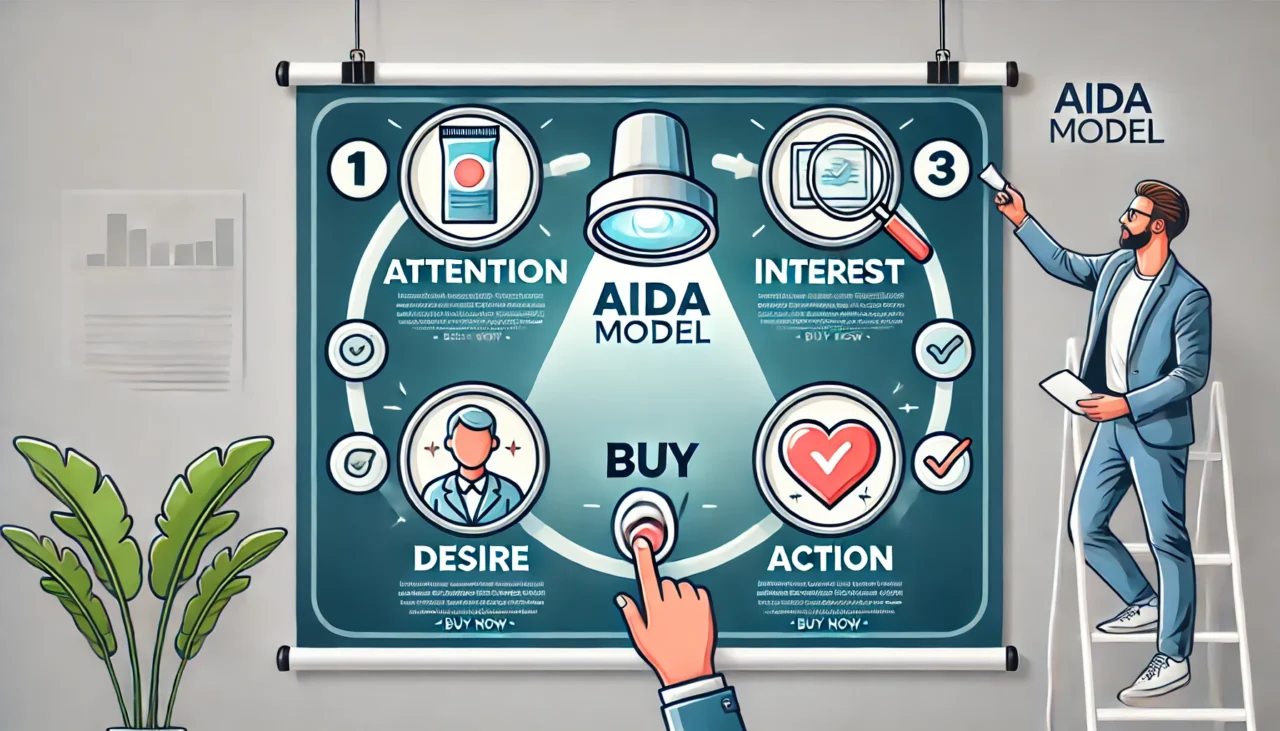
The AIDA formula is a classic model in marketing and advertising that describes the four phases a potential customer goes through before making a purchase decision. AIDA stands for:
- Attention: This phase is about capturing the attention of the potential customer. This can be achieved through eye-catching advertising, interesting headlines, visual elements, or other measures that make the customer aware of the product or service.
- Interest: Once attention is captured, the customer’s interest must be deepened. This is done by providing relevant information that highlights the benefits or unique features of the product or service. The goal is to make the customer curious and draw them further into the decision-making process.
- Desire: In this phase, the customer’s desire or want for the product or service should be aroused. This is often achieved through emotional appeal, highlighting benefits, or creating a need that the product or service can satisfy.
- Action: Finally, the customer should be prompted to take a specific action, such as making a purchase, signing up for a newsletter, or submitting an inquiry. This phase concludes the process and ideally leads to a conversion.
The AIDA formula is used in many areas of marketing and advertising to structure campaigns and ensure that they effectively guide potential customers through the entire decision-making process.
AIDA Formula explained simply: TL;DR: The AIDA principle explains how advertising leads people to purchase: attract attention, generate interest, create desire, and call to action.

Florian Ibe
CEO & Marketing Consultant
Your contact person: Florian Ibe
AIDA Formula Examples from Advertising & Marketing
Here are three examples of the application of the AIDA formula, two in B2C and one in B2B:
Example 1: B2C – Online Fashion Shop
- Attention: An online fashion shop places an ad on Instagram with a striking image of a new collection, accompanied by a catchy, short slogan: „Discover your new look!“
- Interest: The ad highlights the unique quality and variety of the new collection, which offers something for every style.
- Desire: The ad emphasizes that the collection is only available for a limited time and offers an exclusive discount for the first 100 buyers, which increases the desire to act quickly.
- Action: A "Shop now" button leads directly to the website, where the products can be purchased immediately.
Example 2: B2C – Gym
- Attention: A billboard in the city shows a picture of an athletic person in top shape with the slogan: „Are you ready for summer?“
- Interest: Below it says: „Our new fitness classes will get you in top shape in 8 weeks. For beginners and advanced.“
- Desire: The advertisement promises a free trial training and emphasizes that only limited spots are available, which increases the desire to take advantage of this offer.
- Action: A QR code on the billboard leads to the online registration for the trial training.
Example 3: B2B – Software Solution for Companies
- Attention: A software company sends an email with the subject line: „Reduce your operating costs by 30% – without additional effort.“
- Interest: The email explains how the software solution automates processes, thereby achieving efficiency gains for companies.
- Desire: The company offers a free demo and highlights references in the email from well-known companies that are already benefiting from the software.
- Action: A „Request Demo“ button leads directly to scheduling an appointment for a personalized presentation of the software.
These examples demonstrate how the AIDA formula can be applied in different contexts to guide potential customers through the decision-making process.
The AIDA Concept
The AIDA concept is a marketing and communication model that describes how advertising and other marketing activities can attract the attention and interest of potential customers and ultimately lead them to an action, such as purchasing a product or service. The concept consists of four consecutive phases that a customer goes through:
- Attention: This first phase focuses on attracting the attention of the potential customer. In a world full of advertising messages, a campaign must stand out to be noticed at all. This can be achieved through eye-catching graphics, provocative questions, surprising elements, or striking slogans.
- Interest: Once attention has been gained, the customer’s interest must be aroused. In this phase, the aim is to show the potential customer that the product or service is relevant to their needs. Information that clarifies the benefits and advantages of the offer plays a central role here.
- Desire: In this phase, the customer's interest should be transformed into a desire to own the product or service. Emotional or psychological triggers are often used here to strengthen the customer's desire for the product, e.g., by promising status, happiness, or problem-solving.
- Action: The final phase aims to move the customer to action, e.g., to purchase, register, or another form of conversion. This can be supported by clear calls-to-action, limited offers, or other sales promotion measures.
The AIDA concept is particularly widespread in the advertising industry and is used to design campaigns in such a way that they systematically have the desired effect on the potential customer. It helps marketers to plan communication in a targeted manner and to ensure that every phase of the decision-making process is effectively addressed.
The AIDA Principle
The AIDA principle is a fundamental model in marketing and advertising that describes how communication measures should be structured to guide potential customers through the purchasing process. The principle is based on the four phases of Attention, Interest, Desire, and Action, which the customer goes through before making a purchase decision.
Here is a brief summary of the AIDA principle:
- Attention: The first task is to gain the customer’s attention. This can be achieved through striking visual elements, surprising statements, or unusual advertising methods. The goal is to draw the customer out of their environment and make them aware of the message.
- Interest: After attention has been gained, the customer’s interest must be further developed. This means providing relevant information that highlights the benefits or unique features of the product or service. The aim here is to show the customer why the offer is important to them.
- Desire: In this phase, the customer's interest should be transformed into a strong desire to purchase the product or service. This can be achieved through emotional appeal, highlighting unique benefits, or creating a need that can only be satisfied by the offer.
- Action: The final phase aims to prompt the customer to take action. This could be a purchase, signing up for a newsletter, or another form of interaction. Clear calls to action, simple implementation paths, and incentives such as discounts or special promotions can help successfully complete this phase.
The AIDA principle is a practical model that helps companies structure their advertising and marketing strategies to effectively address the needs and behaviors of their target audience. It is frequently used to design advertisements, sales pitches, and other marketing activities intended to achieve a direct and measurable impact.


 DE
DE