

Customer Journey – The Process from Decision to Inquiry or Purchase
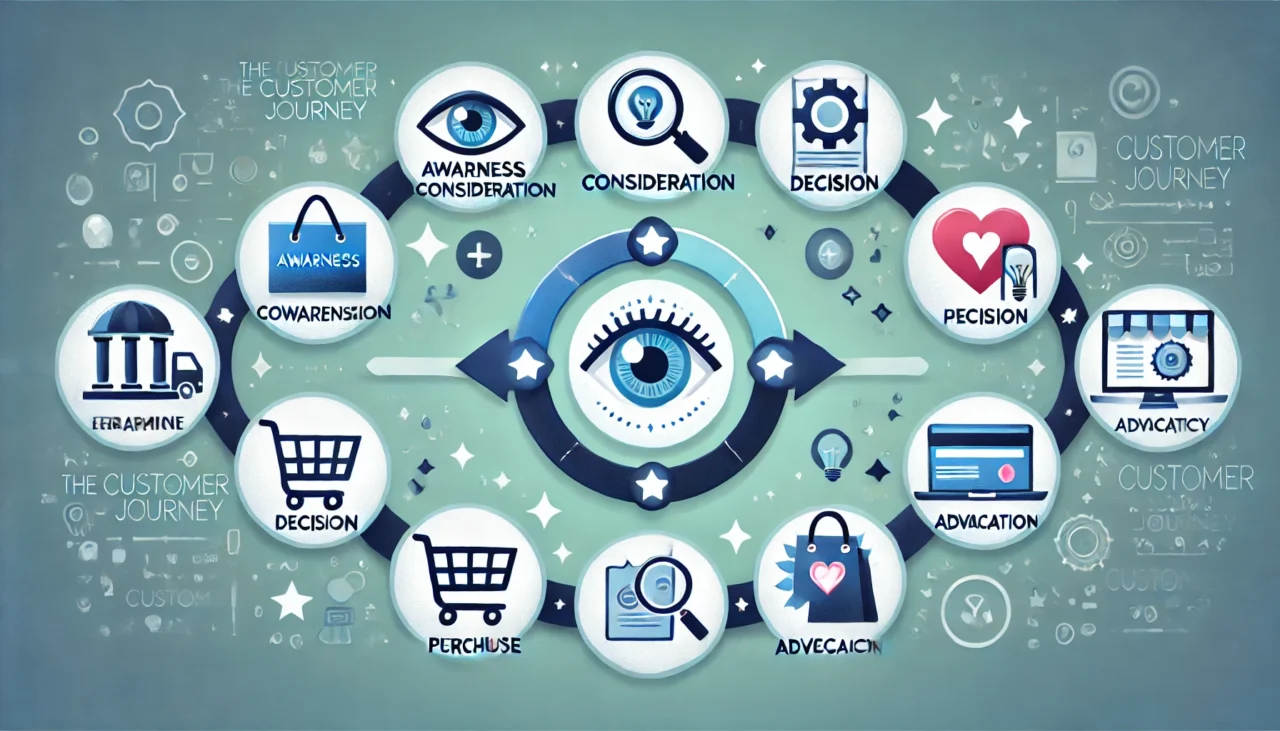
The Customer Journey describes the entire cycle a customer goes through when interacting with a company or brand. This journey can be divided into several key phases, each representing different touchpoints and experiences the customer encounters. Here is a breakdown:
- Awareness: The customer becomes aware of your brand or product, often through advertising, word-of-mouth, social media, or other marketing efforts.
- Consideration: After becoming aware, the customer begins to consider whether your product or service meets their needs. This may involve research, comparisons with competitors, and reading reviews.
- Decision: The customer decides to purchase your product or service. Factors influencing this decision include pricing, features, customer service experiences, and the overall perceived value.
- Purchase: The actual transaction takes place. This phase includes every aspect of the buying process, from the website’s user interface or the physical store’s layout to the checkout process.
- Retention: After the purchase, the focus shifts to keeping the customer engaged and satisfied. This could include post-purchase communication, support, loyalty programs, and ensuring that the product or service meets or exceeds expectations.
- Advocacy: If the customer is satisfied, they can become a brand advocate. They might leave positive reviews, recommend products to friends, or engage with the brand on social media.
Each of these stages offers opportunities to improve the customer experience and build long-term relationships. Understanding the customer journey allows companies to better align their strategies and interactions with the needs of their customers.
The customer journey thus describes the various phases a customer goes through when interacting with a brand, from initial awareness to purchase decision/inquiry and beyond, with the goal of turning customers into long-term brand advocates.
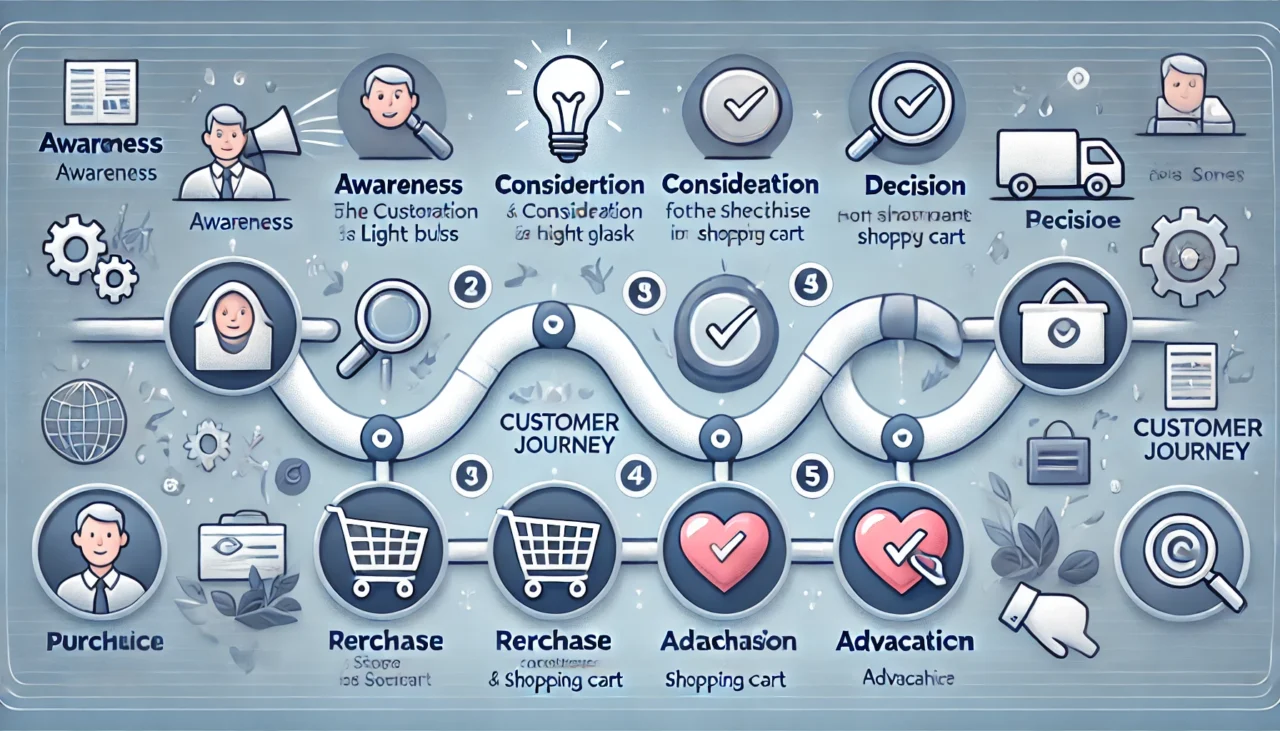
Customer Journey 5 Phases + 1 Extra Phase
The customer journey describes the complete path a customer takes from the first perception of a brand to the purchase decision and beyond. This process is divided into several phases, each representing crucial touchpoints and experiences the customer has with the brand. A deep understanding and targeted design of each of these phases are essential for companies to strengthen customer loyalty and create a positive customer experience that ultimately leads to long-term customer loyalty and brand advocacy.

Florian Ibe
CEO & Marketing Consultant
Your contact person: Florian Ibe
Become more visible on Google & Social Media?
In a free strategy consultation for data-driven online marketing, we uncover your untapped potential, review any existing ad accounts if necessary, examine your SEO ranking and visibility, and determine which strategy is appropriate for your budget and which active measures will lead to more inquiries or sales.

✅ More visibility & perception through targeted placement
✅ More visitors > prospects > customers > revenue
✅ Reach target groups scalably with SEA
✅ Act and grow sustainably with SEO
🫵 Maximum success with our hybrid strategy
💪 More than 15 years of experience across industries in over 1,000+ projects demonstrable!






The phases of the customer journey typically include awareness, consideration, decision, purchase, retention, and advocacy. Each phase is characterized by specific customer needs and behaviors that must be addressed through targeted marketing strategies and customer interactions. The goal is to continuously accompany customers and provide a seamless, pleasant, and valuable experience that not only increases customer satisfaction but also enhances the potential for recommendations and repeat purchases.
The following sections describe each phase in more detail, highlighting important aspects and providing concrete tips on how companies can use these insights to effectively address their target groups and successfully acquire and retain their desired customers.
1. Awareness
In the awareness phase, the potential customer first becomes aware of the product or service. The challenge here is to effectively capture the attention of the target group. Important aspects such as identifying the right target group, creative and engaging content, and measuring the reach and effectiveness of the channels used are crucial.
To leverage this phase for your target audience and desired customers, you should conduct targeted advertising campaigns, use SEO and social media analytics to identify trends and preferences, and create engaging, valuable content that encourages sharing.
Awareness of Target Audience and Desired Customers:
- Targeted advertising campaigns to address specific customer segments.
- Use of SEO and social media analytics to identify trends and preferences.
- Creation of engaging, valuable content that encourages sharing.
2. Consideration
During the consideration phase, potential customers compare offers and seek further information. Providing detailed product information, reviews, and testimonials is important here, as is a positive online reputation and visible customer satisfaction. Fast and helpful customer support for questions or problems is also crucial.
To make the most of this phase, you should optimize the website and online shop for intuitive use, implement interactive tools such as product comparisons or live chats, and provide regular updates and content that anticipate and answer questions.
Considerations influencing target audience and desired customers:
- Optimizing the website and online shop for intuitive use.
- Implementing interactive tools such as product comparisons or live chats.
- Regular updates and content that anticipates and answers questions.
3. Decision
In the decision phase, the customer decides for or against a purchase. Clarity and transparency in pricing, as well as compelling arguments that highlight the Unique Selling Proposition (USP), are critical factors. A simple and secure purchasing process can make all the difference.
Utilize this phase by offering deals and discounts for first-time buyers, prominently featuring testimonials and case studies, and ensuring a smooth and fast checkout process.
Supporting the decision-making power of the target group and desired customers:
- Offer deals and discounts for first-time buyers.
- Prominently display testimonials and case studies.
- A smooth and fast checkout process.
4. Purchase
The purchase phase involves the actual transaction. Security and privacy in the payment process, clear communication about delivery times and costs, and hassle-free return and exchange options are the important aspects here.
Improve the customer experience by offering multiple payment options, sending automated confirmation emails and order status updates, and introducing loyalty programs and post-purchase support.
Usage for target audience and desired customers:
- Offer multiple payment options to meet the needs of various customers.
- Automated confirmation emails and order status updates.
- Introduce loyalty programs and post-purchase support.
5. Retention
After the purchase, it is important to retain the customer through effective customer support that acts quickly and solution-oriented, and regular updates on new products, offers, and company news. Involving customers through feedback surveys and community building also plays a major role.
Promote customer loyalty by creating personalized offers based on previous purchases, developing a loyalty program that offers real added value, and maintaining regular contact via email, social media, and other channels.
Utilizing and Building Engagement for Target Audience and Ideal Customers:
- Creation of personalized offers based on previous purchases.
- Development of a loyalty program that offers genuine added value.
- Regular contact via email, social media, and other channels.
6. Advocacy
In the advocacy phase, satisfied customers can become brand ambassadors and recommend its products or services. Encouraging reviews and referrals through incentives, utilizing user-generated content to promote credibility, and actively maintaining a presence on review platforms and social networks are important aspects.
Benefits of Advocacy for Target Audience and Desired Customers:
- Implementing a referral program that rewards customers for recommendations.
- Highlighting customer testimonials in marketing materials.
- Creating a community where customers can interact and engage.
Utilize this phase by implementing a referral program that rewards customers for recommendations, highlighting customer testimonials in marketing materials, and creating a community where customers can interact and engage.
These detailed descriptions and recommendations should help you effectively design each phase of the customer journey and strengthen your relationship with your customers.
The most well-known model of inquiry and purchase phases in marketing and advertising:
AIDA Model in or for the Customer Journey
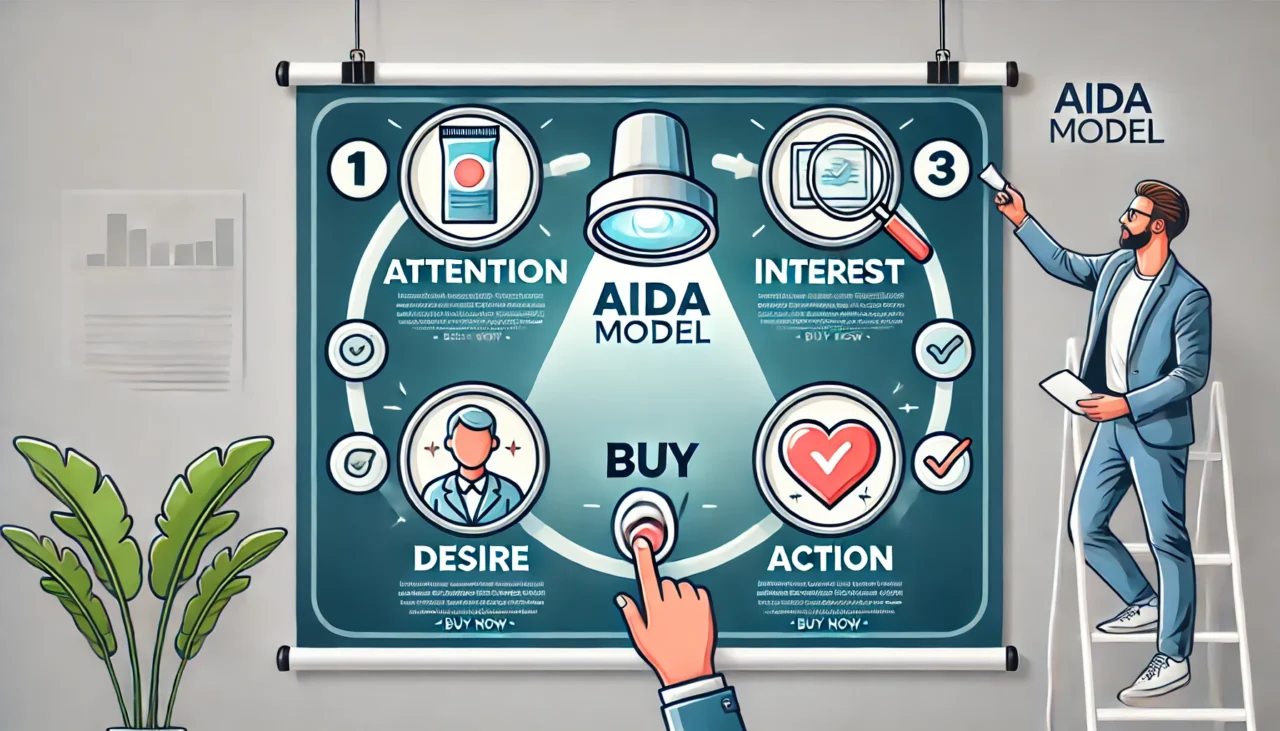
The AIDA model is a classic marketing concept that describes the stages a consumer goes through, from initial awareness to action, i.e., purchasing a product or using a service. It is divided into four phases:
- Attention: In this phase, the goal is to capture the attention of the potential customer. This is achieved through advertising, eye-catching packaging, social media presence, or other marketing strategies designed to stand out from the crowd.
- Interest: After attention has been captured, the customer’s interest should be fostered. This is done by providing detailed information about the benefits and uniqueness of the product or service.
- Desire: In this phase, interest is transformed into a concrete desire. The customer should develop a need to own the product or use the service. Emotionally appealing messages and highlighting product benefits are central here.
- Action: The final phase aims to move the customer to action, i.e., to purchase or use the service. Strong calls-to-action, special offers, simple purchasing processes, and clearly visible buy buttons are examples of measures that can be taken in this phase.
Integration of the AIDA Model into the Customer Journey
The AIDA model can be effectively integrated into the customer journey by aligning each phase of the model with specific touchpoints and interactions with the customer:
- Awareness and Attention are created through advertising measures and media presence.
- Consideration and Interest develop through information provision and engagement, for example, through website content, blogs, or customer reviews.
- Decision and Desire can be promoted through targeted marketing campaigns, personalized offers, and compelling product presentations.
- Purchase and Action occur through an optimized, user-friendly purchasing process and incentives that prompt the customer to act immediately.
The AIDA model provides a clear structure for designing targeted and effective marketing measures and promotes a deeper understanding of how to guide customers through the various stages of the purchasing decision.
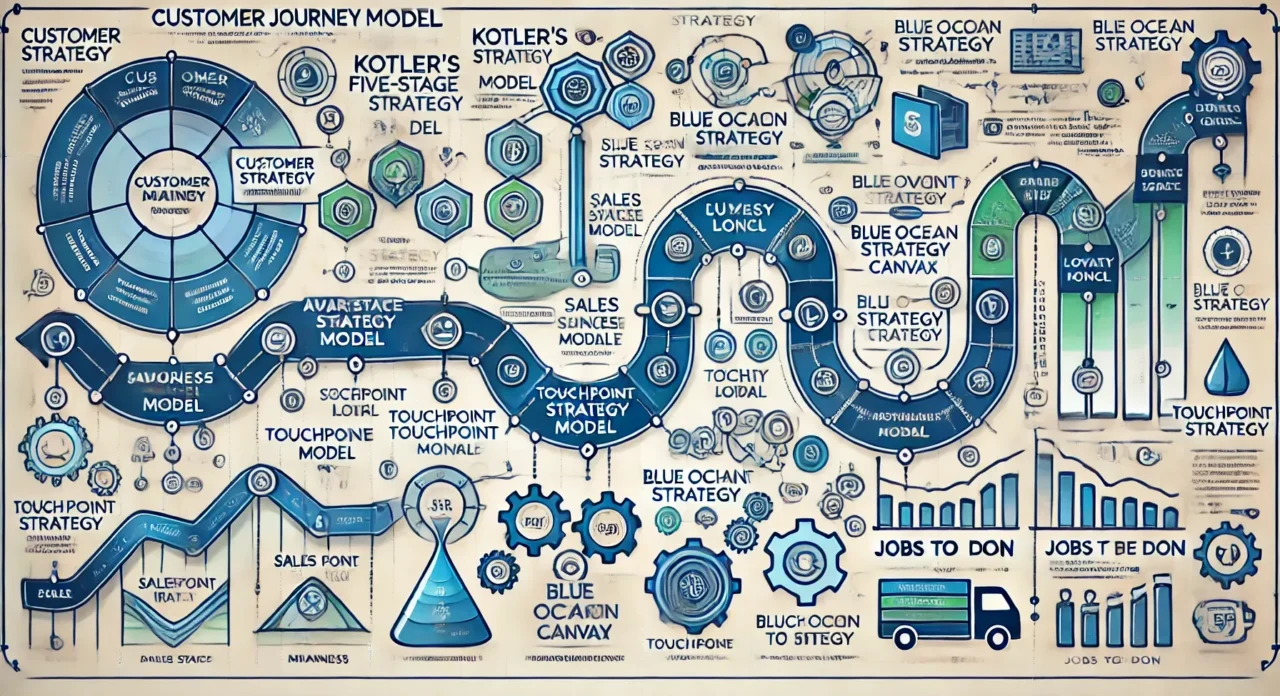
Customer Journey Model
In addition to the AIDA model, there are a number of other models used to describe and optimize the customer journey. Here are some important ones:
1. Kotler's Five-Stage Model
This model, developed by Philip Kotler, comprises five phases:
- Awareness
- Knowledge
- Liking
- Preference
- Purchase It focuses on how consumers perceive brands and how their attitudes lead to purchasing decisions over time.
2. The Sales Funnel Model
The sales funnel is a model that represents the process from initial awareness to purchase completion. It starts broad with many potential customers and narrows down to those who actually buy:
- Awareness
- Interest
- Consideration
- Intent
- Purchase
3. The Loyalty Loop Model
This model focuses on creating and maintaining customer loyalty after the purchase. It extends the traditional linear view of the customer journey with a cyclical component that emphasizes the importance of post-purchase interactions:
- Initial Purchase
- Usage Experience
- After-Sales Service
- Loyalty/Repurchase
4. The Touchpoint Model
This model emphasizes the importance of all touchpoints between a customer and a brand throughout the entire purchasing process. It aims to optimize every interaction to create a positive customer experience and includes:
- Pre-purchase
- Purchase
- Post-purchase
5. The Blue Ocean Strategy Canvas
Although not exclusively a Customer Journey model, the Blue Ocean Strategy Canvas helps identify new markets by focusing on unfulfilled customer needs and aiming to make competition irrelevant. It encourages companies to think beyond traditional market boundaries.
6. Jobs to be Done (JTBD)
The JTBD framework focuses on the tasks customers want to accomplish. It views products and services in terms of how they help the customer solve specific „jobs“ or problems. This model emphasizes a deep understanding of customer needs throughout the entire process.
These models offer different perspectives and tools for analyzing and improving the customer journey. Each company can choose the model that best suits its specific situation, goals, and customer base.


 DE
DE