

What is a Domain?
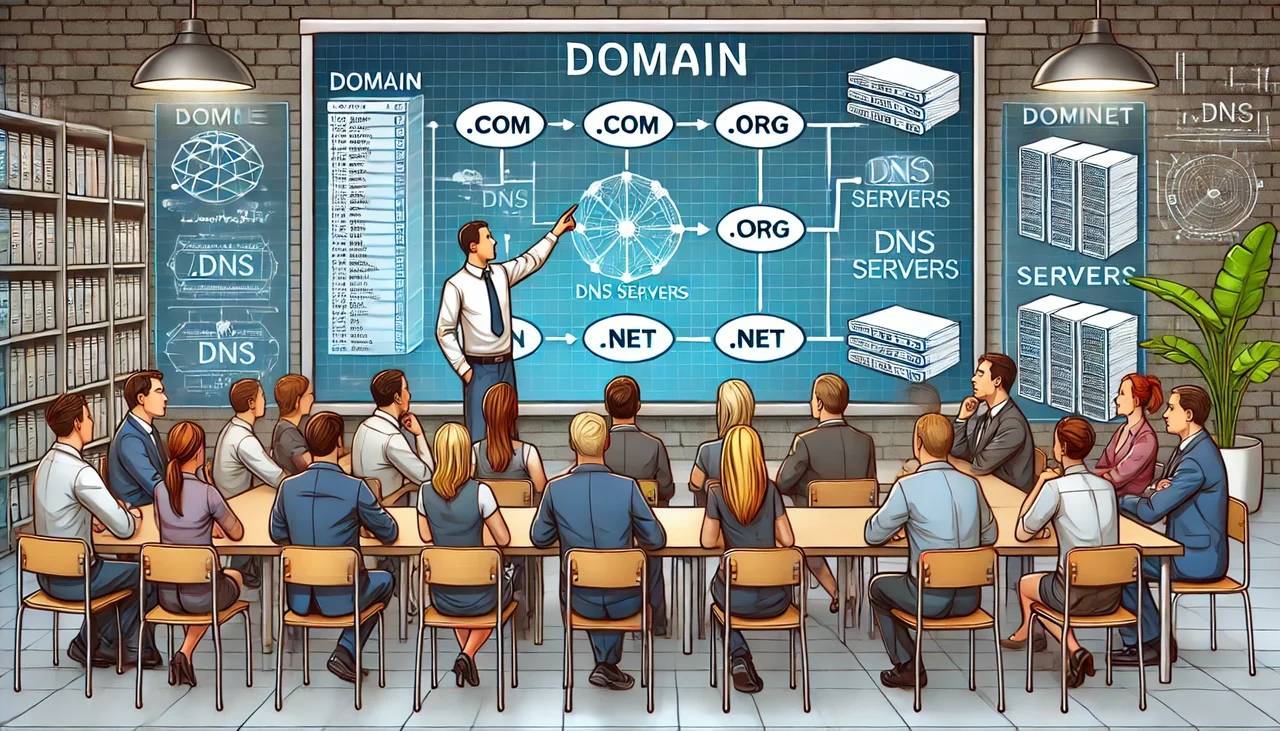
A domain is an identifying string that defines a realm of administrative autonomy, authority, or control on the Internet. Domains are formed by the rules and procedures of the Domain Name System (DNS). Every name registered in the DNS is a domain name.
Domain names are used in various networking contexts and application-specific naming and addressing. Generally, a domain name represents an Internet Protocol (IP) resource, such as a PC used to access the Internet, a server hosting a website, the website itself, or another service communicated over the Internet. In 2017, 330.6 million domain names were registered across all Top-Level Domains (TLDs), with over 150 million of them registered in the .com TLD.
A domain is a plain text that resolves an IP address. This then defines authority or control on the Internet for websites & shops.
What can a domain be used for?
A domain name can be used for entire websites and individual web pages. It can also be used for email addresses, app names, and more. A domain name is like your own unique address on the internet, allowing you to be found online. Once you have a domain name, you can, for example, set up a professional-looking email address (like yourname@yourname.de), which can make you appear more credible and established.
Most domain names are between 2 and 63 characters long, with a few exceptions (like .tv domains) that can be up to 67 characters long. You can use letters (abcdefghijklmnopqrstuvwxyz), numbers (1234567890), and hyphens (-). You cannot use spaces. Most people use only lowercase letters in their domain name, but you can also use a combination of uppercase and lowercase letters if you wish.
How to get a domain?
If you want to get a domain name, you need to register it with a domain name registrar. A registrar is an organization that handles the reservation of Internet domain names. A domain name registrar must be accredited by a generic Top-Level Domain (gTLD) registry and/or a country code Top-Level Domain (ccTLD) registry. A registrar offers registration services to individuals or organizations who want to have their own domain names and occasionally resells domains.
What are the advantages of a domain?
There are many advantages that a domain brings, some of them are
- A domain can make you appear more credible and established
- A domain can help you build your brand and create a professional identity online
- A domain makes it easy for others to find you online
- A domain can help you get more visitors to your website
- With a domain, you get a unique email address (like yourname@yourname.de) that makes you appear more professional
How long is a domain valid?
Domains are registered for a specific period, such as one year, two years, or longer. You can usually renew your domain before it expires to keep it active.
Can I transfer a domain to another person?
Yes, you can transfer a domain to another registrar or to another person. Domain transfers are usually processed within five days.
How do I renew my domain?
You can renew your domain through your registrar. Registrars will send you an email reminder when your domain is about to expire so you can renew it.
Become more visible on Google & Social Media?
In a free strategy consultation for data-driven online marketing, we uncover your untapped potential, review any existing ad accounts if necessary, examine your SEO ranking and visibility, and determine which strategy is appropriate for your budget and which active measures will lead to more inquiries or sales.

✅ More visibility & perception through targeted placement
✅ More visitors > prospects > customers > revenue
✅ Reach target groups scalably with SEA
✅ Act and grow sustainably with SEO
🫵 Maximum success with our hybrid strategy
💪 More than 15 years of experience across industries in over 1,000+ projects demonstrable!







How much does a domain cost?
A domain usually costs about €10-15 per year, but the price can vary depending on the registrar, Top-Level Domain, and other factors. You usually get discounts on your registered domain if you sign up for several years in advance.
What is a Top-Level Domain?
A Top-Level Domain (TLD) is the last part of a domain name, such as .com, .net, or .org. There are hundreds of TLDs to choose from, and new ones are assigned every year. Popular TLDs include .de, .com, .net, .org, .info, and .biz.
What is a country-code Top-Level Domain?
A country-code Top-Level Domain (ccTLD) is a two-letter code that stands for a specific country or territory, such as .us for the United States, .ca for Canada, .uk for the United Kingdom. There are also ccTLDs for regions like .eu for Europe and .asia for Asia.
What is a generic Top-Level Domain?
A generic Top-Level Domain (gTLD) is a Top-Level Domain that is not associated with a specific country or territory. Popular gTLDs include .com, .net, and .org. There are also new gTLDs like .biz and .info.
Is there a limit to the number of domains one can have?
No, there is no limit to the number of domains you can own. You can register as many domains as you wish.


 DE
DE