

Social Selling

Social Selling refers to the use of social networks by salespeople to interact with potential customers, build relationships, and ultimately achieve their sales goals. However, a distinction should be made between B2C and B2B Social Selling. More on this later in the article.
Here are some key strategies for effective Social Selling:
- Building a strong personal brand: It is important for salespeople to build an authentic and professional online presence. This includes maintaining a professional profile on platforms such as LinkedIn, Instagram, or Twitter that reflects their expertise in their field.
- Sharing valuable content: By regularly posting relevant and useful content, salespeople can strengthen their credibility and position themselves as experts in their field. This can include articles, blog posts, studies, or even tips that might be of interest to their target audience.
- Fostering engagement: Social Selling goes beyond merely posting content. Salespeople should actively participate in conversations, respond to comments on their posts, and engage in discussions on platforms relevant to their industry.
- Building relationships: Through personal messages or comments, salespeople can build direct connections with potential customers. It is important that these interactions are not immediately sales-oriented, but rather aim to show genuine interest and helpfulness.
- Utilizing tools and data: Many social platforms offer tools to analyze the interactions and reach of posts. This data can be used to understand what works well and to better tailor future content and strategies.
- Integration of Social Listening: Salespeople should also engage in social listening to monitor conversations about relevant topics or brands. This can help them respond to potential customer needs in a timely manner or participate in relevant discussions.
By applying these tactics, salespeople can not only increase their visibility and reach but also build trusting relationships that can ultimately lead to more sales.
In B2C, there are so-called UBC courses that are often bought and resold, in addition to classic affiliate sales:
UBC Online Course with Social Selling (click here)*
or

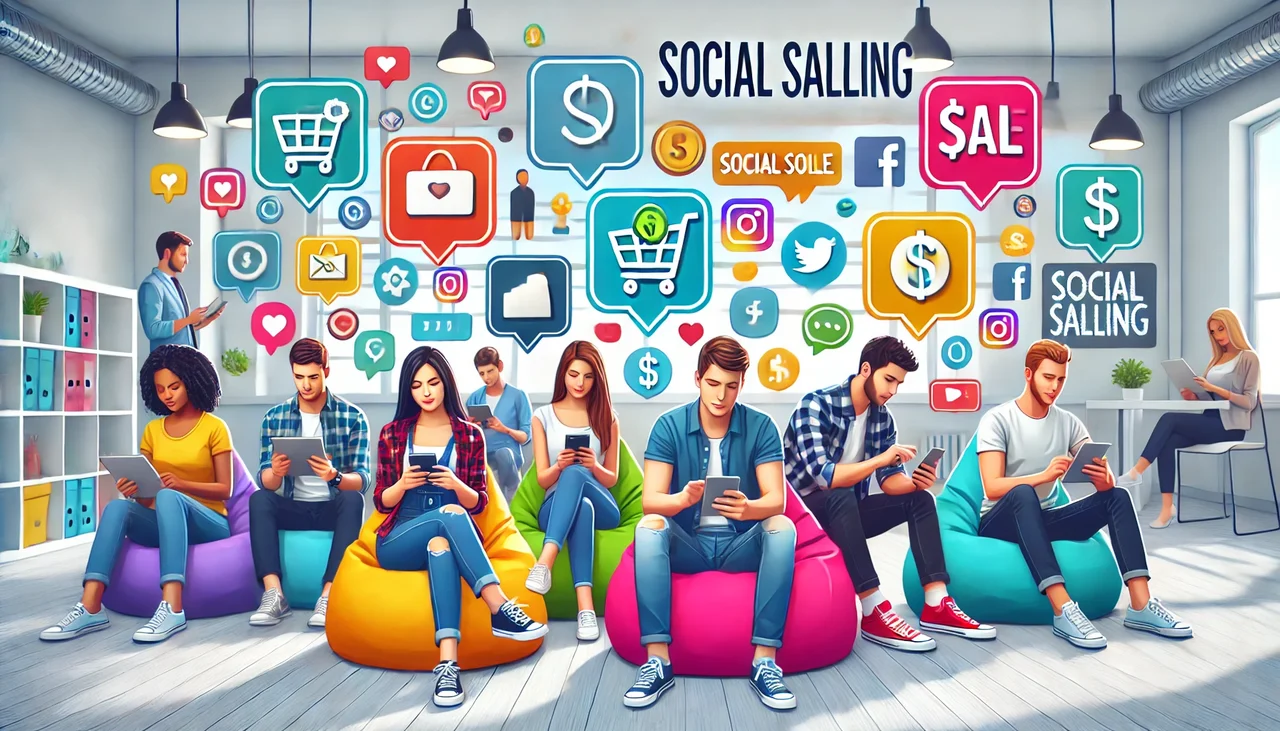
Social Selling in B2B & B2C? Differences and Comparison
Social selling can be effectively used in both B2B (Business-to-Business) and B2C (Business-to-Consumer) sectors, with approaches and strategies varying depending on the target audience. Here are the main differences and some comparisons between social selling in the B2B and B2C contexts:
Become more visible on Google & Social Media?
In a free strategy consultation for data-driven online marketing, we uncover your untapped potential, review any existing ad accounts if necessary, examine your SEO ranking and visibility, and determine which strategy is appropriate for your budget and which active measures will lead to more inquiries or sales.

✅ More visibility & perception through targeted placement
✅ More visitors > prospects > customers > revenue
✅ Reach target groups scalably with SEA
✅ Act and grow sustainably with SEO
🫵 Maximum success with our hybrid strategy
💪 More than 15 years of experience across industries in over 1,000+ projects demonstrable!







B2B Social Selling
- Long-term relationships: In the B2B sector, it is often about building long-term relationships. Decision-making processes are longer, and usually several stakeholders are involved.
- Higher value and complexity: The products or services sold are often more expensive and complex, requiring detailed explanations and often customized solutions.
- Focus on ROI: B2B buyers are primarily interested in the Return on Investment (ROI). Content that demonstrates the value and efficiency gains through the product or service is particularly effective.
- Professional content: The content is often more formal and informative to demonstrate expertise and credibility.
- Platform usage: LinkedIn is a key platform for B2B social selling, followed by Twitter and industry-specific forums.
B2C Social Selling
- Emotional Appeal: In the B2C sector, the emotional connection to the product or brand is often more important. Decisions are made more quickly and impulsively.
- Broader Target Audiences: Target audiences are often broader and less specialized. Communication can be more general and entertainment-oriented.
- Visual Content: Images, videos, and other visually appealing content are particularly effective in capturing consumers' attention.
- Direct Feedback: Social media enables direct feedback from end customers, which can be used for product development and customer relations.
- Platform Usage: Platforms such as Instagram, Facebook, and TikTok are particularly important as they enable broad reach and strong visual content.
Comparison and Integration
- Target Audience Analysis: In both B2B and B2C, precise knowledge of the target audience is crucial for successful strategies.
- Content Strategy: While B2B focuses on expertise and data-driven content, B2C emphasizes entertainment and emotional connection.
- Buying Cycle: B2B typically has a longer buying cycle with multiple touchpoints and decision-makers, whereas B2C often sees more spontaneous purchasing decisions.
- Customer Service: In B2C, fast and proactive customer service is often required, while in B2B, the focus is on tailored service and support.
By understanding these differences, companies can optimally adapt their social selling strategies and succeed in both the B2B and B2C sectors.
A very popular and well-known course on selling via social networks comes from Sociseller Niels Wagner:

What else should be considered for Social Selling?
Social Selling requires a prudent approach to achieve long-term success. Here are some additional aspects to consider:
- Target Audience Analysis: Understand exactly who your target audience is. This includes demographic data, interests, and problems that your products or services can solve. A precise target audience analysis helps to create relevant content that offers real added value.
- Personalized Approach: Personalization is crucial in social selling. Communications should be as personal as possible to establish a connection and build trust. This means that messages should be specifically tailored to the needs and interests of the respective person or group.
- Consistency: Regularity in communication and content posting is important. This helps to build a lasting presence and stay in the target audience’s mind. At the same time, it is important to maintain high content quality and not just post for the sake of quantity.
- Feedback and Data Analysis: Use feedback and data analysis to continuously improve your strategy. This includes engagement rates, click-through rates, and conversions. This feedback should be used to further optimize content and communication.
- Training and Further Education: The social media landscape is constantly evolving. Regular training and further education are therefore essential to understand and apply current trends, tools, and methods.
- Patience and Perseverance: Success in social selling often does not happen overnight. Patience and perseverance are crucial to building long-term relationships and ultimately realizing sales.
- Legal Compliance: Ensure that your social selling activities comply with data protection laws and the terms of use of the respective social networks.
By considering these aspects, companies can effectively design their social selling strategy and maximize their online sales results.
Conclusion: Social selling uses social networks to build relationships and increase sales. In the B2B sector, the focus is on long-term relationships and specialized content, especially on platforms like LinkedIn. B2C relies more on emotional appeal and visual content on platforms like Instagram and Facebook. Common to both is the need to precisely understand the target audience and adapt content to communicate effectively and attract customers.


 DE
DE