

Traffic = (Amount of) visitors to websites & online shops
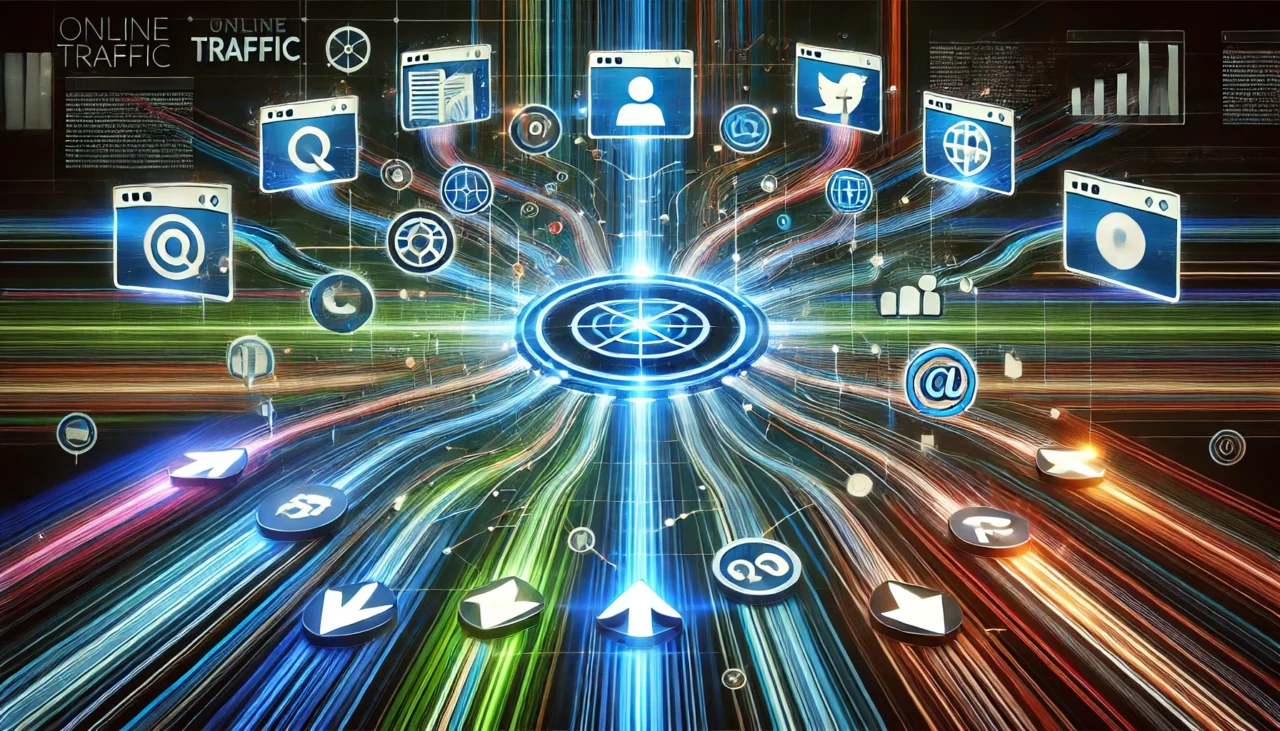
Traffic in the online context refers to the number of visitors or the amount of data that a website or an online service receives. There are different types of online traffic, each of which can have different sources and purposes:
- Organic Traffic (SEO Traffic): Visitors who reach a website via search engines like Google without any advertising.
- Direct Traffic: Visitors who directly type a website's URL into their browser or access the page via a bookmark.
- Referral Traffic: Visitors who reach a page via links on other websites, blogs, or social media platforms.
- Paid Traffic (SEA Traffic, SMA Traffic): Visitors who come to the page via paid advertisements, such as Google Ads or social media advertising.
- Social Media Traffic: Visitors who access the website via social media platforms such as Facebook, Instagram, or LinkedIn.
- Email Traffic: Visitors who access the website via links in emails.
The term „traffic“ is a central component of web analytics and online marketing, as it helps to evaluate the effectiveness of a website or a campaign. More traffic generally means more potential customers or users, which is particularly important for businesses.
Organic Traffic (SEO Traffic)
Organic traffic refers to visitors who reach a website through search engines such as Google, Bing, or Yahoo without paid advertising. This traffic is generated by the relevance and quality of the content and by the website’s search engine optimization (SEO). SEO includes techniques such as keyword research, on-page optimization, link building, and improving user experience to enhance the website’s ranking in search results. Organic traffic is particularly valuable because it usually consists of users who are actively searching for the information or services offered and therefore have a higher conversion rate.
- Organic traffic is free and sustainable in the long term.
- It is based on the relevance and quality of the website’s content.
- SEO is crucial for increasing organic traffic.
- Organic traffic often has a higher conversion rate.
- It is independent of advertising budgets.
Direct Traffic
Direct traffic includes visitors who directly type a website’s URL into their browser or access the page via a bookmark. This type of traffic occurs when the brand or website is already known and visitors specifically target it. Direct traffic can also originate from offline marketing activities such as print advertising, events, or personal recommendations. It is often an indicator of brand awareness and customer loyalty, as it shows that visitors already trust the website or company.
- Direct traffic reflects brand awareness.
- It can result from offline marketing and personal recommendations.
- This type of traffic indicates high customer loyalty.
- Direct traffic is independent of search engines and advertising campaigns.
- It is a good indicator of returning visitors.
Referral Traffic
Referral traffic occurs when visitors arrive at a page via links on other websites, blogs, or social media platforms. This type of traffic is particularly valuable because it often originates from trusted sources that recommend the website or its content. Backlinks from high-ranking and thematically relevant websites can not only increase referral traffic but also improve search engine rankings. Referral traffic can be boosted through partnerships, guest posts, PR campaigns, and active link building.
- Referral traffic originates from external websites that link to one's own site.
- High-quality backlinks can improve search engine rankings.
- This type of traffic can be increased through partnerships and guest posts.
- Referral traffic is often trustworthy and targeted.
- It can contribute to a long-term increase in organic traffic.
Paid Traffic (SEA Traffic, SMA Traffic)
Paid traffic, also known as SEA (Search Engine Advertising) and SMA (Social Media Advertising), is generated through paid advertisements on search engines and social media platforms. This traffic is often highly targeted, as it is aligned based on user profiles, interests, or search terms. Paid traffic can generate high visitor numbers in the short term, but it is dependent on budgets and ongoing campaigns. To maximize the return on investment (ROI), it is important to precisely define target groups and continuously optimize ad texts and landing pages.
- Paid traffic is generated through paid advertisements on search engines and social media.
- It can be highly targeted to specific target groups.
- Its effectiveness heavily depends on budgeting and campaign optimization.
- Paid traffic enables quick results and high visitor numbers.
- Continuous optimization is crucial for ROI.
Social Media Traffic
Social media traffic occurs when visitors access a website via social media platforms such as Facebook, Instagram, LinkedIn, Twitter, or Pinterest. This type of traffic can be generated both organically and through paid social media campaigns. Social media traffic is particularly valuable because it can have a high interaction rate and potential viral effects. By sharing content and using hashtags, reach can be increased organically. Paid campaigns offer the opportunity to target very specific audiences and increase visibility.
- Social media traffic can be organic or paid.
- It offers potential for high interaction rates and viral effects.
- Reach can be increased by sharing content and hashtags.
- Paid campaigns enable targeted audience engagement.
- Social media traffic is ideal for brand building and customer loyalty.
Email Traffic
Email traffic occurs when visitors access a website via links in emails, such as newsletters, promotions, or automated campaigns. This type of traffic is particularly valuable because recipients have already shown a certain interest in the brand or its offerings by subscribing to the newsletter or having previously interacted with the brand. Well-designed email campaigns can not only increase traffic but also conversions and customer loyalty. Personalization, engaging subject lines, and clear calls-to-action are crucial to maximize click-through rates.
- Email traffic originates from links in newsletters and promotional emails.
- Recipients often already have an interest in the brand or its offerings.
- Well-designed campaigns can increase conversions and customer loyalty.
- Personalization and clear calls-to-action are crucial for success.
- Email traffic can be continuously increased through regular, relevant content.
What is Website Traffic?
Website traffic refers to the total number of visits or views a website receives within a specific period. This traffic can originate from various sources, such as search engines, social media, direct URL entries, email marketing, or links from other websites.
Website traffic is often divided into two main categories:
- Number of Visitors (Users/Unique Visitors): This refers to the number of individual people who visit a website. Each visitor is counted only once, even if they visit the page multiple times.
- Page Views: This refers to the total number of pages viewed on a website. One visitor can generate multiple page views.
Website traffic is an important indicator of a website’s success, as it provides insights into how many people visit the site, how long they stay, which pages they visit most frequently, and how they arrive at the website. This information is crucial for optimizing content, improving user experience, and increasing conversion rates.

Become more visible on Google & Social Media?
In a free strategy consultation for data-driven online marketing, we uncover your untapped potential, review any existing ad accounts if necessary, examine your SEO ranking and visibility, and determine which strategy is appropriate for your budget and which active measures will lead to more inquiries or sales.

✅ More visibility & perception through targeted placement
✅ More visitors > prospects > customers > revenue
✅ Reach target groups scalably with SEA
✅ Act and grow sustainably with SEO
🫵 Maximum success with our hybrid strategy
💪 More than 15 years of experience across industries in over 1,000+ projects demonstrable!







Website Traffic Analysis – The Most Important Component in Online Marketing
Website traffic analysis is the process of collecting, reviewing, and interpreting data about the traffic on a website. The goal of website traffic analysis is to understand visitor behavior, evaluate website performance, and make informed decisions to improve the user experience and achieve business goals.
Efficient Server Side Tracking for E-Commerce: Optimize with ShopLytics for best data
Here are the main aspects of website traffic analysis:
- Visitor Numbers (Visitors/Users): This examines how many individual people visit the website and how often.
- Traffic Sources: This shows where visitors come from, e.g., organic search (search engines), paid advertising, social media, email marketing, or links from other websites.
- User Behavior: This includes which pages visitors view, how long they stay on the website (session duration), which pages they visit most frequently, and which they visit last before leaving the website.
- Bounce Rate: The percentage of visitors who leave a website after viewing only one page without further interaction. A high bounce rate can indicate problems with usability or content relevance.
- Conversion Rate: The percentage of visitors who complete a desired action, such as making a purchase, filling out a form, or signing up for a newsletter.
- Device Usage (Device Analysis): This shows what type of devices (desktop, tablet, mobile) visitors use to access the website.
- Geographical Data (Geo-Analysis): Shows from which countries or regions visitors come, which can be important for geographically targeted marketing measures.
- Traffic Trends Over Time: Analyzes how traffic develops over a certain period to identify patterns and evaluate seasonal fluctuations or the effects of marketing campaigns.
Website traffic analysis tools such as Google Analytics,Matomo or other specialized software help to collect this data and transform it into understandable reports and dashboards. This information is crucial for website optimization, improving user experience, and increasing overall performance in online marketing. The topic of finding out website visitor numbers is thus covered. However, the other data per visitor is even more exciting.
Tip for server-side tracking of traffic and ALL user data in compliance with data protection regulations:

also suitable for websites without a shop!
Traffic Generation – How do I get more visitors to my website or shop?
Traffic generation refers to the strategies and measures taken to direct visitors to a website. The goal of traffic generation is to increase a website’s visibility and bring more potential customers or users to the site, ultimately to increase the conversion rate. There are various methods to generate traffic:
- Search Engine Optimization (SEO): Optimizing website content to rank higher in search engine results, which brings organic traffic through search engines like Google.
- Content Marketing: Creating and distributing valuable, relevant content (e.g., blog posts, videos, infographics) to attract and retain an audience.
- Social Media Marketing: Using social media platforms like Facebook, Instagram, LinkedIn, and Twitter to share content and drive visitors to the website.
- Paid Advertising (PPC – Pay-per-Click): Placing paid ads in search engines (e.g., Google Ads) or on social media platforms that lead visitors directly to the website.
- Email Marketing: Sending newsletters or promotional emails to a list of subscribers to drive them back to the website.
- Affiliate Marketing: Collaborating with partners who promote products or services on their own website and drive traffic to your website via special links.
- Influencer Marketing: Collaborating with influencers who share the website or its content on their platforms to bring their followers to the website.
- Links (Backlinks): Building high-quality backlinks from other websites that point to your own site. This not only improves search engine ranking but also generates direct traffic.
- Guest Posts and PR: Writing articles or posts for other websites or online magazines that include a link to your own website to generate traffic.
- Offline Marketing: Using traditional marketing methods such as events, print media, or word-of-mouth to draw attention to the website.
Traffic generation is a continuous process, where various methods are often combined to achieve the best possible effect. The goal is not only to attract more visitors, but also qualified traffic, i.e., visitors who are genuinely interested in the website’s offerings and are more likely to convert.
Learn more about Traffic Marketing.

Florian Ibe
CEO & Marketing Consultant
Your contact person: Florian Ibe
Buying Traffic? A good idea?
Buying traffic can be useful in certain situations, but it also carries some risks and disadvantages. Whether it makes sense to buy traffic largely depends on the goals, the quality of the purchased traffic, and the overall marketing strategy. Here are some considerations:
Advantages of buying traffic:
- Quick Results: Purchased traffic can deliver immediate visitor numbers, which is particularly useful if you want to draw short-term attention to a specific campaign, product, or event.
- Targeted Advertising: With reputable providers, such as Google Ads or Facebook Ads, you can segment traffic by demographic characteristics, interests, and other criteria to bring targeted visitors to your site.
- Increased Visibility: If your website is new or receives little traffic, purchasing traffic can increase visibility and potentially boost organic traffic as more people become aware of your brand.
Disadvantages and Risks of Purchasing Traffic:
- Quality of Traffic: Not all purchased visitors are equally valuable. Cheap traffic from questionable sources often consists of uninterested visitors or even bots that have no real interaction with your website.
- High Costs: Purchased traffic can be expensive, especially if it comes from high-quality sources. The costs must be weighed against the potential benefits, especially when it comes to the conversion rate.
- Short-term Effect: Purchased traffic often only leads to short-term increases in visitor numbers. As soon as you stop paying, the traffic disappears, and the long-term benefits may be small.
- Risk of Sanctions: Buying traffic from untrustworthy sources can lead to your website being penalized by search engines, which can harm your organic traffic and visibility in the long run.
- Poor Conversion Rate: If the purchased traffic is not well-aligned with your target audience, it can lead to a very low conversion rate. This means you are paying for visitors who are unlikely to become customers.
Buying traffic can be a sensible strategy if used judiciously and as part of a broader marketing strategy. It is important to ensure that the purchased traffic is high-quality and targeted to achieve the desired ROI (Return on Investment). In the long term, however, it is often more effective to strengthen organic traffic sources such as SEO and content marketing, as these are more sustainable and generally more cost-efficient.
However, it is better to buy backlinks and invest the budget here.


 DE
DE