Understanding the Fundamentals of the Marketing Funnel
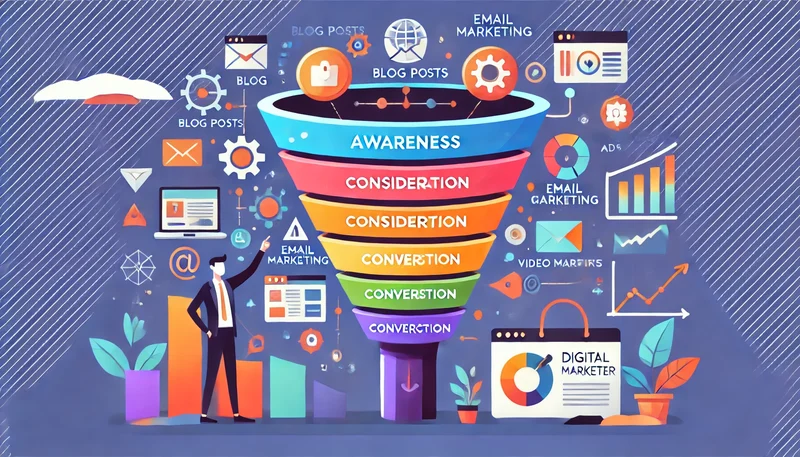
The marketing funnel systematically structures the path of potential customers into three phases: Top of Funnel (ToFu), Middle of Funnel (MoFu), and Bottom of Funnel (BoFu). This segmentation allows for precise alignment of the content strategy with the specific needs of the target audience in each phase.
Each funnel phase requires tailored content formats that consider the knowledge level and purchase readiness of prospects. The characteristic funnel shape reflects the decreasing number of qualified leads over the course of the customer journey.
User behavior in each funnel phase can be analyzed using analytics and tracking tools. This data forms the basis for continuous optimization of the content strategy and enables a measurable increase in the conversion rate.
The Customer Journey in the Digital Age
Self-directed information seeking fundamentally shapes the modern purchasing decision process. Potential customers independently research solutions to their problems and compare various providers before making a purchase decision.
Search engine optimized content plays a central role in the discoverability of relevant information. The content strategy must therefore consider SEO aspects from the outset and naturally integrate keywords into the texts.
Data-driven analysis of the customer journey enables targeted optimization of the content strategy. A/B tests and performance monitoring can be used to evaluate the effectiveness of different content formats in each funnel phase.
From First Contact to Purchase Completion
The path from initial contact to successful completion requires a well-thought-out content strategy. ToFu content first attracts attention through informative blog posts, videos, or infographics that answer fundamental questions of the target audience.
In the MoFu phase, whitepapers, webinars, and case studies deepen the interest of potential customers. These content formats demonstrate expertise and build trust, while simultaneously showcasing specific problem solutions.
BoFu content ultimately supports the final purchase decision through product comparisons, ROI calculations, and customer reviews. This systematic alignment of content formats with the respective funnel phase maximizes the conversion rate and the return on investment of content marketing.

Become more visible on Google & Social Media?
In a free strategy consultation for data-driven online marketing, we uncover your untapped potential, review any existing ad accounts if necessary, examine your SEO ranking and visibility, and determine which strategy is appropriate for your budget and which active measures will lead to more inquiries or sales.

✅ More visibility & perception through targeted placement
✅ More visitors > prospects > customers > revenue
✅ Reach target groups scalably with SEA
✅ Act and grow sustainably with SEO
🫵 Maximum success with our hybrid strategy
💪 More than 15 years of experience across industries in over 1,000+ projects demonstrable!






Top of Funnel (ToFu): Creating Awareness
ToFu content aims to address potential customers in their initial research phase. This content answers fundamental questions and provides orientation for problem-solving. The focus is on neutral information, not direct sales.
In this phase, the target audience is looking for general solutions to their challenges. ToFu content addresses these needs and provides valuable insights without going too deep.
Broad dissemination of content across various channels maximizes reach. Social media, blogs, and YouTube are particularly well-suited for distributing ToFu content, as they enable high organic reach.
Effective Content Formats for ToFu
Blog posts and articles form the foundation of successful ToFu strategies. They offer ideal opportunities to integrate relevant keywords and increase visibility in search engines.
Videos and infographics optimally complement text-based offerings. These visual formats convey complex relationships in an easily understandable way and increase the time spent on the website.
Checklists and short guides generate additional value for the target audience. These practical tools solve specific problems while simultaneously demonstrating the provider’s expertise.
SEO Optimization for ToFu Content
Strategic keyword research forms the basis for ToFu content. The integration of relevant search terms is natural and reader-friendly, without disrupting the flow of reading or impairing text quality.
Technical SEO aspects such as meta descriptions, title tags, and a clear URL structure support the discoverability of content. Mobile optimization also plays a central role in search engine rankings.
Content clusters and internal linking strengthen the thematic relevance of the website. This structuring helps search engines recognize the domain’s expertise in specific subject areas.
Middle of Funnel (MoFu): Building Trust
MoFu content is aimed at prospects who already have a basic understanding of their challenges. This phase focuses on building trust through well-founded specialist information and practical solutions.
In this phase, the target audience compares various solution options. Detailed information and specific expertise help in evaluating the available options.
The content in this phase must be significantly more in-depth than in the ToFu area. Technical terms can be used specifically to emphasize one's own expertise.
Lead Nurturing through Valuable Content
Lead nurturing requires a systematic approach with relevant content. The content must convey specific expertise and simultaneously offer practical added value for the target audience.
Email campaigns play a central role in lead nurturing. Automated sequences deliver relevant information at the right time and maintain contact with the target audience.
Content personalization is based on previous user behavior. Tracking data enables the targeted delivery of suitable content formats according to individual interests.
Conversion-Optimized Content Formats
Whitepapers and detailed guides are particularly well-suited for the MoFu phase. These content formats allow for in-depth engagement with specific topics and simultaneously demonstrate technical expertise.
Webinars and video tutorials offer interactive learning experiences. These formats create personal connection and enable direct exchange with the target audience.
Case studies prove the practical applicability of the presented solutions. Success stories and concrete results strengthen confidence in one’s own competence.
Bottom of Funnel (BoFu): Supporting the Purchase Decision
BoFu content focuses on supporting the final purchase decision. The content must highlight concrete benefits and dispel any remaining doubts.
ROI calculations and economic analyses provide tangible decision-making bases. This factual basis facilitates internal coordination with the potential customer.
Product comparisons and feature overviews enable a well-founded evaluation. The transparent presentation of performance features builds trust and accelerates the decision-making process.
Sales-Supporting Content Formats
Product demonstrations and individual consultations form the core of the BoFu phase. This personal component enables the targeted addressing of specific requirements.
Offers and contract documents must clearly present all relevant information. Clear structures and understandable formulations facilitate the final decision-making.
Reference customers and testimonials provide social proof. Authentic testimonials reduce perceived risks and strengthen confidence in the offered solution.
After-Sales Content and Customer Loyalty
After-sales content focuses on long-term retention of existing customers. Regular updates and training materials support the optimal use of the acquired solution.
Knowledge base articles and FAQ collections enable quick self-help for common questions. These resources relieve support and increase customer satisfaction.
Newsletters and product updates inform about new features and optimizations. Continuous communication strengthens customer relationships and opens up cross-selling potential.
Content Success Measurement in the Funnel
Systematic success measurement is based on defined KPIs for each funnel phase. Conversion rates, time on page, and engagement metrics provide important insights into the performance of the content strategy.
Analysis of user behavior enables targeted optimizations. Bounce rates and scroll depth show which content performs particularly well and where there is room for improvement.
Attribution models help evaluate different touchpoints. Assigning conversions to specific content formats enables ROI-based resource allocation.
Best Practices and Common Mistakes
A balanced content distribution across all funnel phases is essential. Many companies focus too heavily on ToFu content and neglect later phases.
Content formats must be consistently aligned with the target audience. Technical complexity and depth of expertise are based on the knowledge level of prospects in the respective phase.
Regular updating of existing content ensures its relevance. Outdated information and broken links harm credibility and SEO ranking.
Conclusion
Success in content marketing is based on the strategic alignment of content with each funnel phase. Consistent orientation to the information needs of the target audience maximizes the conversion rate.
Regular performance analyses enable continuous optimizations. Data-driven decisions sustainably improve the effectiveness of the content strategy.
The integration of new technologies and formats ensures future viability. Flexibility and willingness to innovate remain important success factors in dynamic content marketing.



 DE
DE