One of the most important pillars of any company is its customers. Anyone who creates products and offers them on the market can only establish themselves there sustainably if enough people can be convinced of the product and buy it accordingly. With increasing digitalization, this principle is now also shifting to the digital market, i.e., the internet. Online shops and homepages are now indispensable for selling one’s own product.
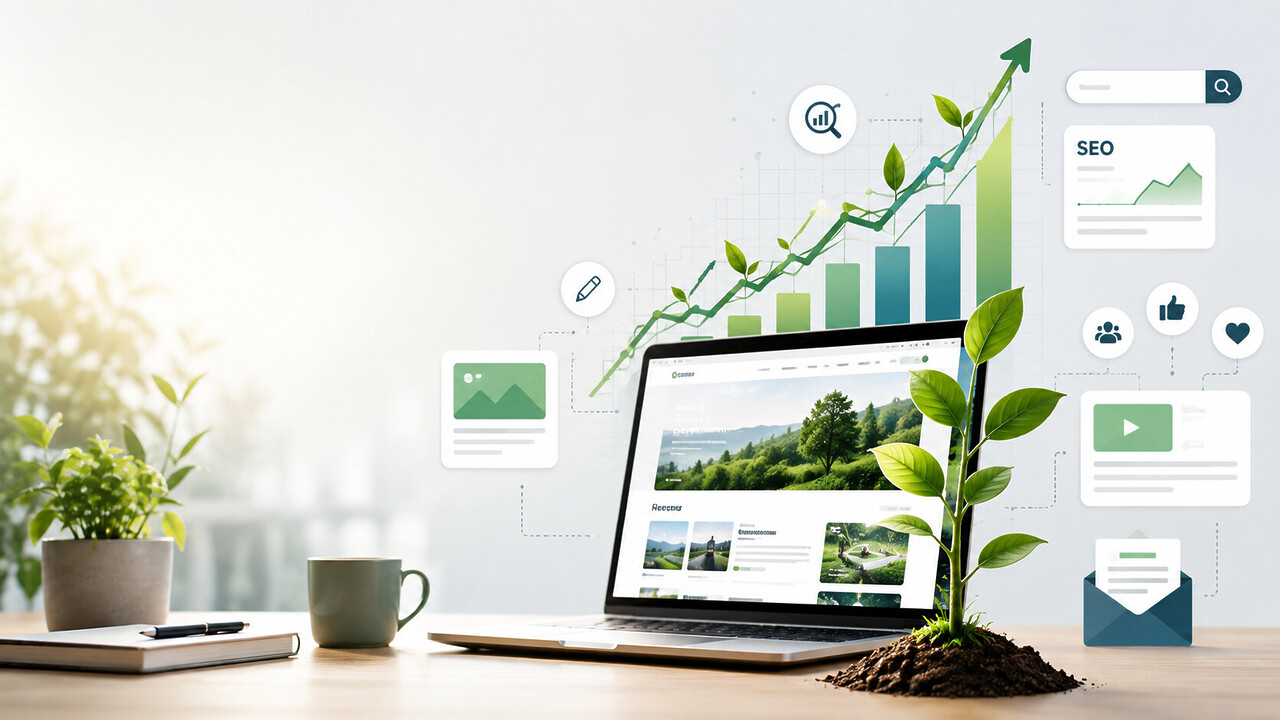
However, this also increases competition. After all, it is no longer just the neighbor to the left and right who can steal potential customers, but virtually the whole world. Data-driven marketing is therefore essential in an increasingly digitized market to both attract new customers and retain existing customers in the long term.
Data-driven Marketing: Successful Customer Loyalty through Personalized Advertising
Automated Marketing for Data Collection
Anyone who wants to work with data-driven marketing must first acquire the right platforms to be able to collect relevant data at all. Legally, this is possible via a so-called CDP Marketing Cloud. The data platform contained in this cloud collects data by generating so-called leads, mostly based on a customer’s email address, which are fed with data over time. In this way, individual and personal profiles are created for each individual customer and their interests, laying the foundation for data-driven marketing.
Analyzing the Data
Collecting data is one aspect; the next step is to work with this data: it must be analyzed. The necessary technical solutions for this are also available in the aforementioned cloud and are summarized under Marketing Automation. Marketing automation simplifies the collection, analysis, and execution of marketing strategies.
Advantages of Data-driven Marketing
The advantages of data-driven marketing are quite obvious. Such marketing is more personalized and individual. Customers are permanently bound to the company with the help of such marketing, as they see both their interests and needs met by the advertising measures. Long-term customer loyalty is essential for a successful company.
Furthermore, with the help of data-driven marketing, new customers can also be more easily identified and persuaded to make a purchase decision. Data-driven marketing makes it possible to analyze the needs and interests of one’s target group in more detail and to focus precisely on these. Through further analysis tools, marketing strategies can also be analyzed for their prospects of success and, if necessary, adjusted.
Data-driven marketing can also be used to more easily direct the interest of potential or existing customers to new or different products. Based on an evaluation of interest, new products or changes in the offering can be efficiently introduced to the right target group, which significantly increases the sales opportunities of the respective products. This allows marketing strategies to be more easily and efficiently aligned with the target group immediately and are therefore more promising.
Data-driven marketing can also focus on so-called real-time marketing, which allows communication between the company and the customer to take place as simultaneously as possible, thus increasing customer satisfaction. Through real-time marketing, customers are encouraged in their purchasing desires and gently guided towards a purchase decision.


 DE
DE