
In a world characterized by rapid changes, constant challenges, and perpetual competition, the topic of longevity has taken on a new dimension. It is no longer merely about the endeavor to reach an old age. Rather, the quality of these additional years of life comes to the fore, especially in the context of the working world. In this regard, maintaining and promoting performance as well as effective strategies for stress management play a central role.
Longevity in Relation to Performance in Everyday Work + Stress Management
The modern working world demands more from us than ever before: flexibility, constant availability, and high productivity. In such an environment, it is essential to develop methods and techniques that support not only physical but also psychological health. This involves developing a deep understanding of the connection between body and mind and integrating this knowledge into daily life. By balancing professional demands and personal well-being, a foundation for improved quality of life and thus for longevity in the work context can be created.
In the following chapters, we will delve into various aspects of longevity in professional life. From nutritional strategies that promote mental clarity, to physical activities that enhance both health and work performance, to stress management techniques and the importance of a balanced work-life balance – all these topics contribute to painting a holistic picture for a long life (longevity) in today’s working world. The goal is to create awareness that long-term professional success and personal well-being go hand in hand, and that investing in one’s own health and mental strength is the best prerequisite for a long, fulfilling professional life.

Definition of Longevity
The term „longevity“ generally refers to the duration of an individual’s life or lifespan. In a broader context, longevity encompasses not only the number of years lived but also the quality of those years. It is about leading a long life with good health, vitality, and mental clarity.
More recently, the concept of longevity has expanded to include aspects such as healthy aging, prevention of age-related diseases, preservation of physical and mental performance, and well-being in old age. This comprehensive approach considers not only medical and biological factors but also lifestyle, nutrition, exercise, psychological balance, and social interactions, all of which can contribute to longevity.
In a professional context, longevity means the ability to remain productive, engaged, and healthy in working life over a long period. This involves balancing work and private life, reducing stress, and promoting practices that support physical and mental health.

Introduction to Longevity: Connection between Work Performance and Lifespan
Longevity in professional life is more than just physical health; it also involves maintaining mental sharpness and motivation over many years. This section introduces the concept of longevity and explains how an increased life expectancy brings new challenges and opportunities for the working world. It examines how lifestyle habits, working conditions, and personal well-being interact to influence work performance over long periods.

Become more visible on Google & Social Media?
In a free strategy consultation for data-driven online marketing, we uncover your untapped potential, review any existing ad accounts if necessary, examine your SEO ranking and visibility, and determine which strategy is appropriate for your budget and which active measures will lead to more inquiries or sales.

✅ More visibility & perception through targeted placement
✅ More visitors > prospects > customers > revenue
✅ Reach target groups scalably with SEA
✅ Act and grow sustainably with SEO
🫵 Maximum success with our hybrid strategy
💪 More than 15 years of experience across industries in over 1,000+ projects demonstrable!






Stress Reduction Strategies for Improved Longevity
Stress management is crucial for maintaining both mental and physical health. This section discusses various stress management techniques, such as time management, relaxation techniques, and cognitive restructuring, which can help minimize professional stress and thus contribute to a longer and healthier life.

Nutrition: Eating for Performance
A balanced diet plays a central role in mental performance and general well-being. This section focuses on foods that nourish the brain, increase concentration, and reduce stress. Practical tips for a healthy diet in a hectic work environment are provided.

Movement, Sports, Fitness, and Activity: Keys to Maintaining Employability
Regular physical activity is crucial for maintaining physical and mental health. This section highlights the importance of exercise and offers suggestions on how to stay active despite a sedentary professional life, including short exercises at the workplace and regular breaks to increase blood circulation.

Sleep and Recovery: Indispensable Factors for Longevity + More Productivity
Good sleep is fundamental for brain recovery and maintaining work performance. This section discusses the effects of sleep deprivation and offers strategies to improve sleep quality, including creating a quiet sleep environment and establishing a consistent bedtime.

Mental Fitness and its Importance for Longevity in Professional Life
Mental fitness is just as important as physical fitness. This section describes how cognitive exercises and challenges can stimulate the brain and enhance mental performance. Techniques for stress reduction and promoting mental well-being are also presented.

Work-Life Balance: Key to Longevity
Finding a healthy work-life balance is crucial for long-term work performance and personal well-being. This section offers practical advice on how to establish and maintain a balance between professional and private life in order to avoid overwork and burnout.

The Role of Social Relationships in Stress Management
Social support from colleagues and friends in the workplace can be an important resource for coping with stress. This section discusses how positive relationships with colleagues can be built and maintained and how they contribute to overall satisfaction and longevity in the profession.

Modern Work Environments and Their Effects
The design of the workplace can have a significant influence on the health and performance of employees. This section examines how ergonomic office design and innovative work environments can help promote physical health and mental performance.

Summary and Outlook: Integrating Longevity into Everyday Work Life
This concluding section summarizes the key findings and provides an outlook on how the principles of longevity can be integrated into everyday working life. Strategies for long-term planning with regard to health and performance in professional life are presented.

Is work harmful to aging or does it accelerate it?
Whether work accelerates aging or not depends on various factors, including the type of work, working conditions, work-life balance, and individual attitude toward work.
- Type of Work: Certain occupations associated with high stress, physical risks, or toxic exposures can potentially accelerate aging and lead to health problems.
- Working Conditions: Long working hours, high stress, poor ergonomic conditions, and lack of social support in the workplace can have a negative impact on health and well-being.
- Stress and Workload: Chronic stress, which is often associated with demanding working conditions, can lead to various health problems linked to accelerated aging, such as cardiovascular diseases, sleep disorders, and a weakened immune system.
- Work-Life Balance: A poor work-life balance can lead to constant exhaustion and increase the risk of long-term health problems.
- Positive Aspects of Work: On the other hand, work that is perceived as fulfilling and rewarding can have positive effects on health. It can provide meaning, social interaction, mental challenge, and a sense of achievement, all of which contribute to well-being and quality of life.
- Individual Factors: The individual response to work stress and the ability to cope with challenges also play a role. Some people can handle stress more effectively or find a source of joy and fulfillment in their work.
Overall, it is important to find a healthy balance and to acquire strategies for coping with stress. Employers can also contribute to the health and longevity of workers by creating healthy working conditions and promoting a good work-life balance.

General Topics on Longevity – Body, Mind & Soul
The topic of longevity is broad and encompasses many areas, some of which are less obvious but nevertheless play an important role. Here are some additional aspects that are important for a comprehensive understanding of longevity:
- Psychological Resilience: The ability to cope with stress and life changes is an important factor for longevity. Resilient individuals adapt better to challenges and recover more quickly from setbacks.
- Meaning and Goals in Life: A sense of purpose and direction in life can promote longevity. People who pursue goals and see themselves as part of a larger whole tend to make healthier life decisions.
- Chronic Diseases and Prevention: The prevention and management of chronic diseases such as heart disease, diabetes, and cancer are crucial for longevity. Regular preventive check-ups and health-conscious behavior can reduce the risk of these diseases.
- Mental Health and Cognition: Maintaining mental health and cognitive function is an important aspect of longevity. Activities that stimulate the brain, such as reading, learning, and social interaction, can help preserve cognitive abilities.
- Environmental Factors: The quality of the environment in which one lives, including air and water quality, noise pollution, and access to green spaces, can also affect longevity.
- Technological Advances in Medicine: The development of new medical treatments and technologies can increase life expectancy by improving the treatment and prevention of diseases.
- Cultural and Social Influences: Different cultures and societies have different approaches and beliefs regarding age and health, which can influence attitudes toward longevity and the associated practices.
- Financial Security: Financial stability and the ability to plan for old age can reduce stress and enable access to better healthcare services, which in turn positively influences longevity.
- Ethics and Philosophy of Longevity: Questions about the meaning and ethical aspects of a potentially much longer life are increasingly relevant, particularly in connection with anti-aging research and possible social implications.
- Global and Demographic Trends: Increasing life expectancy has far-reaching effects on societies worldwide, including demographic shifts, old-age provision, and healthcare systems.
Overall, longevity is a multifaceted concept that requires an integration of physical, mental, and social health and extends across individual, community, and global levels.

Well-Known Personalities (People)
Various personalities from science, medicine, technology, and other fields have intensively engaged with the topic of longevity. Some of the best known are:
- David Sinclair: An Australian biologist, known for his research in the field of genetics and aging research, particularly regarding the role of sirtuins and resveratrol in the aging process.
- Andrew Huberman: He is a renowned neuroscientist and professor at Stanford University. His research focuses on brain functions and plasticity. Although he is not directly known as a longevity specialist, Huberman deals with topics closely connected to health and well-being, such as stress management, sleep, brain health, and cognitive performance. His work provides important insights into the mechanisms that promote well-being and mental health, which is indirectly also relevant for understanding longevity.
- Bryan Johnson: He is an entrepreneur and founder of Kernel, a company specializing in neurotechnology, and of OS Fund, which invests in scientific breakthroughs that promise to extend and improve human life. Johnson is known for his interests in topics such as biotechnology, artificial intelligence, and longevity. His work and investments in these areas aim to improve the human lifespan and quality of life through scientific and technological advances.
- Aubrey de Grey: An English gerontologist known for his thesis that medical technology could one day reverse or significantly slow aging. He is a co-founder of the SENS Research Foundation, which is dedicated to researching and developing anti-aging therapies.
- Elizabeth Blackburn: A Nobel laureate known for her research in the field of telomeres and telomerase, which contributes significantly to the understanding of cellular aging and longevity.
- Valter Longo: An Italian biochemist, known for his research on fasting, diet, and longevity, particularly in connection with fasting-mimicking diets and their effects on health and lifespan.
- Peter Attia: A physician and podcast host who specializes in the science of longevity, nutrition, and metabolic health.
- Ray Kurzweil: An American inventor and futurist who deals with topics such as artificial intelligence, health technology, and longevity. He has written several books on these topics.
- Nir Barzilai: An Israeli-American scientist known for his studies on the genetics of aging and methods to extend lifespan.
- Dan Buettner: A researcher and author known for his work on „Blue Zones,“ areas of the world where people live significantly longer, and the lifestyle factors that contribute to this longevity.
These individuals contribute significantly through their research and work to the growing understanding of longevity and have developed various theories and approaches to improve lifespan and quality of life. Their work ranges from fundamental biological research to practical lifestyle recommendations.

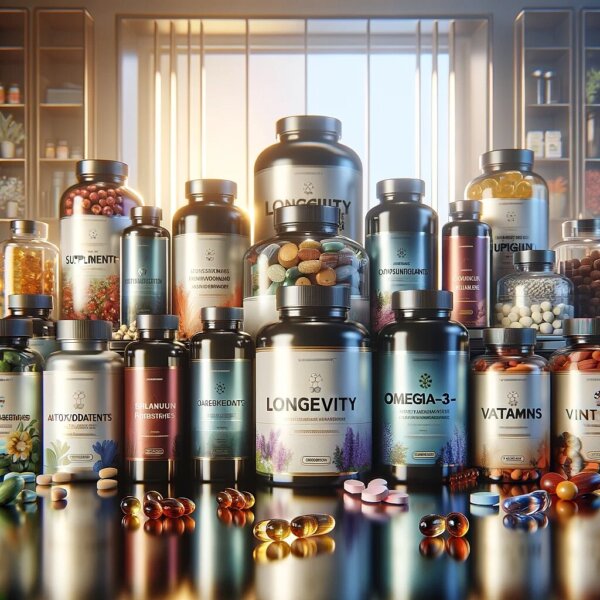
Longevity Supplements: Nutritional supplements to promote longevity
The idea behind nutritional supplements to promote longevity is based on the assumption that certain vitamins, minerals, and other substances can help improve health and thus potentially extend life. While a healthy diet forms the basis for good health, many people see nutritional supplements as a way to fill potential nutrient gaps or achieve certain health benefits. However, it is important to emphasize that nutritional supplements should not be considered a substitute for a balanced diet or a healthy lifestyle, and their effectiveness and safety depend on various factors, including individual health conditions.
Here is a list of the 10 most common nutritional supplements often discussed in connection with longevity:
- Resveratrol: An antioxidant found in grapes and red wine, valued for its potential anti-aging properties.
- Omega-3 fatty acids: Known for their anti-inflammatory properties and positive effects on the heart and brain.
- Coenzyme Q10 (CoQ10): A substance found in every cell of the body that plays an important role in energy production.
- Vitamin D: Important for bone health, the immune system, and possibly also for longevity.
- Magnesium: A mineral that plays a role in many bodily processes and is important for heart health, muscle and nerve function.
- Curcumin (from turmeric): A powerful antioxidant and anti-inflammatory agent.
- Green tea extract: Contains antioxidants such as EGCG, which are associated with numerous health benefits.
- Probiotics: Beneficial bacteria that support gut health and may strengthen the immune system.
- Astragalus: A traditional Chinese herb valued for its potential immune-boosting and life-extending properties.
- B vitamins: A group of vitamins that are important for energy production and may support cognitive function and heart health.
Before taking dietary supplements, it is advisable to consult a health professional, especially if you are already taking medication or have certain health conditions.
Here is a comparison table that presents the benefits and advantages of the 10 dietary supplements mentioned:
| Dietary Supplements | Benefits | Advantages |
|---|---|---|
| Resveratrol | Antioxidant effect | Can prevent cell damage and has potential anti-aging effects |
| Omega-3 fatty acids | Support for heart and brain | Reduces inflammation and improves cognitive functions |
| Coenzyme Q10 (CoQ10) | Energy production in cells | Supports heart health and combats oxidative damage |
| Vitamin D | Promotion of bone health | Strengthens the immune system and supports muscle function |
| Magnesium | Involved in numerous bodily processes | Important for heart health, muscle and nerve functions |
| Curcumin (from turmeric) | Antioxidant and anti-inflammatory | Can reduce chronic inflammation and promote brain function |
| Green tea extract | Rich in antioxidants | Supports heart health and can help with weight management |
| Probiotics | Promotion of gut health | Can strengthen the immune system and support digestive health |
| Astragalus | Traditional Chinese herb | Potential immune-strengthening and life-extending properties |
| B vitamins | Support energy production | Important for cognitive functions and heart health |
Please note that the effectiveness and safety of dietary supplements can depend on individual factors and that this table provides general information. It is always advisable to consult a health professional before taking dietary supplements.
All information on dietary supplements (supplements) without guarantee and liability!
FAQ – 10 most common questions & answers about longevity
Since your question is formulated very generally, I will interpret it in the context of the topic „longevity“ and summarize the 10 most common questions with answers in this area:
- What is meant by longevity?
- Longevity refers to the lifespan and quality of life of an individual. It is about leading a long life with good health and mental clarity.
- Can one influence one's own longevity?
- Yes, lifestyle factors such as diet, exercise, stress management, and social connections can have a major influence on longevity.
- What role does genetics play in longevity?
- Genetics plays a role, but lifestyle and environmental factors are also crucial. Many aspects of longevity can be influenced by conscious decisions.
- How important is nutrition for longevity?
- Very important. A balanced diet rich in fruits, vegetables, whole grains, and healthy fats can promote health and extend lifespan.
- Can dietary supplements promote longevity?
- Dietary supplements can be useful for addressing specific nutrient deficiencies, but they do not replace the benefits of a balanced diet.
- How does exercise influence longevity?
- Regular physical activity improves heart health, strengthens bones and muscles, reduces the risk of chronic diseases, and contributes to mental well-being.
- Is stress always harmful to longevity?
- Chronic stress can be harmful, as it can lead to health problems. Learning stress management techniques is therefore important for a long, healthy life.
- Does work-life balance have an influence on longevity?
- Yes, a good work-life balance helps reduce stress and promotes general well-being, which in turn can positively influence longevity.
- Can social relationships influence longevity?
- Strong social bonds are associated with better health and a longer lifespan. They provide emotional support and can contribute to a more fulfilling life.
- How does sleep affect longevity?
- Good sleep is crucial for health. It influences physical recovery, mental performance, and the immune system, all of which are factors for increased lifespan.




 DE
DE