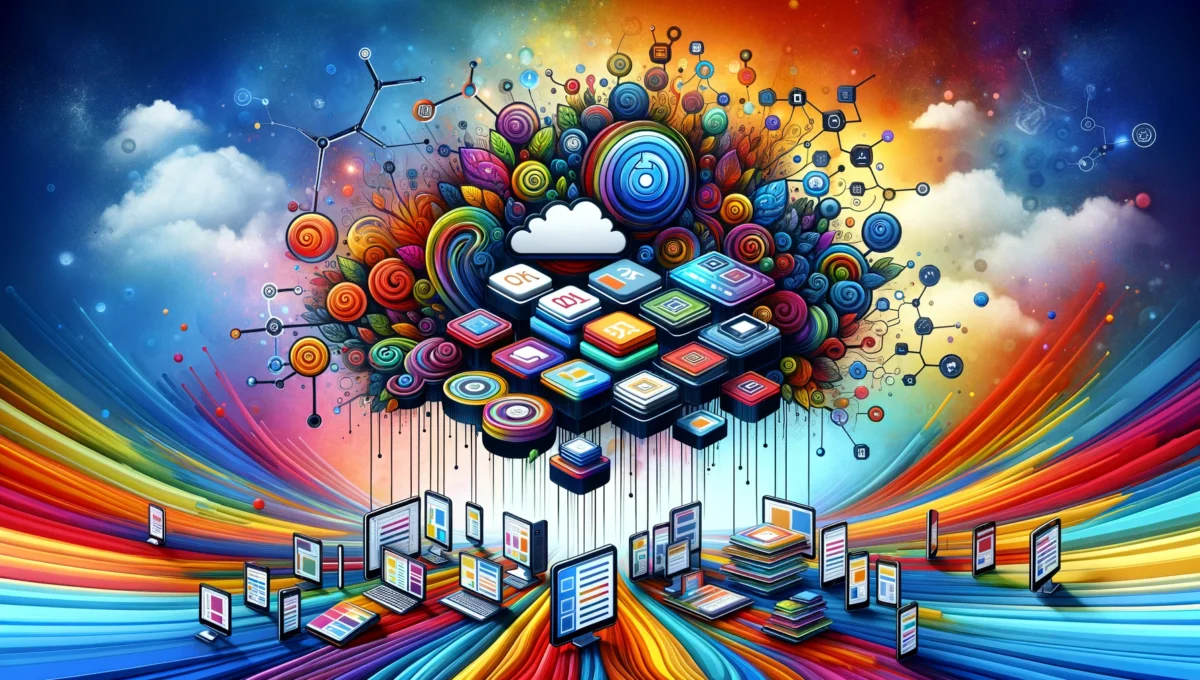
A Headless Content Management System (CMS) is a type of content management system that focuses on the pure storage, management, and delivery of content, without a fixed connection to a specific output form or presentation layer, such as a website or a mobile application. In contrast to traditional CMS, which are usually closely linked to the display of content (i.e., they deliver content along with instructions on how it should be visually designed or arranged), a Headless CMS separates the „head“ (the presentation layer) from the „body“ (the content).
This separation allows developers to retrieve content via an API (Application Programming Interface) and display it in any frontend frameworks or platforms. This approach offers flexibility in the development and maintenance of digital products, as it facilitates the reuse of content across various channels and devices.
Some advantages of a Headless CMS are:
- Flexibility: Since the content is separated from the presentation, it can be easily reused across different platforms and devices.
- Future-proof: By decoupling content from presentation technology, developers can introduce new technologies and frameworks without having to redesign the CMS itself.
- Scalability: Headless CMS can usually be easily scaled as they are optimized for delivering content via APIs.
- Better control for developers: Since content is delivered via APIs, developers have more control over how content is displayed and used.
A disadvantage can be that creating frontends that consume the content requires additional development, as there are no pre-built themes or templates as is common with traditional CMS. This means that using a Headless CMS may require more technical expertise.
More on this in the rest of the article
Headless CMS – Explanation, Function, Comparison, Architecture & WordPress Usage
The use of a Headless Content Management System (CMS) offers a modern approach to content management and delivery, differing from traditional CMS by separating the backend (content management) and frontend (content presentation). Here are the core aspects of a Headless CMS summarized, highlighted by the three most important points:
Core Aspects of a Headless CMS
- Separation of Content and Presentation:
- A Headless CMS focuses on pure content management without direct coupling to a specific presentation method or frontend technology. This separation allows for greater flexibility in how content is presented across various platforms and devices.
- Access via APIs:
- Content is made accessible via APIs (mostly REST or GraphQL), which facilitates integration with any frontend technologies such as React, Vue, Angular, or native mobile apps. This supports a multi-platform strategy and enables the development of omnichannel experiences.
- Advantages of Decoupling:
- Flexibility in Development: Developers can leverage the latest frontend technologies and frameworks to create tailored user experiences without being constrained by backend technologies.
- Optimized Performance and Security: By separating frontend and backend, security risks can be minimized, and page loading speeds can be improved through optimized frontend technologies.
- Easier Scalability: A headless CMS can be scaled more easily because content delivery occurs via APIs, allowing for flexible adaptation to increasing demands.
The three most important points:
- Technological Flexibility: A headless CMS allows developers to use any frontend framework or technology for creating user interfaces, which promotes creative freedom and the use of current web technologies.
- Omnichannel Delivery: Content can be managed through a single platform and seamlessly delivered across various channels—from websites to mobile apps to IoT devices—enabling consistent user experiences across all touchpoints.
- Future-Proofing: By decoupling content and presentation and using standardized APIs, a headless CMS is better equipped to keep pace with future technological developments and implement adaptations or extensions efficiently.
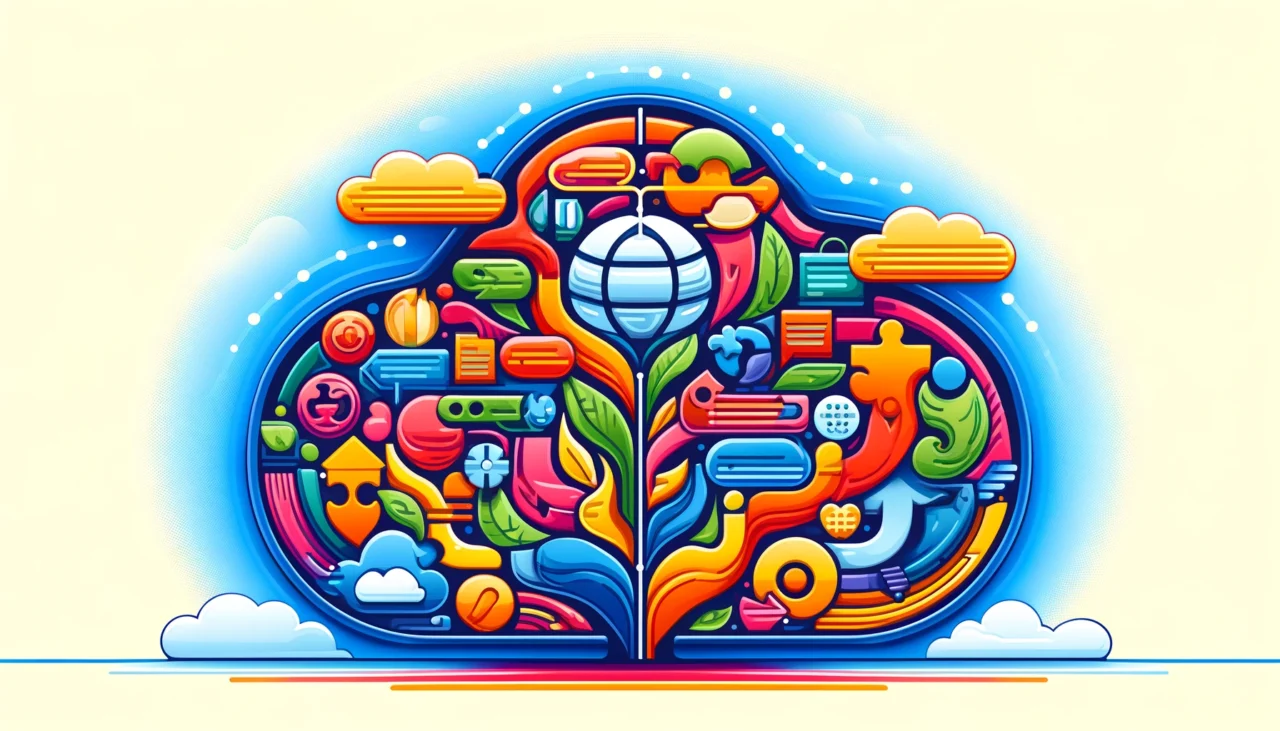
Headless CMS: Consistent Separation of Content & Layout
The consistent separation of content and layout through a Headless Content Management System (CMS) means that content (such as texts, images, videos, etc.) is managed and stored independently of its design or the way it is presented to the end-user. This separation is often described as the decoupling of „head“ (frontend, i.e., the layout and presentation layer) and „body“ (backend, i.e., content storage and management). Here are some specific points that illustrate this separation:
- Content Management without Design Specifications: In a Headless CMS, content is stored in a pure, presentation-independent form. This means that when creating or editing content, no assumptions are made about the layout or design. Content is captured in a structured form that defines its meaning and purpose, but not its appearance.
- API-based Content Delivery: Content is delivered via an API (Application Programming Interface). Developers can query this API to retrieve content and display it in any presentation layer or platform. This approach enables flexible content usage across websites, mobile apps, wearables, IoT devices, and more.
- Frontend Freedom: Since the Headless CMS makes no assumptions about the presentation of content, developers have the freedom to use any technologies, frameworks, or libraries to design the frontend. This allows for a customized user experience and the use of the latest web technologies without restrictions imposed by the CMS.
- Content Reusability: The separation allows content to be easily reused in different contexts and on different platforms without having to be adapted or recreated for each new application or layout. The same content can thus be used for a website, a mobile app, and a digital billboard without additional adaptation effort.
- Agility and Team Independence: The separation of content and layout also promotes the agility and independence of teams. While the content team focuses on creating, managing, and optimizing content, the development team can simultaneously work on presenting this content attractively in various frontends. This reduces dependencies and accelerates development cycles.
In short, the consistent separation of content and layout in a headless CMS offers high flexibility in content management and presentation, enabling companies to react quickly and efficiently to changing technological trends and user expectations.
Become more visible on Google & Social Media?
In a free strategy consultation for data-driven online marketing, we uncover your untapped potential, review any existing ad accounts if necessary, examine your SEO ranking and visibility, and determine which strategy is appropriate for your budget and which active measures will lead to more inquiries or sales.

✅ More visibility & perception through targeted placement
✅ More visitors > prospects > customers > revenue
✅ Reach target groups scalably with SEA
✅ Act and grow sustainably with SEO
🫵 Maximum success with our hybrid strategy
💪 More than 15 years of experience across industries in over 1,000+ projects demonstrable!






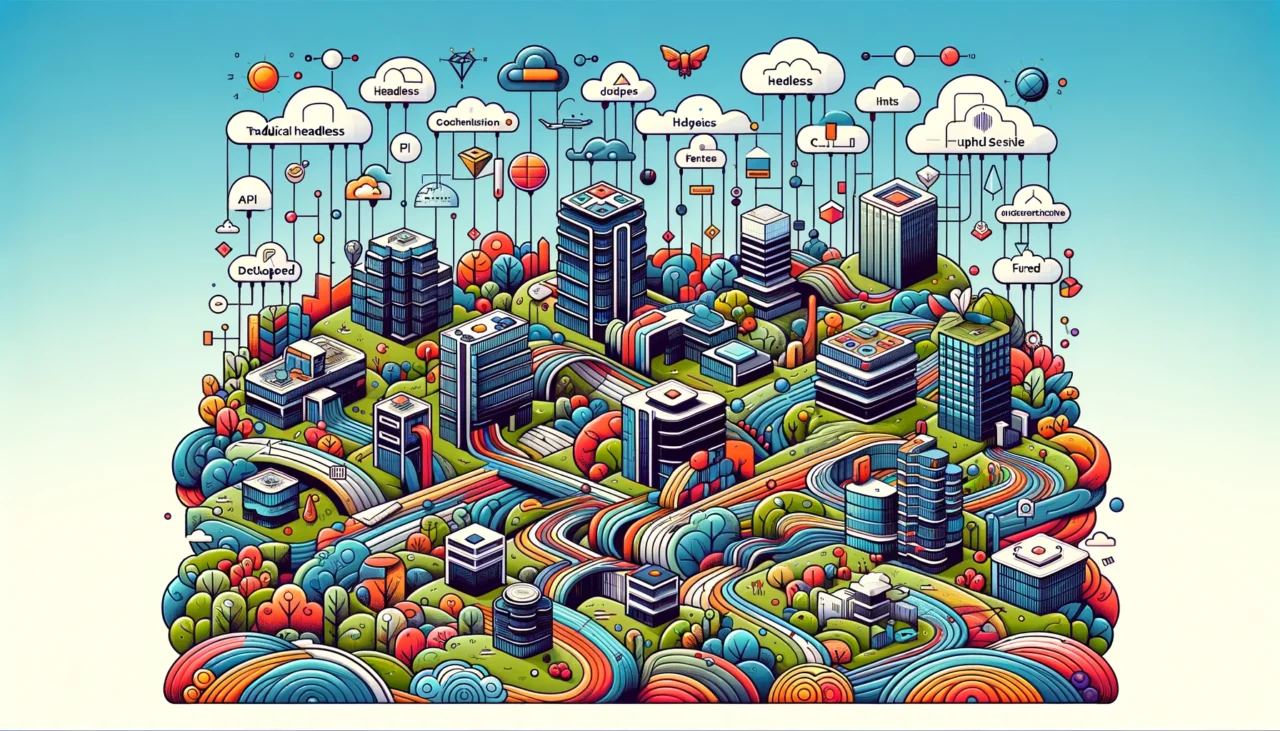
Different Architectures of Headless
The architecture of a Headless Content Management System (CMS) lays the foundation for how content is managed, stored, and made available for display. Different architectures offer various approaches and solutions to meet the requirements of specific use cases. Here are some of the common architectural types of Headless CMS:
1. Traditional Headless CMS
- Characteristics: A traditional Headless CMS focuses exclusively on the backend management of content and its delivery via APIs. It does not offer pre-built frontend templates or design elements.
- Areas of Application: Ideal for projects where content needs to be used consistently across multiple platforms, such as websites, mobile apps, and IoT devices.
2. Decoupled CMS
- Characteristics: A Decoupled CMS also separates content from presentation, but unlike a pure Headless CMS, it offers an optional frontend layer that can be used for content display. This flexibility allows developers to either use the provided frontend tools or create their own presentation layers.
- Use Cases: Suitable for projects that desire flexibility in content presentation but also want to occasionally fall back on pre-built presentation components.
3. API-First Headless CMS
- Characteristics: An API-First Headless CMS focuses on a robust, well-documented API through which content can be queried and published. These systems are designed from the ground up to interact with various frontends and services.
- Use Cases: Ideal for companies that operate a strong ecosystem of different digital products and require seamless integration between them.
4. Git-based Headless CMS
- Characteristics: In a Git-based headless CMS, content is stored in a Git repository. This enables versioning, branching, and other Git functionalities for content management tasks. Content changes are recorded as commits, allowing for close integration with development workflows.
- Use Cases: Particularly suitable for teams that already use Git for their development processes and desire close collaboration between developers and content creators.
5. Cloud-native Headless CMS
- Characteristics: Cloud-native headless CMS are specifically designed for the cloud and leverage the benefits of cloud infrastructure, such as scalability, flexibility, and high availability. They often offer additional services like automatic scaling, security features, and integrations with other cloud services.
- Use Cases: Perfect for projects that have a global reach, need to handle high loads, or require close integration with other cloud services.
Each of these architectures offers unique advantages and can be chosen based on the specific requirements of the project or organization. The choice of the right type depends on factors such as the desired level of control over the frontend, the need for integration with other systems, and the preference for specific technologies or workflows.
Advantages & Disadvantages of Headless CMS
| Advantages | Disadvantages |
|---|---|
| 1. Flexibility in presentation: Content can be used across various platforms. | 1. Higher development effort: The design and development of frontends require additional resources. |
| 2. Future-proofing: Enables the easy integration of new technologies and trends. | 2. Complexity: Can be overdimensioned for smaller projects or teams without sufficient technical expertise. |
| 3. Scalability: Easier to scale through optimization for content delivery via APIs. | 3. Cost: Can be more expensive to acquire and maintain than traditional CMS solutions. |
| 4. Better performance: Faster load times through more efficient content delivery. | 4. Fewer „out-of-the-box“ features: Pre-made designs and features are not directly available. |
| 5. Improved security: Lower risk of web attacks through separation of content management and output. | 5. Integration effort: The need to integrate additional systems or services can be complex. |
| 6. Simpler content reuse: Content can easily be used across various channels and devices. | |
| 7. Central content management: Simplifies the management and updating of content. | |
| 8. API-first approach: Enables seamless integration with other systems and services. | |
| 9. Personalization and targeting: Facilitates the delivery of targeted content for different user groups. | |
| 10. Independence of development teams: Frontend and backend teams can work independently of each other, which accelerates development cycles. |
This table provides a clear overview of the strengths and challenges of using a headless CMS. The decision for or against a headless CMS should be made based on the specific requirements and resources of the respective project or company.
Headless CMS or Traditional CMS – Differences at a Glance
| Feature / CMS Type | WordPress | Joomla | Wix | Squarespace | Jimdo | Other traditional CMS | Headless CMS |
|---|---|---|---|---|---|---|---|
| Flexibility in development | High (with development skills) | High (with development skills) | Limited (based on Wix platform) | Limited (based on Squarespace platform) | Limited (based on Jimdo platform) | Varies, mostly high with skills | Very high |
| API access / integrations | Available via plugins | Available via extensions | Limited, some APIs | Some built-in APIs | Some built-in APIs | Varies, often via extensions | Native API support |
| Design and development approach | Template-based, customizable with development | Template-based, customizable with development | Drag-and-drop, limited customization | Drag-and-drop, limited customization | Drag-and-drop, limited customization | Mostly template-based and customizable | Separation of content and presentation |
| Frontend freedom | Medium (depending on theme and plugins) | Medium (depending on theme and extensions) | Low | Low | Low | Varies | Very high |
| Use cases | Blogs, corporate websites, e-commerce (with plugins like WooCommerce) | Corporate websites, portals, e-commerce (with extensions) | Personal websites, small business websites | Personal websites, portfolios, small to medium-sized business websites | Personal websites, small business websites | Varies, often specific to the platform | Multi-platform projects, mobile apps, IoT, and more |
| Content reusability | Limited without special plugins | Limited without special extensions | Low | Low | Low | Varies | Very high |
| Development speed | Fast for standard projects (thanks to many available themes and plugins) | Fast for standard projects | Fast (thanks to user-friendly drag-and-drop editor) | Fast (thanks to user-friendly drag-and-drop editor) | Fast (thanks to user-friendly drag-and-drop editor) | Varies | Can be slower, as frontend must be developed from scratch |
| Future-proofing | Medium (depending on community and further development) | Medium (depending on community and further development) | Low (platform dependency) | Low (platform dependency) | Low (platform dependency) | Varies | High due to technology independence |
This table shows that traditional CMS like WordPress, Joomla and the other platforms mentioned have their strengths in user-friendliness and fast development time, especially for standard web projects. They offer a wide range of templates and extensions that enable even users without extensive technical knowledge to create and manage websites.
Headless CMS, on the other hand, offer greater flexibility and future-proofing, especially in projects that require a multi-platform presence or have special requirements for the presentation and use of content. Their strengths lie in seamless integration, high adaptability and independence from specific technologies or platforms.
The different ecosystems with ***JS
ReactJS and Next.js play an important role in modern web development and can be used excellently in connection with headless CMS in particular to create dynamic and high-performance web applications. Here is an overview of how they fit into the ecosystem of a headless CMS and what advantages they offer.

ReactJS
- What is ReactJS? ReactJS is a JavaScript library for creating user interfaces that is developed and maintained by Facebook. It enables developers to create and manage reusable UI components, which facilitates the development of single-page applications (SPAs) and interactive web applications.
- Integration with Headless CMS: React can serve as the „frontend“ in a headless architecture, with content retrieved via APIs from a headless CMS and then displayed within React components. This allows dynamic content updates and interactivity without having to reload the page.
- Advantages: React’s declarative approach simplifies the design and development of complex user interfaces. It improves the user experience through fast response times and smooth interaction. React is also widely used and supported by a large developer community, which facilitates the availability of resources and the solution of challenges.

Next.js
- What is Next.js? Next.js is a React framework that offers additional functionalities such as server-side rendering (SSR), static site generation (SSG), and automatic code splitting. It is designed to simplify the development of performant and optimized web applications.
- Integration with Headless CMS: Next.js is excellently suited for creating websites that retrieve content from a Headless CMS. Through SSR and SSG, pages can be preloaded, which significantly reduces loading times and is also SEO-friendly. Content is retrieved from a Headless CMS during the build process or on-demand and integrated into the React frontend.
- Advantages: Web applications developed with Next.js benefit from fast loading times, improved SEO, and a better user experience. It supports developers with a structured basis for their projects, including routing and support for environment variables. Furthermore, it promotes best practices such as preloading page content.
ReactJS and Next.js complement the use of a Headless CMS by providing a powerful and flexible frontend layer that seamlessly integrates with content retrieved via APIs. They enable the development of modern web applications that excel not only in user experience but also in performance and scalability. While ReactJS provides the foundation for creating interactive user interfaces, Next.js extends these capabilities with important features such as SSR and SSG, making the development of efficient applications and the resulting applications faster and more SEO-friendly.
There are other alternatives to ReactJS and Next.js for developing modern web applications, especially in combination with Headless CMS. These alternatives offer different approaches, features, and advantages, depending on the specific requirements and preferences of the development team. Here are some notable options:

Vue.js
- Vue.js is a progressive JavaScript framework for building user interfaces. Similar to React, it enables the development of interactive web applications through a reactive and component-based architecture. Vue is characterized by its simplicity and flexibility and is often praised for its gentle learning curve.
- Integration with Headless CMS: Vue can be seamlessly integrated with a Headless CMS to display dynamic content in web applications. It supports both server-side and client-side rendering.

Nuxt.js
- Nuxt.js is a Vue.js-based framework that offers automatic code splitting, server-side rendering, and static site generation. It is known for its conventions and the resulting simplification of development processes.
- Integration with Headless CMS: Nuxt.js is ideal for projects that use Vue.js and retrieve content from a Headless CMS. It improves the SEO capability and performance of the web application through SSR and SSG.

Angular
- Angular is a comprehensive framework supported by Google for developing single-page web applications. It offers a rich set of features, including two-way data binding, comprehensive routing, modular structure, and dependency injection.
- Integration with Headless CMS: Angular can be used with a headless CMS to integrate dynamic content. It is particularly well-suited for complex applications and enterprises seeking a complete solution with strong community support.

Svelte
- Svelte differs from other frameworks in its approach, where most of the work is shifted to the build step. Instead of interpreting code for reactivity in the browser, Svelte generates highly optimized, imperative code at compile time that directly executes the update logic.
- Integration with Headless CMS: Svelte can be used to create powerful, fast web applications that retrieve content from a headless CMS. It offers an innovative alternative for developers looking for an efficient, lightweight solution.

Gatsby
- Gatsby is a modern framework for building websites and web applications, built on React. It enables the development of extremely fast websites through static page generation and optimized image processing.
- Integration with Headless CMS: Gatsby is particularly well suited for creating static websites that pull content from a headless CMS. It offers extensive possibilities for optimizing page load times and SEO.
Each of these frameworks and libraries has its own strengths and areas of application. The choice depends on the specific requirements of the project, the preferences of the development team, and the desired features.
Strapi with Gatsby Integration:

Comparison of Headless Ecosystems
| Framework/Library | Type | Key Features | SSR Support | SSG Support | Typical Use Cases | Learning Curve | Community Support | Performance Optimizations | International Applications |
|---|---|---|---|---|---|---|---|---|---|
| ReactJS | Library | Component-based, JSX, Virtual DOM | No (with Next.js) | No (with Gatsby) | Interactive UIs, SPAs | Moderate | Very high | High (with third-party solutions) | Good (with i18next or similar) |
| Next.js | Framework | SSR, SSG, API Routes, Image Optimization | Yes | Yes | Universal web applications, SEO-friendly websites | High | Very high | Very high (built-in) | Very good (built-in support) |
| Vue.js | Framework | Reactive components, directives, Vue CLI | No (with Nuxt.js) | No (with Nuxt.js) | Interactive UIs, SPAs | Low | High | High (with third-party solutions) | Good (with vue-i18n or similar) |
| Nuxt.js | Framework | SSR, SSG, Automatic code splitting | Yes | Yes | Universal web applications, SEO-friendly websites | Moderate to high | High | Very high (built-in) | Very good (built-in support) |
| Angular | Framework | Type support, two-way binding, Angular CLI | Yes | No | Large enterprise applications, SPAs | High | High | High (built-in) | Good (with Angular i18n or similar) |
| Svelte | Compiler | No virtual DOM, reactive updates | Yes | Yes | Interactive UIs, SPAs, fast, lightweight applications | Low | Moderate | Very high (built-in) | Moderate (with svelte-i18n or similar) |
| Gatsby | Framework | SSG, plugin ecosystem, GraphQL data layer | No | Yes | Static websites, blogs, portfolio sites | Moderate | High | Very high (built-in) | Good (with plugin support) |
Advanced Aspects:
- Learning Curve: Describes the estimated effort and time required to effectively use the tool. „Low“ indicates an easier entry barrier, while „High“ means that more time and effort are needed for learning.
- Community Support: Indicates the size and activity of the developer community. This is an indicator of the availability of resources, support, and third-party tools.
- Performance Optimizations: Evaluates the extent to which the framework or library offers built-in functions to improve runtime and loading performance.
- International Applications: Shows how well the tool supports the development of multilingual and region-adapted applications.
This more detailed table allows for the comparison and evaluation of various headless systems based on more specific criteria, which can be particularly useful for project planning and implementation.
Is WordPress Headless possible?
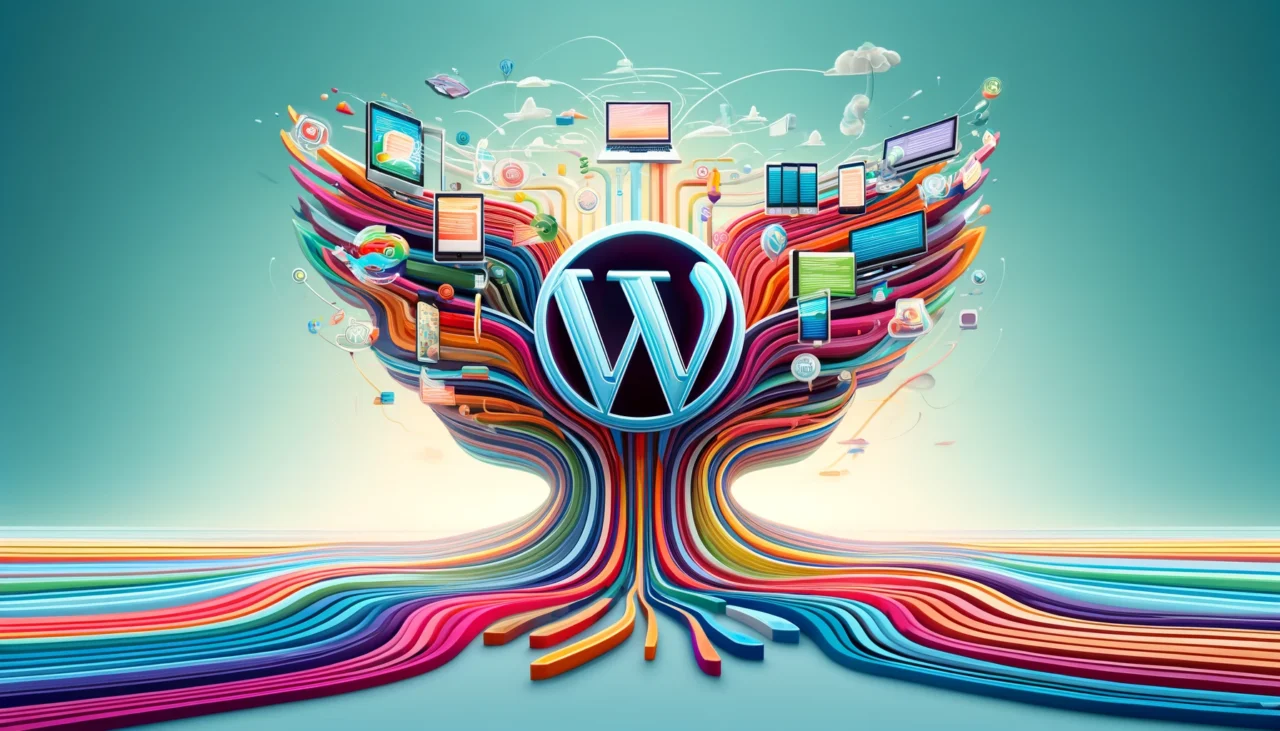
The combination of WordPress with a Headless CMS approach is an innovative solution that unites the strengths of WordPress as a Content Management System (CMS) with the flexibility and performance of a Headless architecture model. WordPress itself can be used as a Headless CMS by making its content available to external applications via the REST API or the GraphQL API (using plugins like WPGraphQL). This allows WordPress to be used as a backend for content management, while the frontend can be developed independently with modern technologies such as React, Vue, Angular, or other JavaScript frameworks.
Advantages of using WordPress as a Headless CMS:
- Familiar Interface: WordPress offers a user-friendly admin interface that is valued by millions of users worldwide. Using WordPress as a Headless CMS allows you to retain this familiar environment for content creation and management, while simultaneously enjoying the benefits of modern frontend technology.
- Strong Content Management: WordPress comes with a rich selection of tools and features for content management, including custom post types, taxonomies, and a powerful editor (Gutenberg) that enables diverse content design.
- Large Plugin Selection: The vast library of WordPress plugins makes it possible to add almost any desired functionality, from SEO tools to custom fields and more.
- API Access: By accessing content via the REST API or GraphQL, developers can easily create modern, interactive user interfaces that work across various devices and platforms.
Challenges and Considerations:
- Performance Optimizations: While headless architectures generally enable high-performing frontends, server and API response times should still be monitored, especially during high traffic or complex queries.
- Development Effort: Developing a separate frontend requires additional work and expertise in the chosen technologies. Teams must be prepared to invest in appropriate resources.
- SEO and Accessibility: Since the frontend is developed independently of the backend, it must be ensured that SEO best practices and accessibility guidelines are adhered to. This can mean additional development effort.
- Plugin Compatibility: Not all WordPress plugins are designed to function in a headless environment. Especially plugins that specifically target the frontend might not work as expected.
Using WordPress as a headless CMS offers an exciting opportunity to combine traditional content management with modern development approaches. It allows companies and developers to leverage the benefits of WordPress for content creation and management while simultaneously building a customized, high-performing frontend that meets today’s demands for user experience and technology.

with and without WordPress



 DE
DE