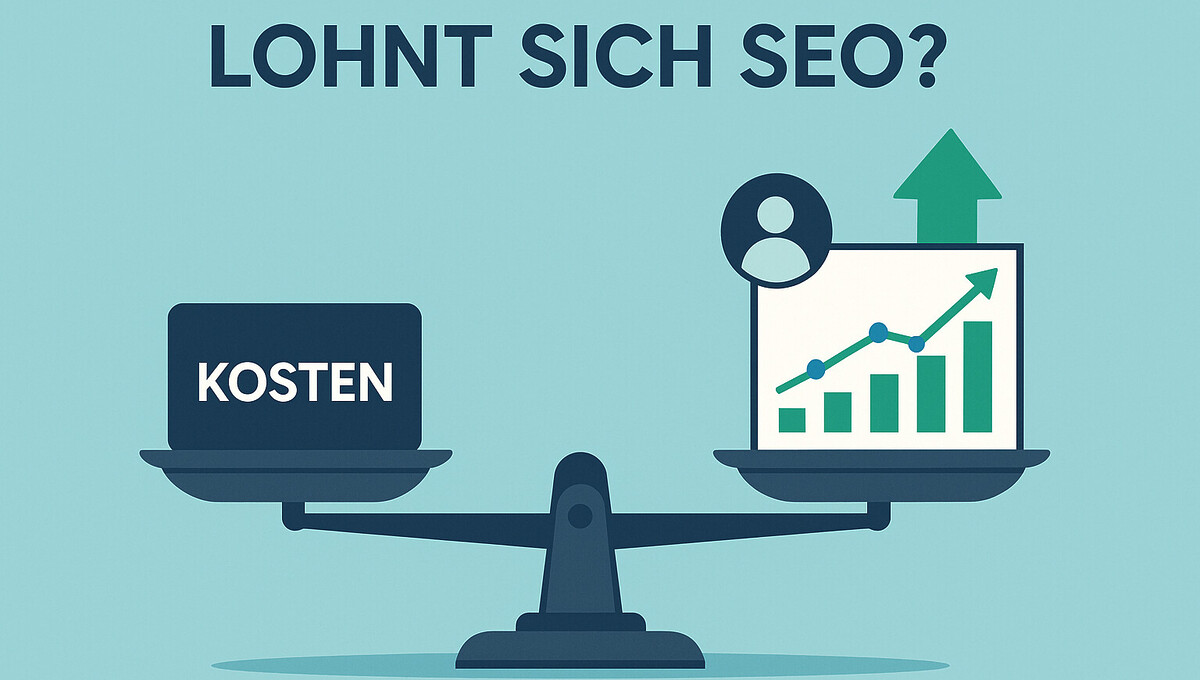
Is SEO worthwhile in the age of ChatGPT, AI, and LLMs? Definitely!
Search engine optimization is at a turning point. Artificial intelligence and Large Language Models are fundamentally changing search behavior. Nevertheless, current market data shows surprising continuity: Google continues to assert its dominant position with a market share of approximately 90 percent. These figures raise a crucial question that concerns businesses.
Skeptics argue that traditional search engine optimization will become obsolete due to AI tools. ChatGPT and similar technologies enable more complex questions and contextual dialogues. Yet, people still use classic search engines for their daily information needs. The reality shows: Is SEO worthwhile remains a highly relevant question, the answer to which must be considered in a nuanced way.
Modern search engine optimization evolves in parallel with the technological landscape. Successful companies adapt their strategies and benefit from the ongoing advantages of organic search results. This development makes it clear why SEO is indispensable in digital marketing.
What is SEO and why has it been so important until now?
Search engine optimization refers to the systematic improvement of websites for better rankings in organic search results. Technical aspects, content quality, and user experience form the pillars of this discipline. Over two decades, it has developed into an indispensable marketing tool.
Historically, Google functioned as a central information hub. Users submitted queries and received structured result lists. Companies quickly realized: those who appear on the first page gain attention and customers. This realization led to the professionalization of search engine optimization.
Its importance resulted from the monopolistic position of traditional search engines. Billions of daily search queries created immense business opportunities. Organic search results enjoyed higher credibility than paid ads. Users trusted algorithm-based rankings more than purchased placements. This basis of trust made SEO a particularly effective channel for customer acquisition and brand building.
The new landscape: ChatGPT, AI, and LLMs as search engines
Large Language Models revolutionize information retrieval by providing direct answers instead of result lists. ChatGPT enables natural dialogues and follow-up questions. Users receive immediate, contextual answers without clicking through various websites. This development fundamentally changes search habits.
AI-based tools offer specific advantages over traditional search engines. Complex questions can be processed more precisely. Users can ask follow-up questions and refine answers. The elimination of link navigation significantly speeds up information acquisition. Particularly in technical or scientific topics, significant efficiency gains are evident.
Paradoxically, the AI revolution reinforces the importance of professional SEO. LLMs like Claude or Perplexity access the same internet sources as traditional search engines. Well-optimized websites are more frequently cited as references, thereby reaching new target groups. Companies without an SEO strategy remain invisible to both Google and AI tools.
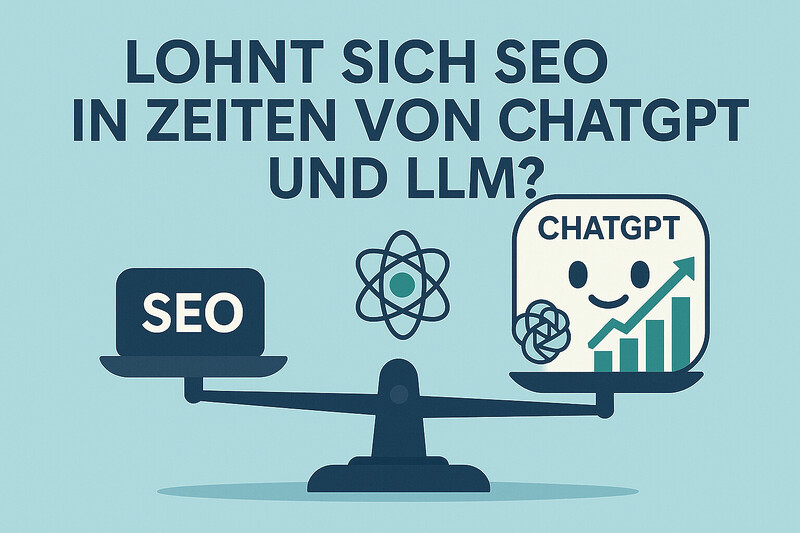
Current Market Data: Why Google Continues to Dominate
Market research data for 2025 confirms Google’s continued dominance with a market share of approximately 90 percent. The search engine processes several billion queries worldwide daily. Even with increasing AI usage, this dominance remains remarkably stable. Alternative search engines combined only achieve single-digit market shares.
While ChatGPT and similar tools are gaining popularity, they have not yet achieved widespread penetration. Studies show that about 8 percent of respondents use AI tools as their primary search engine. This number is continuously growing but remains far behind Google’s reach. Demographic differences are noticeable: younger users experiment more frequently with alternative search forms.
Become more visible on Google & Social Media?
In a free strategy consultation for data-driven online marketing, we uncover your untapped potential, review any existing ad accounts if necessary, examine your SEO ranking and visibility, and determine which strategy is appropriate for your budget and which active measures will lead to more inquiries or sales.

✅ More visibility & perception through targeted placement
✅ More visitors > prospects > customers > revenue
✅ Reach target groups scalably with SEA
✅ Act and grow sustainably with SEO
🫵 Maximum success with our hybrid strategy
💪 More than 15 years of experience across industries in over 1,000+ projects demonstrable!






The stability of traditional search habits surprises many experts. People continue to prefer familiar interfaces and established workflows. Google benefits from its integration into the Android ecosystem and decades of user habituation. These factors create inertia that can slow down technological innovations.
For which companies is SEO still worthwhile?
Target group analysis forms the starting point for SEO decisions. Companies must assess whether their customers actively search for products or services. B2B companies particularly benefit from industry-specific search queries. Local service providers effectively reach geographically defined target groups through regional search terms.
Local SEO is suitable for businesses with a geographical focus. Restaurants, craft businesses, and medical practices reach their customers through location-based search queries. Google Business Profile and local directories further enhance this visibility. The effort remains manageable, while the results become quickly measurable.
National SEO requires greater resources and longer timeframes. Corporations and established online retailers can afford these investments. Start-ups should first develop other marketing channels before pursuing national SEO strategies. Whether SEO is worthwhile therefore strongly depends on the company size and available budgets.
The Advantages of SEO in Today’s World
Higher Trustworthiness
Organic search results enjoy significantly higher credibility than paid advertisements. Users recognize the difference between purchased and earned placements. Click-through rates confirm this preference: the first organic result achieves click rates between 25 and 35 percent. Paid ads achieve an average of only 3.17 percent.
Search engine algorithms evaluate websites based on quality criteria. This evaluation signals trustworthiness and expertise to users. Companies with strong organic rankings are perceived as industry leaders. This trust translates into purchasing decisions and business relationships.
Building trust works long-term and sustainably. Once achieved rankings remain stable with continuous maintenance. Paid advertising disappears immediately after the budget stops. This consistency makes organic visibility a valuable company asset.
Long-term Visibility and Brand Strengthening
SEO investments pay off over years. Well-optimized content consistently ranks for relevant search terms. This continuity creates predictable visitor flows and reduces dependence on paid advertising. Brands establish themselves as authorities in their respective fields.
Search results function as a digital business card. Regular presence for important search terms shapes the brand image. Potential customers perceive the company as established and trustworthy. This perception positively influences purchasing decisions.
Content marketing and SEO reinforce each other. High-quality content improves rankings and positions companies as knowledge providers. Search engine optimized articles reach larger target groups. This synergy maximizes the return on investment for content strategies.
Cost-Effectiveness and ROI
Studies prove exceptionally high returns for SEO investments. Average ROI values reach 250 to 748 percent over three-year periods. These figures significantly surpass most other marketing channels. Long-term oriented companies particularly benefit from these effects.
Organic traffic incurs no direct costs per click. After initial optimization, content continuously generates visitors without additional expenses. Paid advertising requires permanent budgets for every single click. This cost structure makes SEO more cost-effective in the long run.
Scaling effects enhance cost-efficiency. Additional content leverages existing domain authority and technical infrastructure. New pages rank faster than on completely new websites. This synergy significantly reduces the marginal costs for expanded SEO measures.
SEO Strategies for the Future
Modern search engine optimization adapts to changing user habits. Voice search is gaining importance as voice assistants become commonplace. Conversational keywords and natural language patterns complement traditional search terms. Content must be optimized for both text and voice searches.
AI integration requires new optimization approaches. Featured snippets and knowledge panels are gaining relevance. Structured data helps search engines understand content. Semantic SEO considers context and user intent more strongly than pure keyword density.
Mobile-first indexing shapes technical optimization. Websites must function perfectly on smartphones. Loading times and user experience directly influence rankings. Progressive Web Apps and AMP technology measurably improve mobile performance. These technical aspects are becoming increasingly important for SEO success.
Why LLMs Make SEO Indispensable
Large Language Models function differently than many users assume. ChatGPT, Claude, and Perplexity do not generate their answers out of thin air, but rather draw on extensive data sources. These AI systems continuously scan the internet for current and relevant information. Websites form the knowledge base for AI-generated answers.
High-quality and well-structured content significantly increases the likelihood of LLM citations. AI tools prefer authoritative sources with clear information architecture. Technical SEO optimization makes content more understandable for algorithms. Companies with professional search engine optimization are more frequently cited as reference sources.
This development creates a multiplier effect for SEO investments. Optimized content reaches both traditional search engine users and AI tool users. "Is SEO worth it" thus becomes a strategic necessity for comprehensive digital visibility. Companies without an SEO strategy miss opportunities in both worlds.
LLM Citations: The New Holy Grail
AI citations are developing into a valuable marketing channel. When ChatGPT or Claude names your company as a source, you reach highly qualified target groups. These recommendations appear particularly credible because they are presented in an informative context. Users trust AI-generated answers and the source references contained therein.
SEO-optimized websites automatically meet the quality criteria for LLM references. Structured data, semantic markup language, and clear information architecture improve detectability by AI systems. Regularly updated content increases relevance for time-sensitive queries. These technical prerequisites align with proven SEO practices.
Companies must adapt their content strategy accordingly. Expertise and authority become more important than keyword density. Detailed technical articles and well-researched analyses take precedence over superficial texts. This quality orientation pays off for both search engines and LLMs. Professional SEO thus becomes the foundation for AI-age marketing.
Challenges and How to Master Them
AI-generated content is flooding the internet, increasing competition. Search engines increasingly prefer unique, expert-generated content. E-A-T criteria (Expertise, Authoritativeness, Trustworthiness) are gaining weight. Companies must communicate and demonstrate their professional competence more clearly.
Algorithm updates occur more frequently and unpredictably. Google continuously adjusts ranking factors to AI developments. Flexible SEO strategies withstand these changes better than rigid approaches. Diversified traffic sources reduce dependence on individual ranking factors.
Content quality becomes the decisive distinguishing feature. Superficial or duplicate content quickly loses visibility. In-depth expertise and unique perspectives create sustainable value. Regular content audits identify areas for improvement. This focus on quality pays off in the long run.
Should You Hire an SEO Agency?
SEO complexity often exceeds companies' internal capacities. Technical optimization, content strategy, and link building require specialized know-how. Algorithm updates continuously change best practices. Agencies stay up-to-date through daily practice and ongoing training.
Internal resources are better concentrated on core competencies. SEO measures tie up significant working time and attention. CEOs and marketing teams can focus on strategic business decisions. This division of labor increases overall efficiency.
Professional agencies deliver measurably faster results. Experience and established processes shorten the time until ranking improvement. Specialized tools and software licenses are already available. Incorrect optimizations that could permanently damage rankings are avoided. This efficiency often justifies the investment in external expertise.
Measuring SEO Success in the New Era
Organic traffic forms the basis of SEO success measurement. Analytics tools show visitor increases and source origins in detail. Keyword rankings illustrate visibility for important search terms. However, these metrics must be translated into business results to demonstrate true value.
Conversion rates connect traffic with business success. Lead generation and sales show the qualitative dimension of SEO success. Return on Investment is calculated from profit in relation to SEO investments. These financial key figures convince decision-makers more sustainably than mere traffic numbers.
Modern metrics consider user experience and engagement. Dwell time, bounce rate, and pages per session indicate content quality. Core Web Vitals measure technical performance and user satisfaction. Brand mentions and share of voice document brand perception. This holistic view captures SEO success more comprehensively than traditional ranking metrics.
Conclusion: Why SEO Is Definitely Worth It
Market data and ROI studies clearly demonstrate: „Is SEO worth it“ can be answered with a clear yes. Google’s continued dominance ensures the relevance of traditional search engine optimization. AI tools complement classic searches but do not completely replace them. This coexistence creates new opportunities for well-thought-out SEO strategies.
Successful companies adapt their approaches to technological developments. Voice search, mobile optimization, and AI integration expand the optimization spectrum. High-quality content and technical excellence remain crucial for success. This evolution makes SEO more complex, but also more effective.
Long-term perspectives justify continuous SEO investments. Organic visibility builds trust and sustainably reduces acquisition costs. Professional support from specialized agencies accelerates success and avoids costly mistakes. Companies that approach SEO strategically position themselves advantageously for the digital future.




 DE
DE