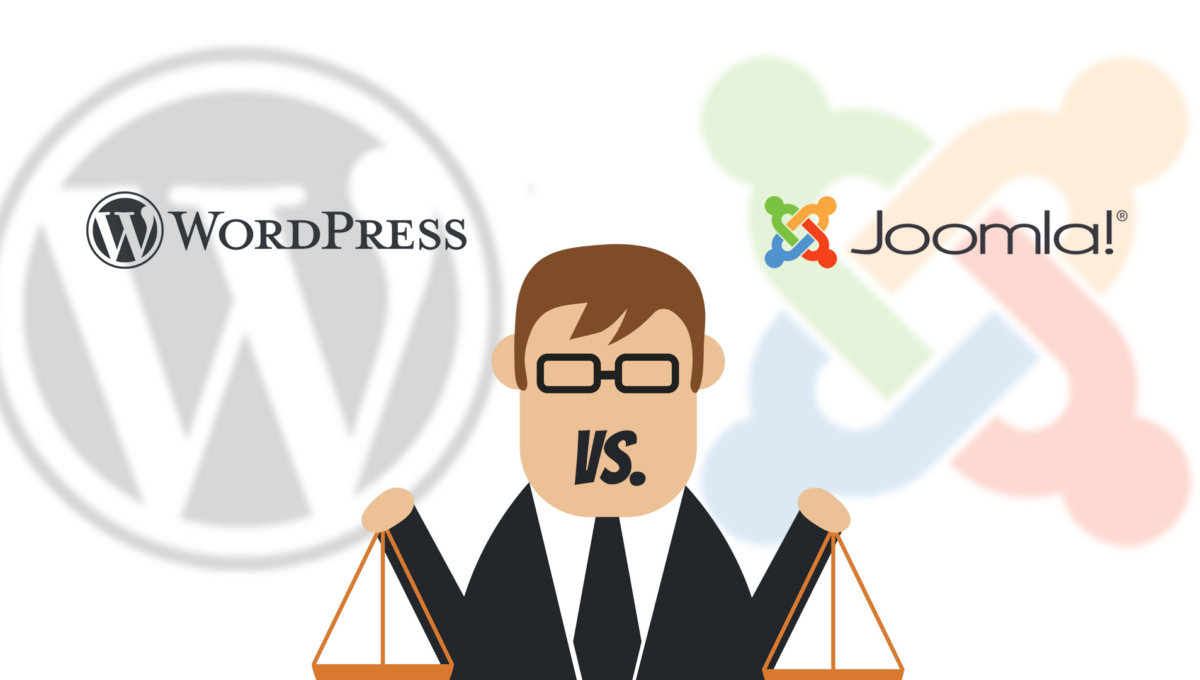
Joomla and WordPress are two of the most well-known Content Management Systems (CMS) on the market. They both offer robust features and customization options that allow users to create and manage professional websites. Nevertheless, they differ in many aspects, which determines their use and popularity.
Joomla vs. WordPress: Comparison between two leading Content Management Systems + Features and Differences
Choosing the right Content Management System (CMS) is crucial for the success of your website. Joomla and WordPress are among the most well-known and popular CMS on the market, offering a variety of features that appeal to both beginners and experienced web developers. WordPress, originally a blogging platform, is known for its user-friendliness and flexibility, while Joomla scores with its advanced user management and built-in multilingualism.
Both offer a wide range of customization options and have strong communities that regularly develop new extensions and themes. The choice between Joomla or WordPress depends on your specific needs, skills, and goals. Whether Joomla is a real WordPress alternative or vice versa will be explained in this article based on feature comparisons, differences, and the respective advantages and disadvantages.
WordPress: Advantages and Disadvantages of the world’s leading Content Management System
WordPress is a widely used open-source Content Management System (CMS) that was originally developed in 2003 as a blogging platform. Today, it is much more than that: it is used to create all types of websites, from simple blogs to complex corporate sites and online shops.
WordPress is characterized by its user-friendliness and adaptability. It offers an intuitive user interface that allows even non-technical users to create and manage websites. In addition, it offers thousands of themes and plugins that allow users to customize the appearance and functions of their websites.
Another outstanding feature of WordPress is its strong community. Millions of developers and users worldwide contribute to the continuous improvement and expansion of the platform. With the added advantage that it can be transformed into a fully functional online shop with WooCommerce, one of the leading e-commerce plugins, WordPress is one of the most versatile and popular CMS on the market.
Advantages of WordPress
- Simple User Interface: WordPress is known for its intuitive and user-friendly interface, which allows even beginners to create and manage websites.
- Huge selection of themes and plugins: With over 150,000 plugins and thousands of themes, WordPress offers an unparalleled selection that allows users to customize and extend their websites as they wish.
- Powerful SEO Tools: WordPress offers powerful SEO tools, especially through plugins like Yoast SEO, which can improve a website's ranking.
- Largest Community Worldwide: WordPress has a very large and active community of developers and users who constantly develop new plugins and themes and provide support.
- Easy Integration with Third-Party Providers: WordPress can be easily integrated with a variety of third-party services and platforms, from social media to payment gateways.
- Good for Blogging: WordPress started as a blogging platform and still offers the best tools for blogging.
- Flexible and Adaptable Platform: WordPress is extremely flexible and adaptable, making it suitable for both small blogs and large commercial websites.
- Easy E-commerce Integration: With plugins like WooCommerce, WordPress can easily be transformed into a fully functional e-commerce website. Similar to or better than Shopify* without monthly costs
- Regular Updates and Maintenance: WordPress regularly releases updates and patches to ensure the platform is secure and up-to-date.
- Customizable Menus: WordPress offers an easy method for creating and managing custom menus.
Disadvantages of WordPress
- Security Issues: Due to its popularity, WordPress is a frequent target for hackers. While the WordPress team works hard to close security gaps, security remains a constant concern. HOWEVER, for installations with fewer than 100,000 visitors per month and with proper WordPress maintenance, NO problems will usually occur.
- Performance: WordPress websites can suffer from performance issues, especially if they are not properly optimized or if they use many plugins. However, this applies to all CMS. It’s like filling the trunk of a car with stones up to the roof.
- Can be expensive: Although WordPress itself is free, the costs for premium themes, plugins, and hosting can quickly add up. However, these are often lifetime licenses that cost between $19-69 once. The investment for a normal site is then a maximum of $300 once.
- Dependency on plugins: Many functions in WordPress require plugins, which can lead to problems if they are not compatible or are no longer supported.
- Customizations require knowledge: To have full control over the appearance and function of your WordPress website, you need knowledge of PHP and CSS or use very good plugins like Yellow Pencil CSS Editor*
- Updates can cause problems: Sometimes WordPress updates can cause problems, especially if they are not compatible with certain themes or plugins.
- No built-in multilingual support: Unlike Joomla, WordPress relies on plugins for multilingual websites. However, there are various automatic solutions for this, such as GTranslate*, Weglot, or WPML.
- Lack of access control: WordPress does not offer the same depth of access control as Joomla.
- Not as good for complex websites: For very complex websites or those requiring very specific functionalities, WordPress may not be the best choice. HOWEVER, everything can be connected and also modified via the REST API.
- Requires regular maintenance: To remain secure and efficient, a WordPress website requires regular maintenance. HOWEVER, EVERY system should be regularly maintained.
Joomla: Advantages and Disadvantages of the Content Management System
Joomla is a powerful open-source content management system (CMS) that allows users to create and manage websites and online applications. It was released in 2005 and offers a variety of features that make it suitable for both simple and complex websites.
Joomla’s strengths lie in its flexibility and customization options. It offers advanced user management features, the ability to create custom post types, and built-in multilingual support, making it ideal for international websites.
Joomla is known for its robust community and offers thousands of free and paid extensions that can expand its functionality. It is suitable for a variety of websites, from personal blogs to large corporate sites and e-commerce websites.
Advantages of Joomla
- Flexible Access Controls: Joomla offers advanced Access Control Lists (ACLs) that enable detailed user management.
- Built-in Multilingual Support: Unlike WordPress, which requires a plugin for multilingual websites, Joomla offers an integrated solution for multilingual websites.
- Advanced Functionalities Built-in: Joomla includes some advanced features, such as RSS feeds, page caching, printable versions of pages, news flashes, and many others.
- Robust Extensions: Joomla has a variety of extensions that provide advanced functionality. However, the selection is limited and may require further development.
- Suitable for e-commerce: Joomla can be (easily) integrated into e-commerce solutions, e.g. with the VirtueMart extension.
- Good community support: Joomla has a relatively active and helpful community.
- Security updates: Joomla provides regular security updates, which contributes to the overall security of the website.
- Suitable for custom post types: Joomla is flexible with regard to different content types.
- SEO-friendliness: Joomla offers various SEO tools that can help improve a website's ranking.
- Built-in form creation: Joomla allows forms to be created without the use of plugins.
Disadvantages of Joomla
- Steeper learning curve: Joomla can be more difficult to learn initially than WordPress.
- Fewer themes and plugins: Joomla has fewer themes and plugins to choose from than WordPress.
- Less SEO-friendly than WordPress: Although Joomla offers SEO tools, it is not as intuitive or powerful as WordPress in this area.
- Lower market share: Joomla is used less frequently than WordPress, which leads to a smaller user and developer community.
- Complexity: Joomla can be overwhelming for beginners as it is more complex than WordPress.
- Fewer customization options: Compared to WordPress, Joomla offers fewer customization options.
- More difficult to optimize: Joomla websites can be more difficult to optimize for speed and performance.
- Support: Since Joomla is less common, it can be more difficult to find qualified technical support.
- E-commerce not built-in: Although Joomla can be integrated with e-commerce solutions, these are not natively built-in.
- Update complexity: Updates in Joomla can sometimes be more complex and require more manual work.
Conclusion on Joomla or WordPress
A video from our colleague ithelps:
Become more visible on Google & Social Media?
In a free strategy consultation for data-driven online marketing, we uncover your untapped potential, review any existing ad accounts if necessary, examine your SEO ranking and visibility, and determine which strategy is appropriate for your budget and which active measures will lead to more inquiries or sales.

✅ More visibility & perception through targeted placement
✅ More visitors > prospects > customers > revenue
✅ Reach target groups scalably with SEA
✅ Act and grow sustainably with SEO
🫵 Maximum success with our hybrid strategy
💪 More than 15 years of experience across industries in over 1,000+ projects demonstrable!







Overall, WordPress is the world’s leading CMS, and for good reason. It is user-friendly, flexible, and offers a huge selection of plugins and themes that allow users to customize their websites. With WooCommerce, it is also a powerful e-commerce platform. Joomla, on the other hand, offers more built-in features and more advanced access controls, but can have a steeper learning curve and offer fewer customization options.
Ultimately, the choice between Joomla and WordPress depends on the specific needs and knowledge of the user. For simple to medium-sized websites, especially blogs and e-commerce sites, WordPress is often the better choice. For larger or more complex websites, especially those requiring advanced user management, Joomla may be the better option.
We are happy to help and advise you on the right Content Management System for you.
[ctahead title=“Further questions or advice? Please contact us:“]




 DE
DE