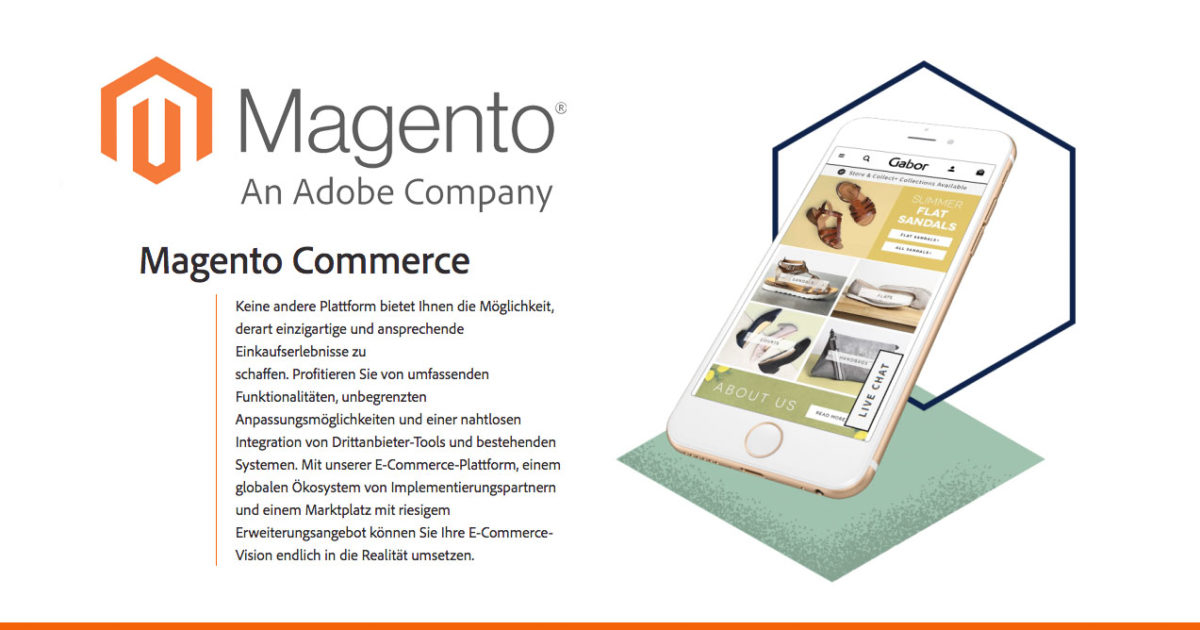
Magento is a software for managing online shops from 2008. The system is now distributed by Adobe Inc. Since 2015, there has been another version, Magento 2.
Magento: What the popular shop system can do
Basically, Magento makes it possible to connect everything necessary for an online shop. This includes a backend database where all content, such as order or user data, can be stored. For this purpose, Magento uses MySQL. Based on the scripting language PHP in conjunction with the use of XML files, it is possible to properly manage data in both the frontend and the backend.
Further information about Magento can be found in this text.
What can Magento do?
Primarily, Magento combines website content with the sale of goods over the internet, or the webshop. The most important functions at a glance:
Page Builder:
This is a tool for content creation, with which content can be designed, tested, and published at any time. With the help of this function, website operators can unleash their creativity in creating the online shop without the help of developers.
Product Recommendations:
As known from Amazon, for example, this function allows relevant products to be suggested to customers in the online shop. Adobe Sensei automatically analyzes visitors‘ purchasing behavior to recommend products tailored to each individual. These recommendations are based on popularity, similarity to the viewed product, and other purchasing behavior. This function can be managed via the Magento Admin area.
Customer Segmentation and Personalization
Based on purchasing behavior, location, gender, and other characteristics, segments can be formed and a personalized shopping experience can be made possible.
Content Staging and Preview
Updates can be scheduled and carried out without the help of the IT department. For all changes, there is a preview version to see how it will look in the end.
Instant Purchase
To make the checkout more pleasant for users, especially in the mobile environment, Magento offers the option of instant purchase. If logged in, previous checkout steps are skipped.
In addition to the aspects just mentioned, there are other points that speak for the use of Magento as a shop system:
Become more visible on Google & Social Media?
In a free strategy consultation for data-driven online marketing, we uncover your untapped potential, review any existing ad accounts if necessary, examine your SEO ranking and visibility, and determine which strategy is appropriate for your budget and which active measures will lead to more inquiries or sales.

✅ More visibility & perception through targeted placement
✅ More visitors > prospects > customers > revenue
✅ Reach target groups scalably with SEA
✅ Act and grow sustainably with SEO
🫵 Maximum success with our hybrid strategy
💪 More than 15 years of experience across industries in over 1,000+ projects demonstrable!







Advantages of Magento
Due to the modular structure of webshops created with Magento, almost all sizes can be scaled with it. Another plus is that you can manage multiple online shops on different domains with different catalogs and customers. The enormous flexibility and individually customizable extension options (extensions) also count among the advantages of this software. These are partly paid, but often even available for free.
If you want to expand your regular online shop, Magento offers the opportunity to sell your goods on Amazon in parallel. With the help of a selection of interfaces, connecting the shop to Amazon is just a few clicks away.
Magento thus combines several functions in one software and offers a comprehensive all-round package for creating an online shop, which can be expanded at any time as desired. Therefore, it may initially seem a bit overloaded to some. So, one should take the time to deal with it more closely.
Alternative Shop Systems
Just because Magento is the most widely used software for online shops does not mean that it is the only one. Other options include Shopify, WooCommerce, Shopware, and many others. Each of them has its advantages and limitations. The most important aspect when choosing the (right) shop system is your own needs and price expectations.





 DE
DE