Online marketing is not rocket science. But if you are just starting out, SEO and SEA might still be confusing terms for you. The answer to the frequently asked question „What is the difference between SEO search engine optimization and SEA PPC advertising?“ depends on which definition of SEM you prefer, as well as your expertise, target audience, and budget.
SEO vs. SEA: What are the differences and where do they meet?
What is SEM?
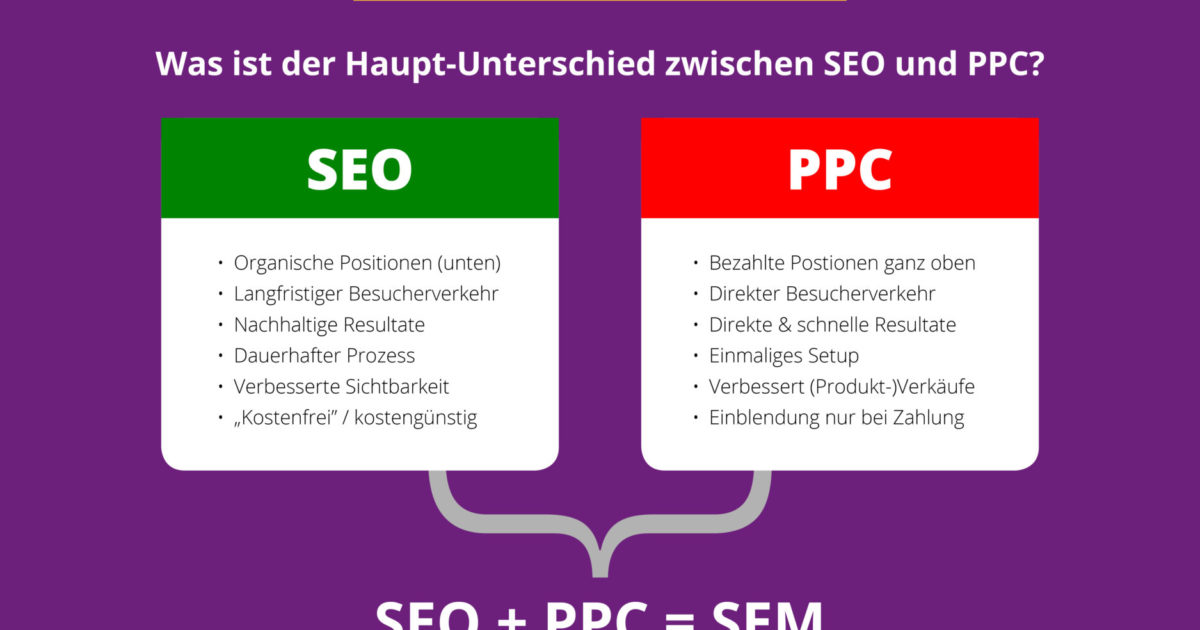
Search Engine Marketing (SEM) is a term that encompasses both SEO (Search Engine Optimization) and SEA (Search Engine Advertising / PPC Advertising) as two main activities of search engine marketing.
However, the term is sometimes used to refer only to paid advertising in search results. In this sense, it is essentially used as a synonym for Pay-per-Click (PPC) ads in search.
In this post, we will stick to the first definition (SEM = SEO + PPC), as we believe it is semantically more accurate.
"SEO vs. SEM" is actually "SEO vs. PPC"
Strictly speaking, comparing SEO and SEA is essentially a false question, as SEO and SEA are completely different and there is no real overlap.
Nevertheless, the 3 abbreviations are often compared, mainly due to the similarity of the terms.
But what you should usually know when searching for „SEO vs. SEA“ is the difference between:
- Organic Search Engine Optimization (SEO)
- Paid Search Engine Advertising (PPC)
First of all: As a full-service online marketing agency, we know all areas very well and have tried with this article to provide an overview of this complex topic and its interrelationships.
SEO vs. SEA – Unterschiede sowie Vor- und Nachteile
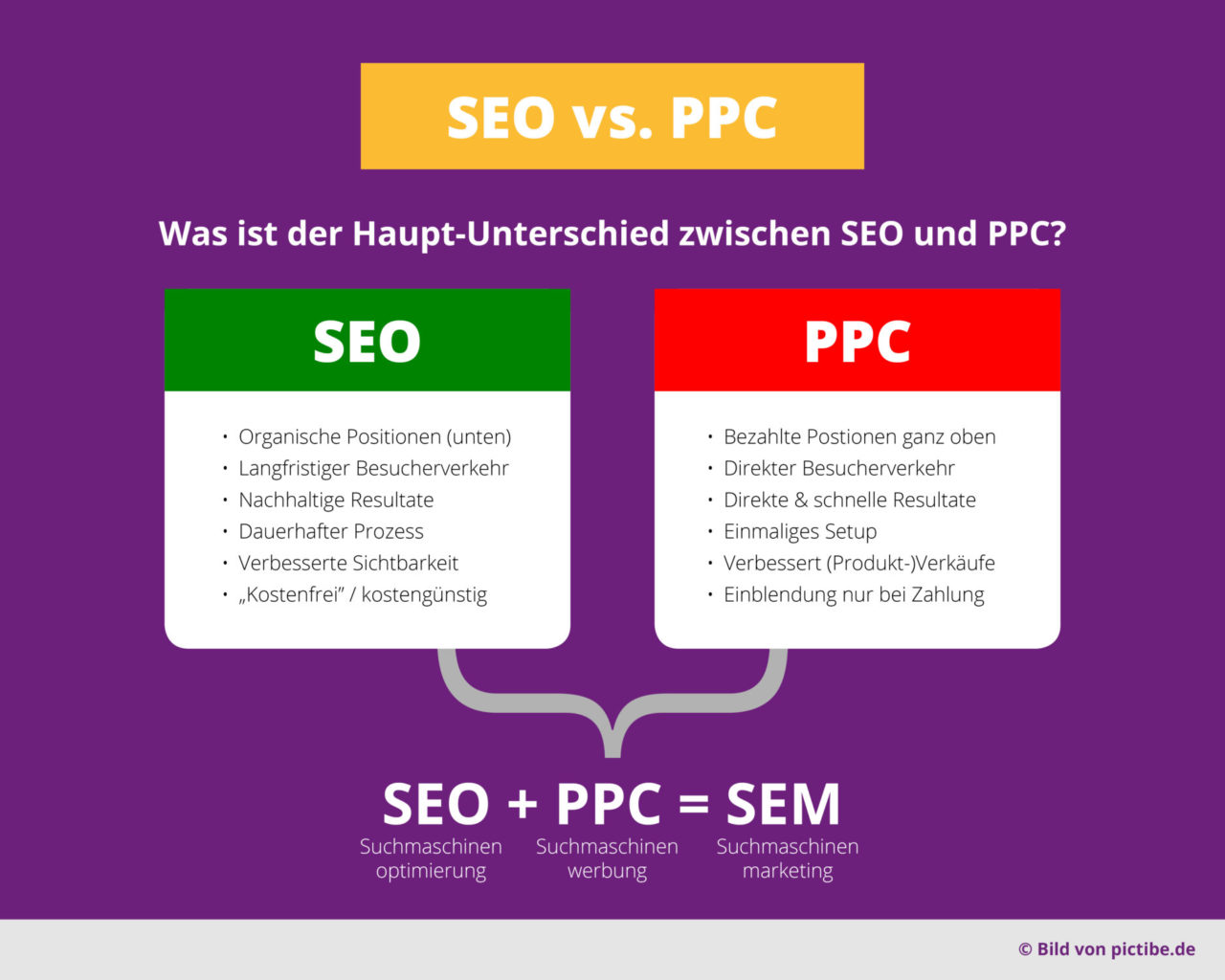
Search engine marketing includes both SEO and PPC methods. The general idea is that SEM helps you grow on two fronts and increase your online presence:
- Both SEO and PPC contribute to the increased visibility of your website.
- SEO requires you to make sustainable efforts over a longer period of time. It is a long-term process that usually does not produce results from day one.
- PPC, on the other hand, can bring immediate results. The main goal is to take a „shortcut“ and overcome those who have achieved the highest positions in SERP through SEO.
- Both strategies require a lot of work – however, SEO is an ongoing process, while a specific PPC campaign usually requires a one-time setup (+ maintenance).
Let’s take a closer look at what each of these concepts involves and how they are used in general marketing practice.
Become more visible on Google & Social Media?
In a free strategy consultation for data-driven online marketing, we uncover your untapped potential, review any existing ad accounts if necessary, examine your SEO ranking and visibility, and determine which strategy is appropriate for your budget and which active measures will lead to more inquiries or sales.

✅ More visibility & perception through targeted placement
✅ More visitors > prospects > customers > revenue
✅ Reach target groups scalably with SEA
✅ Act and grow sustainably with SEO
🫵 Maximum success with our hybrid strategy
💪 More than 15 years of experience across industries in over 1,000+ projects demonstrable!





What is SEO Search Engine Optimization?
The term SEO (Search Engine Optimization) refers to the changes and optimizations you make to improve the organic ranking of your website or a specific page within a search engine „for free“.
SEO is one of the main goals when starting an optimization or updating a website, as Google’s bots cannot properly find and read your content without good optimization.
It consists of these 3 main areas:
- On-Page & Technical SEO
- Content Creation and Keyword Research (Content Marketing)
- Off-Page SEO & Link Building (Backlinks)
Note: SEO offers you free traffic, but can be just as costly as PPC, as you invest time, staff, and tools.
1. On-Page & Technical SEO
On-page SEO consists of all the small changes you make on a single page. From adding your main keyword to the title tag or meta description and other elements, to improving the readability of your website and the quality of your internal links.
It also refers to all technical settings and the optimization of the user experience on your website, such as:
- Page speed (loading time)
- Page architecture (navigation & usability)
- Mobile friendliness (responsive web design)
- Use of HTTPS (SSL encryption)
- etc.
2. Content Creation and Keyword Research
Regardless of how well your site is optimized, the quality of the content you create is the first and most important SEO ranking factor. For this reason, creating high-quality content can also be understood as part of your SEO strategy.
To find content topics and use the right keywords in your content, you need to master the process known as keyword research to drive content marketing with an SEO concept.
It involves finding and using keywords that are:
- popular (they have a high search volume)
- rankable (you can achieve a realistic ranking / placement)
- relevant to your website and content
3. Off-Page SEO & Link Building
Off-page SEO is everything that happens „outside“ of your website – from backlinks to improving your social media presence to gaining general trust and authority.
The most important part of this process is, of course, link building – getting links from other websites, preferably from websites with higher authority (DA & PA factor) and thematic relevance.
The true value of link building lies in the quality of the links you get, not just their number. Depending on the performance and influence of these link sources, you also increase your brand awareness and boost your social following / bookmarking.
A new trend is SummerSEO.
What is SEA Search Engine Advertising / PPC Advertising?
PPC (Pay-per-Click) is an advertising model that allows marketers to place an ad in search engine results, which is only charged when the ad is clicked.
The main goal is to increase a website’s visibility in search engines through paid ads that appear above the organic search results.
Note: Although PPC is used as an advertising model on many platforms (Facebook, Instagram, LinkedIn, Twitter, Pinterest), in this post, we refer ONLY to Pay-per-Click ads for search engines, as it concerns search engine marketing.
Compared to the SEO strategy, which generates free traffic, with PPC you pay for the highest visibility. Depending on the keyword you want to target, costs can exceed the 1-10 or more EUR/click mark, and you pay every time someone clicks on your ad.
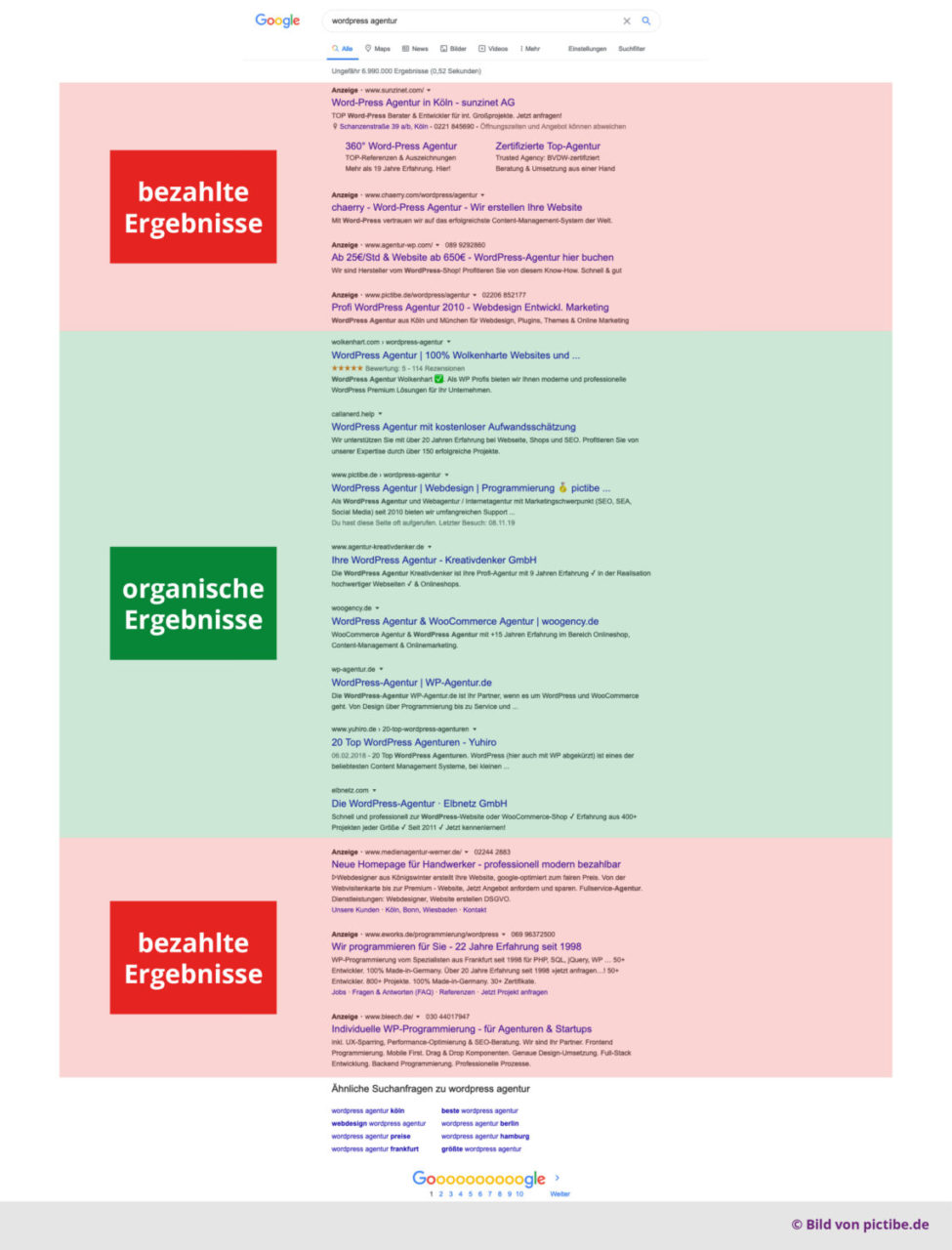
If you’re not sure exactly where to start with PPC, the safest bet is to do SEO right, and then use PPC to:
- Bid on competitive keywords that you wouldn’t be able to rank for with organic optimization alone.
- Run time-sensitive campaigns that need to be targeted quickly and precisely.
- Increase brand awareness by focusing on including your company’s name or motto with your search ads (especially good for businesses just starting out).
These companies bidding for „yoga mats" are doing an exceptional job of creating brand awareness:
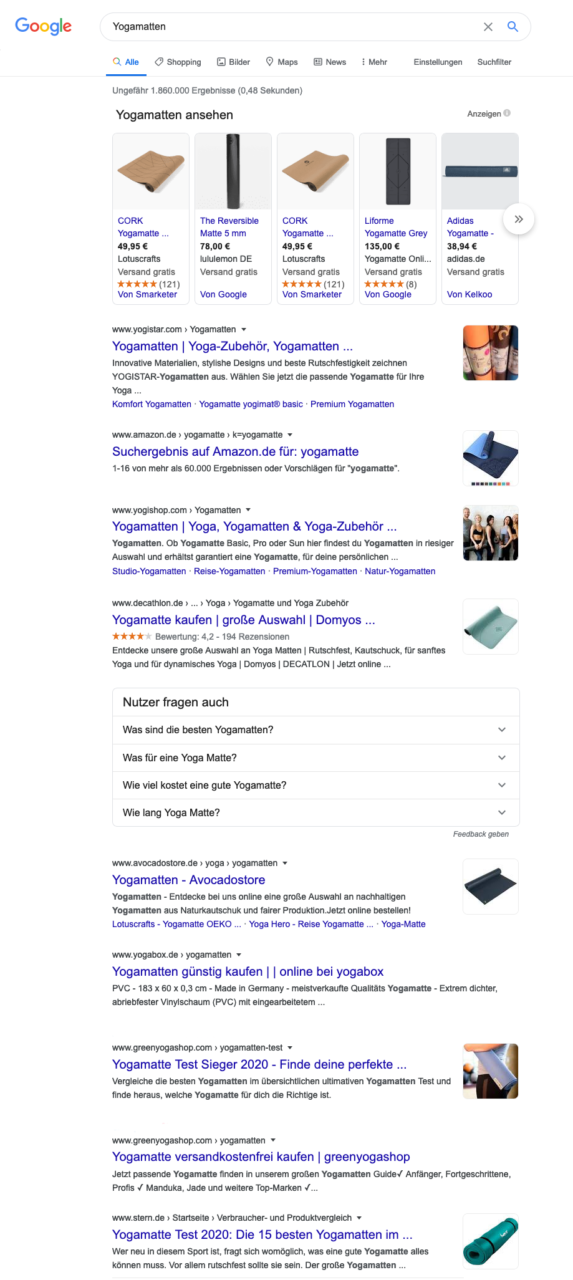
Note: One of the big problems with PPC ads is that many people have a form of ad blindness and simply automatically skip these results.
Last but not least, PPC can be very practical for e-commerce websites that want to launch their products. Google Shopping, as seen above, offers a direct entry point for purchase here.
Which is better: SEO, PPC, or SEM?
There are times when it is better to use PPC over SEO, and sometimes it is best to combine both. Let’s see:
When to use SEO?
In general, SEO is the best tactic if you want to see and maintain results in the long run. Whether you use PPC or not, SEO is a must.
Simply put, if you get a page's SEO right now, it can last another 5 years with regular updates.
When to use PPC?
If you want to quickly get traffic to one of your pages, the PPC technique is the way to go. You may need to draw attention to an event or an exclusive offer. Since you are limited within a certain timeframe, paid advertising will deliver the traffic you need.
Overall, it is a good decision to assume that PPC is better suited for transactional keywords than for informational keywords. However, never rely solely on PPC if you want to expand your website in a timely manner. Also, remember that even the best PPC campaign will most likely not work if your website’s SEO is completely poor.
The SEM Strategy
Of course, you can implement the entire SEM package – both SEO and SEA PPC. Do not consider them as competing strategies; they actually complement each other.
With SEM, you invest the entire SEO effort, but also dedicate part of your time to acquiring paid advertising space. As with all online ads, this can lead to a lot of traffic at a certain point. However, it is all only temporary and not to forget „expensive.“
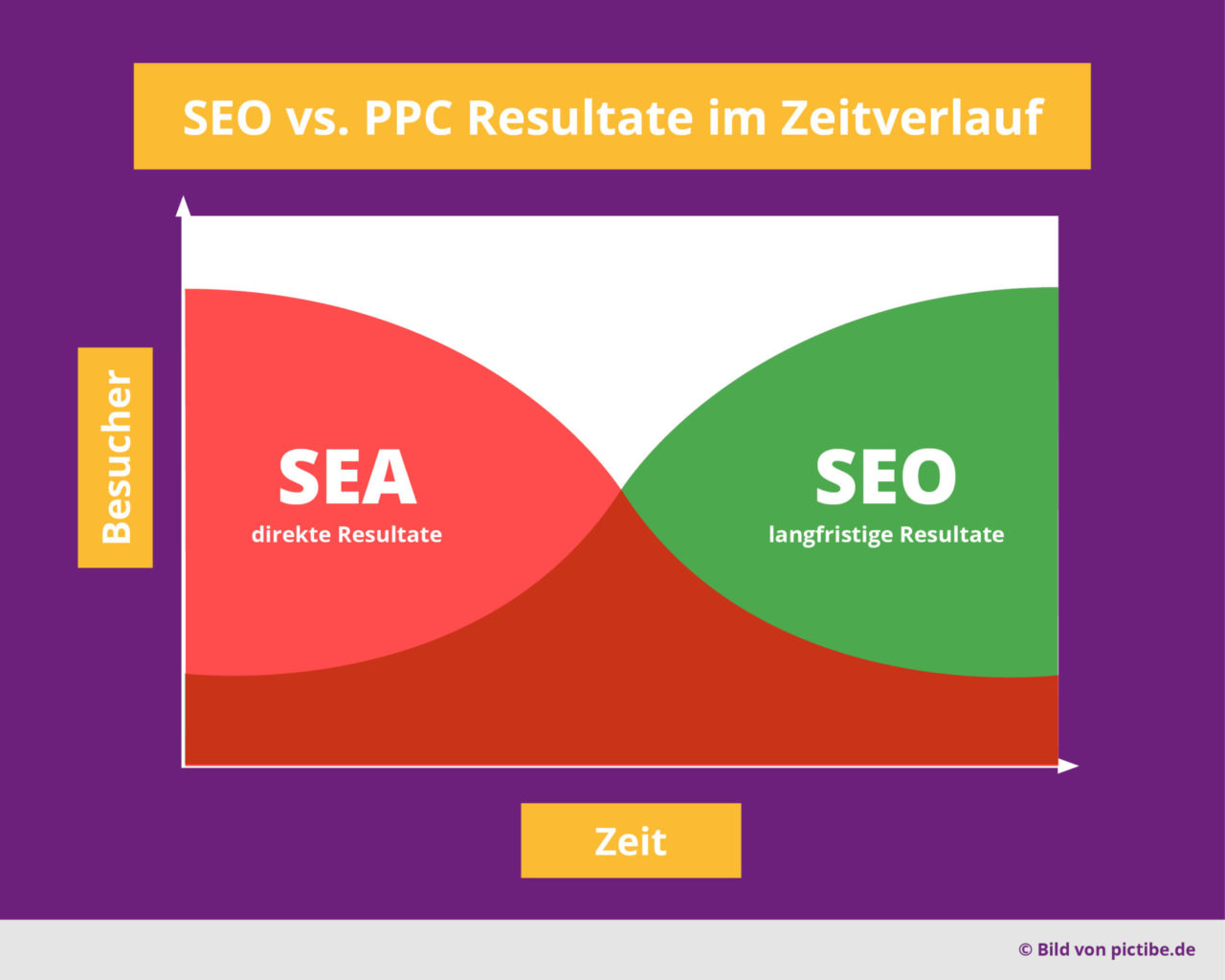
Since both SEO and SEA heavily rely on keyword research & analysis to find the best keywords for your business goals based on indicators such as search volume, keyword difficulty, and cost-per-click (CPC).
Can SEO benefit from PPC?
If you ask whether PPC ads in search results can help your organic ranking, the answer is: No. Based on how the current Google algorithm works, organic rankings never take PPC efforts into account. However, there is an indirect positive effect through more visitors, thus more user data, and more information for learning (also for Google).
PPC can, however, indirectly benefit your SEO efforts:
- All the data and information you collect while running PPC can help you better tailor your organic SEO campaigns. For example, keywords that performed exceptionally well for your ads are likely easier for you to target, as you already know that you are able to address the needs of searchers.
- Alternatively, you can use your PPC efforts to test multiple keywords before investing weeks of work to rank them organically. To do this, run small, targeted ad campaigns on the Google Search Ad Network. Display advertising doesn’t really help here, as you can’t use it to understand a person’s search intent.
Key takeaways for Search Engine Optimization & Search Engine Advertising as Search Engine Marketing
Although SEO and SEM may seem similar, these two marketing buzzwords should never be confused.
Here are some key takeaways from this post:
- SEM = SEO + PPC, therefore comparing SEO and SEM is not correct as SEO is part of search engine marketing
- People often use the term SEM to actually describe only PPC advertising in search engines
- The main difference between SEO and PPC is that the former is a long-term strategy and the latter usually consists of shorter, time-limited advertising campaigns with immediate results
- SEO is a must for all websites, but PPC may not be an option for you if you have a limited budget for advertising spend
- Your industry or type of business may not be suitable for SEO alone. PPC is great for driving traffic from competitive, time-sensitive keywords or increasing your brand awareness
To get a better picture of your position, first make a list of the things you need to improve based on your marketing and business goals.
For example, if you want to generate more sales, paying 10 euros per click for a one-time purchase of 5 US dollars is certainly not a good move. However, don’t think too much about the size of your company or years of experience. What matters is:
- where your potential customers spend their time
- what their needs are
- what they are looking for
Until next time, be open to testing new methods to optimize your presence on the search engine results page. However, always remember to make decisions based on your ROI (Return on Investment) or ROA (Return on Adspent).
As a marketing agency, we prefer the so-called hybrid strategy.

Florian Ibe
CEO & Marketing Consultant
Your contact person: Florian Ibe


 DE
DE