The 4 Ps in Marketing: The Ultimate Guide to the Marketing Mix
Successful marketing strategies are based on proven fundamentals. The 4Ps Marketing Framework has formed the foundation for well-thought-out campaigns and sustainable business growth for decades. This systematic concept enables marketing professionals to approach complex decisions in a structured manner and take all relevant factors into account.
Marketing mix strategies are more than theoretical models – they offer practical solutions to real challenges. Companies of all sizes benefit from the clear systematization of four fundamental marketing instruments. It does not matter whether you are running a startup or working in an established corporation.
This guide explains the 4 P Marketing Mix concept in an understandable and practical manner. You will learn how to deploy each element optimally and what synergies emerge between the individual components. Additionally, you will receive concrete recommendations for implementation in your company.
What is the Marketing Mix? Definition and Fundamentals
The Origins of the 4P Marketing Mix
Jerome McCarthy developed the Marketing Mix 4 P concept as early as the 1960s. His systematic approach revolutionized marketing practice and created a universally applicable framework. The American marketing professor recognized the need to unite the various marketing activities under one roof.
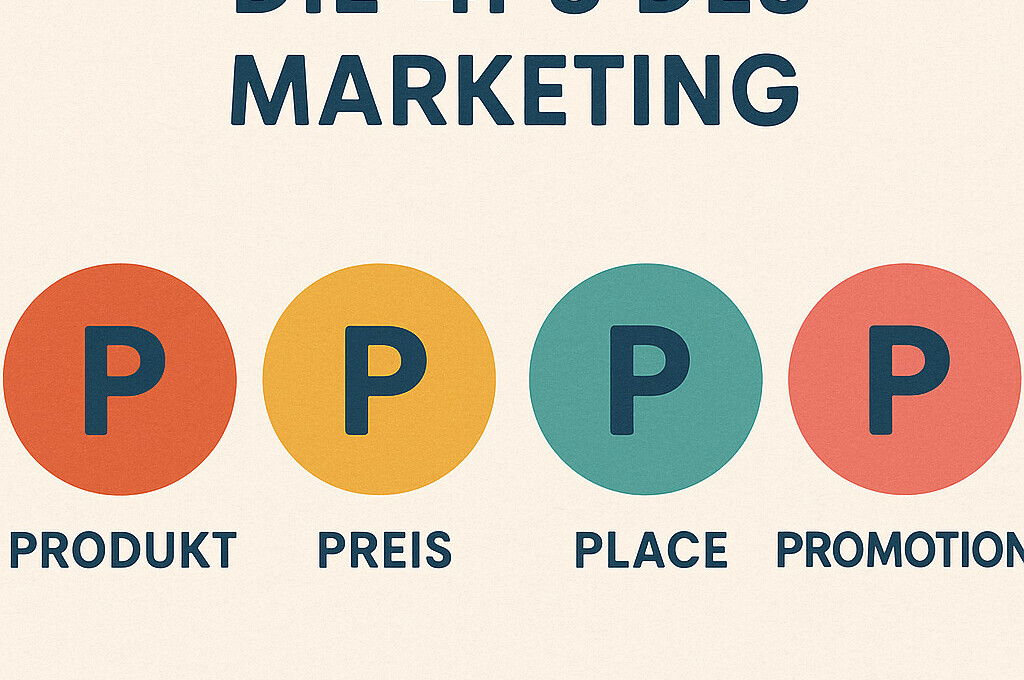
The original model emerged from observing successful business practices. McCarthy analyzed which factors contributed to the success of products and services. His 4P Marketing definition encompasses Product, Price, Place, and Promotion as central elements of any marketing strategy.
Since its inception, the framework has continuously evolved. Modern marketing experts supplement the original four Ps of marketing with additional dimensions. Nevertheless, McCarthy’s basic concept remains the backbone of contemporary marketing approaches and is applied daily in companies worldwide.
The Importance of Marketing Instruments 4 Ps
Structured marketing decisions emerge through systematic application of the 4 Ps of marketing. Each element influences the other components and creates a complex web of effects. Successful campaigns take these interdependencies into account from the start and align all measures with one another.
The 4 Ps of the Marketing Mix provide a methodical framework for strategic planning processes. Marketing professionals can break down complex decisions into manageable sub-areas. This structuring reduces the risk of poor decisions and significantly increases the likelihood of campaign success.
Modern companies often expand the classic 4 P model with additional dimensions. People, Process, and Physical Evidence complement the traditional elements to form a 7P framework. This expansion takes into account the growing importance of service processes and customer experiences in the digital economy.
The Four Ps of Marketing in Detail
The First P: Product (Product Policy)
Product decisions are at the center of every marketing four Ps strategy. The product must create genuine customer value and distinguish itself clearly from competitive offerings. Successful product policy begins with thorough target group analysis and identification of unmet needs.
Product development encompasses far more than technical specifications. Design, functionality, quality, and brand positioning form a holistic offering. Additionally, packaging, service, and warranty services play a crucial role in customer perception. These factors significantly influence the perceived value of the offering.
Become more visible on Google & Social Media?
In a free strategy consultation for data-driven online marketing, we uncover your untapped potential, review any existing ad accounts if necessary, examine your SEO ranking and visibility, and determine which strategy is appropriate for your budget and which active measures will lead to more inquiries or sales.

✅ More visibility & perception through targeted placement
✅ More visitors > prospects > customers > revenue
✅ Reach target groups scalably with SEA
✅ Act and grow sustainably with SEO
🫵 Maximum success with our hybrid strategy
💪 More than 15 years of experience across industries in over 1,000+ projects demonstrable!






Product lifecycle considerations help with long-term planning decisions. Each phase requires adapted marketing measures and investment priorities. Successful companies continuously develop new products and optimize existing offerings based on customer feedback and market changes.
The Second P: Price (Pricing Policy)
Pricing strategies decisively determine the commercial success of products and services. Optimal price finding takes costs, competitive situation, and customer value equally into account. In this context, price is often the most flexible element in the four Ps of marketing framework.
Psychological price effects significantly influence purchasing decisions. Customers evaluate offers not only rationally but are guided by price anchors and reference points. Skillful pricing leverages these mechanisms and creates perceived added value. Discount campaigns and package offerings can further increase purchase willingness.
Dynamic pricing models are gaining importance through digital technologies. Algorithm-based price adjustments enable real-time responses to market changes. At the same time, companies must ensure transparency and fairness to avoid jeopardizing customer trust.
The Third P: Place (Distribution Policy)
Distribution channels determine how and where customers come into contact with your offering. The 4 Ps in marketing systematics emphasizes the strategic importance of distribution decisions. Successful companies choose channels that optimally match their target group and business model.
Omnichannel strategies connect online and offline touchpoints into a seamless customer experience. Customers today expect the flexibility to switch between different channels. All touchpoints must provide consistent messages and service levels. Technological integration plays a key role in the success of these approaches.
Location decisions for physical presence require careful analysis. Factors such as target group density, competitive situation, and infrastructure significantly influence success. At the same time, digital platforms open new opportunities for geographic expansion and niche target groups.
The Fourth P: Promotion (Communication Policy)
Communication strategies create awareness and convey value propositions to the target group. The 4 Ps in marketing systematics positions Promotion as an equal element alongside Product, Price, and Distribution. Successful communication takes into account the particularities of different media and channels.
Integrated communication coordinates all messages and measures into a coherent overall strategy. Consistency in tone, design, and core messages strengthens brand perception. Companies must consider the specific requirements of different target group segments and adapt their approach accordingly.
Content marketing and social media significantly expand traditional advertising opportunities. Authentic content builds trust and fosters long-term customer relationships. Measurement and optimization of communication effects enable continuous improvements and more efficient resource allocation.
How to Successfully Apply the 4 Ps of the Marketing Mix
Step-by-Step Guide
Successful implementation of the 4 Ps of marketing begins with thorough situation analysis. First, understand your target group, competition, and market dynamics. This foundation enables you to strategically plan each of the four elements and align them with one another.
Develop concrete objectives and strategies for each P. Product decisions should meet customer needs, prices must be profitable and competitive. Distribution channels should optimally match the target audience, while communication creates the desired brand perception. Document your decisions and the underlying assumptions.
Regular review and adjustment ensure long-term success. Markets develop continuously, and your 4Ps of marketing strategy must remain correspondingly flexible. Establish measurement and control systems that provide early warning of necessary adjustments.
Practical Examples
Case studies illustrate the practical application of the 4 Ps marketing instruments across various industries. Technology companies often use premium pricing combined with exclusive distribution channels. At the same time, they invest heavily in innovative product development and target group-specific communication.
Retail companies often focus on optimal locations and competitive pricing strategies. Their product policy emphasizes assortment breadth and availability. Communication measures aim at local target groups and seasonal campaigns. This coordination of all elements creates sustainable competitive advantages.
Service companies extend the framework with additional dimensions. People and Process become critical success factors. Your 4Ps of marketing strategy must take into account the special characteristics of intangible services and develop correspondingly adapted approaches.
4P vs. 7P Marketing Mix: The Further Development
The expansion to three additional Ps
Service-oriented markets require extended marketing approaches beyond the classical four Ps in marketing. People, Process, and Physical Evidence complement the original framework with important dimensions. This expansion takes into account the growing importance of customer experiences and service processes.
People encompasses all human interactions between company and customers. Qualified employees become brand ambassadors and significantly shape customer perception. Investments in training and employee motivation pay off through improved customer satisfaction.
Physical Evidence creates tangible touchpoints for intangible services. Office equipment, web design, and documentation quality convey professionalism and competence. Process defines the procedures and standards for consistent service experiences.
When should you expand the 4Ps of marketing?
Complex business models benefit from the 7P expansion of the traditional framework. Consulting firms, financial service providers, and healthcare organizations must systematically manage service processes and employee quality. The expanded model provides the necessary structures and thinking approaches for this.
B2B markets often require more intensive customer relationships than classic consumer goods markets. Sales processes take longer and involve multiple decision-makers. The additional Ps help structure this complexity and develop successful strategies.
Digital transformation changes traditional industry boundaries and creates new requirements. Platform businesses and data-driven services require adapted marketing approaches. The 7P system offers flexibility for these new challenges.
Frequently Asked Questions about the 4 Ps in Marketing
FAQ Section
The relevance of the classical 4P model concerns many marketing managers. The framework remains relevant because it depicts universal marketing fundamentals. Modern additions extend the application possibilities but do not replace the proven basic principles.
Digital transformation influences all four elements of the marketing mix. Online sales expand Place decisions, while data-driven pricing models create new opportunities. Product development becomes more agile, and communication becomes more interactive and measurable.
Industry-specific adjustments are necessary and desirable. Industrial goods require different approaches than consumer products. B2B marketing differs fundamentally from B2C strategies. The 4P framework offers the flexibility for these adjustments.
Conclusion: The 4Ps of Marketing as a Foundation for Success
Systematic marketing requires structured approaches and proven frameworks. The 4Ps of marketing have provided this structure for over 60 years and have proven themselves in countless applications. Their strength lies in simplicity and universal applicability.
Successful companies integrate all four elements into a coherent overall strategy. Isolated optimization of individual components rarely leads to the desired success. Synergies arise through coordinated planning and implementation of all marketing instruments.
Continuous further development keeps the framework current and relevant. New challenges require adjustments and expansions. The fundamental logic of the four Ps remains intact and provides guidance for future developments.



 DE
DE