In B2B e-commerce, purchase on account plays a central role as the most popular payment method for business customers. Unlike in the B2C sector, companies often rely on larger order quantitiesandlonger payment terms reliant on optimizing their liquidity and cash flow. The targeted purchase on account not only offers flexibility and trust but also efficient transaction processing, enabling business customers to place orders quickly without immediate payment.
In this context, purchase on account becomes a decisive success factor for B2B companies that want to offer their customers a convenient and secure payment option. In this article, we will cover all aspects, information, advantages and disadvantages, as well as the currently best solution and payment providers for Europe.
B2B Invoice Purchase Providers & Solution: The Most Important Payment Method in B2B E-Commerce
What does purchase on account mean in B2B?
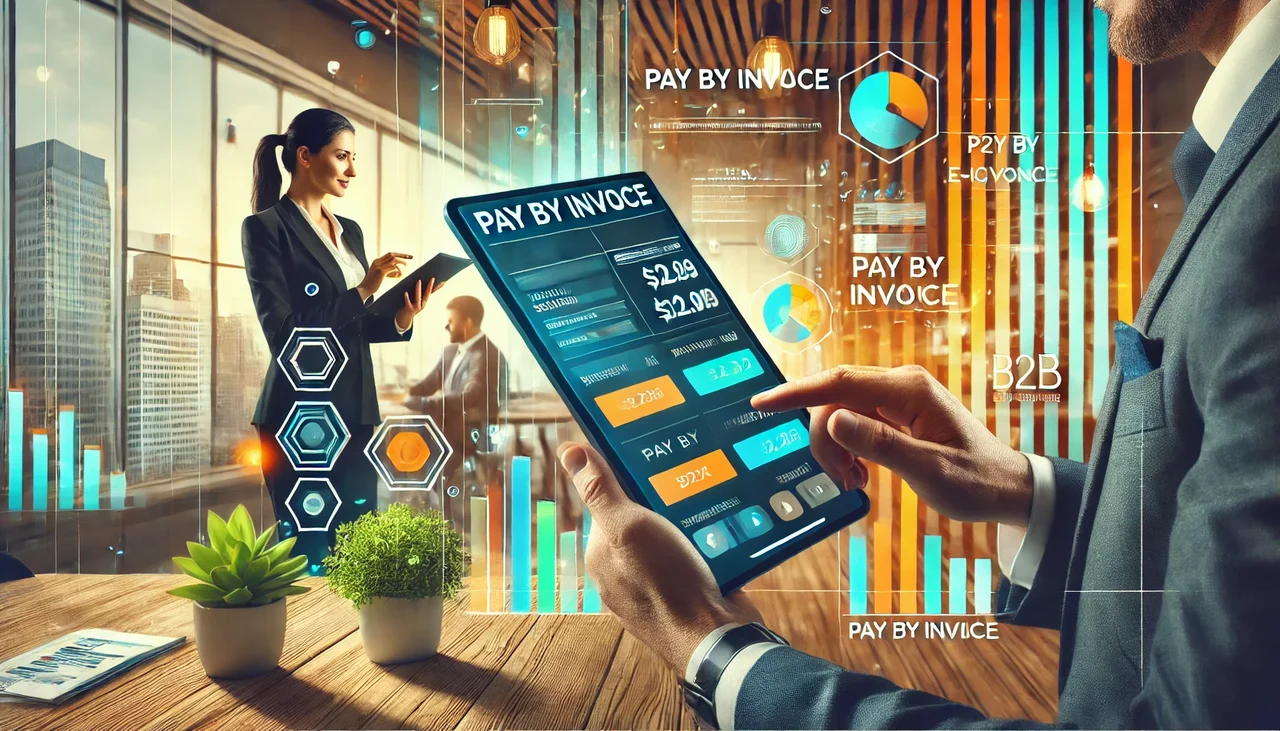
Purchase on account is the most popular payment method in Germany – not only for private individuals but also for companies. With invoice purchase, also known as invoice payment, the buyer receives goods or services immediately and only pays for them later. This provides companies with more liquidity and optimizes cash flow. The payment term varies and is usually determined by the invoice purchase provider. B2B invoice purchase does not differ in principle from the B2C sector. However, the background process is significantly more complex due to legal circumstances and often higher amounts.
Main advantage in a nutshell: With purchase on account, the buyer receives the ordered goods or services immediately and settles the invoice at a later date. However, if the seller uses a payment service provider, they also receive the money immediately! A win-win situation for both sides.
Special challenges in the B2B segment for purchase on account
In B2B, purchase on account still poses a particular challenge. Most B2B companies have a smaller customer base than B2C providers. Since fewer orders are received, B2B providers are all the more dependent on timely payment. B2B purchase on account usually entails a higher risk for the provider because the sums to be paid are significantly higher.
On average, the value of B2B invoices is 1,900 Euros in 2024.
However, if an online payment provider takes over, the receivables management shifts from the provider to the so-called factoring provider.

Risk management and credit assessment
Should the customer file for insolvency after completing a purchase on account, it is unlikely that the invoice will be settled at all. Any potential payment involves considerable effort, long waiting times, and high legal costs. Therefore, it is important for B2B providers to check the company’s creditworthiness in advance. Only after a successful check can the purchase be completed and the goods delivered. This is exactly what B2B payment providers, as we will introduce later in the article, do!
Advantages and disadvantages at a glance
Advantages of B2B purchase on account for sellers:
- Most popular payment method (95% of B2B customers prefer purchase on account)
- Higher customer satisfaction and customer loyalty
- Increase in conversion rate in the online shop
- Sales increase of up to 35% possible
- Competitive advantage by offering the preferred payment method
- With payment provider: Immediate 100% payout
- With payment provider (online payment services): No risk of payment default
- Fee of 2 to 3.5% can often be passed on to the buyer
- Also possible for new customers and guest orders
Disadvantages of B2B purchase on account for sellers:
- High risk of default without a payment provider (Tip: Therefore, only work with factoring and modern payment providers – solution further down in the article!)
- Average invoice amount of 1,900 Euros increases the risk
- Time-consuming and expensive dunning processes in case of payment defaults
- Long waiting times in case of payment default
- High legal fees for legal action
- In case of customer insolvency, usually complete payment default
- Complex credit checks necessary
- Higher administrative effort without a payment provider
Advantages for B2B buyers:
- Goods/services immediately available
- Payment only after receipt of goods
- Flexible payment terms (partially up to 90 days)
- Optionally, installment payments up to 5 years with fair interest rates are possible
- Better liquidity planning possible
- Simplified accounting processes
- Familiar payment processing in the B2B sector
- Fast ordering process possible
- For online payment processing: Simple digital processing
- Balance sheet reduction possible at year-end

Become more visible on Google & Social Media?
In a free strategy consultation for data-driven online marketing, we uncover your untapped potential, review any existing ad accounts if necessary, examine your SEO ranking and visibility, and determine which strategy is appropriate for your budget and which active measures will lead to more inquiries or sales.

✅ More visibility & perception through targeted placement
✅ More visitors > prospects > customers > revenue
✅ Reach target groups scalably with SEA
✅ Act and grow sustainably with SEO
🫵 Maximum success with our hybrid strategy
💪 More than 15 years of experience across industries in over 1,000+ projects demonstrable!





Requirements for Modern B2B Invoice Purchase Solutions
Especially in e-commerce, customers are used to fast processes. To offer a pleasant customer experience in B2B as well, credit checks must not delay the purchase. After all, the advantage of an online shop is that it is fully automated, always accessible, and leads to a purchase with just a few clicks. B2B invoice purchasing requires a plugin (module / extension) for the online shop that can be easily embedded, performs a reliable risk assessment,works in seconds, and is completely automated.
Now let’s move on to the solution for smooth B2B sales with online processing, manually or in the shop.
The Role of Payment Providers
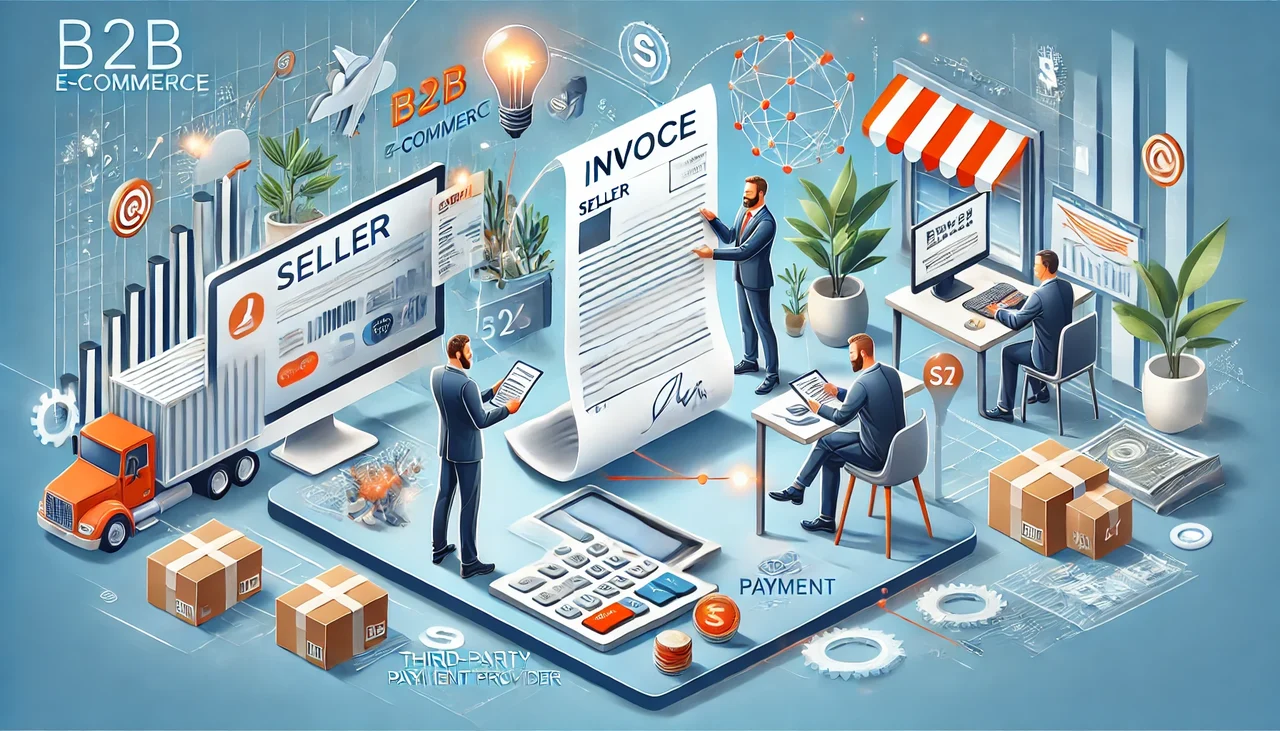
To meet the complex requirements of B2B invoice purchasing, more and more companies are relying on specialized payment providersandfactoring service providers who handle invoice and receivables management. These offer comprehensive solutions that both minimize risks and enable a smooth purchasing process. A leading provider in this area is BILLIE, which specializes in B2B invoice purchasing – more on this in the article.
The Best B2B Online Payment Provider in Europe – BILLIE Payment Provider as the Solution
BILLIE* has specialized in purchase on account as a leading European B2B payment provider. The system is backed by Mollie from Amsterdam, currently the fastest-growing and largest payment system for online sales in Europe! The company offers full integration into common shop systems such as JTL,Magento,Shopify,Shopware, Oxid, PlentymarketsandWooCommerce + many other systems.
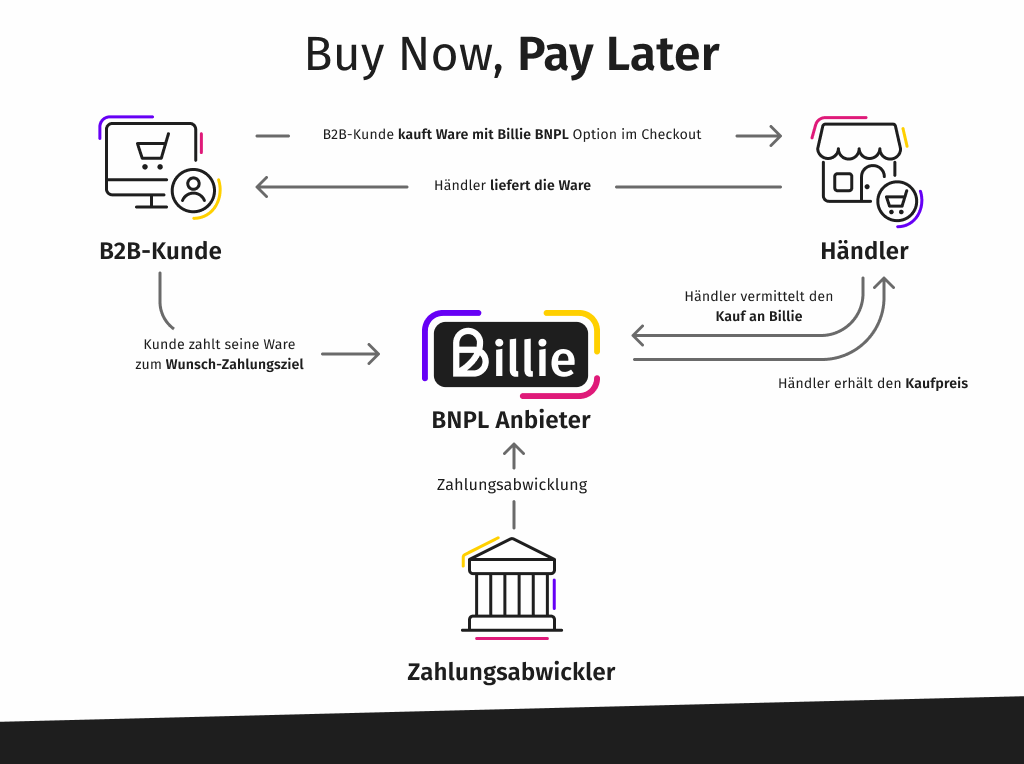
 The risk assessment is carried out in real-time, with an acceptance rate of over 90 percent. New customers and guest orders are also possible. After a successful purchase, an immediate 100 percent payout is made to the merchant – regardless of the customer’s payment term.
Particularly advantageous for merchants is the immediate 100% payout after successful completion of the purchase, regardless of the payment term granted.
The principle briefly explained:
Advantages of using a payment provider:
- Highest acceptance rate on the market (over 90%)
- Over 35% more sales!
- Real-time credit check in seconds
- Full integration into common shop systems
- Complete dunning process is handled (The dunning process is carried out in your name and design, without you having to worry about anything! Billie covers the costs associated with dunning and, if necessary, collection procedures. You will not incur any further costs.)
- Assumption of default risk
- Immediate payout to the merchant
- Digital, automated process
- Professional risk management
- DATEV interface
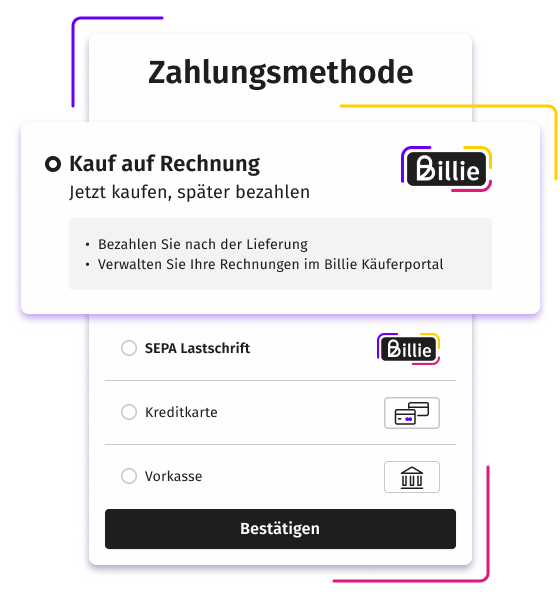
Billie pays you 100 percent immediately – regardless of your customers‘ payment terms.
This is how the process looks at the checkout:
Disadvantages of using a payment provider:
- Transaction fees apply -> can be passed on to the customer (buyer)
- Technical integration necessary (plugins available and simple API interface)
- Dependence on the provider
- Not all customers will be accepted
- Limited control over dunning processes
The invoice payment method for your B2B online shop can thus be implemented ideally and easily without significant disadvantages.
Mollie also offers other payment options as well as manual customer management and payment links – even without an online shop!
Simply register with Mollie and select activation for BILLIE!
No contract, no monthly fixed fee & no minimum term!!!
Currently (as of Nov. 2024) available for the following countries:
Germany, Austria, France, Netherlands & Sweden
Low fees of 3.49% + €0.35, which can be partially or fully passed on to the buyer/customer.
Further B2B payment methods
In addition to purchase on account, there are other B2B payment methods such as SEPA direct debit, credit card payments, PayPal,Klarna, Giropay, and Buy Now, Pay Later (BNPL). SEPA direct debit is particularly suitable for recurring payments, while PayPal offers advantages primarily for international transactions. Credit card payments enable automated payment processing with integrated credit checks.
Buy Now, Pay Later is gaining increasing popularity and allows flexible payment plans.
General article on Mollie as a payment system (absolute recommendation):
Future of B2B purchase on account
The digitalization of B2B purchase on account is progressing. Modern payment providers enable secure and efficient processing that meets the needs of both buyers and sellers. With the right technical solution, purchase on account can also be successfully implemented in B2B e-commerce.

Florian Ibe
CEO & Marketing Consultant
Your contact person: Florian Ibe
Future Prospects
The digitalization of B2B invoice purchasing is continuously progressing. Modern payment providers play a key role in this by ensuring secure and efficient processing that meets the needs of both buyers and sellers. The integration of artificial intelligence and automated processes will further drive development and make B2B invoice purchasing even more efficient.
The benefits of this development are already measurable today:
- Increase in conversion rate
- Revenue growth of up to 35 percent
- Reduced administrative effort
- Improved liquidity
- Simplified international expansion
The future of B2B invoice purchasing clearly lies in the intelligent combination of traditional payment methods with modern digital solutions. Companies that actively embrace this development gain a decisive competitive advantage in the increasingly digitalized B2B trade.

Important definitions for invoice purchasing, factoring, and receivables management:
Factoring is a financial service in which a company sells its outstanding receivables to a factoring company (the so-called factor). In return, the company receives immediate liquidity without having to wait for customer payments. Factoring serves to improve liquidity and can minimize the risk of payment defaults.
Receivables Management encompasses all measures a company takes to collect outstanding invoices and claims from customers. It begins with invoicing, includes dunning and debt collection, and aims to secure liquidity and minimize payment defaults. Effective receivables management helps to accelerate incoming payments and improve the company’s financial stability.
How does factoring / receivables management work?
- Sale of the receivable:
The company sells its receivables (outstanding invoices) to the factoring company. This often happens at a certain percentage of the invoice amount (e.g., 90-95%). - Immediate payment:
The factoring company usually pays the company the agreed percentage of the receivable amount within 24 to 48 hours. This immediately improves the company’s liquidity. - Collection of the receivable:
The factoring company takes over the collection, i.e., collecting the receivables from the company’s customer. The customer now pays directly to the factor. - Final payment:
Once the company’s customer has fully paid the invoice, the company receives the remaining amount minus a fee that the factoring company retains for its service.
Types of Factoring
- True Factoring (with default protection):
With true factoring, the factor assumes the risk of payment default. Should the customer not pay, the factoring company bears the risk. The company is thus protected against payment defaults. - Untrue Factoring (without default protection):
With untrue factoring, the risk of payment default remains with the company. Should the customer not pay, the company must reimburse the factoring company for the sum. - Open vs. Silent Factoring:
Open Factoring: The customer knows that the receivable has been sold to a factoring company, as this is noted on the invoice.
Silent Factoring: The customer is not informed that the receivable has been sold. The company collects the receivable in its own name, while the factoring company remains in the background.
Advantages of Factoring
- Improved liquidity: The company receives money immediately and does not have to wait for customer payments.
- Risk hedging: With true factoring, the company is protected against payment defaults.
- Relief of receivables management: The factoring company takes over debt collection and dunning.
- Better planning predictability: The immediate inflow of liquidity simplifies the company’s financial planning.
Disadvantages of Factoring
- Costs: Factoring involves fees that can reduce a company's profit. -> can be charged extra to the customer upon purchase!
- Dependency: Companies that regularly use factoring could become dependent on quick liquidity.
- Restrictions: Not all receivables are suitable for factoring, e.g., with uncertain customers or long payment terms. Therefore, credit checks are performed online in real time.
Factoring is a helpful financing instrument to improve a company’s liquidity and reduce the risk of default. It is particularly suitable for companies that have long payment terms and need quick liquidity to continue growing or cover their ongoing costs.
Here too, BILLIE with Mollie perfectly steps in and enables the best liquidity with efficient processing and maximum digitalization.
No contract, no monthly fixed fee & no minimum term!!!


 DE
DE