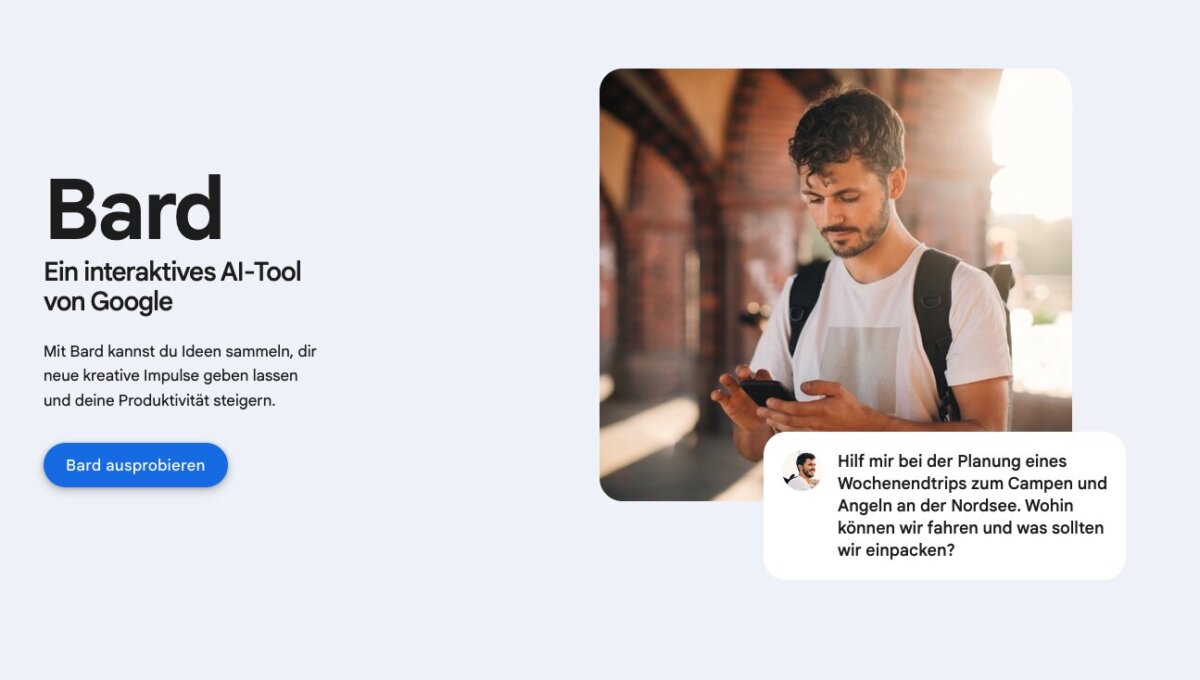
„Bard“ is Google’s answer to ChatGPT, developed by Alphabet (Google’s parent company). Bard is based on Google’s own language processing technology and aims to provide a similar experience to ChatGPT, but with the integration of Google’s extensive data and search capabilities. It is part of a growing trend in the development of AI-driven language models that can be used for various applications such as automated responses, text generation, and data-driven decision support. Bard is designed to leverage Google’s expertise in search technologies and machine learning to provide users with more precise and contextually relevant information.
Bard Google AI (Alphabet) – Googles ChatGPT-Alternative
Google Bard, another ChatGPT alternative, developed by Alphabet’s Google, is an advanced AI language model that is attracting a lot of attention due to its capabilities and potential applications. However, there are ethical, social, and technical challenges in the development and implementation of Bard. These include issues such as inherent bias in training data, transparency in how the models work, and the protection of user privacy. From a societal perspective, topics such as potential job loss due to automation, preventing the spread of misinformation, and understanding the broader social impacts of the extensive use of AI language models are in focus. Technically, challenges such as scalability, explainability, and data quality are crucial for the efficient functioning of these models.
Google Bard is preparing to launch a range of new features, including custom bots,tasks,shared queries, and a paid „Advanced“ version. This Advanced version is expected to offer more sophisticated language processing capabilities. Google recently unveiled its Gemini model, which powers Bard, and the „Ultra“ version of Gemini is set to power Bard Advanced. Google is also exploring the integration of custom bot creation under the codename „Motoko“.
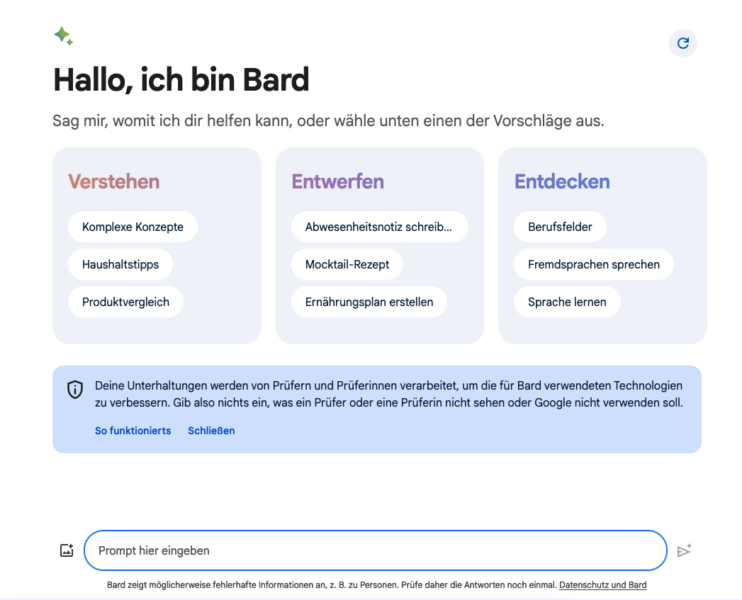
Furthermore, Bard will be integrated into the Google Assistant, which will change the way users interact with their devices. This integration will allow users to type, speak, or share photos with the Assistant, leveraging Bard’s AI capabilities. The integration points to a more seamless and intuitive user experience and signals Google’s intention to make Bard a core component of the Android ecosystem.
In addition, Bard’s potential for the education sector is being explored, with the possibility of revolutionizing teaching and learning methods. However, specific details on this aspect were not elaborated in the sources.
Overall, Google Bard represents a significant step in the development of AI-driven language models, with far-reaching implications for various sectors, including technology, education, and society in general.
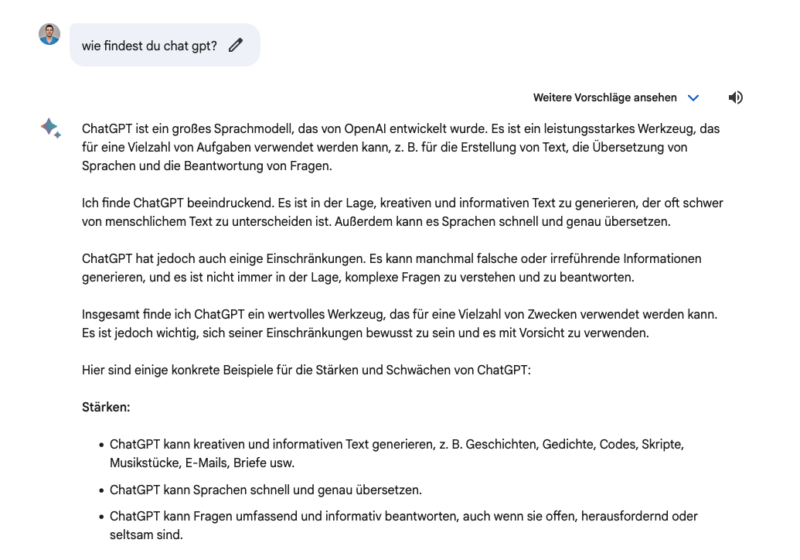
Difference between Google Bard and Chat GPT
Google Bard and OpenAI's ChatGPT differ in several key aspects, primarily due to their respective development, underlying technology, and functionalities:
- Development and Company: Bard was developed by Google, a company known for its extensive data and search capabilities. ChatGPT, on the other hand, was developed by OpenAI, an organization renowned for its research and development in artificial intelligence.
- Technological Basis: Although both Bard and ChatGPT are based on large language models (LLMs), they utilize different technological foundations and training data. Bard, for example, might have stronger access to Google’s own databases and search algorithms, while ChatGPT relies on OpenAI’s data and models.
- Integration and Applications: Bard might be more closely integrated with Google’s own products and services, such as Google Search and various Google platforms. ChatGPT, however, is designed as a standalone tool that can be integrated into various applications and platforms.
- Access and Business Model: The access and usage models might differ. Bard could be part of the Google ecosystem and potentially linked to other Google services. ChatGPT is offered by OpenAI and has its own access and usage framework.
- Extensions and Features: Both models are constantly evolving and adding new features. Bard might have special features tailored to Google’s technologies, while ChatGPT excels in text generation and answering, possibly with a focus on creativity and versatility.
It is important to note that both Bard and ChatGPT are dynamic projects that are continuously evolving, so their capabilities and offerings may vary over time.
Learn and further develop skills in working with Chat GPT
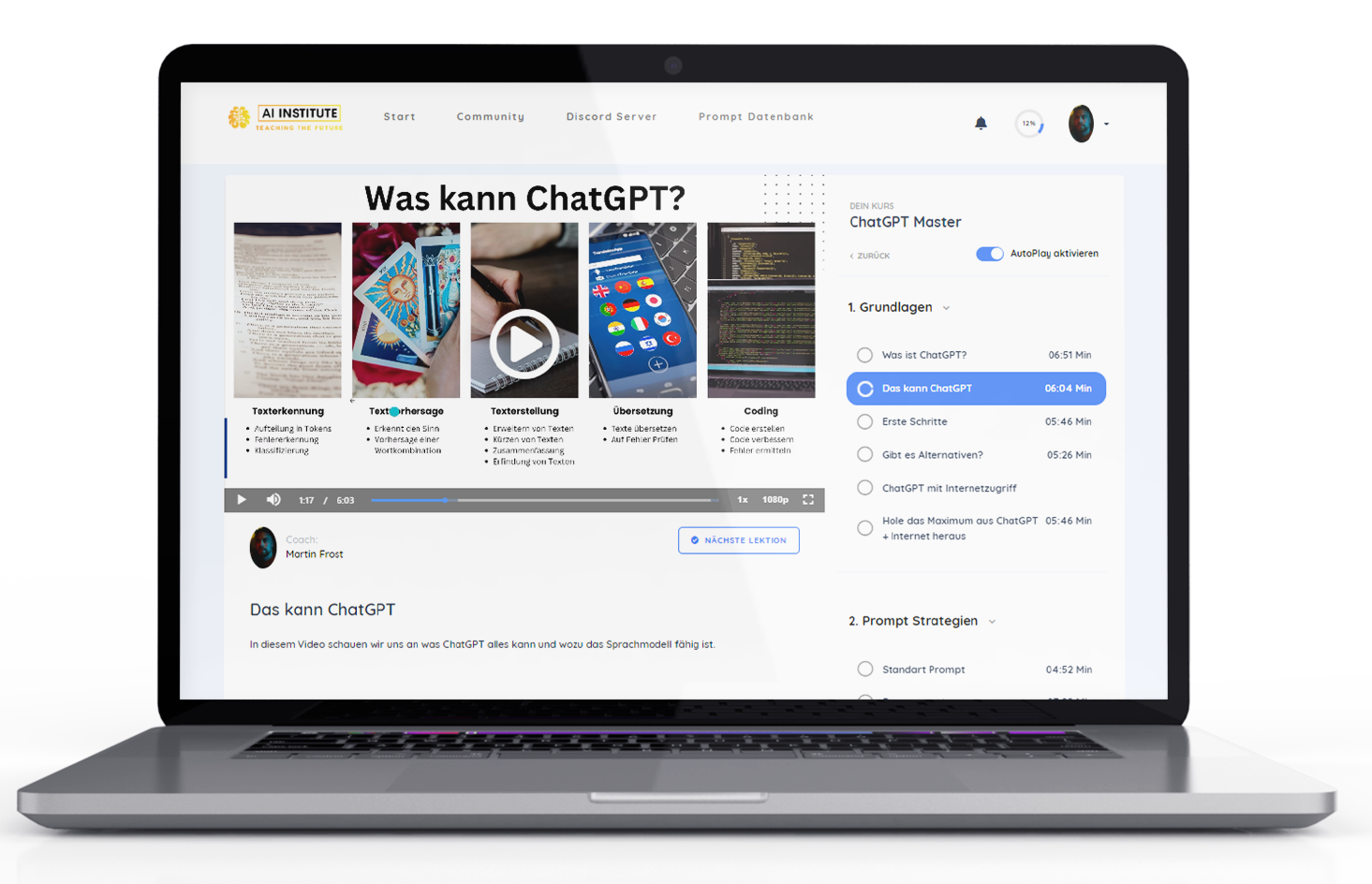
Absolute Empfehlung um den Handling and using Chat GPT + templates to learn quickly 🚀:
Another alternative as a Chat GPT basic course for business:

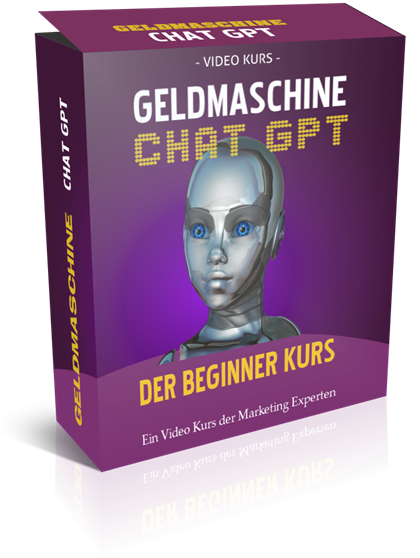
Earn money with Chat GPT – the ultimate money-making machine?
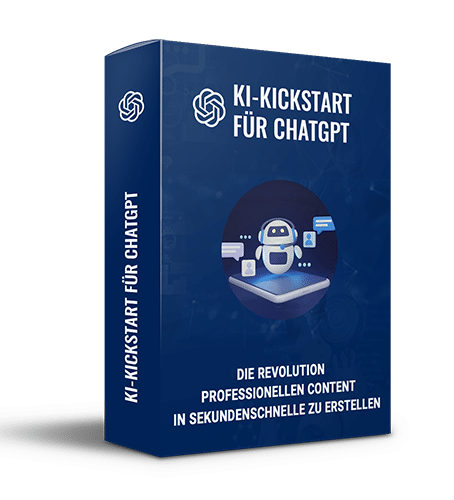
AI Kickstart Course to Get Started 10% Faster in Online Marketing:
Become more visible on Google & Social Media?
In a free strategy consultation for data-driven online marketing, we uncover your untapped potential, review any existing ad accounts if necessary, examine your SEO ranking and visibility, and determine which strategy is appropriate for your budget and which active measures will lead to more inquiries or sales.

✅ More visibility & perception through targeted placement
✅ More visitors > prospects > customers > revenue
✅ Reach target groups scalably with SEA
✅ Act and grow sustainably with SEO
🫵 Maximum success with our hybrid strategy
💪 More than 15 years of experience across industries in over 1,000+ projects demonstrable!






Additional Tip – Buy AI & AI Software Cheaply with One-Time Payment Instead of Monthly Subscriptions
Now it's getting exciting around Google Chat:
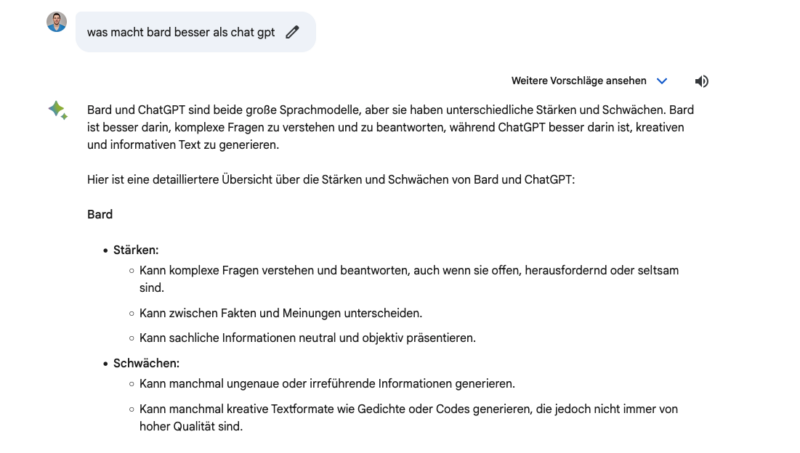
What makes Bard better than Chat GPT, or not?
Google Bard differs from ChatGPT in several key areas, which may make it "better" in certain aspects, depending on specific requirements and usage context:
- Access to current information: Bard can access the internet in real-time and incorporate information that has emerged since its last training data update. This allows Bard to provide more current and contextually relevant answers, especially on rapidly evolving or recent topics. In contrast, ChatGPT relies on a fixed training dataset that was completed at a specific point in time, meaning it cannot directly access current events or the latest information.
- Integration with Google services: Bard is closely integrated with existing Google services and products. This integration can offer users a more seamless experience, especially if they are already embedded in the Google ecosystem. For example, Bard can work directly with Google Search and other Google platforms to enable more comprehensive and contextualized information retrieval.
- Technological advancements: Bard is based on Google’s LaMDA technology, known for its advanced capabilities in natural language processing and dialogue management. LaMDA was developed to enable natural and fluid conversations, which could lead to a potentially more intuitive and human-like interaction.
- Scalability and efficiency: Google has stated that Bard operates with a lighter version of LaMDA that „requires significantly less computing power,“ allowing the tool to scale to more users while enabling more feedback. This could lead to more efficient and widespread use of Bard compared to ChatGPT.
It is important to note that the advantages of Bard over ChatGPT can vary depending on the area of application and personal preferences. While Bard offers advantages in some areas, ChatGPT could be superior in other aspects such as versatility in text generation or the broad range of use cases. Both tools represent significant advances in AI-powered language technology and each has its own strengths and areas of application.
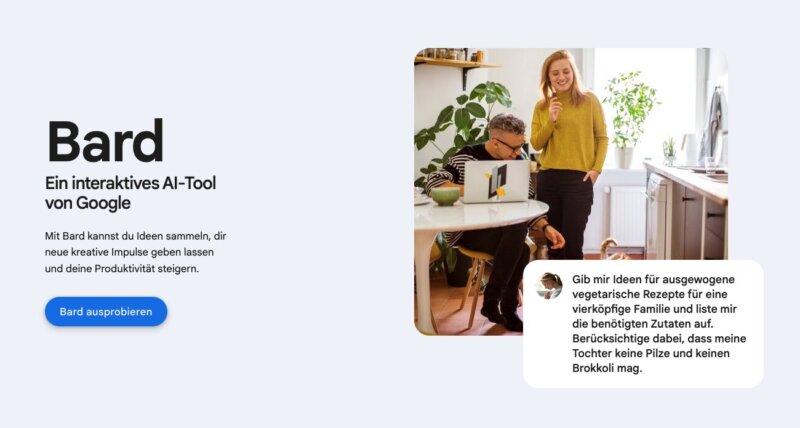
Comparison: Advantages (Strengths) & Disadvantages (Weaknesses) of Google Bard as a Chat GPT Alternative
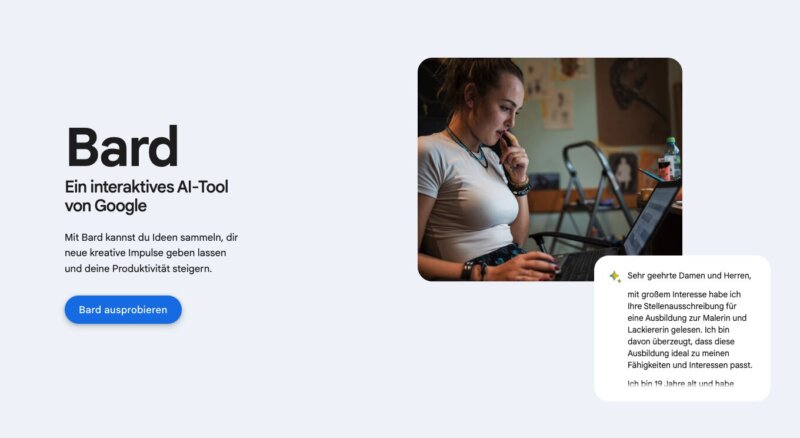
The most frequently asked questions about Bard, the Google AI chat from Alphabet
Google Bard, Google’s AI-powered language model, has a series of frequently asked questions and answers that shed light on its range of applications and functionalities:
- What is Bard and how can it help? Bard is a virtual assistant that can help with various tasks such as brainstorming, creating drafts, and simplifying complex topics. It can answer questions on a wide range of topics, but should not be used as a substitute for professional advice in areas such as medicine, law, or finance.
- What is needed to use Bard? To use Bard, you need a personal Google account or a Google Workspace account with Bard access enabled. Bard is primarily available in English, but also supports other languages.
- Age restrictions for using Bard? Users must be at least 18 years old.
- Can Bard help with generating code? Yes, Bard can assist with creating code for various programming tasks. However, the use of the code is the responsibility of the user.
- Is Bard a replacement for Google Search? Bard is not intended as a replacement for Google Search, but rather as a feature within Search. It is designed to help users explore knowledge on topics and offers an interactive method for accessing knowledge
- How can one use Bard? Bard can be used by entering prompts or questions in the Google search bar, similar to ChatGPT. It is expected that Bard will be made available to the general public in the coming weeks
- Differences between Bard and ChatGPT? A main difference between Bard and ChatGPT lies in Bard’s ability to take real-time events into account when generating responses. Bard’s responses are based on a broader and more current data basis
- Can Bard use my location data? Bard can use your general or precise location to provide more relevant responses, but requires your permission to access the precise location of your device.
- Limitations of Bard? Bard is an experimental technology and can sometimes provide inaccurate or inappropriate responses. Its ability to maintain context in longer conversations is currently still limited.
This information provides a comprehensive overview of how Google Bard works and its possible applications, but also shows that there is still room for development, particularly regarding accuracy and contextual understanding.
More information about Google Bard
In addition to the basic information and frequently asked questions about Google Bard, there are some other important aspects worth highlighting:
- Technological basis: Bard is based on Google’s LaMDA technology (Language Model for Dialogue Applications), an advanced AI engine. LaMDA enables Bard to respond more precisely to natural language input and offers the flexibility to communicate across a wide range of topics and contexts
- Current information: A key advantage of Bard over some other AI models is its ability to incorporate current information. This means that Bard can potentially provide information about events and developments that occurred after the last update of its training dataset.
- Integration plans: Google plans to integrate Bard into its search functions. This means that Bard will not only serve as a standalone tool, but can also play a role in improving and expanding the search experience by helping users handle complex queries and gain deeper insights into various topics.
- Beta testing phase: Bard is currently in a beta testing phase and is only accessible to a limited number of testers. This indicates that Google is actively gathering feedback and making improvements before Bard is made available to a broader public.
- Future Availability: Google has announced that Bard will be available to all users in the coming weeks. This suggests a broader rollout of the tool soon.
- Data Protection and Privacy: As with any AI tool based on large amounts of data, data protection and privacy are important considerations. Users should be aware of the type of data they share with Bard and how this data may be used.
- Potential for Education and Research: Bard could play an important role in education and research by helping users gather information, understand concepts, and develop new ideas. Its ability to simplify complex information makes it a potentially valuable tool for learners and researchers.
These points underscore that Bard is an exciting development in the field of AI-driven language models, presenting both opportunities and challenges for users and developers.
Future with the AI & AI Google Chat Bard
Bard’s own response:
“
As a large language model, I am constantly learning and growing. In the future, I will work on improving my capabilities in the following areas:
- Accuracy: I want to be able to provide accurate and factual information, even when questions are complex or challenging.
- Objectivity: I want to be able to present factual information neutrally and objectively, without expressing my own opinions or biases.
- Creativity: I want to be able to generate creative text formats such as poems, code, scripts, musical pieces, emails, letters, etc., that are of high quality.
- Understanding of languages: I want to be able to translate languages quickly and accurately.
I believe that these improvements will enable me to support people in even more diverse and helpful ways.
Here are some concrete examples of tasks that I would like to perform better in the future:
- I want to be able to understand and answer scientific questions, even if they are complex or controversial.
- I want to be able to write creative texts that are both entertaining and informative.
- I want to be able to translate languages in a way that is not only grammatically correct, but also natural and fluent.
I am excited about what the future holds for me, and I am determined to use my skills to help people around the world.
Quote from 11.01.2024 end.
Conclusion on Bard
Google Bard is an innovative development in the field of AI-based language models that leverages the strengths of Google’s technologies and services. With its ability to incorporate current information from the internet, Bard potentially offers more relevant and up-to-date answers than models based on fixed training datasets. The integration with Google’s search and other services could make Bard a valuable tool for users seeking deeper insights into various topics or wanting to process complex queries.
While Bard offers many advantages, there are also challenges and limitations, such as the need for further development in areas like dialogue management and data protection. As part of the Google ecosystem, Bard could also be subject to certain business and data protection policies that influence its application and flexibility.
Overall, Bard represents a significant advance in AI technology and could have a considerable impact on how we search for and process information. Its future development and broader introduction will be insightful in understanding its full potential and its role in the digital landscape.




 DE
DE