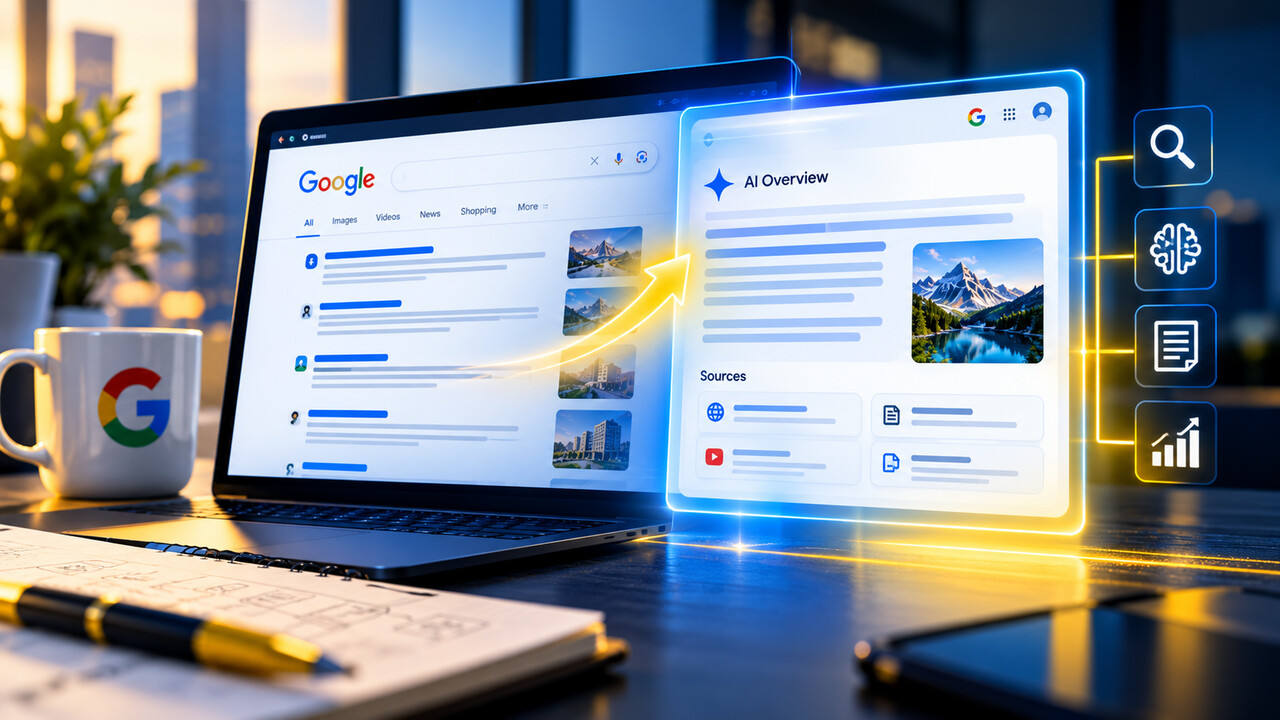
„Becoming visible“ in a general context means gaining more attention, perception, and presence. It can refer to various aspects of life or work. However, it mostly involves increasing and continuously improving perception and visibility on the web through online marketing and content – i.e., targeted content for one’s target group.
Becoming visible means being perceived as or for something…
Becoming Visible – Visibility on the Internet for Individuals, Teams & Companies
Visibility on the internet (web) is essential today for the success of individuals, teams, and companies. For individuals, this means building a strong personal brand that highlights their unique skills and values. Teams benefit from a clear team identity and dynamics that strengthens their collaboration and innovation and makes it visible externally. Companies can build trust and loyalty among customers and employees through a consistent corporate identity, differentiate themselves from competitors, and increase their brand awareness.
Through targeted online presence, social media marketing, content creation and distribution, as well as continuous adaptation and improvement of their strategies, individuals, teams, and companies can make their uniqueness visible and achieve sustainable success.

Making Your Uniqueness Visible: A Guide for Individuals, Teams, and Companies to Become More Visible on the Web
In an increasingly digital and interconnected world, it is crucial for individuals, teams, and companies to effectively communicate and make their uniqueness visible. The guide „Making Your Uniqueness Visible“ aims to provide you with practical strategies and innovative approaches to strengthen your presence on the web. From sharpening your brand to optimizing your online appearances, this guide covers all important aspects to not only be seen but also recognized and appreciated. We will explore how to remain authentic while standing out from the crowd, and how to develop a sustainable strategy that supports your long-term success in the digital space. Learn to use your uniqueness in a way that not only attracts attention but also creates genuine connections and leads to tangible results.

Becoming Visible as Individuals (Freelancers, Consultants or Coaches)
- Personal Branding:
- What is it?: Personal branding refers to how you present yourself externally and how you want to be perceived by others.
- Requirement: Clearly define and communicate your values, skills, and unique characteristics.
- Benefit: Differentiating yourself from others in your field, building a loyal following, and increasing your professional opportunities.
- To-Dos:
- Develop a clear and consistent personal brand.
- Create a professional online profile (e.g., LinkedIn).
- Regularly publish content that showcases your expertise.
- Participation in professional events and networking meetings.
- Nurturing and expanding your network through active interaction.

Becoming Visible as a Team
- Team Dynamics and Identity:
- What is it?: Team dynamics and identity refer to the way team members work together and how the team is perceived as a unit.
- Requirement: Define common goals, values, and working methods that emphasize the uniqueness of the team.
- Benefit: Strengthen collaboration, foster innovation, and build a strong, unified team image.
- To-Dos:
- Define the team’s common values and goals.
- Develop a clear communication strategy within the team.
- Promote team-building activities to strengthen cohesion.
- Regular reflection and adaptation of work processes.
- Presentation of team achievements and projects to the outside world.

Become more visible on Google & Social Media?
In a free strategy consultation for data-driven online marketing, we uncover your untapped potential, review any existing ad accounts if necessary, examine your SEO ranking and visibility, and determine which strategy is appropriate for your budget and which active measures will lead to more inquiries or sales.

✅ More visibility & perception through targeted placement
✅ More visitors > prospects > customers > revenue
✅ Reach target groups scalably with SEA
✅ Act and grow sustainably with SEO
🫵 Maximum success with our hybrid strategy
💪 More than 15 years of experience across industries in over 1,000+ projects demonstrable!







Becoming more visible as a company (Corporate Identity)
- Corporate Identity (CI):
- What is it?: Corporate Identity encompasses the entirety of characteristics that make a company unique and express its philosophy, culture, and positioning.
- Requirement: Consistent representation of corporate values, vision, and culture through visual, communicative, and behavioral measures.
- Benefit: Increased brand awareness, building trust and loyalty among customers and employees, differentiation from competitors.
- To-Dos:
- Development of a uniform visual identity (logo, colors, fonts).
- Definition and communication of corporate values and vision.
- Implementation of a clear internal and external communication strategy.
- Promoting a corporate culture that reflects the CI.
- Regular review and adjustment of the CI strategy based on feedback and market changes.
Conclusion: Making your uniqueness visible means for individuals, teams, and companies to clearly define and consistently communicate their own strengths, values, and special characteristics. This requires a strategic approach that ensures authenticity and consistency in presentation. By highlighting your uniqueness, you build trust and loyalty, differentiate yourself from the competition, and create a strong, recognizable identity.

The necessary steps to become more visible – online and in real life
-
Build a strong online presence – website, blog, webshop:
- Definition: A strong online presence means that you are easily found and perceived as an authority through your website, blogs, and other online platforms.
- Requirement: Building and continuously maintaining a professional and informative online presence.
- Benefit: Increased trust and credibility with potential customers, better visibility in search engines, and a professional appearance.
- Importance: Without a strong online presence, it can be difficult to be noticed by potential customers or partners.
- To-Dos:
- Creation of a professional website with an appealing design and clear structure.
- Regular updating and maintenance of website content.
- Setting up a blog and regularly publishing valuable posts.
- Search engine optimization (SEO) for all website content.
- Linking the website with social media profiles and other relevant platforms.
-
Market Research and Target Audience Analysis:
- Definition: Market research is the process of collecting, analyzing, and interpreting data about markets, customers, and competitors. Target audience analysis is a specific part of this that focuses on examining the characteristics and needs of a particular group of people who are considered potential customers or users.
- Requirement: To make informed decisions, you need to understand who your target audience is and what they need. This requires data research and analysis.
- Benefit: A deep understanding of your target audience helps you develop tailored marketing strategies that are better aligned with their needs. This increases the likelihood that they will respond to your messages and purchase your products or services.
- Importance: Without accurate knowledge of your target audience, you risk using marketing resources inefficiently and failing to reach potential customers.
- To-Dos:
- Conduct surveys and interviews with existing and potential customers.
- Utilize web analytics tools (e.g., Google Analytics) to identify visitor demographics and behavior patterns.
- Conduct competitive analysis to understand their target audience strategies.
- Create buyer persona profiles representing typical customers.
- Regularly review and update target audience analyses based on new data.
-
Branding and Positioning:
- Definition: Branding refers to the process of designing and developing a brand, including its visual identity, tone of voice, and the values it represents. Positioning is the strategic decision of how a brand should be perceived in comparison to its competitors.
- Requirement: Clear definition of brand identity and desired market positioning. This requires a coherent strategy and consistent implementation.
- Benefit: A strong brand builds trust and recognition among the target audience. Clear positioning helps to differentiate from competitors and remain embedded in consumers‘ minds.
- Importance: Without clear branding and positioning, your brand can appear diluted and struggle to stand out from the competition.
- To-Dos:
- Development of a brand mission statement and brand strategy.
- Creation of a visual brand identity kit (logo, colors, fonts).
- Definition of brand voice and tone for all communication channels.
- Conduct a positioning analysis to determine where you stand in the market and how you can differentiate yourself.
- Consistent application of brand guidelines in all marketing and communication materials.
-
Content Strategy:
- Definition: A content strategy is a plan for creating, publishing, and managing content (text, video, audio, etc.) that is relevant and engaging for the target audience.
- Requirement: Content must be planned regularly and strategically to reach and engage the target audience.
- Benefit: High-quality content strengthens your brand’s authority, improves search engine rankings, and promotes customer loyalty.
- Importance: Without a clear content strategy, you risk creating inconsistent or uninteresting content that fails to engage your target audience.
- To-Dos:
- Creation of an editorial calendar with planned content.
- Identification of relevant topics and keywords through research.
- Production of high-quality and diverse content (blogs, videos, infographics).
- Publication and promotion of content on suitable platforms.
- Regular analysis of content performance and adaptation of the strategy.
-
Active Social Media Presence:
- Definition: An active social media presence means regularly sharing content on social platforms and interacting with the target audience.
- Requirement: Regular, consistent, and engaging posts on relevant social networks.
- Benefit: Increases your brand’s reach and visibility, enables direct communication with the target audience, and promotes customer loyalty.
- Importance: Without an active social media presence, you miss the opportunity to communicate with your target audience in real-time and capture their attention.
- To-Dos:
- Creation of a social media plan with regular posting schedules.
- Use of social media tools for automation and scheduling of posts.
- Active interaction with followers through comments, likes, and direct messages.
- Use of analytics to monitor and optimize post performance.
- Participation in relevant discussions and groups to increase visibility.
-
Social Media Marketing:
- Definition: Social media marketing involves using social networks to promote products, services, or one’s own brand.
- Requirement: Regular and consistent activity on relevant social media platforms.
- Benefit: Direct interaction with the target audience, increased brand awareness, and promotion of engagement.
- Importance: Without social media marketing, you miss an important platform for communication and interaction with your target audience.
- To-Dos:
- Selection of suitable social media platforms based on your target audience.
- Creation of a social media plan with regular posting times.
- Use of engaging and relevant content to retain followers.
- Active interaction with followers through comments and direct messages.
- Analysis of social media activities and adaptation of the strategy based on the results.
-
Content Marketing:
- Definition: Content marketing is a marketing technique that aims to attract and retain a clearly defined target audience by creating and distributing valuable, relevant, and consistent content.
- Requirement: Creation of content tailored to the needs and interests of your target audience.
- Benefit: Building trust and authority, improving search engine rankings, and long-term customer loyalty.
- Importance: Without effective content marketing, you might not reach potential customers and lose existing ones.
- To-Dos:
- Identification of relevant topics and keywords for your target audience.
- Creation of a content plan with regular publication times.
- Production of high-quality content in various formats (blogs, videos, infographics).
- Distribution of content across various channels and platforms.
- Regular monitoring and analysis of content performance.
-
Search Engine Optimization (SEO):
- Definition: SEO encompasses all measures aimed at increasing the visibility of a website in organic (unpaid) search engine results.
- Requirement: Technical optimization of the website, creation of high-quality content, and building backlinks.
- Benefit: Improved rankings in search results lead to more traffic on your website, potentially resulting in more leads and sales.
- Importance: Without SEO, your website will be lost in search engines, and potential customers will not find your offers.
- To-Dos:
- Conducting keyword research to identify relevant search terms.
- Optimizing website structure and navigation for better user experience and crawling.
- Creating and optimizing content based on identified keywords.
- Building backlinks through guest posts and partnerships.
- Regular monitoring and analysis of SEO performance and strategy adjustment.
-
Paid Advertising (paid ad placement on search engines, portals & social media):
- Definition: Paid advertising refers to paid advertising measures to increase the visibility and reach of a brand or product. This includes ads on search engines, social media, and other digital platforms.
- Requirement: Targeted planning and execution of advertising campaigns aimed at the right target audience.
- Benefit: Rapid increase in visibility, targeted approach to potential customers, and measurable results.
- Importance: Without paid advertising, it can take longer to achieve organic visibility, and you may miss opportunities for rapid scaling.
- To-Dos:
- Define clear goals and budgets for advertising campaigns.
- Select suitable platforms for your target audience (e.g., Google Ads, Facebook Ads).
- Create engaging ads with clear calls to action.
- Conduct A/B tests to optimize ad effectiveness.
- Regularly monitor and adjust campaigns based on results.
-
Online Reputation Management:
- Definition: Online reputation management encompasses all measures aimed at controlling and improving the image of a person or brand on the internet.
- Requirement: Active maintenance and monitoring of one’s own online image, quick response to negative comments, and promotion of positive reviews.
- Benefit: Building and maintaining a positive reputation, which leads to higher trust and better business relationships.
- Importance: Without online reputation management, you risk negative information damaging your image and deterring potential customers.
- To-Dos:
- Monitoring of online mentions using tools such as Google Alerts or specialized reputation management software.
- Active maintenance of review platforms and reaction to customer feedback.
- Promotion of positive reviews and testimonials from satisfied customers.
- Publication of success stories and case studies on your own website and in social media.
- Professional and transparent communication in case of negative comments or crises.
-
Use of multimedia:
- Definition: Multimedia involves the use of various media formats such as text, image, video, and audio to create and disseminate content.
- Requirement: Production and dissemination of content in various formats that are appealing to the target audience.
- Benefit: Various media formats increase the attractiveness and reach of your content, appeal to different learning types, and improve engagement.
- Importance: Without multimedia content, you might reach a less diverse target audience and lose the interest of your followers.
- To-Dos:
- Creation of videos on relevant topics and their publication on YouTube and social networks.
- Conducting livestreams and webinars to interact directly with your audience.
- Production of podcasts to share your expertise in a different format.
- Use of infographics to visually represent complex information.
- Distribution of multimedia content across various channels and platforms.
-
Email Marketing:
- Definition: Email marketing involves sending targeted emails to a defined recipient list to strengthen customer loyalty and promote sales.
- Requirement: Creation of relevant and engaging emails tailored to the needs and interests of the recipients.
- Benefit: Direct communication with the target audience, personalized approach, and high conversion rates.
- Importance: Without email marketing, you miss an effective way to regularly stay in touch with your target audience and inform them about news and offers.
- To-Dos:
- Build and maintain an email list through signup forms and lead magnets.
- Create an editorial calendar for regular newsletters and campaigns.
- Personalize emails based on recipient behavior and interests.
- Use automation tools to send welcome series and follow-ups.
- Analyze email performance and optimize strategy based on results.
-
Networking and Cooperations:
- Definition: Networking means establishing and maintaining professional contacts. Collaborations are partnerships with other brands or influencers to achieve common goals.
- Requirement: Building and maintaining relationships with relevant players in your industry.
- Benefit: Expanding your own sphere of influence, tapping into new target groups, and gaining access to new business opportunities.
- Importance: Without networking and collaborations, you miss out on opportunities to expand your reach and create new synergies.
- To-Dos:
- Participation in industry events and conferences.
- Active participation in online forums and groups relevant to your industry.
- Building relationships with influencers and opinion leaders.
- Collaboration with other companies or brands for joint projects.
- Regular exchange and maintenance of existing contacts.
-
Consistent Communication:
- Definition: Consistent communication means that all communication measures of a brand are uniform and in accordance with the brand identity and message.
- Requirement: Ensuring that all marketing and communication measures are clear, consistent, and brand-compliant.
- Benefit: Strengthening brand recognition, increasing trust, and promoting a clear brand message.
- Importance: Without consistent communication, confusion and distrust can arise among the target audience, which can negatively affect brand perception.
- To-Dos:
- Develop a brand guide that defines communication guidelines.
- Train all employees and partners in brand-compliant communication.
- Regularly review all communication materials for consistency.
- Uniform design of marketing materials, including language and tone.
- Continuous monitoring and adaptation of communication strategies.
-
Continuous Learning and Adaptation:
- Definition: Continuous learning and adaptation means constantly absorbing new information and trends and updating one’s strategies accordingly.
- Requirement: Openness to change and willingness to continuously improve.
- Benefit: Stay up-to-date with developments in your industry, continuously optimize your marketing strategies, and improve results.
- Importance: Without continuous learning and adaptation, you risk your strategies becoming outdated and falling behind the competition.
- To-Dos:
- Participate in training courses, webinars, and conferences to learn about current trends and best practices.
- Regularly read specialist literature and blogs to gain new insights.
- Exchange with industry colleagues and experts to benefit from their experiences.
- Conduct regular performance analyses and adapt strategies based on the results.
- Implement feedback loops to continuously make improvements.
These detailed strategies will help you, as a personal brand, freelancer, self-employed individual, or company, to become more visible and sustainably strengthen your online presence.

Main Benefits of Visibility and Perception
High visibility and positive perception offer numerous advantages for individuals, teams, and companies. Firstly, they contribute to being perceived as trustworthy and credible, which makes potential customers or partners more likely to collaborate with you or purchase products and services. Secondly, visibility ensures that more people become aware of you or your company, which increases reach and enhances recognition. This increases the chances of acquiring new customers and business opportunities.
Another advantage is the competitive edge: a strong market presence sets you apart from your competitors, allowing you to position yourself as a leader in your field and gain market share. Regular and consistent visibility also creates a bond with existing customers, which fosters loyalty and leads to repeat business and recommendations. This ultimately increases revenue in the long term.
High visibility also gives you influence and authority in your industry. You can set trends, lead discussions, and have a stronger negotiating position. This contributes to business growth as more people become aware of your offerings, which increases customer numbers and sales figures. Additionally, high visibility opens up new networking opportunities with other professionals, influencers, and organizations. Stronger networks lead to collaborations, partnerships, and further business opportunities.
Another important aspect is brand protection: a strong brand perception protects against negative influences and imitators, ensuring that your brand remains unique and distinctive, which increases its market value.
Benefits at a Glance:
- Building Trust and Credibility
- Increased Reach and Awareness
- Competitive Advantage
- Customer Retention + Loyalty
- Influence and Authority
- Business Growth
- Networking Opportunities
- Brand Protection
These benefits are crucial for ensuring long-term success and sustainable development for individuals, teams, and companies.
Conclusion: What does it REALLY mean to become visible?
Becoming visible means much more than just showing presence. It requires a strategic and well-thought-out approach that encompasses all aspects of online marketing and personal branding.
Visibility means:
- Building trust and credibility through consistent and authentic communication.
- Ensuring relevance by thoroughly understanding and addressing the needs and interests of the target audience.
- Providing added value through high-quality and useful content that truly interests and benefits the audience.
- Fostering engagement through active interaction and building genuine relationships with followers, customers, and partners.
- Continuous adaptation and improvement through ongoing learning, analysis, and optimization of one’s strategies.
In short, truly becoming visible means establishing oneself as a credible, trustworthy, and valuable source in one’s niche. It requires commitment, authenticity, and a willingness to constantly grow and evolve. Only then can one sustainably gain the attention and trust of their target audience and achieve long-term success.

Florian Ibe
CEO & Marketing Consultant
Your contact person: Florian Ibe





 DE