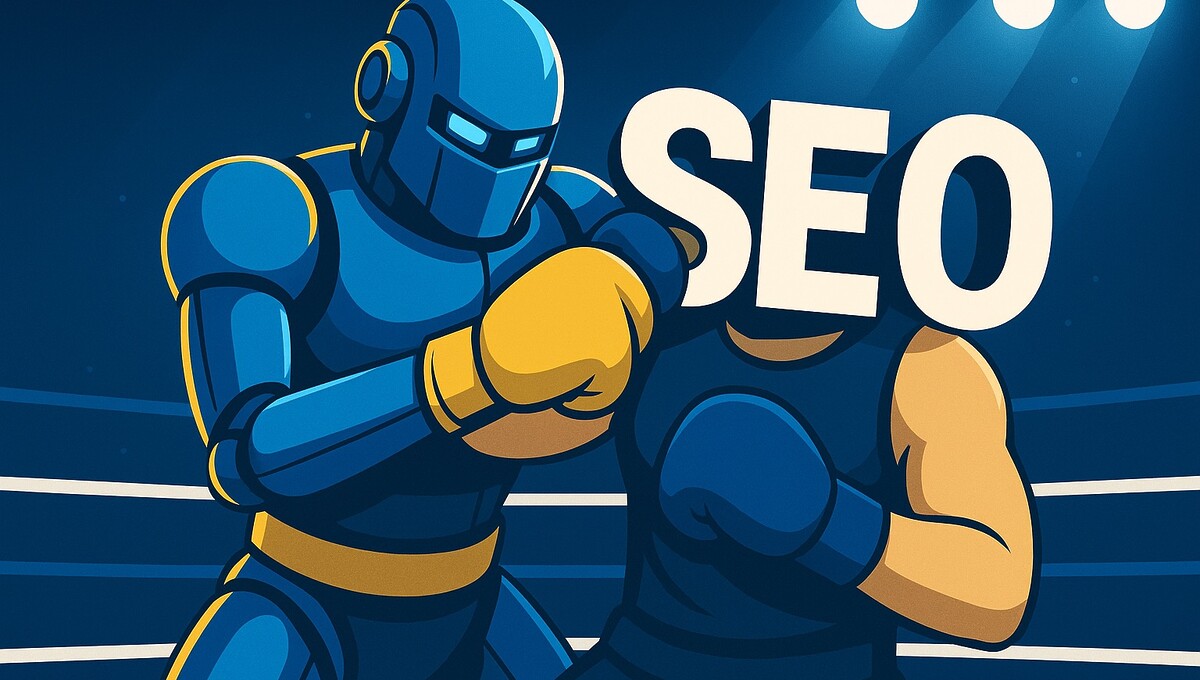
The digital visibility of companies is changing rapidly. While classic SEO strategies were the key to more reach and organic traffic for years, the focus is increasingly shifting towards a new discipline: LLM-SEO. The reason for this is the rise of AI-powered search systems and language models such as ChatGPT, Google Gemini, or Perplexity.
Where it used to be about ranking at the top of search results for specific keywords, this is no longer sufficient today. Users are increasingly asking their questions directly to AI systems – and these provide precise answers, often without classic search results even being clicked on. Companies must therefore not only be found on Google but also ensure that their content is understood and cited by AI.
In this article, we compare the differences between classic SEO and LLM-SEO, show which factors will be crucial in the future, and provide concrete approaches on how you can optimally position your company for both worlds + two real examples further below.
The Comparison: Classic SEO vs. LLM-SEO for AI Search
The way people search for and find information is changing at a rapid pace. Classic SEO – i.e., optimizing websites for search engines like Google or Bing – was the most important discipline for building reach and visibility on the web for many years. But with the spread of Large Language Models (LLMs) and AI-powered search systems, a new playing field is emerging: LLM-SEO (or LLMO).
The video on the topic:
It’s no longer just about ranking at the top of search results. Rather, the competition for visibility is increasingly decided in the answers of AI systems such as ChatGPT, Gemini, or Perplexity. Whoever is cited as a source here has a clear advantage – and that is precisely what this comparison is about.
Classic SEO: Visibility via Keywords and Rankings
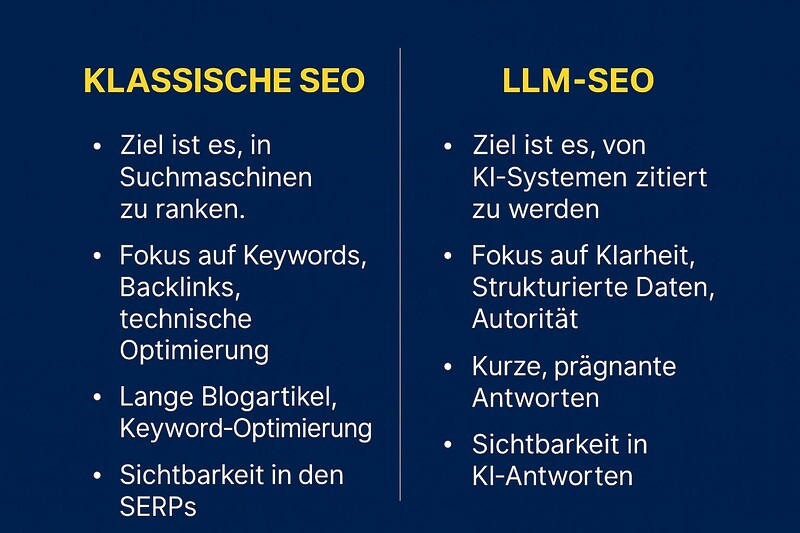
Traditional search engine optimization follows a familiar pattern. The goal is to appear as high as possible in the SERPs (Search Engine Result Pages).
The core factors are:
Become more visible on Google & Social Media?
In a free strategy consultation for data-driven online marketing, we uncover your untapped potential, review any existing ad accounts if necessary, examine your SEO ranking and visibility, and determine which strategy is appropriate for your budget and which active measures will lead to more inquiries or sales.

✅ More visibility & perception through targeted placement
✅ More visitors > prospects > customers > revenue
✅ Reach target groups scalably with SEA
✅ Act and grow sustainably with SEO
🫵 Maximum success with our hybrid strategy
💪 More than 15 years of experience across industries in over 1,000+ projects demonstrable!





- Keywords: Content must be aligned with search terms that users enter into Google.
- Backlinks: Links from external, trustworthy websites are considered a sign of relevance.
- Technical Optimization: Loading times, mobile display, crawlability, and clean URL structures play a major role.
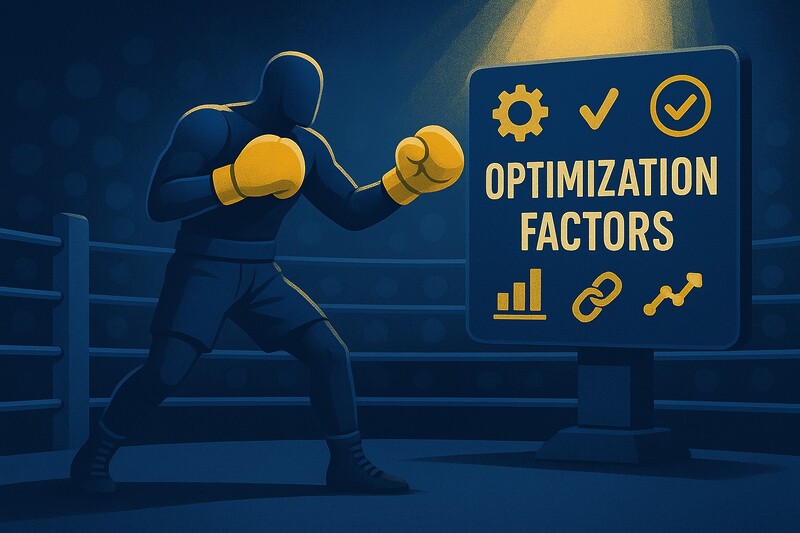
- Content Quality: Google evaluates content according to E-E-A-T (Experience, Expertise, Authority, Trustworthiness).
The goal of this strategy is clear: more clicks, more visitors, more conversions. The user themselves decides which page to click on – Google only provides a list of results.
LLM-SEO: Visibility in AI chat and search results
With the rise of generative AI, the rules of the game are changing. People are increasingly asking their questions not to Google, but directly to AI systems. These systems provide ready-made answers – and, in the best case, refer to sources.
This is where LLM-SEO comes in: it’s about designing content in such a way that it can be understood, processed, and deemed citable by AI models.
Important differences from classic SEO:
- Clarity and conciseness: AI prefers short, unambiguous statements that can be easily paraphrased or directly quoted.
- Brand mentions: Even unlinked mentions, i.e., mentions of a brand without a backlink, are valuable authority signals.
- Answering questions: Content should be structured like a knowledge article that covers defined questions with clear answers.
While classic SEO fights for rankings, LLM-SEO is about being included in the AI’s answers at all..
IMPORTANT: Myth!!! Structured data: Schema Markup, FAQ elements, and semantic links help AI understand.
See also:
Why Schema.org Markup Doesn't Work with ChatGPT and Co. – The Inconvenient Truth About AI Search

Classic SEO vs. LLM-SEO: How Search Engine Optimization Reinvented in the AI Age
While classic SEO still forms the foundation for visibility, LLM-SEO opens up an additional dimension that goes far beyond mere ranking. Particularly exciting is that content is not only found but actively integrated into answers. This shifts the role of websites: they are no longer just the target of a search query, but provide the building blocks for the AI’s answers themselves.
For companies, this means a dual responsibility. On the one hand, the content must be designed to be machine-readable and semantically linked. On the other hand, the brand’s reputation comes more into focus. Mentions, expert status, and clear positioning in a subject area are crucial to be perceived as a reliable source.
Another difference lies in the type of user interaction. While SEO-optimized content often aims to retain users on the website after they click, LLM SEO works in the background: here, the AI decides which content is selected and how it is presented. Those who manage to be included in this selection process secure an invisible but impactful presence directly in the user response.
New terms around AI optimization
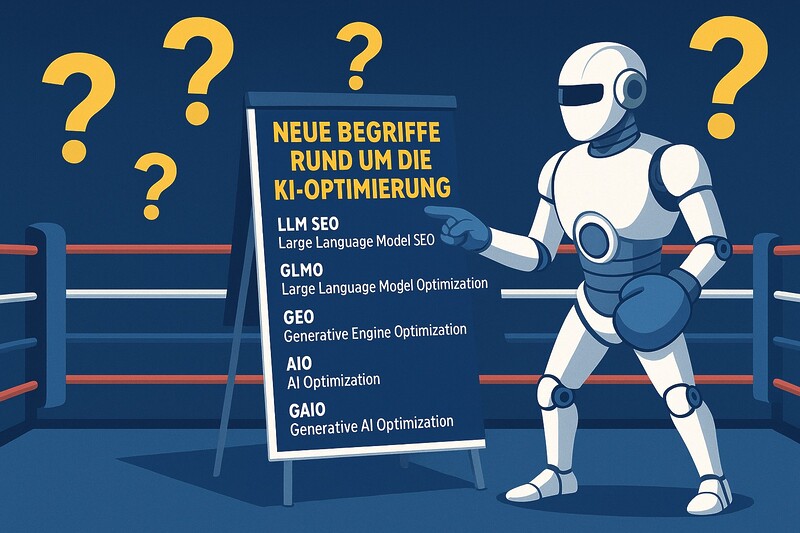
In the discourse surrounding AI visibility, various terms have become established that emphasize different nuances:
By the way, LLMSEO is also referred to as LLMO, GAIO, AIO, SEvO or GEO as the future of SEO search engine optimization.
- LLM SEO (Large Language Model Search Engine Optimization): Retains the familiar „SEO“ tag and emphasizes optimization for search engines powered by LLMs.
- LLMO (Large Language Model Optimization): Omits „SEO“ and relies on a broader „Optimization.“ Here, the focus is on optimization for LLMs across various application areas.
- GEO (Generative Engine Optimization): Focuses on „generative engines“ — that is, AI chatbots and search tools that generate human-like responses.
- AIO (AI Optimization): A more general term that encompasses the optimization of digital assets for any form of artificial intelligence.
- GAIO (Generative AI Optimization): This is what we at Mercury Technology Solution call it. This designation specifically targets optimization for generative AI and is therefore closely related to GEO and LLM SEO.
- SEvO (Search Everywhere Optimization): Our holistic approach at Mercury that takes the fragmented customer journey into account. It is about ensuring that your brand is visible and findable not only in classic search engines or AI chatbots, but also on social media, on e-commerce platforms, in videos, in voice search, and more.
Worth reading:
Search Everywhere Optimization: Why classic SEO is no longer enough
What is the difference between the terms? A quick comparison
Although the core objective remains the same, the differences in terminology partly reflect slightly different areas of focus. Here is a simple overview:
| Term | Full Name | Primary Focus | Key Implication for Content |
|---|---|---|---|
| LLM SEO | Large Language Model SEO | Optimization for search engines that use LLMs for ranking and summaries. | Familiar SEO principles, adapted to how LLMs understand content. |
| LLMO | Large Language Model Optimization | Optimization of content for LLMs in general, beyond classic search. | Broader applicability, e.g., for chatbots or AI content generation. |
| GEO | Generative Engine Optimization | Optimization for AI systems that generate conversations or answer summaries. | Focus on structure and clarity of content for direct answer generation. |
| AIO | AI Optimization | A broader term for optimizing all digital assets or processes for AI systems. | Encompasses LLMO, GEO, and other AI applications. |
| GAIO | Generative AI Optimization | Specialized optimization for generative AI such as chatbots. | Similar to GEO, with a focus on being the source for AI answers. |
| SEvO | Search Everywhere Optimization | Holistic optimization for visibility across all platforms (classic search, AI, social media, e-commerce, video, voice, etc.). | Adaptation of content and strategy to platform-specific search behavior. |
This terminology shows: Classic SEO is only one part of a larger search and visibility strategy that must encompass all digital channels in the future.
Targeted and sustainable optimization for AI search through large language models is therefore based on „classic“ search engine optimization.
See also our
Opportunities and risks of LLM SEO
LLM SEO opens up the opportunity for companies to become visible early in the responses of AI systems and thereby build enormous authority. Anyone cited as a source by ChatGPT & Co. automatically gains trust and reach – especially in niches or in the B2B sector. At the same time, this development also carries risks: Classic KPIs such as rankings and clicks lose their informative value, while citations and brand associations are difficult to measure.
In addition, AI models are constantly changing, which requires adaptability. One thing is clear: Those who seize the opportunities and actively manage the risks gain a decisive competitive advantage in the digital battle for visibility.
Opportunities:
- Early visibility in AI responses provides a clear competitive advantage.
- Brands cited by AI systems automatically appear serious and trustworthy.
- Especially in B2B and niche markets, LLM-SEO can quickly lead to greater authority.
Risks:
- Classic KPIs such as rankings or keyword positions lose their significance.
- Tracking citations by AI is more difficult and less transparent.
- Changes to the models can quickly affect visibility.
- The effort for high-quality, clearly structured content increases.

Recommendations for SEO Practice
Companies should combine SEO and LLM optimization, rather than replacing one with the other. Successful strategies rely on:
- High-quality content with clear answers – Content must answer questions in a way that can be easily cited by AI.
- Structuring and semantics – with H1–H3 structure, Schema.org markup, and clean text logic.
- Building brand authority – making mentions, PR, social proof, and expertise visible.
- Technical excellence – loading times, mobile-friendliness, clean HTML, and API-ready structures.
- Developing an SEvO strategy – preparing content to work across social media, voice search, YouTube, e-commerce, and traditional search engines.

Practical Examples: LLM-SEO in B2C and B2B
The requirements for search engine optimization differ significantly depending on the industry and target group. While in B2C e-commerce, quick purchasing decisions and emotional product presentations are often paramount, B2B mechanical engineering focuses more on technical details, investment security, and authority. The following examples illustrate how classic SEO and LLM-SEO specifically differ in both areas.
Example 1: B2C E-commerce (Fashion Online Shop)
Target Audience: End customers looking for clothing and accessories.
Classic SEO Measures:
- Focus on product keywords ("red sneakers women", "summer dress 2025")
- Optimized product pages with meta tags, descriptions, and images
- Internal linking (e.g., from blog articles to products)
- Reviews as a trust signal
LLM SEO Measures:
- Integration of FAQ sections on product pages ("How do I properly care for sneakers?") – AI readily picks up such answers
- Content in the style of guide articles that answer frequently asked questions („Which sneakers go with summer dresses?“)
- Brand and Style Guides as Authority Signals (e.g., blog "Sneaker Trends 2025")
- Social Mentions & Co-Occurrences: Mentions of the brand in magazines or social media increase the chance of being cited in AI answers
Example 2: B2B Mechanical Engineering (Manufacturer of CNC Machines)
Target Audience: Technical decision-makers, engineers, purchasers in the industry.
Classic SEO measures:
- Optimization for Long-Tail Keywords ("buy CNC milling machine for aluminum")
- Case Studies & Whitepapers for Lead Generation
- Technical Data Sheets as PDF Downloads
- LinkedIn SEO & Industry Portals for Industry Visibility
LLM-SEO Measures:
- Technical FAQs („What are the advantages of a 5-axis CNC machine?“) for direct AI citations
- Glossary of technical terms – LLMs rely heavily on clear definitions
- Thought Leadership Content („Future of CNC Machining in the Aerospace Industry“) – signals expertise
- Presence in technical articles & studies – Mentions in industry media increase the likelihood of appearing as a source in AI responses
Difference in optimization:
- B2C: User questions are everyday-oriented, product- and benefit-focused → stylistically emotional & simple.
- B2B: User questions are complex, technical, and investment-related → stylistically professional, precise, authoritative.
| B2C (E-commerce, Fashion) | B2B (Mechanical Engineering, CNC) | |
|---|---|---|
| Classic SEO | – Focus on product keywords („red sneakers women“) – Optimized product pages with meta tags & descriptions – Internal links (e.g., blog → product) – Customer reviews as a trust signal |
– Optimization for long-tail keywords („buy CNC milling machine for aluminum“) – Case studies & whitepapers for leads – Technical data sheets as PDFs – Visibility in industry portals & LinkedIn |
| LLM SEO | – FAQ sections on product pages („How do I care for sneakers properly?“) – Guide articles with answers to user questions („Which sneakers go with summer dresses?“) – Brand and style guides as authority signals – Social mentions & co-occurrences in magazines & social media |
– Technical FAQs („What are the advantages of a 5-axis CNC machine?“) – Glossary with technical terms for clear definitions – Thought leadership content („The future of CNC machining in the aerospace industry“) – Mentions in trade articles & studies as a trust signal |

Conclusion: The Future of Visibility in Search and AI Chat
SEO is not dead – but it has changed. Classic optimization remains important, yet the real challenge lies in being understood and cited by AI. Those who invest in LLM SEO early on will not only be present in the next generation of search but will also build trust and authority.
FAQ on LLM SEO and Citations by AI
1. What is the biggest difference between classic SEO and LLM SEO?
Classic SEO optimizes content for search engine rankings, while LLM SEO aims to be named as a source in the responses of AI systems.
2. Why is citation by AI so important?
Because users receive the answer directly in the AI – without having to comb through classic SERPs. If a brand is mentioned there, it automatically appears more credible and gains trust.
3. How can I make my content AI-citable?
Through clear, concise answers to common questions, a logical structure, FAQ sections, as well as the use of structured data and semantic links.
4. Can small businesses also benefit from LLM SEO?
Yes – especially in niche markets or in the B2B sector, the opportunities are great because there is less competition and AI specifically seeks trustworthy sources.
5. What role does SEvO (Search Everywhere Optimization) play?
SEvO expands the strategy: Instead of being visible only on Google or ChatGPT, the goal is to be present everywhere people search for information – whether in social media, voice search, or e-commerce.

Florian Ibe
CEO & Marketing Consultant
Your contact person: Florian Ibe
TL:DR as a summary:
1. Objective
- Classic SEO: The goal is to rank as high as possible in search engines like Google & Bing. The focus is on keywords, backlinks, and technical optimization.
- LLM SEO: The goal is to be cited as a source by AI systems (ChatGPT, Perplexity, Gemini, Claude, etc.). This means it is no longer just about visibility in search results, but about appearing in the answers of AI assistants.
2. Optimization Factors
- Classic SEO
- Keyword Relevance & Density
- Meta Tags & Snippets
- Mobile & Page Speed Optimization
- Backlink Profile
- Technical Structure (Sitemaps, Canonicals, Indexing)
- LLM-SEO
- Clarity & Directness of content (AI must be able to "understand" your page)
- Structured Data / Schema Markup (Knowledge Graph & Entity Linking)
- Authority & Citing Capability (Social Media presence, author profiles, mentions)
- Source Reliability (serious presentation, verifiable facts, source citations)
- Content in Q&A form (answer questions, provide definitions, precise paragraphs)
3. Content Strategy
- Classic SEO: Long blog articles, keyword optimization, internal linking.
- LLM-SEO: Short, concise answers that act like "mini-Wikipedia entries." Content must be written in such a way that AI can directly quote or paraphrase it.
However, both require an SEO concept!
4. Visibility
- Classic SEO: Visible in SERPs (Search Engine Result Pages).
- LLM-SEO: Visible in Conversational AI responses and generative search results (e.g., Google SGE, Bing Copilot).
5. Key Performance Indicators (KPIs)
- Classic SEO:
- Rankings
- Organic Traffic
- Click-Through Rate (CTR)
- Conversions
- LLM-SEO:
- Citations by AI
- Mentions of brand/domain in AI responses
- Authority signals (social proof, mentions, reviews)
- Relevance in "Geo-LLM Search" (local + thematic discoverability)




 DE
DE