
Creative writing is a form of writing characterized by the use of imagination, creativity, originality, and literary artistry to create stories, poems, dialogues, scripts, and other literary forms. Unlike technical or academic writing, which focuses on clear and precise information transfer, creative writing aims to evoke emotions, provoke thoughts, and immerse readers in an imagined or artistically presented world.
Learning Creative Writing Exercises (Writing Exercises & Tasks)
Before we get to the exercises and how to practice and learn creative writing, let’s define what needs to be considered and for whom free writing is suitable and what can be done with it.
Creative writing encompasses a variety of genres and styles, including, but not limited to:
- Fiction (short stories, novels): Narrative literature driven by the author’s imagination, encompassing invented events and characters.
- Poetry: A literary form characterized by rhythm, rhyme, metaphor, and figurative language to express intense emotions or impressions.
- Drama (plays, screenplays): Written for performances on stage or in film, focusing on dialogue and action.
- Creative Non-Fiction (memoirs, essays): Uses literary techniques to tell true events and experiences, often blurring the lines with fiction.
The goals of creative writing vary depending on the author, but may include the following:
- Entertainment: To tell stories that captivate readers and bring them joy or excitement.
- Reflection: To explore personal or social themes and encourage contemplation.
- Expression: To express emotions, thoughts, and experiences that are personally meaningful to the author.
- Art: To explore and utilize the beauty of language to create powerful or poetic texts.
Creative writing often requires a deep understanding of language, a good sense of character development, plot construction, and atmosphere, as well as the ability to emotionally move readers. It is a skill that is developed and refined through practice, study, and often through feedback from readers and other writers.

Who is creative writing suitable for and what prerequisites should one have?
Creative writing is suitable for a wide range of people, regardless of age, profession, or educational background.
EVERYONE can learn and practice creative writing, and with targeted tasks, can also implement it correctly!
It is particularly appealing to those who:
- Have a need for expression: Individuals who feel a deep need to communicate their thoughts, feelings, experiences, and fantasies through the written word often find a natural inclination towards creative writing.
- Seek creative development: People looking for a creative outlet to explore and develop their imagination and creativity can find a fulfilling practice in creative writing.
- Have an interest in literature and stories: Those with a passion for literature, stories, films, and theater tend to be drawn to creative writing, as it allows them to create their own narrative worlds.
- Have personal or therapeutic reasons: Many people use creative writing as a form of self-reflection or therapy to process and express personal experiences, traumas, or emotions.
- Aspiring Professional Writers: Those who wish to work as authors, screenwriters, poets, or in other literary professions will find that creative writing is essential for developing the necessary skills and portfolio.
- Teachers and Educators: Educators who want to integrate creative writing into their lessons to foster their students' creativity, expressiveness, and language proficiency.
- Hobby Writers: People who simply enjoy the writing process and pursue it as a hobby, without necessarily aiming for publication or professional recognition.
Creative writing is therefore suitable for anyone who enjoys writing, wants to improve their communication skills, or finds creative self-expression enriching. There are no prerequisites regarding skills or experience; rather, it is about bringing the willingness to learn, experiment, and engage in the writing process.

Become more visible on Google & Social Media?
In a free strategy consultation for data-driven online marketing, we uncover your untapped potential, review any existing ad accounts if necessary, examine your SEO ranking and visibility, and determine which strategy is appropriate for your budget and which active measures will lead to more inquiries or sales.

✅ More visibility & perception through targeted placement
✅ More visitors > prospects > customers > revenue
✅ Reach target groups scalably with SEA
✅ Act and grow sustainably with SEO
🫵 Maximum success with our hybrid strategy
💪 More than 15 years of experience across industries in over 1,000+ projects demonstrable!







Creative Writing Exercises – Learn to Write Freely and Interesting Texts with Writing Exercises
Creative writing can be fostered in many different ways, depending on whether you want to work on your storytelling, poetry, dialogue writing, or other aspects. Here are some exercises that can help you improve your creative writing skills:
- Freewriting: Set a timer for 10 minutes and write down everything that comes to mind without interruption. Try not to censor or correct yourself. The goal is to encourage creative flow and overcome the fear of the blank page.
- Change narrative voice: Choose a story or text you have written and rewrite it from the perspective of another character, or change the narrative perspective (for example, from first person to third person).
- Setting exercise: Write a short story set in an environment you know well, and then in one you completely invent. Note how the setting influences the tone and direction of your story.
- Dialogue exercises: Write a conversation between two or more characters. Focus on giving each character a unique voice. You can also try writing a dialogue that consists solely of spoken words, without explanatory text.
- Sensory impressions: Choose an object and describe it using all five senses. Try to be as detailed as possible to create a vivid image in your readers' minds.
- Word limit stories: Set a word limit (for example, 100 words) and try to tell a complete story within that limit. This forces you to be precise and choose each sentence carefully.
- Opening sentences: Write a list of opening sentences and choose one to start a story. You can also set the last sentence and work towards it.
These exercises can be used individually or in combination to develop various aspects of creative writing. It is also helpful to write regularly and receive feedback from others to further improve your skills.
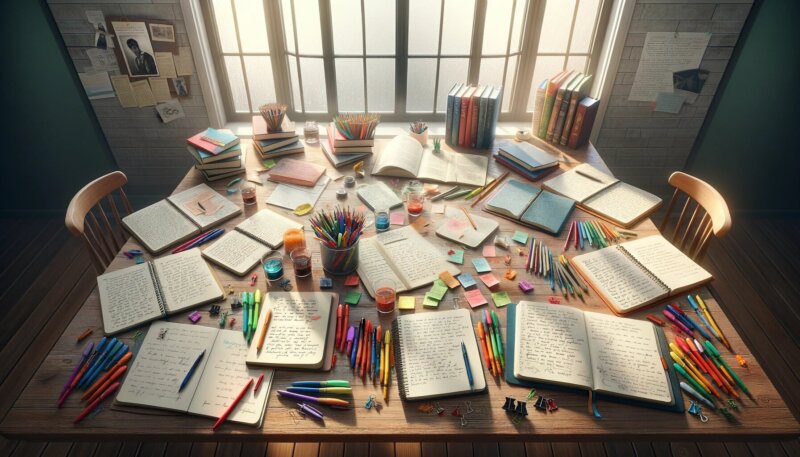
Targeted writing exercises for even greater success in learning creative writing
To learn creative writing and improve your skills, writing exercises can help you foster your creativity, refine your writing technique, and think outside the box. Here are some exercises specifically designed to develop various aspects of creative writing:
1. Daily Journaling
Start each day by writing in a journal for a few minutes. You can write about your thoughts, feelings, dreams, or simply about what you experienced during the day. This promotes the habit of regular writing and helps you formulate your thoughts more clearly.
2. Using Writing Prompts
Use writing prompts to stimulate your creativity. Writing prompts can be sentences, words, images, or even pieces of music that serve to start a story or text. Try to respond to a new prompt every day or week.
3. Character Development
Create a detailed character sheet for a fictional character. Consider not only their appearance and name, but also their backstory, motivations, fears, and dreams. Then write a short story in which this character plays the main role.
4. Dialogue Exercises
Write a dialogue between two characters who couldn’t be more different. Focus on giving each character a unique voice and perspective. This helps you write more realistic and interesting dialogues.
5. Setting Descriptions
Choose a place you know well and describe it as detailed as possible using all five senses. Then try to describe a place you completely invent, also paying attention to a vivid and sensual description.
6. Change of Perspective
Take a story or text you have already written and rewrite it from the perspective of another character or even from a different narrative perspective (e.g., switch from first-person to third-person).
7. Word Limit
Challenge yourself by writing a story in exactly 100 words or another set limit. This forces you to be precise and think carefully about every word.
8. Genre Experiments
Choose a genre you don’t normally write in and try to write a story in that style. This can help you expand your comfort zone and discover new techniques.
9. Continuation Stories
Start a story and ask a friend or group to continue it. This is a fun way to see how others interpret and expand on your ideas, and can lead to unexpected and creative twists.
10. Review and Revision
Select an older text of yours and revise it with the goal of improving it. Focus on aspects such as clarity, structure, character development, and language use. This helps you develop a better understanding of the revision process and identify your own writing weaknesses.
These exercises are not only designed to improve your writing skills but also to foster the joy of writing and unleash your creativity. Regular practice and a willingness to experiment and learn from mistakes are key to success in creative writing.

5 Creative Writing Ideas & Examples
Creative writing can take many forms and explore a wide variety of topics. Here are five versatile and stimulating ideas that can inspire writers to unleash their creativity in new ways:
- Time Travel Experiences: Write a story where your main character has the ability to travel through time. Instead of the usual historical or futuristic explorations, your character could return to or anticipate moments in their own life to change decisions or explore how different choices would have affected their life. Examine the emotional and psychological impacts of these time travels.
- Letters to Myself: Create a series of letters that your present self writes to your younger self or your future self. These letters can contain advice, warnings, comfort, or simply reflections on life. This exercise can be introspective and lead you to reflect on growth, regret, and hopes.
- A World Without…: Imagine a world where an everyday concept or technology was never invented. How would the absence of such an element – be it the internet, the car, or even something as fundamental as paper – affect society, culture, and daily life? Develop a story set in this alternative reality and explore the consequences and challenges.
- The Last of Its Kind: Tell the story of a person, animal, or object that is the last of its kind. This could be the last book in a world that has forgotten how to read, the last living creature of an extinct species, or a person with a unique ability that no longer has a place in the modern world. Explore themes such as loneliness, preservation, and meaning.
- Trapped in a Work of Art: Your character is literally drawn into a painting, sculpture, or other work of art and must find a way to return to the real world. While trapped in the artwork, the character experiences the world from the artwork’s perspective, perhaps encountering other characters trapped within it or discovering secrets and stories surrounding the artwork. This idea offers a fantastic opportunity to reflect on art, interpretation, and the relationship between artist and viewer.
Each of these ideas can serve as a starting point to delve deep into the endless possibilities of creative writing and develop original, captivating stories.

Creative Texts and a Free Writing Style for a Successful Online Blog or Social Media Profile (Social Posts)
For individuals who enjoy writing a blog or who are active on social media, creative writing offers an excellent foundation to stand out and build an engaged readership or follower base. Creative writing can be beneficial in these contexts in various ways:
- Unique Content: Creative writing helps to create original and engaging content that captures the attention of readers or followers. By developing their own voice and a unique style, bloggers and social media users can differentiate themselves from others.
- Narrative Techniques: Using narrative techniques from creative writing, such as storytelling, character development, and building suspense, can make blog posts and social media contributions more interesting and captivating. Stories are a powerful tool to evoke emotions and emotionally connect readers or followers.
- Engagement and Interaction: Creatively written content can promote engagement and interaction on blogs and social media. By telling stories, sharing experiences, or creatively presenting information, authors can stimulate discussions and build a community.
- Branding: For bloggers and social media personalities, it is important to develop a recognizable brand or personality. Creative writing allows for the creation of a consistent and appealing „voice“ that matches the brand or personal brand.
- Versatility: Creative writing enables flexibility in the type of content that can be produced – from humorous and entertaining to thoughtful and inspiring posts. This versatility is particularly advantageous in social media, where different formats and styles can appeal to the audience.
- Improving writing skills: Regular creative writing sharpens writing skills, leading to clearer, more convincing, and more professional blog posts and social media contributions.
For bloggers and social media users who want to expand their audience and connect with them more deeply, it is advisable to learn and apply creative writing techniques. It can help to improve the quality of content, expand readership or followers, and establish a strong online presence.

FAQ – Questions & Answers about Creativity in Texting and Practicing Writing
When it comes to „creative writing,“ some questions are asked particularly frequently. Here are some of them, along with their answers:
1. What is creative writing?
Creative writing is a form of writing where the emphasis is on originality, expressiveness, and imagination. It encompasses a variety of genres and styles, including fiction, poetry, drama, and creative non-fiction.
2. Why is creative writing important?
Creative writing promotes self-expression, creativity, and imaginative skills. It can also have a therapeutic effect by helping people process their thoughts and feelings. Additionally, it improves writing skills and can contribute to personal or professional development.
3. Can anyone learn creative writing?
Yes, anyone can learn creative writing. It requires practice, patience, and a willingness to experiment and accept feedback. There are no prerequisites regarding age or educational background.
4. How can I start creative writing?
You can start with simple exercises like freewriting, where you write continuously about anything that comes to mind. Reading literature in different genres can also be inspiring and give you a feel for different writing styles.
5. How do I overcome writer's block?
Writer’s block can be overcome through various techniques, such as taking writing breaks, reading inspiring literature, using writing prompts, or writing in a different environment. It is important to minimize pressure and let the creative process flow.
6. How important is grammar in creative writing?
While the basics of grammar are important to ensure clarity and comprehensibility, creative writing allows for experimentation with language and conventions. Creativity and expression are paramount, and sometimes breaking rules can lead to a powerful literary effect.
7. How do I publish my creative works?
Publication can be done through traditional publishers, self-publishing, or online platforms. It is important to carefully revise and proofread your work before submitting it, and to inform yourself about the various publishing options and their requirements.
8. How important is reading for creative writing?
Reading is extremely important as it helps you develop an understanding of different writing styles, genres, and techniques. It can also serve as inspiration and help you find your own voice as a writer.
9. Should I revise my creative writing?
Yes, revision is an essential part of the writing process. It helps you eliminate ambiguities, refine your ideas, and polish your text. Often, new perspectives or opportunities for improvement are discovered during revision.
10. How do I find ideas for creative writing?
Ideas can be found everywhere: in everyday life, in personal experiences, in nature, in art, in conversations, or through targeted writing prompts. Openness and curiosity are important to discover inspirations and translate them into creative texts.
These questions and answers provide a basic overview of creative writing and can serve as a starting point for anyone interested in this fascinating form of expression.





 DE
DE