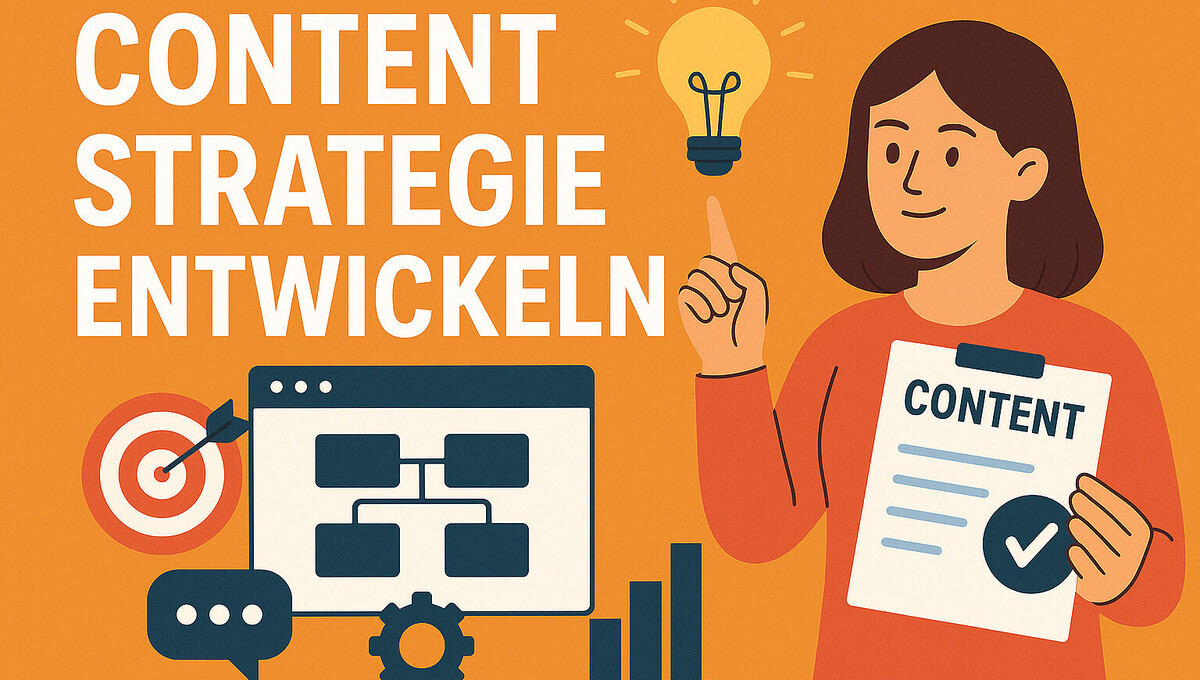
Developing a Content Strategy – The Key to Successful Content Marketing
What is a Content Strategy and why is it important?
A well-founded content strategy forms the operational basis for all communication measures and systematically defines how content is planned, created, and distributed. It determines which messages should be conveyed to which target groups via which channels. Companies that develop a well-thought-out content strategy can use their resources more efficiently and respond more specifically to customer needs. If you want to develop an effective content strategy, you should view this as a strategic process.
The competition for attention is becoming increasingly intense. Studies show that more and more companies are expanding their content production. A clear strategy helps to stand out from the competition and not get lost in the crowd. It provides orientation for all involved and ensures that every content component contributes to achieving the overarching corporate goals.
Therefore, before you start producing content, you should first develop a solid content strategy. This gives you a clear roadmap and prevents aimless production of content that ultimately has no impact.
Content Strategy vs. Content Marketing Strategy – The Difference
The terms are often confused, but they differ significantly in their focus. When you develop a content marketing strategy, you deal with the overarching framework and define which communication measures your company wants to use to reach its target audience. The content marketing strategy answers fundamental questions about the „why“ and determines which goals are pursued with content marketing.
The content strategy, on the other hand, focuses on the operational level. It clarifies specifically how content is planned, created, and distributed. This includes aspects such as topic identification, format selection, and publication rhythm. It deals with the practical implementation of the previously defined marketing goals and ensures their systematic integration into daily work.
Both aspects complement each other: While you develop a content marketing strategy to define the basic direction, the content strategy helps you with concrete planning and implementation. The ability to develop both a content marketing strategy and a content strategy is crucial for success. Only when both elements interlock can a coherent overall concept emerge.
7 Steps to Developing a Successful Content Strategy
A systematic approach helps to develop a goal-oriented content strategy. With these seven consecutive steps, you create a solid foundation for your content marketing and ensure that no important aspects are neglected.

1. Define Goals – Why are you creating content?
The first step in developing a content strategy is to formulate clear goals. Do you want to generate more traffic, increase brand awareness, or improve your conversion rate? Each goal requires different content formats and distribution channels. Precise SMART goals (specific, measurable, attractive, realistic, time-bound) form the foundation of every content strategy. Experts recommend documenting these goals in writing when developing a content strategy.
Without clearly defined goals, your content creation is like a shot in the dark. You waste valuable resources on content whose success you cannot measure. Concrete goal expectations, on the other hand, create clarity and make it possible to evaluate the success of your measures and make adjustments if necessary.
Ensure that your content goals align with the overarching corporate goals. Only when both are coordinated can your content make a valuable contribution to corporate success and find the necessary support within the company.
Become more visible on Google & Social Media?
In a free strategy consultation for data-driven online marketing, we uncover your untapped potential, review any existing ad accounts if necessary, examine your SEO ranking and visibility, and determine which strategy is appropriate for your budget and which active measures will lead to more inquiries or sales.

✅ More visibility & perception through targeted placement
✅ More visitors > prospects > customers > revenue
✅ Reach target groups scalably with SEA
✅ Act and grow sustainably with SEO
🫵 Maximum success with our hybrid strategy
💪 More than 15 years of experience across industries in over 1,000+ projects demonstrable!







2. Understand Your Target Audience – Develop Buyer Personas
A deep understanding of your target audience is indispensable for developing an effective content strategy. Create detailed buyer personas – fictional, but data-driven profiles of your ideal customers. These help you understand the needs, problems, and information habits of your target audience and create content that addresses precisely these points.
Conduct interviews with existing customers and analyze existing customer data. Ask about demographic characteristics, but also about challenges, goals, and preferred sources of information. The more detailed your personas are, the more targeted you can design your content.
With clear buyer personas in mind, it is easier to identify relevant topics and strike the right tone. They help to detach from your own product and instead consistently think from the customer’s perspective – a crucial success factor for any content marketing strategy.
3. Conduct a Content Audit – Inventory and Analysis
Before planning new content, a thorough content audit is recommended. Analyze your existing content for relevance, performance, and topicality. Such an audit reveals strengths and weaknesses of your previous content strategy and shows where there is potential for optimization.
Categorize your content by topics, formats, and target groups. Examine important metrics such as traffic, dwell time, and conversion rate. Identify top performers that can serve as role models, as well as weak content that should be revised or archived.
A content audit also uncovers thematic gaps and helps to use resources efficiently. Instead of constantly producing new content, you can update and optimize existing content. This saves time and simultaneously strengthens the overall quality of your content portfolio.
4. Research Topics and Keywords – The Basis for Relevant Content
Systematic research of relevant topics and keywords forms the backbone of every content strategy. Use SEO tools to find out what your target audience is searching for and identify thematic clusters that are relevant to your company. The intertwining of content planning and SEO maximizes the visibility of your content.
Pay attention to a balanced mix of high-volume keywords and niche terms. While popular search terms promise more traffic, niche topics often offer lower competition density and higher conversion chances. When researching, also consider seasonal trends and industry-specific events.
Based on your research, create a thematic editorial plan. This should include both timeless evergreen topics and current trends. This ensures that your content strategy remains viable in the long term and can simultaneously react flexibly to current developments.
5. Define Content Formats and Channels – The Right Form for Your Message
The selection of suitable content formats and distribution channels is crucial for the success of your content strategy. Consider both the preferences of your target audience and the messages to be conveyed. Not every topic is suitable for every format, and not every channel reaches your desired target audience equally well.
Blog articles are excellent for in-depth information and SEO, while videos can convey complex issues vividly. Podcasts are suitable for building personal relationships, and infographics simplify complex data. Check which formats suit your resources and competencies.
Analyze which channels your target audience is active on and focus on these first. A focused presence on a few relevant platforms is more valuable than a superficial spread across many channels. Always keep the customer journey in mind and adapt formats and channels to the different phases.
6. Create an editorial plan – Ensure structure and continuity
A well-thought-out editorial plan brings structure to your content production and ensures that your content strategy is actually implemented. It defines what content will be created and published when, who is responsible for it, and what resources are needed.
Set a realistic publication rhythm that matches your capacities. Regularity is more important than frequency – continuous high-quality content brings more than frequent publications with declining quality. Plan enough buffer time for unforeseen events.
Also integrate aspects such as content recycling and cross-promotion into your editorial plan. A good editorial plan also takes into account seasonal events, industry trends, and internal company milestones. This makes it a central control instrument for the successful implementation of your content strategy.
7. Plan content production and distribution – From idea to dissemination
The last step in developing a content strategy involves the concrete planning of production and distribution. Define standardized workflows for content creation – from initial research to creation, approval, and publication. Clear processes increase efficiency and ensure consistent quality.
Determine what resources are needed for content production and who takes on which tasks. Check whether external support makes sense, for example, from specialist journalists or video experts. A clearly defined production process with specified quality criteria creates transparency for all involved.
Supplement your production plan with a well-thought-out distribution strategy. Plan how you will disseminate your content across various channels and promote it through paid measures. Content that is not seen cannot have an impact – therefore, distribution is just as important a part of your content strategy as production itself.
Measure and optimize content performance
Regular measurement and optimization of your content performance are essential to continuously improve your content strategy. Define specific KPIs for each content type that align with your overarching goals. Traffic figures, dwell time, social shares, and conversion rates provide valuable insights into the effectiveness of your content.
Set up systematic monitoring that gives you a regular overview of your content’s performance. Analyze which topics, formats, and channels work particularly well, and identify optimization potential. Derive concrete recommendations for action from these findings.
The insights gained flow directly into the further development of your content strategy. While some basic principles remain, your strategy should be flexible enough to react to new insights. This creates a continuous improvement process that steadily increases the effectiveness of your content measures.
Common challenges in content strategy development
Companies encounter various hurdles when developing a content strategy. Resource scarcity is one of the most common problems – both in terms of time and budget and expertise. Realistic planning and setting clear priorities help to develop an effective content strategy even with limited resources.
Consistency across different channels and departments poses another challenge. Clear guidelines for tone of voice and brand messages, as well as regular coordination between the teams involved, provide a remedy here. A common content management system also simplifies collaboration.
Last but not least, the pressure to succeed complicates strategic content planning. Long-term goals such as brand building and trust-building are difficult to translate into short-term ROI figures. Therefore, rely on a mix of short-term and long-term metrics and communicate realistically what results can be expected when.
Conclusion: Developing a successful content marketing strategy
Developing a well-thought-out content strategy requires time and commitment but forms the foundation for sustainable success in content marketing. Those who want to professionally develop a content marketing strategy should proceed methodically. With a systematic approach, you ensure that all content is targeted and contributes to achieving your business goals. The described seven-step process offers you practical guidance to develop your content strategy.
Start with clear goals and a deep understanding of your target audience. Analyze existing content and research relevant topics. Choose suitable formats and channels and establish a realistic editorial plan. Define clear processes for production and distribution and regularly measure the success of your measures.
Don’t forget: A content strategy is never static but continuously evolves. Remain flexible, learn from your experiences, and adapt your strategy as needed. With this dynamic approach, your content marketing will become a valuable instrument for long-term business success.




 DE
DE