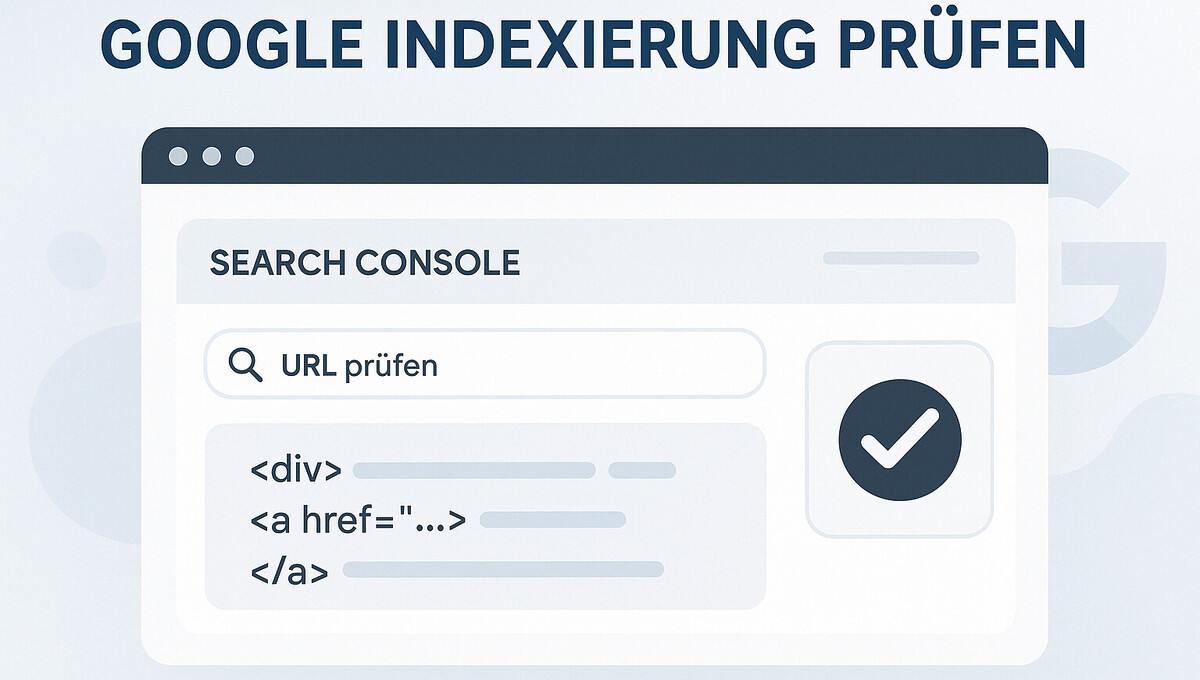
Do you want to check Google indexing and ensure that your web pages are actually discoverable in search results? Many website operators invest time and resources in content creation without checking whether their content has even been indexed by search engines. If you neglect to check website indexing, even the highest quality content will remain invisible and without visitors.
Check Google Indexing – How to check website indexing on Google
What is Google Indexing and why should you monitor it?
Indexing forms the foundation of every successful online presence. Without this process, even the highest quality content remains invisible to searchers. Google goes through a systematic process: First, the crawler discovers new pages, analyzes their content, and stores relevant information in a huge database. This database enables the search engine to deliver suitable results within fractions of a second.
Website operators benefit significantly from regularly monitoring their indexing status. Missing or incorrect indexing inevitably leads to a loss of visibility and thus to lost visitors. The importance of this control becomes apparent especially after major website changes or when launching new content. Continuous monitoring reveals problems early and allows for quick corrections.
Successful search engine optimization begins with the certainty that all important pages have been indexed. Only then can further optimization measures unfold their full effect and contribute to sustainable traffic growth.
The indexing process simply explained
The path of a website into the search results is divided into three consecutive phases:
- Crawling: Google’s automated programs continuously scan the internet for new or updated content. They follow existing links and use submitted sitemaps as guides to relevant pages.
- Indexing: Algorithms analyze text content, HTML structures, images, and videos to understand the thematic focus. At the same time, the system checks technical aspects such as loading speed, mobile optimization, and internal linking.
- Ranking: Only indexed pages can appear for relevant search queries. Hundreds of evaluation criteria determine their position in the search results.
Important ranking criteria:
- Relevance to the search query
- User-friendliness of the page
- Trustworthiness of the domain
- Technical performance
The importance for your website visibility
Indexing directly determines the findability of your content. Even perfectly optimized pages remain ineffective if they are not stored in the Google index. This connection makes it clear why checking Google indexing is one of the fundamental SEO tasks. Regular checks protect against problems that arise unnoticed.
Various factors can impair or prevent indexing. Technical configuration errors, quality deficiencies in content, or structural problems frequently lead to exclusions. Early detection of such obstacles enables targeted countermeasures and prevents long-term losses in visibility.
The connection between indexing status and organic traffic is directly measurable. Non-indexed pages generate no search engine traffic, while well-indexed content continuously attracts visitors. This insight underscores the necessity of systematic monitoring and proactive optimization.
Methods for checking Google indexing
Various approaches enable reliable verification of the indexing status. The choice of the appropriate method depends on the size of your website and the available resources. Smaller sites benefit from quick individual checks, while larger projects require automated solutions.
Become more visible on Google & Social Media?
In a free strategy consultation for data-driven online marketing, we uncover your untapped potential, review any existing ad accounts if necessary, examine your SEO ranking and visibility, and determine which strategy is appropriate for your budget and which active measures will lead to more inquiries or sales.

✅ More visibility & perception through targeted placement
✅ More visitors > prospects > customers > revenue
✅ Reach target groups scalably with SEA
✅ Act and grow sustainably with SEO
🫵 Maximum success with our hybrid strategy
💪 More than 15 years of experience across industries in over 1,000+ projects demonstrable!





| Method | Suitable for | Time required | Level of detail |
|---|---|---|---|
| Site query | Individual checks | Low | Basic |
| Search Console | Systematic monitoring | Medium | High |
| SEO tools | Large websites | Low (automated) | Very high |
Fundamental Differences Between Methods:
- Speed: From immediate results to detailed analyses
- Level of Detail: Simple yes/no answers versus comprehensive diagnoses
- Scalability: Single check versus bulk analyses
Our recommendation for arguably the best SEO tool: Mangools 5in1 SEO Tool

*Note: The links used here are affiliate links (commission links).
Successful website operators use multiple testing methods in parallel and develop systematic monitoring routines from them. This approach ensures continuous control and enables quick reactions to changes.
Site query directly in Google Search
The site query is the simplest method to check individual pages. Enter site:yourdomain.de/specific-page into the Google search field and confirm with Enter. If your page appears in the results, it is indexed. An empty results page indicates missing indexing or deliberate exclusion.
Advantages of the site query:
- Instant results
- No additional tools required
- Available for free
- Easy to use
Disadvantages:
- Only basic information available
- No details on problems
- Impractical for larger websites
- No historical data
For systematic reviews, combine the site query with other methods. This way, you get both quick individual resultsandcomprehensive overall overviews. This combination forms a solid basis for informed decisions regarding your indexing strategy.
Use Google Search Console
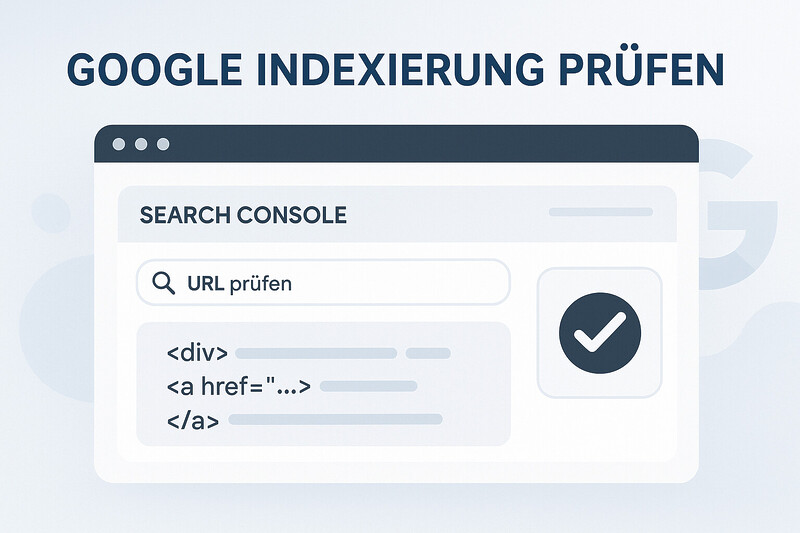
The Search Console offers the most detailed and reliable way to check Google indexing. The URL inspection tool shows not only the current status, but also crawling times, detected problems, and structured data. This information enables precise diagnosesandtargeted optimizations.
Key features of the Search Console:
| Function | Benefit | Information type |
|---|---|---|
| URL inspection | Single page analysis | Status, issues, crawl date |
| Coverage report | Overall overview | Indexed/excluded pages |
| Sitemap status | Submitted URLs | Processed/erroneous URLs |
| Performance report | Visibility data | Clicks, impressions, rankings |
Coverage report is particularly valuable, as it provides an overall overview of all indexed and excluded pages. Categorized error types make problem identification considerably easier. Regular use of the Search Console develops into an indispensable routine of successful SEO work.
SEO tools for indexing checks
Professional SEO tools considerably expand the possibilities for indexing monitoring. They automate bulk checks, create detailed reports, and continuously monitor changes. These functions save time and increase precision when checking website indexing.
Many tools offer integration options with the Search Console and combine various data sources into comprehensive analyses. Historical tracking functions show indexing trends over longer periods and enable the evaluation of optimization measures. Automated alerts provide immediate notification of critical changes.
The investment in suitable SEO tools is particularly worthwhile for larger websites or professional SEO agencies. Time savings, extended analysis capabilities, and automated monitoring justify the costs through improved efficiency and better results. Free basic versions provide an initial insight into these advanced possibilities.
Common problems when checking website indexing
Indexing problems arise from a variety of causes and require systematic diagnosis. Technical configuration errors are often at the beginning of the problem chain, while content-related or structural deficiencies exacerbate the situation. Successful troubleshooting requires detailed knowledge of possible sources of error.
The complexity of modern websites increases the risk of undetected indexing obstacles. Plugins, content management systems, and external services can unintentionally cause blocks. Regular review of all involved components prevents such problems and ensures continuous indexability.
Successful problem-solving follows a structured approach: identification of symptoms, analysis of possible causes, systematic resolution, and final verification of success. This methodology leads to sustainable solutions and prevents the recurrence of similar problems.
Recognizing technical obstacles
Technical barriers frequently block access for search engine crawlers. These errors require immediate correction, as they can completely prevent indexing.
Common technical obstacles:
- robots.txt issues
-
- Accidental blocking of important areas
- Incorrect syntax or path specifications
- Excessively restrictive rules
- Meta Tag Errors
-
noindextags on important pages- Conflicting robot instructions
- Missing or incorrect canonical tags
- Server issues
-
- HTTP status codes 404 or 500
- Slow response times
- SSL certificate errors
- Canonical conflicts
-
- References to incorrect URLs
- Circular Canonical References
- Missing Canonical Tags
Solution: Systematic review of all technical components with webmaster tools, server logs, and specialized crawling software. Preventive maintenance and regular checks prevent the occurrence of technical indexing problems.
Content Factors
Quality issues with content often lead to indexing exclusion. Google prefers unique, comprehensive, and user-oriented texts that offer genuine added value.
Problematic content types:
| Problem | Description | Impact |
|---|---|---|
| Duplicate Content | Identical content on multiple URLs | Confusion, possible exclusion |
| Thin Content | Extremely thin texts without added value | Ignoring by Google |
| Keyword Stuffing | Excessive keyword repetition | Filter measures, devaluation |
| Automated Content | Machine-generated texts | Quality filters take effect |
| Outdated Information | Factually incorrect or outdated data | Loss of relevance and trust |
Content quality solution strategies:
- Develop and communicate unique perspectives
- Comprehensive topic coverage instead of superficial texts
- Focus on user needs
- Regular updating of existing content
- Factual accuracy and ensure topicality
High-quality content creation solves these problems sustainably and significantly improves indexing chances.
Structural optimizations
Poor website architecture makes it difficult for crawlers to navigate and capture content. Isolated pages without internal linking often remain undiscovered, while excessively deep nesting reduces crawling efficiency. Illogical URL structures or dynamic parameters can cause additional confusion.
Missing or incomplete sitemaps deprive search engines of important navigation aids. Inconsistent internal linking, broken links, or circular redirects hinder systematic crawling. Mobile optimization is becoming increasingly important for successful indexing.
Well-thought-out information architecture forms the foundation of successful indexing. Flat hierarchies, logical categorization, and consistent linking strategies considerably facilitate the crawling process. XML sitemaps and structured data support search engines in efficiently capturing content.
Solution approaches for indexing problems
Successful problem-solving requires a systematic approach and precise diagnosis. Superficial corrections often treat only symptoms, while the actual causes remain unrecognized. Sustainable solutions address root problems and implement preventive measures for the future.
The order in which problems are addressed significantly influences success. Technical obstacles should be eliminated first, as they render all other optimizations ineffective. Content improvements and structural adjustments follow afterward. This prioritization maximizes the efficiency of corrective measures.
Documentation of all changes made facilitates later analyses and prevents repetition of the same mistakes. Success measurement through continuous monitoring demonstrates the effectiveness of implemented solutions and identifies further optimization requirements.
Immediate measures for missing indexing
Acute indexing problems require rapid responses to limit damage. A systematic approach maximizes the probability of success.
Priority list for immediate measures:
- Technical review (highest priority)
-
- Check robots.txt for blocks
- Verify meta robots tags
- Analyze HTTP status codes
- Test server reachability
- Search Console actions
-
- Manual URL submission via "URL Inspection"
- Update and resubmit XML sitemap
- Check coverage report for errors
- Content optimization
-
- Evaluate and improve content quality
- Eliminate duplicate content
- Expand or remove thin content
- Structural improvements
-
- Strengthen internal linking
- Prominent placement on the homepage
- Optimize navigation
Success measurement: Monitor the status daily via Search Console and perform regular site queries. These combined immediate measures often show initial success within a few days.
Long-Term Optimization Strategies
Sustainable indexing improvement requires strategic planning and continuous optimization. Content quality forms the most important foundation: unique, comprehensive, and user-oriented content is preferentially indexed. Regular updating and expansion of existing pages signals currency and relevance.
Technical excellence supports optimal crawling conditions. Fast loading times, mobile optimization, and clean code structure facilitate automated processing. Structured data helps search engines understand the content and significantly improves indexing quality.
Systematic monitoring develops into an indispensable routine. Automated monitoring detects problems at an early stage, while regular audits reveal structural improvement opportunities. This proactive approach prevents indexing problems and continuously optimizes website performance.
Timeframe and Expectations
Indexing speed varies considerably and depends on numerous factors. New websites typically require several days to weeks for initial indexing, while established domains are often updated within hours. These differences result from Google’s trust and priority assessments of various websites.
Realistic expectations prevent frustration and enable objective success evaluation. External factors such as Google algorithm updates or technical maintenance work can temporarily influence indexing times. Patience and continuous optimization lead to stable results in the long term.
Successful SEO strategies take these temporal aspects into account and plan appropriate buffers. Early content creation and technical preparation maximize the chances of timely indexing of important pages.
How long does Google indexing take?
Under optimal conditions, indexing of new content occurs within a few hours. High-quality websites with regular updates and strong internal linking benefit from accelerated processing. On average, however, you should expect one to seven days for new pages to be fully captured.
Indexing times at a glance:
| Website Type | Typical Duration | Influencing Factors |
|---|---|---|
| New Websites | 2-4 weeks | Trust must be built |
| Established Domains | 1-7 days | Existing authority |
| High-Frequency Updates | A few hours | Regular crawler visits |
| Seasonal Content | Variable | Crawling load at Google |
Factors for accelerated indexing:
- Server performance: Fast response times
- Content quality: Unique, valuable content
- Website authority: Trustworthy domain
- Internal Linking: Strong connection to important pages
- XML Sitemaps: Up-to-date and complete sitemaps
- Social Signals: Linking via social media
Active support through manual URL submissionandstrategic internal linking can significantly speed up indexing.
Check Google Indexing: Develop a Monitoring Routine
Systematic monitoring forms the backbone of successful indexing optimization. Daily checks of important pages via the Search Console reveal problems early. Weekly overall analyses show trends and development patterns, while monthly audits identify strategic optimization opportunities.
Automated notifications warn of critical indexing losses and enable immediate reactions. Historical data collection documents successes and setbacks, allowing successful strategies to be identified and replicated. This documentation supports data-driven decision-making.
Combining various monitoring tools increases significance and eliminates blind spots. Search Console, specialized SEO software, and manual spot checks complement each other optimally. This comprehensive approach ensures complete control over the indexing status.
Conclusion and Recommendations
Successful indexing optimization combines technical excellence with high-quality content and systematic monitoring. Checking Google indexing thus becomes a fundamental routine of every SEO strategy. Without this control, even the best optimization measures remain ineffective, as unindexed pages cannot achieve visibility.
A proactive approach significantly outperforms reactive problem handling. Preventive measures such as regular technical audits, continuous content optimization, and systematic structural improvements prevent indexing problems from the outset. This investment pays off through stable rankings and continuous traffic growth.
Start systematically checking your website’s indexing today. Implement the described methods step by step and develop an individual monitoring routine from them. Continuous optimization and patient implementation lead to sustainable success in search engine optimization.




 DE
DE