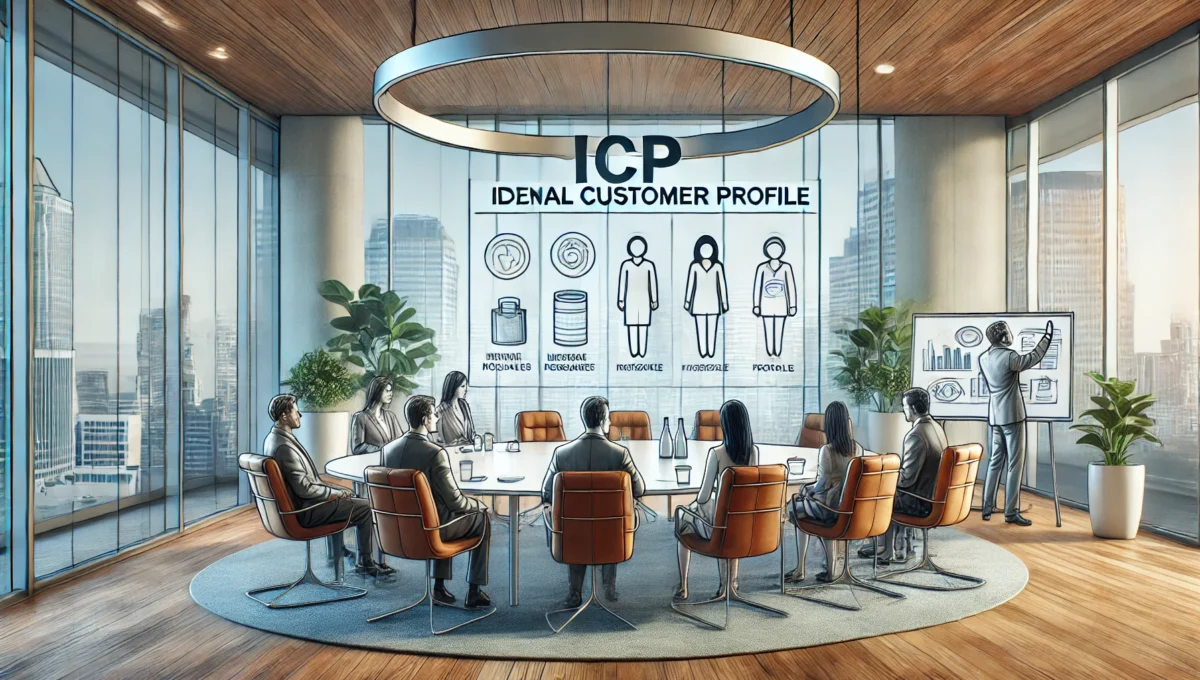
„ICP“ typically stands for „Ideal Customer Profile“ in marketing, which describes the ideal customer profile. This profile is used to identify and understand the characteristics of a company’s most valuable customers. The goal is to specifically align marketing and sales strategies with this particular customer group to increase effectiveness.
ICP Marketing = Ideal Customer Profile – Customer Profile and Persona
An ICP includes demographic data, behavioral patterns, motivations, and pain points of customers. This information helps to develop targeted marketing campaigns that appeal and convert.
To create an ICP, companies should collect and analyze data from various sources, including:
- Customer databases – Analyzing existing customers who bring the highest value.
- Market research – Collecting data on industry trends and competitors.
- Direct customer feedback – Utilizing interviews, surveys, and customer feedback.
- Analytical tools – Using web analytics and other measurement tools to identify behavioral patterns and preferences.
A well-defined ICP allows for more efficient resource allocation, personalized customer engagement, and ultimately increased customer loyalty and revenue.
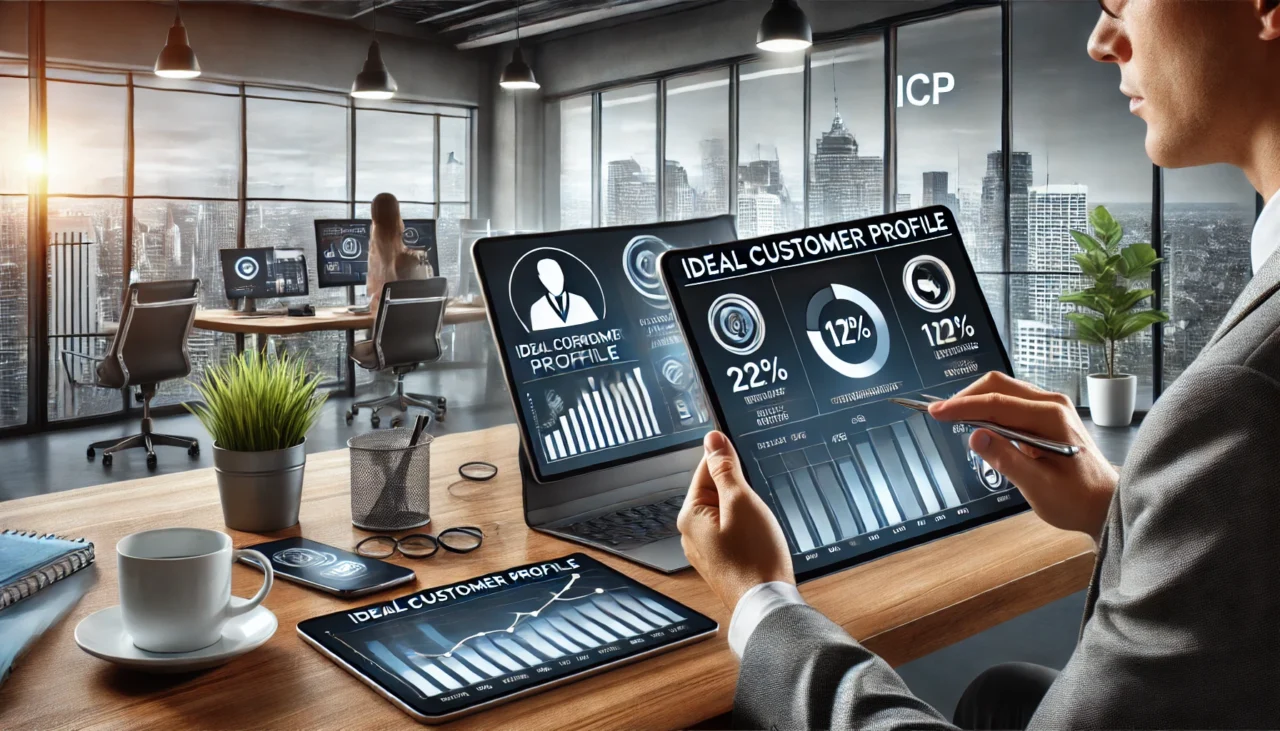
The Ideal Customer Profile (ICP) Theory
The theory behind the Ideal Customer Profile (ICP) in marketing is central to understanding how companies can most effectively focus their resources on the customer segments that promise the greatest value. Here are the core points of this theory:
1. Targeted Approaches
An ICP helps companies align their marketing and sales strategies specifically with the needs and preferences of a defined customer group. This leads to more efficient resource utilization, as marketing efforts are concentrated where they have the greatest impact.
2. Personalization
By precisely knowing the characteristics and needs of the ideal customer, companies can personalize their communication, offers, and services. This increases the relevance and effectiveness of marketing efforts and promotes stronger customer loyalty.
3. Product and Service Development
The insights gained from a well-defined ICP can also guide the development of new products or services. Companies can focus on developing solutions that directly address the biggest pain points or needs of their ideal customer.
4. Risk Reduction
By focusing on customers who are most likely to succeed and have the highest lifetime value, companies minimize the risk of misinvesting in less profitable segments.
Become more visible on Google & Social Media?
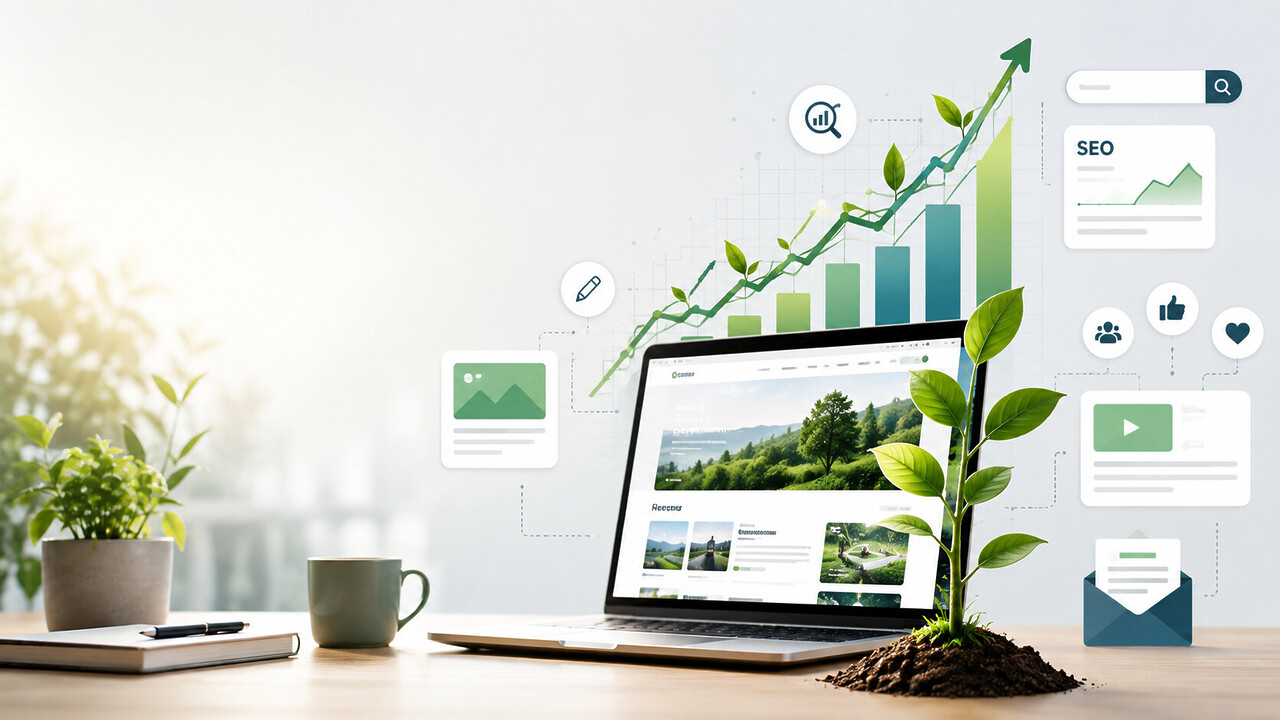
In a free strategy consultation for data-driven online marketing, we uncover your untapped potential, review any existing ad accounts if necessary, examine your SEO ranking and visibility, and determine which strategy is appropriate for your budget and which active measures will lead to more inquiries or sales.

✅ More visibility & perception through targeted placement
✅ More visitors > prospects > customers > revenue
✅ Reach target groups scalably with SEA
✅ Act and grow sustainably with SEO
🫵 Maximum success with our hybrid strategy
💪 More than 15 years of experience across industries in over 1,000+ projects demonstrable!







5. Market Segmentation
The ICP is often the starting point for more detailed market segmentation, which allows for identifying and addressing different subgroups even within the ideal profile.
6. Feedback Loops
A dynamic ICP, regularly updated to incorporate feedback and new data, helps companies adapt to changing market conditions and sharpen their strategies accordingly.
Implementation
The following steps are often taken to implement an ICP:
- Data Analysis: Collecting and analyzing data from existing customer relationships, market studies, and competitor analyses.
- Customer Surveys: Directly gathering feedback through interviews or surveys.
- Creation of Buyer Personas: Building detailed profiles that are representative of the ideal customer profile.
- Adaptation of Strategies: Revising marketing and sales approaches to align them with the ICP.
A thoroughly researched and applied ICP can lead to significant improvements in the effectiveness of customer engagement and ultimately in the overall performance of a company.
Advantages of Ideal Customer Profile in Marketing
The Ideal Customer Profile (ICP) is a powerful tool in marketing that offers numerous benefits when used correctly. Here are some of the most important advantages:
1. Increased Efficiency in Marketing and Sales
By focusing on customer segments that are most likely to convert and have the highest customer value, companies can deploy their marketing and sales resources more efficiently. This minimizes wastage and optimizes the return on marketing investments.
2. Improved Customer Satisfaction and Retention
An ICP enables companies to better understand and address the specific needs and preferences of their target customers. This leads to higher customer satisfaction, which in turn increases customer retention and loyalty.
3. Targeted Product Development
With a clear understanding of the ideal customer’s needs, companies can make their product development and innovations more targeted. Products and services can thus be developed to precisely solve the problems or fulfill the desires that are most relevant to the target customers.
4. Optimized Personalization
Marketing campaigns aligned with an ICP can be highly personalized to improve relevance and appeal. Personalized content and offers are often more effective because they are directly tailored to the specific interests and needs of the target audience.
5. Better Prediction of Buying Behavior
An ICP helps predict the buying behavior of target customers by providing insights into their purchasing motives, decision-making paths, and preferences. This enables marketers to act proactively and develop strategies that optimize the sales process.
6. Clearer Communication Strategy
With a well-defined ICP, companies can sharpen their messages and ensure that their communication focuses on the most resonant topics and messages. This helps to convey the brand message clearly and convincingly.
7. Facilitated Market Segmentation and Expansion
An ICP not only facilitates the segmentation of the existing market but can also help identify new markets or expansion opportunities. Companies can identify similar segments that are potentially profitable and accessible.
8. Reduced Risk in Marketing Decisions
The decision to invest in certain marketing channels or strategies becomes less risky when supported by data from a thoroughly researched ICP. This leads to safer investments and better resource allocation.
Overall, a well-implemented ICP helps companies work smarter, not harder, by focusing on the customers who have the greatest impact on their business.

Implementing the Ideal Customer Profile in Marketing Strategies
Implementing an Ideal Customer Profile (ICP) in marketing strategies is a multi-stage process that requires thorough planning and continuous adaptation. Here are some key steps on how to effectively integrate an ICP into your marketing strategies:
1. Creation and Refinement of the ICP
First, the ICP must be developed based on a combination of market analysis, existing customer data, and feedback. This profile should describe the demographic data, behavioral characteristics, motivations, and challenges of your ideal customers in detail. It is important that the ICP is regularly reviewed and adjusted to account for changes in market conditions or customer behavior.
2. Develop Targeted Messages
Utilize the information from the ICP to develop tailored marketing messages that directly address the needs and pain points of your target customers. This could manifest in personalized email campaigns, targeted social media posts, or customized advertisements.
3. Adaptation of Product and Service Offerings
Adapt your products and services to better meet the needs of your ideal customer. This may include developing new features, offering additional services, or even repositioning existing offerings.
4. Optimization of Sales Channels
Identify which sales and marketing channels your ideal customer uses most frequently and focus your efforts on those channels. This may include selecting specific social platforms, utilizing specific online or offline sales channels, or focusing on particular geographic areas.
5. Personalization of Customer Interaction
Implement technologies and processes that enable personalized interaction with your customers, from initial contact through the purchasing process to customer service. This could include CRM (Customer Relationship Management) systems, personalized web content, or customer-specific recommendation systems.
6. Use of Data for Performance Monitoring
Deploy analytical tools to monitor how well your strategies resonate with your ideal customer. Pay attention to KPIs (Key Performance Indicators) such as conversion rates, customer retention rates, and average customer value. Use this data to continuously improve your strategies.
7. Team Training
Ensure that your sales and marketing team fully understands what the ICP entails and how it can be integrated into their daily work. Regular training and workshops can help ensure that all team members are up-to-date and effectively utilize the ICP.
8. Continuous Iteration and Adaptation
The market and customer needs are constantly evolving. Your ICP should therefore not be a static document. Review it regularly and adapt your strategies to ensure they remain relevant and effective.
By placing your ICP at the center of your marketing strategies, you can ensure that your efforts are targeted and effective, ultimately leading to improved customer loyalty and a higher ROI.
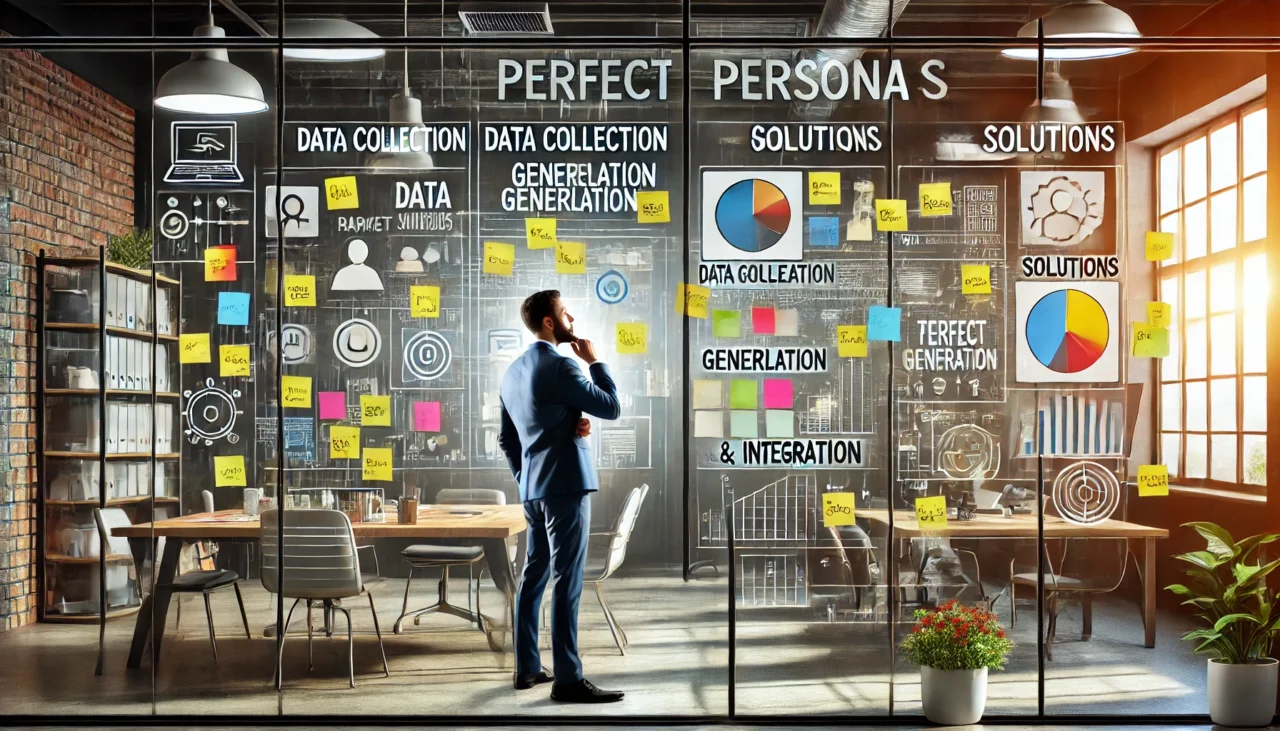
Challenges and Solutions for Perfect Personas (Target Group Persona Profiles)
The creation and use of target group personas or buyer personas presents companies with certain challenges, but also offers effective solutions to overcome them. Here are some typical challenges and possible solutions:
Challenges in Creating Personas
1. Data Acquisition
Challenge: Creating precise personas requires detailed and reliable data. However, many companies struggle with incomplete or outdated data sets. Solution: Integrate diverse data sources such as CRM systems, customer feedback, social media, and market research. Use advanced analytics tools to gain deeper insights from existing data.
2. Overgeneralization
Challenge: Personas can become too general, limiting their usefulness. Broadly defined personas can miss the specific needs of individual customer groups. Solution: Segment your target audiences further to create more specific personas. Use qualitative research methods to gain deeper insights into specific customer segments.
3. Integration into Marketing Strategies
Challenge: Even well-developed personas are useless if they are not effectively integrated into marketing strategies. Solution: Train your marketing and sales team in the application of personas. Develop specific guidelines and examples of how personas can be used in campaigns and in daily customer contact.
4. Timeliness and Relevance
Challenge: Markets evolve quickly, and personas can quickly become outdated. Solution: Review and update your personas regularly. Use real-time data and feedback to make adjustments and keep the personas current.
Solutions for Persona Optimization
1. Dynamic Personas
Develop dynamic personas that automatically adapt by using AI and machine learning to continuously analyze data and update the personas.
2. Cross-functional workshops
Host workshops where members from different departments (marketing, sales, product development) come together to contribute their insights and experiences. This promotes a deeper understanding of the personas and their effective use.
3. Storytelling
Use storytelling techniques to bring personas to life. Tell stories that illustrate typical days, problems, and successes of the personas to create a deeper empathetic understanding.
4. Feedback loops
Implement systematic feedback loops to learn directly from customers and the market. Use this feedback to continuously refine your personas.
By directly addressing these challenges and continuously working on refining your personas, you can ensure that they remain a vivid, effective tool in your marketing arsenal.

Florian Ibe
CEO & Marketing Consultant
Your contact person: Florian Ibe

Guide + Checklist for creating personas – Target group profile creation
Creating buyer personas is an essential step in marketing to better understand and effectively reach target groups. Here you will find a detailed guide and a checklist to help you develop effective personas for your marketing.
Guide to creating buyer personas
1. Collect data
- Utilize existing customer databases to gain initial insights into your customer base.
- Conduct surveys and interviews with current and potential customers to obtain deeper insights.
- Analyze social media interactions and your website analytics to identify behavioral patterns.
- Also consider industry reports and studies for additional market information.
2. Define demographic and psychographic characteristics
- Determine basic demographic details such as age, gender, education level, and geographical location.
- Supplement with psychographic characteristics such as interests, hobbies, values, and attitudes.
3. Identify needs and pain points
- Understand what problems your personas want to solve and what obstacles they encounter.
- Recognize the motivations that drive their purchasing decisions.
4. Analyze purchasing behavior
- Examine how and where your personas prefer to shop and what factors influence their purchasing decisions.
- Consider the typical decision-making process from first contact to purchase.
5. Creation and documentation
- Create detailed persona profiles that summarize all collected information.
- Use narrative elements to make the personas tangible and understandable.
6. Integration and Use
- Train your team on how to apply the personas in marketing and sales.
- Integrate the personas into all marketing strategies and campaign planning.
7. Review and Adaptation
- Schedule regular reviews to keep the personas up-to-date.
- Adjust the personas based on new customer feedback and changing market conditions.
Checklist for Persona Creation
- ✅ Data sources identified (customer databases, surveys, social media, etc.)
- ✅ Demographic characteristics defined (age, gender, location, etc.)
- ✅ Psychographic characteristics determined (interests, values, attitudes, etc.)
- ✅ Needs and pain points identified
- ✅ Purchasing behavior and decision-making processes analyzed
- ✅ Persona documents created (with names, images, and stories)
- ✅ Training material provided for the team
- ✅ Persona deployment in marketing strategies planned
- ✅ Feedback mechanisms established
- ✅ Regular reviews and updates planned
These steps and the checklist will help you develop well-founded and vivid personas that make your marketing targeted and effective.

3 Examples of ICP Personas from Different Target Groups



 DE
DE