Job Automation with AI in Online Marketing, Paid Ads, and Social Media
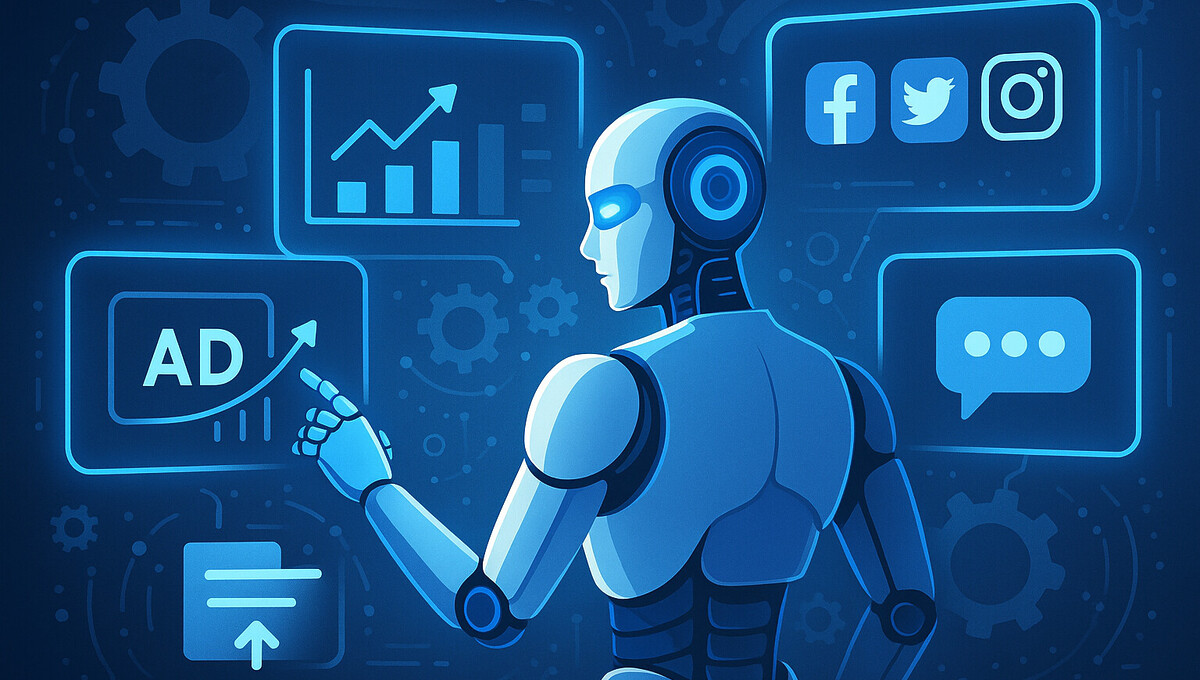
Marketing teams are under increasing pressure: more channels, higher expectations, constant resources. Repetitive tasks such as adapting ad texts, planning social media posts, or segmenting email lists consume valuable working time. This is precisely where job automation comes in – an approach that uses Artificial Intelligence to accelerate time-consuming processes and relieve marketing professionals.
Intelligent systems now take over tasks that used to take hours. They analyze campaign data, optimize bids in real-time, and create personalized content. However, despite these advances, human expertise remains indispensable. Strategic decisions, creative concepts, and sensitive communication with target groups cannot be fully automated.
This article shows you how AI-powered automation works in online marketing, paid ads, and social media marketing. You will learn which processes can be automated, where the limits lie, and how to get started. The goal: more time for strategic work, while intelligent systems handle the operational details.
What is Job Automation with AI in Marketing?
Job automation refers to the transfer of recurring workflows to software systems. In marketing, this means that Artificial Intelligence takes over tasks such as data analysis, content distribution, or campaign optimization. Unlike classic automation, AI systems learn from past actions and continuously improve their performance. They recognize patterns, make predictions, and independently adapt processes to changing conditions.
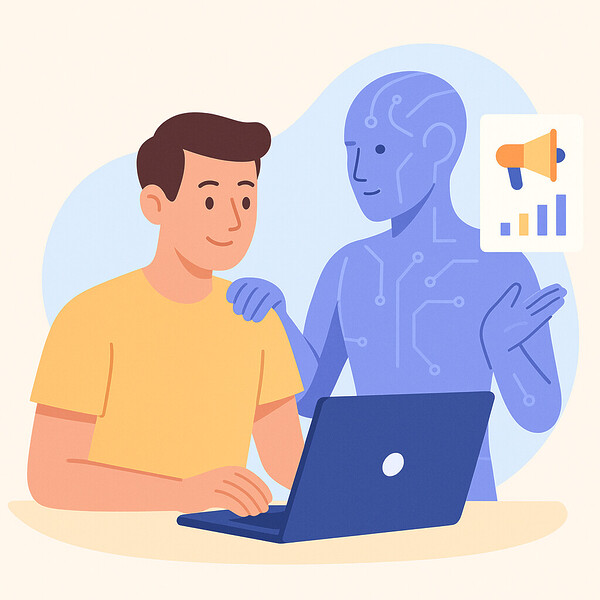
The crucial difference to complete replacement lies in the interaction between human and machine. Automated systems perform defined tasks but require strategic guidelines and quality control. For example, an AI tool creates variations of ad texts, but the final approval and brand adaptation remain in human hands. This division of labor increases efficiency without sacrificing creative control.
In digital marketing, job automation encompasses various areas:
- Content creation for websites and blogs
- Email campaigns with personalized content
- Automated bidding strategies for advertisements
- Scheduled publication of social media posts
Each of these areas benefits from AI-powered solutions that perform routine tasks faster and more precisely than manual processes. At the same time, they create space for strategic planning and creative conceptual work, which constitute the decisive competitive advantage.
AI-powered Automation in Online Marketing
Content Creation and Optimization
Artificial intelligence is changing the way marketing content is created. Modern systems generate product descriptions, blog drafts, or meta-descriptions within seconds. However, content creation largely remains a manual task. AI-generated content is easily reproducible and often similar, which Google and other search engines do not consider high-quality content. Algorithms are increasingly recognizing automatically generated texts and evaluating them more critically.
Manual post-processing is therefore essential. AI tools provide basic structures and text modules that you should individually adapt, expand, and enrich with your own expertise. Tools like NeuronWriter* can help: they analyze top rankings for your target keywords and show which topics and terms you should integrate. The actual text creation, the incorporation of experience, and the development of a unique perspective remain your task.
Keyword research still has to be done manually with specialized tools like Mangools* or Ahrefs. These platforms provide precise data on:
Become more visible on Google & Social Media?
In a free strategy consultation for data-driven online marketing, we uncover your untapped potential, review any existing ad accounts if necessary, examine your SEO ranking and visibility, and determine which strategy is appropriate for your budget and which active measures will lead to more inquiries or sales.

✅ More visibility & perception through targeted placement
✅ More visitors > prospects > customers > revenue
✅ Reach target groups scalably with SEA
✅ Act and grow sustainably with SEO
🫵 Maximum success with our hybrid strategy
💪 More than 15 years of experience across industries in over 1,000+ projects demonstrable!






- Search volume and trends
- Competition intensity
- Keyword difficulty
- Related search terms

However, AI can help with keyword idea inspiration: It suggests related terms, identifies semantic connections, and shows alternative formulations. The final selection of keywords, however, is based on your strategic assessment, your knowledge of the target audience, and the data from professional SEO tools.
Automate email marketing
Email campaigns thrive on relevant content at the right time. AI-powered systems automatically segment recipient lists based on behavior, interests, and purchase history. They recognize which subscribers respond to specific topics and create corresponding groups. This dynamic segmentation continuously adapts to new information without requiring manual adjustments. Personalization thus goes far beyond the salutation.
Send time optimization uses machine learning to predict individual open probabilities. The system analyzes historical data for each recipient and sends emails at times with the highest probability of success. What is early morning for one user can be late evening for others. This personalized approach significantly increases open rates and engagement.
A/B tests run more efficiently with AI support. Intelligent algorithms identify relevant test variables, optimally distribute traffic, and automatically terminate tests once statistical significance is reached. They evaluate results and independently implement winning variants. Nevertheless, your expertise remains in demand: Algorithms cannot make strategic decisions about campaign goals, brand language, and content orientation. They require clear guidelines to work effectively.
Automatically optimize Paid Ads with AI
Campaign Management
Bid management is one of the most time-consuming tasks in performance marketing. AI-based bidding strategies analyze millions of data points in real-time and automatically adjust bids to competitive situations, time of day, and user behavior. They maximize conversions within predefined budget limits or achieve defined cost-per-acquisition targets. These systems react faster to market changes than any manual intervention.
Budget optimization occurs across campaigns and considers the performance of individual ad groups and keywords. Intelligent algorithms automatically shift budgets from weaker to stronger areas. They recognize seasonal fluctuations, predict demand, and prevent unnecessary expenses when success is unlikely. This prevents budget waste and significantly improves the overall performance of your advertising activities.
Cross-platform control simplifies the management of campaigns across different ad networks:
- Synchronization of settings across multiple platforms
- Comparison of performance data between channels
- Identification of the most profitable ad networks
- Automated rule sets for ad serving
Nevertheless, successful campaign management requires strategic thinking: target group definition, creative concepts, and brand positioning remain human tasks that set the framework for automated optimizations.
Audience Targeting and Ad Optimization
Audience creation is increasingly based on machine learning. AI systems analyze the behavioral patterns of successful customers and identify similar user groups with high conversion potential. They combine demographic data, interests, and online behavior to create precise target groups. Lookalike audiences are created automatically, expanding your reach to qualified prospects that you might have overlooked manually.
Dynamic ad adjustment optimizes ad creatives for different platforms, devices, and target groups. AI-powered systems test countless combinations of headlines, descriptions, and visual elements. They learn which messages work for which user segments and automatically play out the most successful variants. This continuous optimization significantly increases relevance and click-through rates.
Performance analysis goes beyond simple reporting. Predictive analytics forecasts future campaign results based on current trends and historical data. You receive early warnings of performance drops and recommendations for countermeasures. Intelligent dashboards highlight relevant insights and save time in data evaluation. However, automated insights do not replace interpretive work: root cause analysis, strategic conclusions, and creative solutions still require experienced marketing experts with industry knowledge.
Automate Social Media Marketing with AI
Content Planning and Publishing
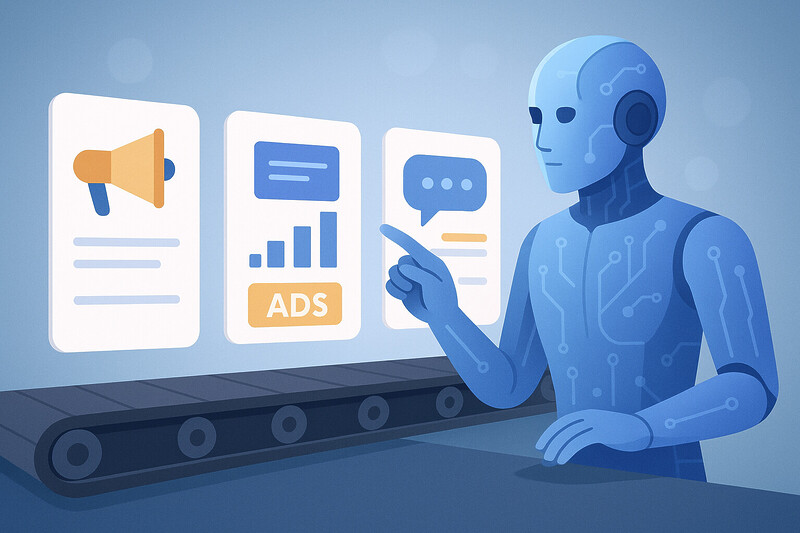
Posting schedules benefit significantly from AI-powered planning. Intelligent systems analyze when your target audience is most active and what posting frequency achieves optimal reach. They consider platform-specific characteristics: what works on LinkedIn at lunchtime might reach more people on Instagram in the evening. Automated scheduling tools publish content at these optimal times, even outside regular working hours.
Cross-platform publishing significantly simplifies the management of multiple social media channels. A single post can be automatically adapted to the requirements of different networks:
- Character limits (e.g., 280 characters for Twitter)
- Image formats and sizes for each platform
- Hashtag conventions and limits
- Platform-specific text formatting
This saves time and ensures a consistent brand presence across all channels. Central editorial plans keep track of planned and published content.
Hashtag and keyword optimization uses AI to identify trending topics and relevant terms. Systems suggest suitable hashtags based on your content and target audience. They analyze the reach of different hashtag combinations and recommend adjustments for better visibility. Nevertheless, the content orientation of your social media strategy remains a creative task: authentic brand communication, community building, and the development of campaign concepts require human intuition and strategic thinking that algorithms cannot replace.
Community Management and Interaction
Automated responses and chatbots handle the initial processing of frequent inquiries. They answer standard questions about opening hours, product availability, or shipping costs around the clock. Modern systems understand natural language and conduct context-based dialogues. For complex concerns or emotional topics, they seamlessly transfer to human employees. This division of labor accelerates response times and relieves your team.
For professional networks like LinkedIn and Twitter, specialized tools such as Powerin* offer additional automation capabilities. Powerin* assists you in automating comments and interactions on these platforms. The tool helps to increase engagement and enhance presence, allowing you to focus on strategically important conversations. The balance between automated and personal interactions remains crucial for authentic community management.
Sentiment analysis automatically evaluates the mood in comments, mentions, and direct messages. AI recognizes positive, negative, or neutral tones and flags critical posts for priority processing. It identifies emerging crisis situations before they escalate. Trend detection shows which topics are moving your community and provides valuable insights for content strategies and product development.

Comment and message prioritization sorts requests by urgency and relevance:
- VIP customers automatically receive top priority
- Time-sensitive complaints are immediately flagged
- Viral posts with high engagement potential
- Spam and inappropriate content are filtered out
This intelligent triage enables efficient community management even with high message volumes. Despite this technical support, authentic communication remains essential: empathy, humor, and the ability to convey brand values in interactions are human strengths that no job automation can fully replace.
Social Media Analytics
Performance tracking provides comprehensive insights into the effectiveness of your social media activities. AI-powered analytics tools capture engagement rates, reach, follower growth, and conversion data across all platforms. They identify patterns in user behavior and show which content formats generate the strongest resonance. Automated alerts inform you about unusual activities or performance outliers, allowing you to react quickly.
Trend detection identifies emerging topics and hashtags in your industry before they reach the mainstream. Intelligent algorithms analyze millions of posts and recognize viral potential early on. They show which competitors are pursuing which strategies and where opportunities for your own campaigns arise. This market observation gives you competitive advantages and inspires creative content ideas.
Reporting automation creates regular performance reports without manual effort. Individually configurable dashboards visualize relevant key figures and developments. Reports are automatically sent to stakeholders, including summaries and recommendations for action. This saves time on administrative tasks. However, numbers can only be part of the story: interpreting data, deriving strategic measures, and evaluating qualitative factors such as brand perception still require your expertise and experience in the marketing context.
Limits of AI: Why human expertise remains indispensable
Strategic decisions and creative concepts form the foundation of successful marketing. AI systems optimize within given parameters but cannot develop a corporate vision or generate innovative campaign ideas. Long-term positioning, brand building, and the development of new markets require strategic thinking that transcends historical data. Algorithms lack an understanding of cultural nuances, societal developments, and the subtle factors that influence purchasing decisions.
Brand communication and emotional intelligence cannot be fully automated. Authentic stories that evoke emotions and build relationships arise from human creativity. AI can generate text variations but cannot capture the soul of a brand or create genuine connections with customers. Especially in sensitive situations – crisis communication, complaint management, or emotional topics – empathy cannot be replaced by any job automation.
Quality control and ethical considerations remain indispensable human tasks:
- Checking for factual accuracy and brand consistency
- Identifying inappropriate phrasing
- Avoiding discriminatory patterns
- Ensuring social acceptance
The optimal interplay arises when intelligent systems handle repetitive tasks and marketing professionals focus on strategic, creative, and interpersonal aspects. This division of labor maximizes efficiency without compromising quality.
Practical Tips for Getting Started with Job Automation
Analyzing your own marketing processes is the first step towards successful automation. Document which tasks are recurring, time-consuming, and follow clear rules. Particularly suitable for job automation are:
- Daily adjustment of ad bids in paid ad campaigns
- Publication of scheduled social media posts
- Segmentation and personalization of email campaigns
- Creation of performance reports across multiple channels
- Identification and prioritization of comments and messages
Prioritize processes by time expenditure and potential benefit of automation. Start with tasks that require high manual effort and at the same time run in a standardized manner.
Selecting suitable AI tools requires careful evaluation. Define specific requirements for your particular marketing areas and compare different solutions:
- Content Optimization: Tools like NeuronWriter* assist with analysis and post-processing
- Keyword Research: Mangools* or Ahrefs provide precise SEO data
- Paid Ads: Platform-specific automation features or specialized tools
- Social Media: Management platforms for planning, publishing, and analytics

Free trials allow for practical experience without risk. Pay attention to data protection compliance and the scalability of the solutions.
Step-by-step implementation prevents overwhelm and enables learning processes. Start with a clearly defined area – such as the automation of social media posts or bid optimization for a single paid ads platform. Train your team thoroughly and gather experience. After successful implementation, expand the automation to additional areas. Define clear KPIs for each automated process and regularly monitor performance.
Popular areas of application for AI tools in marketing
| Marketing Area | Tasks That Can Be Automated | Remaining Manual Tasks |
|---|---|---|
| Online Marketing | Content generation, SEO analysis, personalization | Strategy development, brand management, creative concepts, final content quality |
| Paid Ads | Bid management, budget allocation, A/B testing | Campaign strategy, target audience definition, creative development |
| Social Media | Posting schedules, community monitoring, analytics | Content conception, crisis management, relationship building |
The range of functions should cover your specific needs in online marketing, paid ads, or social media. User-friendliness determines acceptance within the team – complicated systems are often not used consistently. The cost-benefit ratio must be right: inexpensive tools can be sufficient for smaller campaigns, while extensive paid ads budgets justify specialized solutions. Support quality and documentation facilitate problem-solving and the onboarding of new employees.
Integration into existing systems avoids data silos and media disruptions. Check whether tools can communicate with your CRM, email marketing system, or analytics platform. API interfaces enable flexible connections between different marketing tools. Native integrations often work more smoothly than third-party connections. A seamless data flow between paid ads platforms, social media channels, and your analytics systems maximizes the benefits of job automation.
Practical examples demonstrate the breadth of automation possibilities: keyword research tools such as Mangools* and Ahrefs provide precise data for strategic SEO decisions, while AI assists with inspiration for additional keyword ideas. Content optimization tools such as NeuronWriter* help with the post-processing and quality assurance of texts. Paid ads platforms offer integrated bidding strategies for automated campaign optimization. Social media management tools combine planning, publishing, and analytics in a central interface.
Conclusion
Job automation with AI is fundamentally changing work in online marketing, paid ads, and social media. Intelligent systems take over time-consuming routine tasks such as bid optimization, content planning, and performance analysis. Marketing teams gain valuable time for strategic planning, creative concepts, and maintaining customer relationships. Automated processes accelerate workflows and measurably increase efficiency.
Despite impressive progress, AI tools cannot fully replace human expertise. Keyword research still requires professional tools such as Mangools* or Ahrefs, even if AI assists with idea generation. Content creation remains largely a manual task, because purely automatically generated texts are not rated as high-quality content by search engines such as Google. Manual post-processing with the support of tools such as NeuronWriter* is indispensable for high-quality results.
Start by analyzing your marketing processes in online marketing, paid ads, and social media. Identify time-intensive, recurring tasks and select suitable tools for these specific areas. Implement step by step and measure success using concrete KPIs. Your investment in job automation pays off through time savings, better campaign results, and more satisfied teams. Use the possibilities of technology to make your marketing activities more efficient without having to forgo human creativity and strategic thinking.




 DE
DE