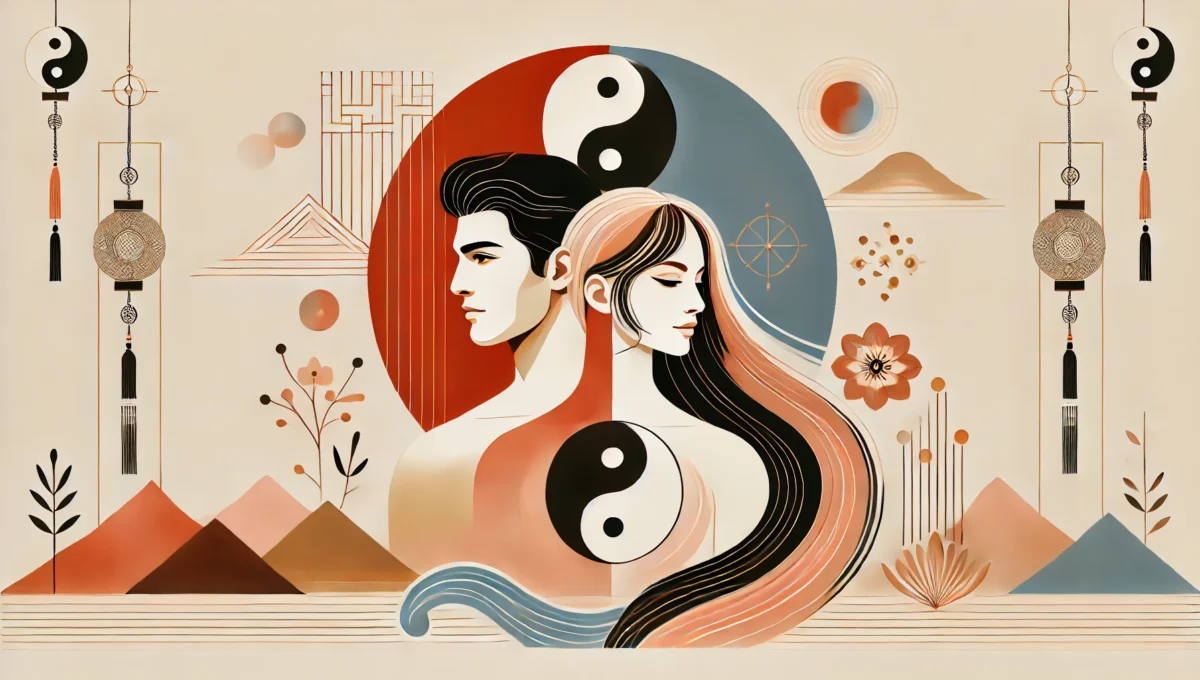
Masculine and Feminine Energy are concepts often used in spiritual, psychological, and philosophical discourse. They refer not directly to gender, but to archetypal qualities and principles that are characterized as "masculine" or "feminine." Learn more in the following detailed article with book recommendations and extensive background knowledge.
Male and Female Energy (Yin & Yang)
Male (Yang) and female (Yin) energy are archetypal principles that exist in every person, regardless of gender. Male energy stands for activity, assertiveness, and logic, while female energy represents receptivity, intuition, and creativity. A balanced relationship between these energies is crucial for a harmonious, fulfilling life. In everyday life and in relationships, the balance of Yin and Yang provides inner peace, productive action, and deep emotional connections.
The Masculine Energy
Masculine energy is often associated with attributes such as action, assertiveness, logic, structure, and goal orientation. It stands for the principle of giving, acting, and advancing. Masculine energy is active and often focused on achieving goals and solving problems.
Examples of masculine energy:
- Assertiveness
- Clarity and logic
- Determination
- Create structure and order
- Competition and independence
The Feminine Energy
Feminine energy, on the other hand, is associated with qualities such as receiving, intuition, creativity, compassion, and nurturing. It is often more passive, receptive, and oriented toward being rather than doing. Feminine energy represents the principle of receiving and nourishing.
Examples of feminine energy:
- Intuition and creativity
- Compassion and Empathy
- Patience and flexibility
- Care and Connection
- Dedication and Letting Go
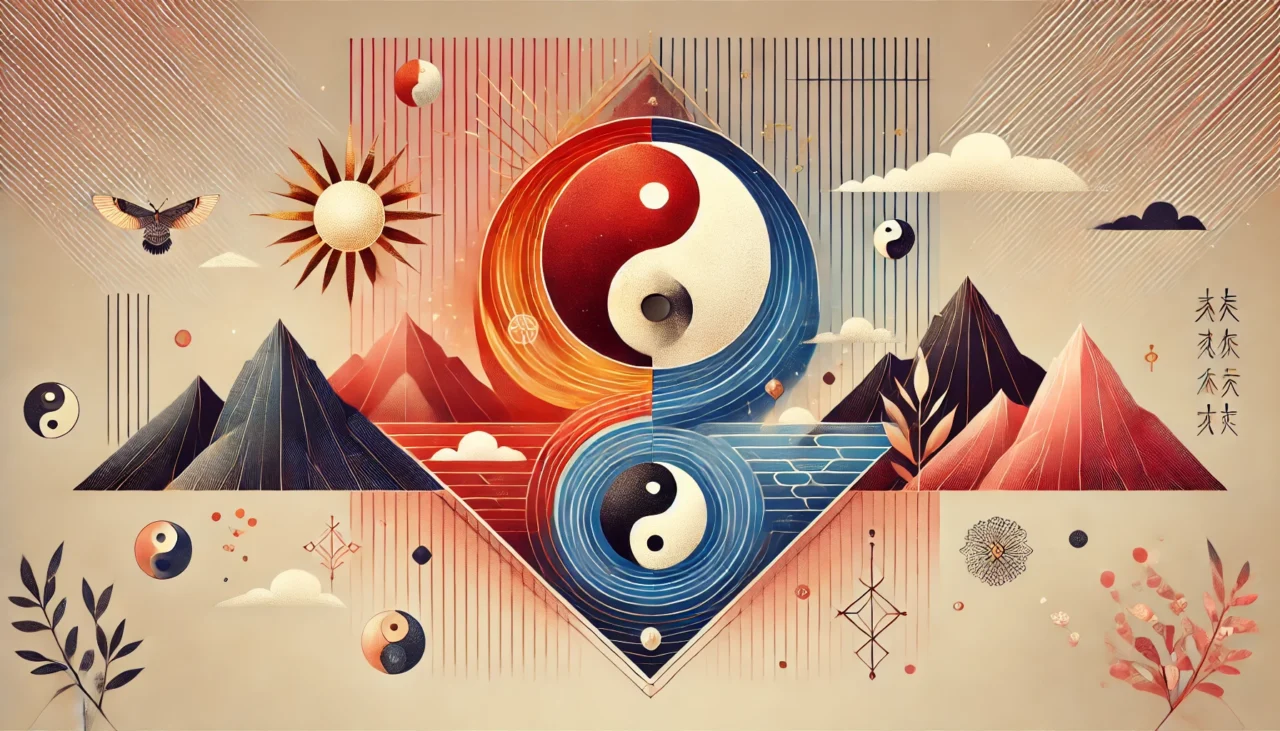
Balance of Energies – an Important Equilibrium
In many spiritual teachings, it is emphasized that balance, that is, equilibrium between masculine and feminine energy, is important for a harmonious life. Both energies exist in every person, regardless of gender. An excess of one energy can lead to imbalances, such as aggression from too much masculine energy or passivity from an excess of feminine energy.
A particularly important and frequent topic in the context of energies is:
What to Do With Too Much Masculine Energy as a Woman?
Excessive masculine energy as a woman can lead to an imbalance that affects various areas of life. When Yang energy predominates in a woman, the following challenges can arise:
Become more visible on Google & Social Media?
In a free strategy consultation for data-driven online marketing, we uncover your untapped potential, review any existing ad accounts if necessary, examine your SEO ranking and visibility, and determine which strategy is appropriate for your budget and which active measures will lead to more inquiries or sales.

✅ More visibility & perception through targeted placement
✅ More visitors > prospects > customers > revenue
✅ Reach target groups scalably with SEA
✅ Act and grow sustainably with SEO
🫵 Maximum success with our hybrid strategy
💪 More than 15 years of experience across industries in over 1,000+ projects demonstrable!






1. Stress and Overwork
- High Pressure and Performance Stress: Women with too much masculine energy tend to want to be constantly productive and focus strongly on achieving goals. This can lead to overwork, stress, and ultimately burnout, as the need for rest and recovery (Yin) is neglected.
2. Difficulties in Relationships
- Need for Control: A woman with excessively high Yang energy may tend to want to take control in relationships and have difficulty relaxing or letting go. This can lead to tension in partnerships, especially if the partner is also strongly Yang-oriented.
- Low Emotional Connection: Focusing on logic and efficiency can lead to neglecting emotional closeness and empathy in relationships. This can weaken the emotional bond with others.
3. Lack of Self-Care
- Neglect of One's Own Needs: Women who are strongly anchored in their masculine energy could ignore their own needs and feelings in order to complete their tasks or achieve their goals. In the long term, this can lead to emotional exhaustion and dissatisfaction.
4. Feeling of Isolation
- Independence to the Point of Isolation: A woman who overemphasizes her masculine energy could try to accomplish everything alone and reject help from others. This can lead to a feeling of isolation, as she cuts herself off from the support and community that feminine energy offers.
5. Inner Restlessness and Impatience
- Constant Activity: Excessive Yang energy can lead to inner restlessness, as the person is constantly in motion and has difficulty finding moments of silence and reflection. This can manifest in impatience and frustration when things do not progress quickly enough.
6. Difficulties with Female Identity
- Conflict with One's Own Femininity: Women who are strongly anchored in their masculine energy might feel that their femininity is weakened or suppressed. This can lead to an identity conflict, particularly in social contexts that value traditional feminine qualities.
How to restore balance
To restore balance, it can be helpful to consciously cultivate more Yin energy:
- Self-care and relaxation: Integrate regular rest periods and self-care into your daily routine, such as meditation, walks in nature, or a relaxing bath.
- Emotional Connection: Focus on nurturing emotional relationships, whether through deeper conversations with friends or by allowing vulnerability in relationships.
- Creativity and Intuition: Take time for creative hobbies and listen more to your intuition rather than relying exclusively on rational decisions.
- Letting Go and Receiving: Practice releasing control and accepting help or support from others.
By bringing Yin and Yang into balance in your life, you can lead a more fulfilling and harmonious life that respects and integrates both your masculine and feminine energy.
Everyday Application
In everyday life, the balance of these energies manifests in the various roles and tasks we undertake. It is helpful to be aware of your own energies and use them according to the situation and need to lead a fulfilling and balanced life.
Yin & Yang – Feminine and Masculine Energy actively and passively influence your life!
Yin and Yang are central concepts of Chinese philosophy that describe the interplay of opposing yet complementary forces in the universe. These concepts can be applied to many aspects of life, including the idea of female (Yin) and male (Yang) energy. These energies influence our lives in many ways and can help us lead a balanced and fulfilling life.
Yin – The Feminine Energy
Yin represents feminine energy and is associated with qualities such as calm, passivity, receptivity, and intuition. It is the energy of being, inner reflection, and nourishing. Yin energy is cool, calm, and gentle, and it stands for the dark, the hidden, and the mysterious.
Influence of Yin energy:
- Self-Care: Yin energy supports us in taking care of ourselves, nurturing ourselves, and taking time for rest and regeneration.
- Intuition and Creativity: It promotes connection to our inner voice and inspires creative processes.
- Emotional Depth: Yin helps us build deeper emotional connections with others and engage with our own feelings.
Yang – The Masculine Energy
Yang represents masculine energy and stands for activity, dynamism, expansion, and assertiveness. It is the energy of action, progress, and breaking through obstacles. Yang is hot, energetic, and intense, and it represents light, openness, and visibility.
Influence of Yang energy:
- Goal orientation and determination: Yang energy drives us to set goals and pursue them with determination.
- Assertiveness: It strengthens our ability to express our wishes and needs and to assert ourselves in the world.
- Change and Progress: Yang motivates us to initiate change and make progress.
The interplay of Yin and Yang
Yin and Yang are inseparably connected and do not exist without each other. In Chinese philosophy, it is emphasized that within every Yin phase lies a Yang core and vice versa. This balance is essential for harmony and well-being.
How Yin and Yang influence your life:
- Balance: A harmonious life emerges through the equilibrium between Yin and Yang. Excessive Yang can lead to stress and overexertion, while excessive Yin can result in passivity and stagnation.
Personal Development: Understanding Yin and Yang can help you recognize your strengths and weaknesses and work deliberately on your personal development. By consciously cultivating Yin and Yang energy in your life, you can achieve greater balance and satisfaction.
Practical application in everyday life
- Self-reflection and mindfulness:
- Yin: Take time regularly for self-reflection and mindful exercises such as meditation to connect with your inner world and strengthen your intuition.
- Yang: Set clear goals and develop strategies to achieve them. Use your energy to actively work towards your goals.
- Work and Recreation:
- Yin: Create spaces for rest and relaxation in your daily life. Give yourself breaks to recharge your energy and avoid burnout.
- Yang: Be productive and focused at work. Use Yang energy to embrace challenges and drive projects forward.
- Communication and relationships:
- Yin: Listen to others attentively, be empathetic and understanding. Use your Yin energy to build deeper connections and trust.
- Yang: Be clear and direct in your communication. Express your thoughts and needs without hesitation.
- Creativity and implementation:
- Yin: Let your creativity flow freely, without pressure or time constraints. Explore new ideas and possibilities.
- Yang: Put creative ideas into action. Plan concrete steps to realize your visions and achieve results.
The importance of balance
An excess of Yang can lead to feeling overwhelmed, stressed, or burned out. Too much Yin, on the other hand, can lead to passivity, lack of drive, or the feeling of being stuck in life. The balance between Yin and Yang is crucial for living a healthy and fulfilling life. This can be achieved through regular self-observation and adjustment of your actions and ways of thinking.
Goal: Yin and Yang in harmony
Yin and Yang are more than just philosophical concepts; they are practical tools that can help you lead a balanced life. By acknowledging and nurturing both the female (Yin) and male (Yang) energy within you, you can better understand yourself and shape your life more consciously. The goal is not to have one energy dominate the other, but to bring both into harmony to get the best of both worlds.
The Conflict Between Female and Male Energy
The conflict between the feminine and masculine, both within ourselves and in our interaction with the world, can arise for various reasons. These conflicts are often the result of societal expectations, inner imbalances, and misunderstandings about the nature of these energies.
1. Social Conditioning and Role Models
- Traditional gender roles: In many cultures, there are deeply rooted ideas about how men and women should behave. Men are often encouraged to emphasize their masculine energy (Yang) by being strong, independent, and goal-oriented. Women, on the other hand, are often encouraged to express their feminine energy (Yin) through care, empathy, and passivity. These rigid role models can lead to inner conflicts when someone feels that they do not meet expectations or feels confined in these roles.
- Suppression of an Energy: When society favors a particular energy and suppresses the other, it causes people to reject or ignore one side of themselves. For example, a man who shows his sensitive, intuitive side may be perceived as weak, while a woman who asserts herself and communicates clearly may be seen as unfeminine. This suppression can lead to inner discomfort and conflict.
2. Inner Imbalances
- Lack of Balance: Every person carries both Yin and Yang within them. When one of these energies is too strong or too weak, an imbalance can occur that leads to conflict. An excess of Yang can lead to overwork, stress, and burnout, while an excess of Yin can lead to passivity and stagnation. This lack of balance can lead to inner dissatisfaction and a feeling of being torn apart.
- Struggle Against One's Inner Nature: Some people have difficulty accepting their natural tendency toward Yin or Yang energy, particularly when they feel it does not align with social expectations. This inner struggle can lead to self-doubt and a sense of alienation from oneself.
3. Misunderstandings about the energies
- Misinterpretation of Energies: Many people interpret Yin and Yang as exclusively masculine or feminine and not as complementary. This misinterpretation can lead to the belief that one energy is better or stronger than the other, which can result in constant competition or a feeling of inferiority.
- Dualistic Thinking: The tendency to think in black-and-white categories often leads people to view Yin and Yang as opposing and incompatible, rather than as complementary. This dualistic thinking can lead to conflict, as it is difficult to find and accept the synthesis and harmony between these energies.
4. Relationship Conflicts
- Imbalance in Relationships: In interpersonal relationships, an imbalance between Yin and Yang can lead to conflict. For example, if both partners are strongly Yang-oriented, power struggles and competition can arise. If both partners are predominantly Yin-oriented, the relationship may lack activity and decisiveness.
- Poor Communication: Misunderstandings and communication problems can also intensify conflicts. When partners do not understand how to express and balance their Yin and Yang energies, this can lead to frustration and conflict.
5. Personal Development and Growth Processes
- Growth Processes: During phases of personal development and change, an inner conflict can arise between the old (Yin) and the new (Yang). The desire to change and grow can contradict the comfort zone and habits we have developed in the past.
- Resistance to Change: When people fear change or cling to old patterns, this can lead to conflict, especially when they sense that change is necessary to lead a more harmonious life.
The conflict between the feminine and masculine often arises from social conditioning, inner imbalances, misunderstandings, and personal challenges. The key to resolving these conflicts lies in developing a deeper understanding of the nature of Yin and Yang, finding one's own balance, and accepting and appreciating both the feminine and the masculine in oneself and in others. By viewing these energies as complementary rather than contradictory, we can achieve a more harmonious and fulfilling life.
Is Balance the Solution to Avoiding Conflicts?
The balance between masculine (Yang) and feminine (Yin) energy is essential to prevent conflicts and lead a harmonious life. This balance not only helps to resolve inner conflicts, but also brings the interaction with other people and the environment into harmony.
1. Inner harmony and self-acceptance
- Self-Awareness: A balanced ratio between Yin and Yang enables us to understand and accept ourselves better. We recognize that both gentle, intuitive qualities (Yin) and active, assertive qualities (Yang) are part of our nature and both are equally valuable.
- Avoidance of Self-Conflict: When we find balance, we avoid judging ourselves or forcing ourselves to live only one side of our energy. This leads to greater inner peace and fewer self-doubts.
2. Healthy Relationships
- Complementarity Instead of Competition: In relationships, a balance between Yin and Yang can help partners complement each other rather than compete with one another. For example, if one partner brings more Yang energy, the other can balance it with Yin energy, resulting in a harmonious and supportive relationship.
- Promoting Understanding and Empathy: Awareness of the balance of energies promotes understanding and empathy in relationships. It helps to respect and appreciate the different needs and expressions of Yin and Yang.
3. Avoiding burnout and stagnation
- Healthy Work-Life Balance: A balance between Yin and Yang is essential to avoid burnout. While Yang energy drives us to pursue goals and be productive, Yin reminds us to take breaks, recover, and care for ourselves.
- Prevention of Stagnation: On the other hand, balance also helps prevent stagnation. Yin energy alone can lead to passivity, but balance with Yang energy promotes active action and progress.
4. Conflict resolution and communication
- Constructive Conflict Resolution: A balanced ratio of Yin and Yang promotes constructive conflict resolution. Yang energy supports us in conducting clear and direct communication, while Yin energy helps us listen, show empathy, and find solutions that are acceptable to all parties.
- Avoiding Escalation: When Yin and Yang are in balance, we are less inclined to act in extreme situations or unnecessarily escalate conflicts. Instead, we can respond calmly and thoughtfully, leading to more peaceful conflict resolution.
5. Spiritual and personal development
- Holistic Development: Striving for a balance between Yin and Yang supports holistic development. We learn to promote our spiritual and personal growth by integrating both our inner wisdom (Yin) and our outer actions (Yang).
- Conscious Life Design: A balanced life enables us to live more consciously and make decisions that consider both our inner needs and our external goals. This leads to a more fulfilling and meaningful life.
6. Global and Social Impact
- Peace and Cooperation: On a global level, understanding and promoting balance between Yin and Yang can contribute to more peaceful and cooperative societies. When both feminine and masculine principles are integrated into decision-making processes, solutions emerge that aim for balance and harmony rather than dominance and competition.
- Sustainability and Growth: Societies that respect the balance between Yin and Yang tend to be more sustainable and resilient. They promote not only growth and innovation (Yang), but also care for the environment and social justice (Yin).
The Power of Balance
The balance between Yin and Yang is not only an individual but also a collective challenge. It helps us avoid conflicts by acknowledging and harmonizing the polarities within us and in the world around us. A life in balance is a life based on both inner harmony and outer cooperation, which ultimately leads to a more peaceful, fulfilling, and sustainable existence.
Finding the balance between masculine and feminine energy
Finding a balance between masculine (Yang) and feminine (Yin) energy requires mindfulness, self-reflection, and conscious practice. Here are some approaches to establish this equilibrium in your life:
1. Self-reflection and awareness
- Self-Observation: Begin by observing your daily actions, thoughts, and feelings. Which energy dominates your behavior? Are you predominantly active, assertive, and goal-oriented (Yang), or do you tend to be more receptive, intuitive, and reflective (Yin)?
- Acceptance: Accept both energies as valuable parts of yourself. Recognize that both yin and yang are useful and necessary in certain situations.
2. Mindful Practice
- Meditation and Mindfulness: Regular meditation can help promote balance between Yin and Yang. Meditation practices that guide you into stillness strengthen Yin energy, while visualizations or affirmations aimed at achieving goals promote Yang energy.
- Mindful Movement: Practices such as yoga, tai chi, or qigong promote the balance of yin and yang by harmonizing body and mind.
3. Physical Activity and Rest
- Balance in Movement: Plan your physical activities so that they support both your Yang energy (through powerful exercises such as running, strength training) and your Yin energy (through gentle activities such as stretching, yoga, walks).
- Adequate Rest: Ensure that after phases of intense activity (Yang), you allocate sufficient time for rest and regeneration (Yin). Make sure to take regular breaks and get adequate sleep.
4. Emotional Balance
- Acknowledge Feelings: Learn to acknowledge your feelings without judgment. Yin energy promotes feeling and emotional depth, while Yang energy supports you in acting on your feelings and finding solutions.
- Emotional Expression: Find healthy ways to express your emotions, whether through conversation, creative writing, or art. This can help keep both Yin and Yang energies in harmony.
5. Combining intuition and logic
- Decision-Making: Use your intuition (Yin) to delve deeper into your inner wisdom, and combine it with logical thinking (Yang) to make well-informed decisions. Let your inner voice and rational considerations work hand in hand.
- Creativity and Implementation: Use yin energy to be creative and develop new ideas, and then use your yang energy to put these ideas into action.
6. Balanced Relationships
- Giving and Receiving: Pay attention to balance between giving and receiving in your relationships. Be willing to offer support (Yang) and equally open to accepting support (Yin).
- Communication: Develop a communication style that includes both direct, clear statements (yang) as well as active listening and empathy (yin).
7. Work-life balance
- Work and Personal Life: Ensure that your professional life does not consume all of your Yang energy. Create space for Yin activities in your personal life, such as creative hobbies, time in nature, or simply relaxing.
- Flexible Work Approach: Integrate both structured work methods (Yang) and flexible, creative approaches (Yin) into your daily routine. This helps maximize productivity while avoiding exhaustion.
8. Spiritual and personal development
- Personal Growth: Focus on both spiritual growth (Yin) through meditation, reflection, and inner work as well as personal growth (Yang) through goal setting, education, and active implementation of your plans.
- Rituals and Routines: Develop rituals that balance Yin and Yang activities. A morning ritual could consist of a brief meditation (Yin) and a plan for the day (Yang).
Finding a balance between male and female energy is a dynamic process that requires continuous adjustment and mindfulness. It is about acknowledging both energies in your life, bringing them into harmony, and consciously using them to lead a fulfilling, balanced, and harmonious life. By bringing Yin and Yang into alignment, you can not only avoid conflicts but also unfold your full potential.
10 Tips for More Feminine and Masculine Energy
Here are 10 tips to promote both more masculine (Yang) and feminine (Yin) energy in your life:
10 tips for more masculine energy (Yang)
- Set clear goals:
- Define clear, achievable goals and develop a plan to achieve them. This gives you focus and direction.
- Engage in physical activity:
- Engage in regular intensive training such as strength training, running, or martial arts to strengthen your physical energy and develop perseverance.
- Take Responsibility:
- Take responsibility for your decisions and actions. Be prepared to take the lead, both professionally and in your personal life.
- Make quick decisions:
- Work on improving your decision-making ability by training yourself to make decisions quickly and effectively.
- Challenge Yourself:
- Regularly seek out challenges that take you out of your comfort zone and test your abilities.
- Practice assertiveness:
- Learn to express your needs and desires clearly and distinctly without appearing aggressive. Communication is the key.
- Structure your daily life:
- Create a structured daily plan that helps you complete your tasks efficiently and focus on what matters most.
- Take the Initiative:
- Do not wait for opportunities to arise – take the initiative and create them yourself.
- Set boundaries:
- Learn to set clear boundaries, both in personal relationships and professionally, to protect your energy.
- Cultivate a winning mentality:
- Develop a mindset focused on success and perseverance. Visualize your success and work towards it.
10 tips for more feminine energy (Yin)
- Practice mindfulness and meditation:
- Take time each day for meditation or mindfulness exercises to promote your inner peace and composure.
- Allow yourself to receive:
- Learn to accept support and help from others without feeling that you always have to give.
- Spend time in nature:
- Spend regular time in nature to connect with the earth and nourish your Yin energy.
- Cultivate Intuition:
- Listen to your inner voice and pay attention to your intuition. Practice listening to your gut feelings and trusting them.
- Nurture Your Emotions:
- Allow yourself to feel and express your emotions fully. Journaling or artistic activities can help with this.
- Create Spaces of Calm:
- Create small oases of peace in your home or daily life where you can relax and regenerate.
- Be creative:
- Let your creativity flow freely through artistic activities such as painting, writing, or music. These activities promote your feminine energy.
- Pamper Yourself:
- Take time for self-care and regularly treat yourself to something that brings you joy, such as a bath, a massage, or a quiet time with a book.
- Foster Connections:
- Cultivate deep and meaningful relationships. Be open to emotional closeness and share your thoughts and feelings with others.
- Live in the moment:
- Practice living in the present moment without constantly thinking about the past or the future. Mindfulness in the here and now strengthens your yin energy.
By integrating these tips into your life, you can consciously promote more masculine or feminine energy, depending on what you currently need to lead a harmonious and balanced life.
Cyclical life: A strong connection
The concept of cyclical life is closely connected to the balance between male (Yang) and female (Yin) energy. Cyclical life refers to the understanding that life consists of natural rhythms and cycles that are reflected in nature, in the seasons, in biological processes, and in human behavior. These cycles can be influenced and explained by the polarities of Yin and Yang.
Connection Between Cyclical Living and Yin/Yang
- Natural cycles and rhythms:
- Days and Seasons: The alternation between day (Yang) and night (Yin) as well as the seasons (spring and summer as Yang, autumn and winter as Yin) demonstrate the cyclical nature of life. These cycles remind us that there are times for activity, growth, and expansion (Yang) and times for rest, withdrawal, and regeneration (Yin).
- Moon Cycle: The moon cycle, which is closely associated with feminine energy, consists of phases of growth (Yang) and decline (Yin). These cycles influence not only nature but also human behavior and mood.
- Biological Cycles:
- Menstrual Cycle: The menstrual cycle is a direct example of the cyclical nature of life and demonstrates how female energy (Yin) is connected to the phases of preparation, release, and renewal. Here too, Yin and Yang phases alternate, with ovulation representing a Yang phase (peak of activity) and menstruation representing a Yin phase (withdrawal and recovery).
- Life Phases: Human life encompasses various phases that reflect Yin or Yang energies. For example, youth is often a time of growth and development (Yang), while old age can be a time of withdrawal and reflection (Yin).
- Cyclical work and living:
- Productivity and Rest Phases: Cyclical living can also be integrated into the work environment. Phases of intense work and productivity (Yang) should be balanced with phases of rest and recovery (Yin). This helps to avoid burnout and remain capable of performing well in the long term.
- Project Phases: Projects often go through various phases that are cyclical – from the idea (Yin) through planning (Yang) to implementation (Yang) and finally to reflection and adaptation (Yin).
- Spiritual and personal development:
- Inner Growth: Spiritual development often proceeds in cycles that include phases of intensive learning and growth (Yang), followed by phases of integration and inner reflection (Yin). These cycles help to gain deeper insights and promote personal development.
- Rituals and Rhythms: Rituals that respect the cycles of the moon, sun, or seasons can help you connect with natural rhythms and support the balance of Yin and Yang.
- Holistic health:
- Cycle-Based Nutrition and Movement: By aligning your nutrition and movement with natural cycles, you can promote the balance of Yin and Yang. For example, during cold months you could consume more warming, nourishing food (Yin), and during warm months lighter, refreshing food (Yang).
- Conscious Energy Management: By recognizing and accepting high and low phases in your energy level, you can better plan when you should intensify or withdraw to live in harmony with cyclical rhythms.
Cyclical Living and Balance
Cyclical life reminds us that Yin and Yang are not only in constant interaction, but also part of a larger, natural rhythm. By becoming aware of these cycles and shaping our lives accordingly, we can establish a deeper connection to ourselves and to the world around us. This understanding not only promotes balance between masculine and feminine energy, but also supports a more sustainable, more fulfilling life that is in harmony with the natural rhythms of the world.
Book recommendations for more energy and understanding of Yin & Yang of the genders
Here are some book recommendations that address the topics of masculine and feminine energy, Yin and Yang, and cyclical living. These books offer deeper insights and practical approaches to leading a balanced life:
1. "Yin and Yang: The Principle of Balance" by Anna Halprin
- This book provides an introduction to the Yin-Yang principle and how it can be applied to various areas of life to achieve harmonious balance.
2. "The Power of Femininity: How to Unfold Your Female Energy" by Rachel Jayne Groover
- A practical handbook that helps women discover and strengthen their feminine energy. It contains exercises and techniques to integrate more Yin energy into daily life.
3. „King, Warrior, Magician, Lover: Rediscovering the Archetypes of the Mature Masculine“ von Robert Moore und Douglas Gillette
- This book examines the four masculine archetypes and how men can find a healthy balance between these energies. It offers valuable insights into masculine energy and its balance.
4. "Women Who Run with the Wolves: The Power of Female Primal Instincts" by Clarissa Pinkola Estés
- A classic that delves deeply into the psyche of women and explores feminine archetypes. It is an inspiring book that celebrates the power and significance of feminine energy.
5. "The Wisdom of Menopause: How Women Can Experience Their Physical and Emotional Changes in a Healthy and Conscious Way" by Christiane Northrup
- This book helps women understand menopause as a powerful phase of transition and renewal in which they can rebalance their yin and yang energies.
6. "The Way of the Superior Man: A Spiritual Guide to Mastering the Challenges of Women, Work, and Sexual Desire" by David Deida
- A book that helps men consciously live their masculine energy while simultaneously finding a deep connection to their feminine side. It offers practical advice for men who want to be more fulfilled in relationships and in life.
7. "Living in the Rhythm of Time: Toward a Harmonious Life with the Wisdom of Cycles" by Wilma and Wighard Strehlow
- This book illuminates the natural rhythms of life and shows how to live in harmony with these cycles. It offers valuable advice to bring more balance into your own life.
8. „The Tao of Womanhood: Ten Lessons for Power and Peace“ von Diane Dreher
- A book that applies the principles of Taoism to women's lives to promote inner strength and peace. It helps bring feminine energy into balance and live it.
9. „The Wild Edge of Sorrow: Rituals of Renewal and the Sacred Work of Grief“ von Francis Weller
- Although it primarily addresses dealing with grief, this book delves deeply into the cycles of life, death, and renewal. It offers a perspective on cyclical living and the significance of Yin and Yang in transformation processes.
10. "The Twelve Laws of Life: Timeless Wisdom for Personal Success" by Deepak Chopra
- This book conveys universal principles and wisdom that help lead a balanced and fulfilling life. It shows how to live in harmony with natural laws and energies.
These books offer a mix of philosophical approaches, practical exercises, and in-depth insights into the dynamics of Yin and Yang as well as the significance of cyclical life. They can help you develop a deeper understanding of the balance between masculine and feminine energy and apply these principles in your daily life.
Using energy correctly in professional life
The balance between masculine (Yang) and feminine (Yin) energy can be utilized in many ways in business life, in work as a freelancer, as a manager, and even as a perpetual traveler in the field of online marketing. Here are some approaches to how these energies can be meaningfully employed:
1. Creativity and implementation (Yin and Yang)
- Yin: Use your feminine energy to develop creative ideas and find innovative solutions. Take time for brainstorming, reflection, and exploring new concepts that can advance your business or brand.
- Yang: Put these creative ideas into action. Develop concrete action plans, set goals, and pursue them systematically. Masculine energy helps you act in a focused and goal-oriented manner.
2. Strategic Planning and Intuition (Yang and Yin)
- Yang: Use your masculine energy for strategic planning. This includes creating business plans, conducting market analyses, and setting clear, measurable goals.
- Yin: Complement your strategy with intuition and "gut feeling." Use your inner wisdom to decide when you should deviate from the plan or when it is time to take risks that are not always immediately comprehensible from a rational perspective.
3. Leadership and empathy (Yang and Yin)
- Yang: As a manager or leader, utilize your masculine energy to provide clear instructions, take responsibility, and motivate your team. Demonstrate assertiveness and strengthen your authority.
- Yin: Complement this with feminine energy by demonstrating empathy, listening actively, and understanding the needs of your team or customers. A strong leadership approach combined with compassion fosters trust and a positive work atmosphere.
4. Productivity and Recovery (Yang and Yin)
- Yang: Use masculine energy to be productive, manage projects, and meet deadlines. Plan your work efficiently and focus on implementation.
- Yin: Ensure regular breaks and self-care. As a freelancer or perpetual traveler, it is important to create moments of rest and relaxation to avoid burnout and maintain creative energy.
5. Networking and Relationship Building (Yin and Yang)
- Yin: Nurture and build relationships, whether with customers, business partners, or colleagues. Use your feminine energy to create genuine connections and build long-term partnerships.
- Yang: Be proactive in networking. Actively seek new contacts, build relationships, and provide added value. Use your masculine energy to create new business opportunities.
6. Flexibility and structure (Yin and Yang)
- Yin: Be flexible and open to change. As a freelancer or perpetual traveler, it is important to adapt quickly to new circumstances and find creative solutions for unforeseen challenges.
- Yang: Create structure in your work routine, even when you are on the move. Fixed working hours, clearly defined tasks, and regular routines help you stay productive and achieve your goals.
7. Content Creation and Analysis (Yin and Yang)
- Yin: Use your feminine energy to create engaging, creative content. Whether blog posts, videos, or social media content – your creative side helps you develop authentic and inspiring content.
- Yang: Analyze the performance of your content. Use your masculine energy to interpret data, monitor metrics, and make strategic adjustments to maximize your reach and conversions.
8. Risk Management and Trust (Yang and Yin)
- Yang: Take calculated risks, particularly in online marketing. Use masculine energy to make bold decisions and invest in new business opportunities.
- Yin: Trust the process and your intuition. Not everything in business can be explained rationally; sometimes you must trust that things will develop positively in unexpected ways.
9. Growth and Sustainability (Yang and Yin)
- Yang: Implement growth strategies, whether through scaling your business model, expanding into new markets, or reaching new target groups. This is where your masculine energy comes into play.
- Yin: Ensure that your growth is sustainable. Use feminine energy to ensure that your business remains ethically, socially, and ecologically responsible.
10. Presence and Authenticity (Yang and Yin)
- Yang: Be present and visible in your market. Whether through online marketing, social media, or personal appearances – use your masculine energy to actively present yourself and your business.
- Yin: Remain authentic and genuine. Use feminine energy to ensure that your communication and appearance are in alignment with your values and that you build a genuine connection with your target audience.
By consciously applying the balance between Yin and Yang in your business life, you can be successful as a freelancer, manager, or perpetual traveler. The combination of strategic planning, creativity, leadership, empathy, and flexibility helps you achieve your goals, promote sustainable growth, and at the same time lead a fulfilling and balanced life.
FAQ – Questions & Answers
Here are the five most frequently asked questions on the topic of male and female energy, together with detailed answers:
1. What is the difference between male and female energy?
- Masculine Energy (Yang) is often associated with activity, assertiveness, logic, goal orientation, and structure. It is about taking action, driving forward, and achieving goals. Masculine energy is focused, direct, and oriented toward achieving results.
- Feminine Energy (Yin), on the other hand, is associated with receiving, intuition, creativity, care, and reflection. Feminine energy is flowing, gentle, and receptive. It emphasizes being, nurturing, and connecting.
2. Do men only have male energy and women only female energy?
- No, both men and women possess both male and female energies. These energies exist in every person, regardless of biological sex. The challenge is to find a balance between these energies and consciously use them depending on the situation. For example, men can use their female energy to be empathetic, while women can use their male energy to act purposefully and assertively.
3. How do I recognize if my masculine or feminine energy is out of balance?
- An imbalance in masculine energy can manifest through overwork, stress, aggression, or the constant need to have everything under control. People may feel overwhelmed, impatient, or unable to find peace.
- An imbalance in feminine energy can manifest through passivity, lack of assertiveness, oversensitivity, or a feeling of stagnation. People may feel insecure, emotionally overwhelmed, or unable to make decisions and take active action.
4. How can I bring my male and female energy into balance?
- For masculine energy: Set clear goals, plan strategically, engage in regular physical activity, and be proactive in your decision-making and communication.
- For feminine energy: Integrate relaxation phases into your daily routine, listen to your intuition, cultivate creative hobbies, and focus on building deep, authentic relationships.
- A conscious alternation between activity and rest, between structure and flexibility, and between giving and receiving helps keep both energies in balance.
5. How do male and female energy influence my relationships?
- In relationships, masculine and feminine energies create dynamics and balance. Masculine energy brings clarity, structure, and goal orientation to a relationship, while feminine energy provides emotional connection, empathy, and care. An imbalance can lead to conflicts, for example when both partners bring too much masculine energy (power struggles) or too much feminine energy (passivity and lack of direction). A balanced ratio of these energies promotes a healthy, supportive, and harmonious relationship.
These answers provide a comprehensive overview of the central questions and help develop a deeper understanding of how masculine and feminine energy interact in life.


 DE
DE