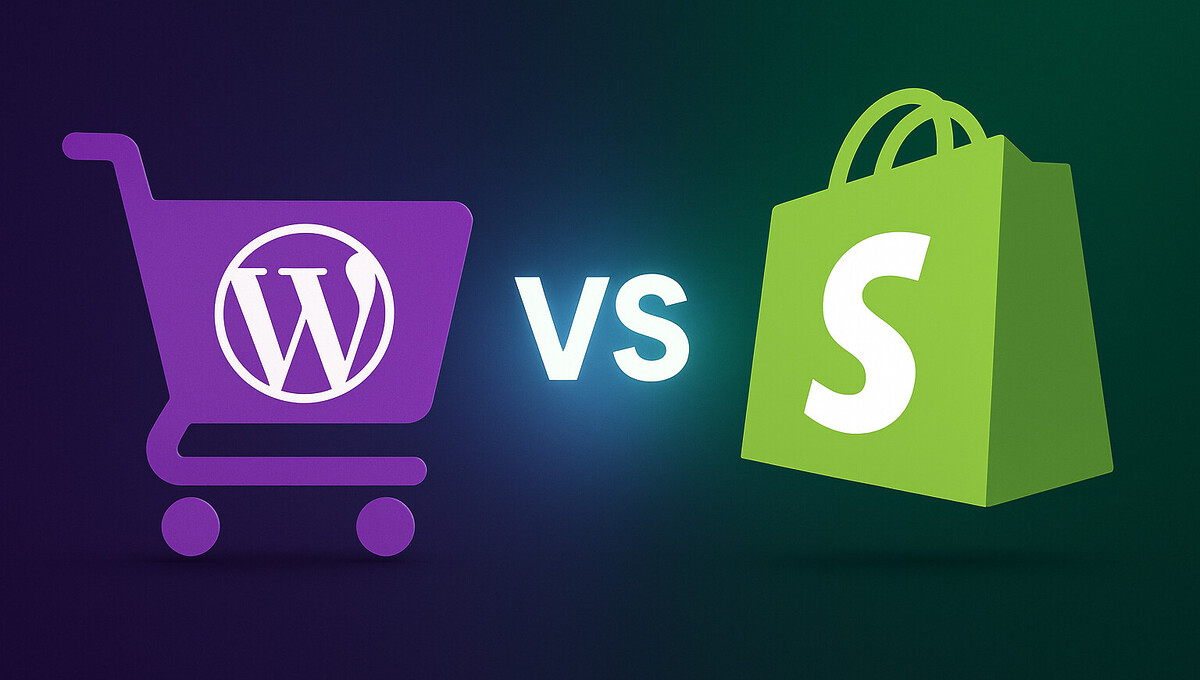
You are planning an online shop and are faced with the fundamental question: WooCommerce or Shopify? Both systems power millions of successful shops, but they differ fundamentally in cost, flexibility, and ease of use. The right choice depends on your budget, your technical skills, and your growth plans. This detailed comparison shows you the decisive differences and helps you find the optimal shop system for your business.
WooCommerce vs Shopify: Which shop system is the better choice in 2026?
The decision for the right shop system significantly influences the success of your online business. WooCommerce and Shopify dominate the e-commerce market with over 4 million active shops each worldwide. However, both platforms pursue fundamentally different approaches: While WooCommerce, as a WordPress plugin, offers maximum control and flexibility, Shopify positions itself as a cloud-based all-in-one solution with monthly fees.
This comparison analyzes the decisive differences between the two systems. You will learn which platform is suitable for your specific requirements and where the respective strengths lie. The focus is on concrete factors such as cost, range of functions, customization options, and long-term cost-effectiveness. This way, you can make a well-founded decision for your e-commerce project.
What is WooCommerce?
WooCommerce is the world’s leading e-commerce plugin for WordPress and was acquired by Automattic in 2015. As an open-source solution, it enables the seamless integration of shop functionalities into existing WordPress websites. Over 6 million online shops use WooCommerce, which corresponds to about 23 percent of all e-commerce websites. The platform is characterized by complete freedom of customization and independence from individual providers.
The central advantage lies in the direct connection with WordPress, the most widely used content management system in the world. You retain full control over your data, server infrastructure, and technical implementation. WooCommerce itself is available free of charge but requires its own hosting and a WordPress installation as a foundation. This architecture offers maximum flexibility with manageable base costs at the same time.
WooCommerce is particularly attractive for companies that already use WordPress or want to combine content marketing with e-commerce. The large community provides thousands of free and premium extensions that cover almost every conceivable functional requirement.
What is Shopify?
Shopify was founded in 2006 and developed into the leading cloud-based e-commerce platform. Over 4.8 million shops in 175 countries use the system, including well-known brands from a wide range of industries. As a hosted all-in-one solution, Shopify handles all technical aspects of shop operation, from server infrastructure to automatic updates. The platform is aimed primarily at merchants who want to quickly build a professional online shop without technical prior knowledge.
The business model is based on monthly subscription fees that range between 36 euros and 384 euros. In return, you receive a comprehensive all-around package with integrated hosting, SSL certificate, and professional support around the clock. Shopify is characterized by its intuitive operation and the drag-and-drop builder system. Without programming knowledge, you can add products, customize designs, and integrate payment systems.
The platform offers multichannel integration for social media and various sales channels by default. However, as a shop operator, you remain dependent on the provider and must adhere to predefined technical framework conditions. This limitation affects, among other things, URL structures and the number of product variants.
WooCommerce vs Shopify: Fundamental differences at a glance
| Criterion | WooCommerce | Shopify |
|---|---|---|
| System type | WordPress plugin (self-hosted) | Cloud-based complete solution |
| Costs (3 years) | 800-1,500€ | 4,000-8,000€ |
| Ownership | Fully yours | Platform dependency |
| Product variants | Unlimited | Max. 100 per product |
| Transaction Fees | 0% (payment provider only) | Up to 2% additional |
| Theme Selection | Over 2,000 themes | Approx. 120 themes |
| URL Control | Fully customizable | Fixed structures |
| Technical Knowledge | Basic knowledge helpful | Not required |
The fundamental difference between WooCommerce and Shopify lies in their architecture. WooCommerce extends existing WordPress websites with shop functions, while Shopify is a standalone, closed platform. This different philosophy runs through all aspects of both systems and significantly influences costs, flexibility, and long-term development possibilities.
Become more visible on Google & Social Media?
In a free strategy consultation for data-driven online marketing, we uncover your untapped potential, review any existing ad accounts if necessary, examine your SEO ranking and visibility, and determine which strategy is appropriate for your budget and which active measures will lead to more inquiries or sales.

✅ More visibility & perception through targeted placement
✅ More visitors > prospects > customers > revenue
✅ Reach target groups scalably with SEA
✅ Act and grow sustainably with SEO
🫵 Maximum success with our hybrid strategy
💪 More than 15 years of experience across industries in over 1,000+ projects demonstrable!







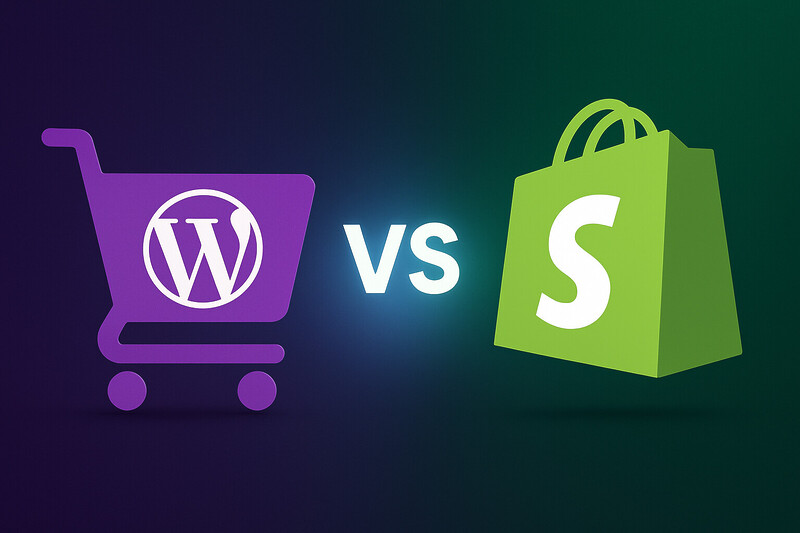
WooCommerce vs Shopify: The Most Important Differences in Detail
Ownership: Full Control vs. Dependency
The fundamental difference between the two platforms lies in ownership. With WooCommerce, the shop belongs entirely to you – from the data to the software to the complete infrastructure. You decide independently on hosting partners, server locations, and technical adjustments. This independence protects you from one-sided price increases or changes to the terms and conditions.
Shopify, on the other hand, provides you with its platform, which effectively makes you a tenant. Your shop data is stored on the provider’s servers, and you are subject to its terms of use. If you are dissatisfied or wish to close your business, migrating is complex and expensive. Additionally, Shopify reserves the right to block shops for violations of the terms and conditions.
WooCommerce offers maximum data sovereignty, which is particularly relevant for GDPR-compliant business models. You determine yourself where customer data is stored and who has access to it. This level of control can only be realized to a limited extent with Shopify, as the infrastructure inevitably runs through North American servers.
Cost Structure: Transparency vs. Ongoing Fees
The cost structure differs fundamentally between the two systems. WooCommerce itself is available free of charge as open-source software. You only invest in hosting, domain, and optionally in premium themes or extensions. A solid hosting package costs between 10 and 30 euros per month, high-quality themes are a one-time cost of 50 to 100 euros. These investments remain one-time or only amount to small annual sums.
Shopify, by contrast, charges monthly base fees regardless of your revenue. The Basic plan starts at 36 euros, professional plans cost 105 or 384 euros per month. In addition, there are transaction fees of up to 2 percent if you do not use the company’s own payment system. Premium apps quickly add up to another 100 to 300 euros per month.
Over a period of three years, WooCommerce results in total costs of approximately 800 to 1,500 euros. Shopify costs 4,000 to 8,000 euros over the same period. The savings through WooCommerce thus amount to over 5,000 euros for comparable functionality. Particularly with growing revenue, Shopify’s percentage-based transaction fees have a negative impact.
Flexibility and Customization Options
As an open-source platform, WooCommerce offers unlimited customization options. Developers can fully view, modify, and extend the source code. Any conceivable function can be programmed or integrated through one of the thousands of available plugins. From individual checkout processes to complex pricing structures to tailor-made interfaces – technical limits practically do not exist.
Shopify, on the other hand, operates with a closed system. While you can choose from over 8,000 apps and make various adjustments, you always remain within the framework set by the provider. In-depth code changes are only possible to a limited extent. The Liquid template language offers certain freedoms but does not achieve the flexibility of WooCommerce.
For standard shops without special requirements, Shopify is usually completely sufficient. However, as soon as you want to map specific business processes, implement multi-tier membership models, or build complex B2B structures, the platform reaches its limits. WooCommerce, by contrast, enables any desired customization, provided the corresponding developer resources are available.
Theme Selection and Design Freedom
The design options differ significantly between the two platforms. WooCommerce benefits from the huge WordPress ecosystem with over 2,000 specialized shop themes. In the official WordPress directory, you will find numerous free options, while marketplaces like ThemeForest offer premium designs with extended functions. This variety guarantees that you will find a design perfectly suited to your brand.
Theme Costs in Comparison:
- WooCommerce: Free themes available, premium from €50-100 (one-time)
- Shopify: Few free themes, premium $200-400 (one-time)
Shopify is limited to about 120 curated themes in the official store. The selection appears manageable, but Shopify guarantees consistently high quality. All designs are responsive, performant, and regularly updated. However, the best premium themes cost between 200 and 400 US dollars. With WooCommerce, you often get comparable quality for 50 to 100 euros.
The decisive advantage of WooCommerce lies in its limitless customizability. Every theme can be modified down to the smallest detail, as you have full access to the source code. With Shopify, you encounter limitations as soon as customizations go beyond the provided options. For design purists and brands with specific corporate identity requirements, WooCommerce offers the better starting point.
Product variants without limits
A critical difference concerns the management of product variants. Shopify limits you to a maximum of 100 variants per product with three dimensions. Specifically, this means: You can offer a T-shirt in different sizes, colors, and materials – however, a fourth dimension such as neckline can no longer be added. For many standard product ranges, this limit is sufficient, but shops with complex configurable products quickly reach their limits.
WooCommerce knows no such restrictions. You can create unlimited product variants and combine any number of dimensions. This freedom is particularly crucial for industries such as furniture, jewelry, or technical products with diverse configuration options. WooCommerce also plays to its strengths in the B2B sector, where custom-specific variants are often offered.
Although Shopify has announced that it will increase the limit to 2,000 variants, the fundamental restriction remains. Workaround solutions via apps do exist, but they complicate shop management considerably. WooCommerce offers the technically superior solution from the start without workarounds or additional costs.
SEO control and URL structures
Search engine optimization significantly influences the long-term success of your online shop. WooCommerce offers complete control over all SEO-relevant aspects. You define URL structures according to your wishes, optimize meta data freely, and integrate powerful SEO plugins such as Yoast or The SEO Framework. These tools analyze every page, provide concrete optimization suggestions, and help you achieve better rankings.
Shopify, on the other hand, forces you into predefined URL patterns. Product pages inevitably contain „/products/“ and category pages „/collections/“ in the address. This structure cannot be changed, even if it may not be optimal for your SEO strategy. While Shopify offers basic SEO functions, it lacks the depth and flexibility of WordPress-based solutions.
The WordPress community has developed SEO best practices over many years, from which WooCommerce benefits. Over 40 percent of all websites worldwide use WordPress, which is why search engines understand its structures perfectly. On average, WooCommerce shops do not rank worse than Shopify stores, but they offer significantly more optimization possibilities for ambitious SEO strategies.
Transaction fees: The hidden cost factor
A frequently overlooked aspect is transaction fees for payment processing. WooCommerce fundamentally does not charge its own fees – you pay exclusively the costs of your chosen payment provider such as Stripe, PayPal, or other gateways. This transparency enables precise calculations, and you are free to choose the most cost-effective provider for your target audience.
Shopify, on the other hand, charges additional fees unless you use its own Shopify Payments:
- Basic plan: 2% additional
- Standard plan: 1% additional
- Advanced plan: 0.5% additional
With a monthly revenue of 10,000 euros, this means 200 euros in additional costs on the Basic plan – per month, mind you. These fees add up to considerable sums over the year. For an annual revenue of 120,000 euros with Shopify Basic, expect an additional 2,400 euros from these transaction fees alone.
WooCommerce does not incur these costs at all. Even if you use Shopify Payments to avoid the extra fees, you pay similar percentages as with other providers – but without the freedom to switch. WooCommerce offers significantly more flexibility and long-term cost savings here.
Plugin and app ecosystem
The extension ecosystem differs fundamentally between the two platforms. WooCommerce has access to the entire WordPress universe with over 60,000 plugins, thousands of which were developed specifically for e-commerce. Many high-quality extensions are available for free, and premium plugins usually cost a one-time fee between 30 and 200 euros. These one-time investments remain your property without recurring fees.
Shopify offers over 8,000 apps in its store, most of which incur monthly subscription costs. An average shop configuration requires 5 to 10 apps for marketing, analytics, shipping, and customer support. These quickly add up to 100 to 300 euros in additional monthly costs. Over three years, app expenses alone amount to 3,600 to 10,800 euros.
Quality control works differently: Shopify curates its app store strictly and guarantees compatibility, while the WordPress ecosystem requires more personal responsibility. With WooCommerce, you should look for regular updates and good ratings. In return, you get significantly more choices and lower long-term costs through one-time purchases instead of permanent subscriptions.
Content commerce integration
WooCommerce particularly shines when it comes to connecting content marketing and e-commerce. Since the platform is based on WordPress, you use the world’s most powerful blogging and content system. You create extensive guides, optimized landing pages, and editorial content within the same platform as your shop. This seamless integration optimally supports content marketing strategies.
While Shopify offers blog functions, they remain rudimentary compared to WordPress. This is sufficient for simple product announcements, but ambitious content strategies quickly reveal limitations. Many Shopify merchants therefore additionally run WordPress blogs on subdomains – a detour that causes additional costs and administrative effort.
If you want to generate organic traffic through high-quality content, WooCommerce fully plays to its strengths. Google prefers websites with regularly updated, relevant content. With WooCommerce, you can effortlessly create content hubs around your products, while with Shopify you are primarily dependent on external measures. This integration is particularly valuable for niche shops and brands that position themselves through expertise.
Data protection and GDPR compliance
Data protection is becoming increasingly important, especially in the European market. WooCommerce enables complete data sovereignty: You choose hosting providers with server locations in Germany or the EU and retain control over all customer data at all times. This architecture considerably facilitates GDPR compliance, as you can respond directly to information requests and implement data deletions.
Shopify stores data on servers in North America, which creates legal gray areas regarding data transfers. Although Shopify has implemented mechanisms for GDPR compliance, the fundamental server structure remains problematic. For companies with strict compliance requirements or customers from sensitive industries, this can become a disqualifying factor.
In addition, with WooCommerce you retain full transparency over all data flows. You can review every plugin and every integration with regard to data protection and replace them if you have concerns. With Shopify, you rely on both the platform and all apps working in compliance with the GDPR – without being able to fully control this technically.
No risk of vendor lock-in
Vendor lock-in refers to dependence on a single provider that makes switching extremely difficult. WooCommerce clearly has the advantage here: as a self-hosted open-source solution, you can switch to other hosting providers at any time, customize the software as you wish, or even migrate to other shop systems. Your investments in themes and plugins are retained, since you own the licenses.
With Shopify, you commit yourself to a provider for the long term. All customizations, apps, and integrations function exclusively within the Shopify ecosystem. A migration to other platforms requires considerable effort and incurs costs for data exports, rebuilding, and possible revenue losses during the transition. This dependence restricts your strategic flexibility.
In addition, Shopify reserves the right to make price adjustments, which you can only avoid by switching platforms. With WooCommerce, you control all cost factors yourself and remain independent of third-party corporate decisions. This freedom has considerable value, especially in the long term, for the planning security of your business.
Pros & Cons: WooCommerce vs Shopify at a Glance
WooCommerce: Advantages and Disadvantages
Advantages:
- Full ownership of shop and data
- Drastically lower total costs (€5,000+ savings over 3 years)
- Unlimited product variants and customization options
- No transaction fees on payments
- Perfect integration with WordPress for content marketing
- Free choice of hosting, server location, and service providers
- Over 2,000 themes to choose from, many free
- Full SEO control and flexible URL structures
- No vendor lock-in risk
- GDPR compliance easily implementable through EU servers
- One-time costs for themes and plugins instead of subscriptions
Disadvantages:
- Basic WordPress knowledge required
- Responsibility for hosting and updates
- Steeper learning curve for initial setup
- Quality of third-party plugins varies
- No 24/7 support included (depends on host)
Shopify: Advantages and Disadvantages
Advantages:
- Extremely easy to use without technical knowledge
- Immediate start possible
- Hosting, updates and maintenance included
- 24/7 support via chat, email and phone
- Guaranteed compatibility of all apps
- Integrated multichannel sales (social media)
- SSL certificate automatically included
Disadvantages:
- High running costs (€4,000-€8,000 over 3 years)
- Additional transaction fees up to 2%
- Dependence on a single provider
- Limit of 100 product variants
- Fixed URL structures, no SEO flexibility
- Only 120 themes available, mostly paid
- Apps incur high monthly additional costs
- Limited customization options
- Data storage on US servers
- Difficult and expensive migration to other systems
- Rudimentary blog functions
The Cost Comparison: WooCommerce or Shopify?
The Hidden Costs of Shopify
At first glance, Shopify presents transparent prices starting at 36 euros per month. However, the reality shows that this base fee is only the beginning. For professional shop functions, you need premium apps, whose costs quickly add up: email marketing tools cost 20 to 50 euros per month, advanced analytics another 30 euros, review systems 15 euros, and inventory management 40 euros.
Transaction fees also apply when using external payment providers. With the Basic plan, you pay an additional 2 percent per sale – with 10,000 euros in monthly revenue, this means 200 euros extra. Premium themes cost a one-time fee of 250 to 400 US dollars. The total costs thus quickly reach 200 to 400 euros per month, which corresponds to 7,200 to 14,400 euros over three years.
Particularly problematic: These costs remain permanently and increase with growing success. Higher revenues require better plans, more apps, and more professional customizations. Shopify locks you into a cost model that becomes significantly more expensive in the long term than initially calculated. Many shop operators underestimate these hidden expenses when making their decision.
The Transparent Costs of WooCommerce
WooCommerce itself incurs no costs – the plugin can be used completely free of charge. Your investments focus on necessary infrastructure: Professional managed WordPress hosting costs between 10 and 30 euros per month with specialized providers. For 15 to 20 euros, you already get performance that is sufficient for most small to medium-sized shops.
A domain costs approximately 10 to 20 euros per year. You invest a one-time fee of 50 to 100 euros in a high-quality premium theme. SSL certificates are included free of charge with modern hosts such as Let’s Encrypt. Essential plugins for SEO, security, and backups are available free of charge or with one-time license fees of 30 to 100 euros. Even GDPR compliance can be achieved with free or inexpensive plugins.
Your total investment in the first year is realistically 300 to 600 euros, and in subsequent years only 150 to 400 euros for hosting and any plugin updates. Over three years, this amounts to costs of 600 to 1,400 euros – a fraction of what Shopify charges. This calculation already includes professional equipment without compromising on functionality or security.
3-Year Cost Comparison: The Truth in Numbers
| Cost Item | WooCommerce (3 years) | Shopify Basic (3 years) |
|---|---|---|
| Base Fee | €0 | €1,296 |
| Hosting | €720 (€20/month) | Included |
| Domain | €45 | Included |
| Theme | €80 (one-time) | €300 (one-time) |
| Plugins/Apps | €150 (one-time) | €3,600 (€100/month) |
| Transaction Fees* | €0 | €7,200 (at €10,000/month) |
| SSL Certificate | €0 (included) | Included |
| TOTAL COSTS | €995 | €12,396 |
| SAVINGS | €11,401 | — |
*At €10,000 monthly revenue and use of external payment providers
This calculation illustrates the significant cost differences. Even if you occasionally need developer support with WooCommerce, you remain below Shopify costs. Even 20 hours of agency work at €100 per year is well below the difference. These figures are based on conservative estimates – with higher revenues or more extensive app requirements, the difference becomes even more drastic.
Who is WooCommerce suitable for?
The ideal target audience for WooCommerce
WooCommerce is particularly recommended for businesses and individuals who want to reduce costs in the long term while maintaining maximum control. You should choose this platform if you already operate a WordPress website or pursue content marketing as a central growth strategy. The seamless integration of editorial content and shop functions offers unbeatable synergies for organic growth.
WooCommerce is ideal for you if:
- You want to save thousands of euros in the long term
- Full control over data and infrastructure is important
- You do not want to pay monthly mandatory fees
- Unlimited product variations are required
- Content marketing is part of your strategy
- You already use or are familiar with WordPress
- Maximum customization freedom is required
- GDPR-compliant EU servers are necessary
- No transaction fees are desired
- Independence from individual providers is important
Technically savvy users or companies with access to developers benefit most from WooCommerce. The unlimited customization options allow for every conceivable function, from complex pricing models to multi-level membership systems and individual checkout processes. WooCommerce also offers the technically superior solution for shops with fragmented product catalogs and numerous variations.
When is Shopify an option?
The Niche for Shopify
Shopify is primarily suitable for a specific target group: absolute beginners with no technical affinity who need a functional shop within the shortest possible time. The platform scores with its user-friendliness and the all-round carefree package with integrated hosting, automatic updates, and support. Those who are willing to accept permanently higher costs for maximum convenience will find a ready-to-use solution here.
Shopify might be a good fit if:
- Absolute technical simplicity is the top priority
- You need to launch within 24 hours
- Your product range is very simple (few variants)
- High ongoing costs are not an issue
- No content marketing is planned
- You need 24/7 support
However, you should consider the long-term implications: increasing costs, platform dependency, and limited scalability can become a problem in the medium to long term. Shopify works as a quick-start solution but increasingly shows weaknesses as requirements grow. For ambitious e-commerce projects with growth ambitions, direct entry via WooCommerce is recommended to avoid costly migrations later on.
Migration: Switching from Shopify to WooCommerce
The move is seamless
Many Shopify users eventually recognize the long-term cost advantages of WooCommerce and decide to switch. This migration is significantly easier today than before, thanks to specialized tools. Cart2Cart and LitExtension offer automated solutions that securely transfer products, customer data, order history, and other information. The entire process takes a few hours to a maximum of one day, depending on the shop size.
The tools work intuitively: you connect both shops via API interfaces, select the data types to be migrated, and start the transfer. During this time, your Shopify store remains fully functional, so there are no revenue losses. After a successful migration, you thoroughly test the new WooCommerce shop before adjusting the DNS records and going live.
The investment in a professional migration typically ranges between 200 and 800 Euros, depending on the complexity of your shop. Given annual savings of 3,000 to 5,000 Euros, this investment pays for itself within a few months. Many agencies also offer comprehensive services that include not only data migration but also theme adjustments and functional extensions.
Conclusion: WooCommerce offers more freedom, control, and cost-effectiveness
The clear recommendation for your online shop
The comprehensive comparison between WooCommerce and Shopify shows a clear result: WooCommerce is convincing in almost all relevant areas. The platform offers complete ownership, unlimited customization options, and significantly lower long-term costs. Over three years, you save at least 5,000 to 10,000 Euros compared to Shopify – money you can invest in growth instead of platform fees.
The flexibility of WooCommerce particularly stands out: unlimited product variants, full SEO control, free URL structures, and no transaction fees create ideal conditions for scalable growth. Integration with WordPress enables content marketing at the highest level, while you simultaneously benefit from the world’s largest CMS community. Data protection and GDPR compliance can be optimally implemented through the free choice of server location.
Shopify only scores points for absolute ease of use for beginners, but this comes at the cost of permanent dependence and high ongoing costs. For 90 percent of all online retailers, WooCommerce represents the smarter, more economical, and future-proof choice. The investment in WooCommerce pays off many times over in the long run.
FAQ: The most important questions about WooCommerce vs Shopify
Is WooCommerce really cheaper than Shopify?
Yes, significantly. While WooCommerce incurs costs of approximately 800 to 1,500 Euros over three years, you pay 4,000 to 8,000 Euros with Shopify. The savings thus amount to at least 5,000 Euros with comparable functionality. Transaction fees and monthly app costs, in particular, drive up Shopify expenses.
Do I need programming skills for WooCommerce?
No. Modern page builders, ready-made themes, and intuitive plugins enable professional shop setup without coding knowledge. Specialized hosts also automatically handle technical maintenance. Basic WordPress knowledge is helpful, but even without prior knowledge, you can successfully start with a little training.
Which system is better for SEO?
WooCommerce offers significantly more SEO control through flexible URL structures, comprehensive plugin support, and its connection with WordPress as a content platform. Shopify limits you to predefined structures with fixed „/products/“ and „/collections/“ URLs. For ambitious SEO strategies, WooCommerce is clearly superior.
Can I easily switch from Shopify to WooCommerce?
Yes. Tools like Cart2Cart or LitExtension enable automated migrations within a few hours. The investment of 200 to 800 Euros pays for itself through cost savings within a few months. Your products, customer data, and order history are reliably transferred while your Shopify shop continues to operate.
Is WooCommerce secure enough for online shops?
Absolutely. With the right hosting, SSL certificate, and regular updates, WooCommerce is just as secure as Shopify. You even retain more control over security measures and data protection. Specialized WooCommerce hosts offer security monitoring, malware scans, and automatic backups as standard.
Which platform scales better with a growing business?
WooCommerce scales more cost-effectively, as only hosting resources need to be adjusted. With Shopify, as revenue grows, costs increase proportionally due to higher tariffs, more apps, and transaction fees. Furthermore, with WooCommerce, you remain flexible and independent of provider decisions.



 DE
DE