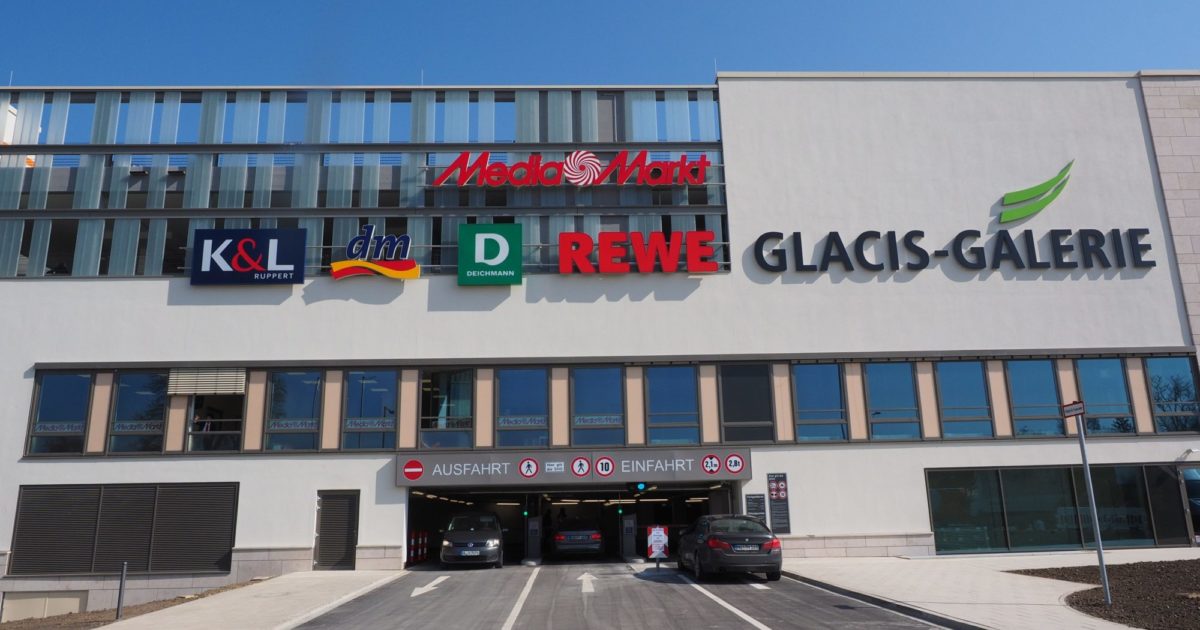
Advertising installations in public road spaces are only permitted if they have been previously checked and approved by the competent building authority. This applies to both classic billboards and house walls painted with advertising.
Advertising installations: When do they require a permit?
Accordingly, it is advisable for businesses to have their advertising installations approved under building law. If a violation is discovered later, the authorities may demand removal and also impose a fine. But why and, above all, when is a permit from the authorities required at all? The answers to this are provided below.
When advertising installations require a permit
Advertising installations are understood to be any stationary facilities that, for example, advertise a profession or announce a business. Another characteristic of advertising installations is that they are visible from public traffic areas. According to the state building regulations, these include signs, inscriptions, as well as illuminated advertisements and display cases.
Building law relevance applies to installations that are made of building products and are connected to structural installations not only for a temporary period. For example, applying a film to a shop window is generally subject to approval. Displays and decorations, on the other hand, do not require approval.
If a sign is erected in a public road space without being anchored to the ground, no building permit is required either. An advertising technician in Berlin, for example, can be commissioned to install the advertising.
Further provisions for approval
Advertising inscriptions on motor vehicles or trailers are not considered stationary and therefore do not require a building permit. However, there are cases of special use requiring a permit – if the vehicle appears as an advertising installation due to its location or special constructions.
Whether the advertising is for commercial purposes or not is irrelevant here. For example, even political parties may only advertise in a stationary manner if a building permit is available.
Caution with changes: Are changes being made to a building-approved advertising installation? Then that change also requires approval! Accordingly, the intended changes should be checked for admissibility in advance.
Why advertising installations must be approved
The following generally applies: The purpose of the permit requirement is to prevent a „proliferation“ of advertising installations. On the one hand, it must be checked in advance whether the advertising installation could pose a danger to road traffic – for example, due to distraction caused by particularly striking advertising.
On the other hand, the approval/inspection also serves the purpose of ensuring that cities are not disfigured.
Become more visible on Google & Social Media?
In a free strategy consultation for data-driven online marketing, we uncover your untapped potential, review any existing ad accounts if necessary, examine your SEO ranking and visibility, and determine which strategy is appropriate for your budget and which active measures will lead to more inquiries or sales.

✅ More visibility & perception through targeted placement
✅ More visitors > prospects > customers > revenue
✅ Reach target groups scalably with SEA
✅ Act and grow sustainably with SEO
🫵 Maximum success with our hybrid strategy
💪 More than 15 years of experience across industries in over 1,000+ projects demonstrable!







Permit requirement and its exceptions
There are numerous exceptions from the state building regulations – these often apply to advertising installations with smaller areas of up to one square meter. Furthermore, advertising installations and notices on traffic roads that draw attention to businesses located outside in the interest of road traffic are exempt from approval.
According to the Building Code of North Rhine-Westphalia, the exemption also applies to advertising installations in, for example, designated special areas – or also temporarily limited events.
Design regulations from the municipalities
The municipalities issue detailed design regulations for advertising installations, especially for city centers. For example, the city of Aachen summarizes its regulations in a guideline. Only if the requirements are met can a building permit therefore be granted.
The municipality can set general design specifications as well as further regulations – including size, type, and the location of the advertising installations.
Furthermore, the advertising installations must above all not pose any dangers. Likewise, a disturbing accumulation of advertising installations is legally inadmissible. If several approved advertising installations are already installed at a certain location, a certain limit may eventually be reached – meaning: A new installation may no longer be lawfully erected here.





 DE
DE