Is an AI agency just a trend or will this become its own service sector in the medium to long term? Knowing, understanding and correctly applying software is not a novelty, but being a "prompt engineer" and an "early adopter" can become very valuable for the future. As a management consulting firm with a focus on marketing, digitalization and structural consulting, we have been successfully using AI since early 2020. In this article, we cover all aspects of an AI agency and its services as well as practical examples. Of course, we also explain one or another term and definition.
AI Agency – experience innovation with artificial intelligence, receive active support & automate (digitalize) processes
An AI agency is a company or organization that specializes in the development and implementation of artificial intelligence (AI). These agencies typically offer a broad range of services in the field of artificial intelligence, including but not limited to:
- Advertising & Online Marketing: AI agencies specializing in advertising and online marketing use artificial intelligence to make advertising campaigns more efficient, better understand customers, develop personalized marketing strategies, and automate social networks (social media).
- Consulting: They help companies understand how to integrate AI into their existing business processes. This often involves assessing the current IT infrastructure and business operations to identify potential areas of application for AI.
- Development of customized AI solutions: They develop specific AI systems tailored to the individual needs and requirements of a company. This can include the development of machine learning algorithms, data-driven analytics, automated decision-making systems, and more.
- Integration and Implementation: In addition to developing AI systems, they also support companies in implementing these technologies into their existing systems and workflows.
- Training and Support: Many AI agencies also offer training and continuous support to ensure that customers can effectively use and manage AI systems.
- Research and Development: Some agencies also participate in research and development projects to discover and develop new AI technologies and applications.
AI & AI agencies often work across industries by offering solutions for various sectors such as finance, healthcare, retail, manufacturing, and many others. They play an important role in facilitating access to advanced AI technologies for companies that may not have the resources or expertise to develop these internally.

Florian Ibe
CEO & Marketing Consultant
Your contact person: Florian Ibe
First, a few important terms, definitions and explanations:
Not everything is always clear, and before we write about the topics of an AI agency, terms must be clearly defined and foundational knowledge must be present.
What is the difference between AI and algorithm and what does AI mean?
Often confused and still not clearly defined! The term "AI" (Artificial Intelligence) and the term "algorithm" are closely related, but they refer to different concepts:
- AI (Artificial Intelligence):
- Artificial intelligence refers to the ability of machines or computers to perform tasks that typically require human intelligence. This includes activities such as learning, decision-making, problem-solving, and perception.
- AI systems can perform complex tasks that require adaptability, judgment, and intelligent analysis.
- AI can appear in the form of machine learning, deep learning, natural language processing, and other advanced technologies.
- Algorithm:
- An algorithm is a series of precisely defined instructions or rules designed to solve a specific task or problem.
- Algorithms are the building blocks of all computer programs and can be used for simple tasks such as sorting data or complex tasks such as analyzing large volumes of data.
- In AI, specific algorithms are used to enable machine learning and other intelligent functions. These algorithms can improve and adapt independently by learning from data.
- AI (Artificial Intelligence):
- "AI" is simply the English acronym for "Artificial Intelligence" (Artificial Intelligence). It refers to the same concept and is often used in international or technical contexts.
In summary, an algorithm is a set of instructions for a specific task, while AI represents a broader concept that refers to the creation of intelligent machines capable of performing tasks that normally require human intelligence. AI systems often use complex algorithms, particularly in the field of machine learning, to perform their intelligent functions.
What is an early adopter?
An "early adopter" is a person or group that adopts and uses new technologies, products, or systems early on, often before they are accepted or become popular in the broader market. Early adopters are typically technology enthusiasts, risk-takers, and play an important role in the dissemination and validation of new innovations. They often contribute significantly to how a product or technology develops further and how it is received by the broader market.
What is prompt engineering
Prompt engineering refers to the process of carefully designing and optimizing commands or input prompts (prompts) to obtain specific and effective responses from AI systems, particularly from language models or other AI systems that respond to natural language. It is both an art and a science that aims to formulate the right questions or instructions to get the desired information, creative content or problem solutions from the AI. Prompt engineering is particularly important to maximize the performance and accuracy of AI-based systems in various use cases.
What is the well-known Bavarian AI agency?
The Bavarian AI Agency, also known as baiosphere, is an important network for Artificial Intelligence (AI) in Bavaria. It comprises internationally recognized researchers, industry giants and agile startups that have jointly built a world-class technology landscape with a focus on AI innovations. The Bavarian State Government has further strengthened this network by creating over 100 new professorships and additional funding as part of the High-Tech Agenda. The main goal of baiosphere is to promote excellent education and innovation and to make Bavaria a more attractive location.
The structure of the baiosphere is based on four central hubs that span more than 40 universities, colleges, and research institutions throughout Bavaria and beyond. These hubs specialize in Intelligent Robotics (Munich), Data Science (Würzburg), Health (Erlangen-Nuremberg), and Mobility (Ingolstadt). The Bavarian AI Council provides impetus for the baiosphere, while the Bavarian AI Agency supports members in marketing and networking.

1. AI Agency for Advertising & Online Marketing
Artificial Intelligence (AI) has established itself in recent years as a revolutionary force in the world of marketing. An AI or AI agency specializing in marketing uses advanced algorithms and machine learning to forge new paths in advertising and online marketing. These agencies are at the forefront of technological innovation and offer services ranging from data analysis to personalized customer engagement to the automation and optimization of marketing campaigns.
At the center of their activities is the use of AI to analyze and interpret large volumes of data obtained from various customer interactions and market trends. This information is then used to develop targeted and efficient marketing strategies that have a positive impact on ROI (Return on Investment). By personalizing content and automating processes, AI agencies in the marketing field enable more precise and effective customer engagement.
Furthermore, such agencies are able to gain new insights into customer behavior and predict future trends, allowing companies to proactively adjust their strategies. The AI-driven marketing world is dynamic and constantly evolving, with AI and AI agencies serving as important pioneers and innovators. They offer customized solutions that can be crucial for both small startups and large enterprises to succeed in an increasingly competitive digital market environment.
Here are some key aspects, services, and use cases in this area:
Key aspects of AI in advertising and online marketing
- Data Analysis and Insights: AI systems are capable of analyzing large amounts of data from various sources and deriving valuable insights about customer behavior and market trends.
- Personalization: By analyzing customer behavior and preferences, AI-based systems can create personalized advertising messages and content tailored to individual users.
- Automation: Many processes in online marketing, such as bidding for advertisements or sending emails, can be automated and optimized through AI.
- Forecasting trends: AI systems can predict future market trends and customer preferences, helping companies adjust their strategies accordingly.
- Improving Customer Interaction: AI can be used in chatbots and customer interaction tools to improve communication with customers and provide personalized experiences.
Services of an AI agency in the field of advertising & online marketing
- Target audience analysis: Using AI to create detailed customer segmentations and target audience profiles.
- Content optimization: Use of AI for creating and optimizing content for various platforms and target audiences.
- Automated Ad Placement: Use of AI for automated placement and optimization of online advertising campaigns.
- Chatbot development: Creation of intelligent chatbots for improved customer service and engagement.
- Email Marketing Automation: Automation and personalization of email marketing campaigns.
- Social Media Analytics: Use of AI to analyze social media trends and engagement.
- SEO optimization: AI-powered tools for improving search engine optimization and analyzing search trends.
- Behavior-based advertising: Development of systems for behavior- and interest-based advertising.
- Performance monitoring: Monitoring and analysis of advertising campaign performance.
- Sentiment analysis: Use of AI to analyze customer opinions and sentiments.
Practical examples in advertising & online marketing
- Personalized Product Recommendations on e-commerce platforms based on previous browsing and purchasing behavior.
- Dynamic pricing in online shops, adapted to demand and user behavior.
- Automated social media campaigns tailored to the interests and engagement of the target audience.
- Real-time adjustment of advertising based on user behavior and current trends.
- SEO Optimization of Web Content to achieve higher visibility in search engines.
- Chatbots for Customer Service that answer frequently asked questions and personalize user interactions.
- Analysis of Customer Feedback across various platforms to improve product and service quality.
- Forecasting of sales trends to adjust marketing strategies and inventory levels.
- Personalization of Email Marketing Campaigns to increase open and click rates.
- Targeted Influencer Marketing Campaigns, based on analysis of influencer performance and target audience affinity.
These services and applications demonstrate how AI agencies in the field of advertising and online marketing can support companies in refining their marketing strategies, better understanding their target audiences, and ultimately increasing their marketing efficiency.
One of the most popular areas:
AI Artificial Intelligence for Social Media (social networks)
The integration of Artificial Intelligence (AI) into the field of social media through specialized AI agencies is an increasingly important trend in the digital marketing world. These agencies use advanced AI technologies to improve the efficiency and effectiveness of social media strategies. Here are some key aspects and areas of application in which AI agencies are active in the context of social media:
Key aspects of AI in social media
- Content analysis and creation: AI systems can analyze large amounts of social media data to understand trends, customer preferences, and overall sentiment. Additionally, they can help generate or optimize relevant and engaging content for various platforms.
- Personalization: By understanding individual user preferences, AI systems enable personalized user engagement on social media, which can lead to a higher engagement rate.
- Automated Customer Interaction: AI-driven chatbots and messaging systems can be deployed for fast and efficient customer communication on social media.
- Target audience analysis: AI helps create detailed audience profiles by analyzing user behavior patterns and interests.
- Performance Tracking and Analysis: AI tools can monitor and analyze the performance of social media campaigns in real time to identify optimization opportunities.
Services of an AI & AI agency in the field of social media
- Sentiment Analysis: Analysis of user opinions and sentiments regarding brands or products on social media.
- Trend forecasting: Use of AI to identify and predict trends on social media.
- Target Audience Segmentation: Detailed segmentation of target audiences based on user data and behavior.
- Automated content creation: Development of AI systems for automated creation of social media content.
- Chatbot development: Creation and integration of intelligent chatbots for customer interaction on social media.
- Influencer Analysis: AI-powered analysis of the performance and influence of social media influencers.
- Ad Optimization: Automation and optimization of social media advertising campaigns.
- Behavior-based targeting: Use of AI for targeted advertising based on user behavior and interests.
- Content recommendation systems: Development of systems that recommend personalized content to users.
- Image and Video Analysis: Application of AI for analyzing and optimizing visual content.
Practical examples for the use of AI in the social media sector
- Automated community management: Use of AI chatbots to respond to customer inquiries on social networks.
- Creation of Personalized Advertising Campaigns: Use of AI to display target group-specific advertisements.
- Detection of influencer trends: Analysis of influencer activities to identify effective partnerships.
- Real-time analysis of social media feeds: Monitoring social media platforms to respond immediately to relevant events or trends.
- Optimization of posting times: Using AI to determine the best times for posting content.
- Creation of social media reports: Automated generation of performance reports for social media campaigns.
- Proactive reputation management: Using AI for early detection of potential crises or negative trends.
- Personalized Product Recommendations: Use of AI to suggest products to users based on their behavior and interests.
- User Engagement Analysis: Assessment of how users interact with different types of content.
- Visual Recognition in Social Media: Analysis of images and videos to identify trends and brand presence.
These services and applications demonstrate how AI agencies in the social media sector can offer innovative solutions that increase user engagement and lead to more effective marketing strategies.
2. Consulting on AI & AI
AI and AI agencies offer consulting services to help companies understand the potential of AI technologies for their specific business needs. This consulting often includes a thorough analysis of existing business processes, data infrastructure, and IT systems. The goal is to identify areas where AI can increase efficiency, reduce costs, or create new business opportunities. Consultants can also assist in formulating an AI strategy, risk assessment, and change management.
Services:
- Analysis of business processes and IT infrastructure
- Identification of AI use cases
- Development of an AI Strategy
- Risk Assessment and Management
- Data audits and assessments
- Recommendations for Data Management
- Change management and employee training
- Compliance and Data Protection Consulting
- Technology Selection and Procurement
- Creation of roadmaps for AI implementation
Practical examples:
- Automation of customer inquiries in call centers
- Supply chain optimization in logistics
- Prediction of maintenance needs in the manufacturing industry
- Personalized marketing strategies in retail
- Efficiency improvement in financial reporting
- Detection of fraud cases in banking
- Improvement of patient care in healthcare
- Energy consumption optimization in smart cities
- Quality Control in Production
- Real-time analysis of market trends for investment decisions
3. Development of customized AI solutions
AI and AI agencies develop customized AI solutions tailored to the specific requirements and objectives of a company. This can include the development of machine learning algorithms, process automation, or data-driven decision-making. Such customized solutions can range from simple automation tools to complex, integrated AI systems specifically developed for an organization's individual needs.
Services:
- Development of algorithms for machine learning
- Automation of business processes
- AI-based data analysis and interpretation
- Development of chatbots and virtual assistants
- Image and Speech Recognition Systems
- Predictive Analytics and Trend Forecasting
- Development of Recommendation Systems
- Creation of Custom AI Applications
- Integration of AI into existing systems
- Development of AI-powered user interfaces
Practical examples:
- Chatbots for automated customer interactions in retail
- Detection and diagnosis of diseases in medicine
- Demand Forecasting in Supply Chain Logistics
- Sentiment analysis for social media in marketing
- Fraud detection systems in the financial sector
- Quality control in manufacturing through image recognition
- Personalized recommendation systems in e-commerce platforms
- Voice recognition for controlling smart home devices
- Real-Time Traffic Flow Analysis in Smart Cities
- Optimization of energy consumption patterns in buildings
4. Integration and Implementation
After developing the AI solution, AI agencies support companies in integrating these technologies into their existing systems. This includes adapting the IT infrastructure to support the new AI applications, as well as ensuring that the solutions work seamlessly with existing business processes and data sources. Implementation also includes testing and validating AI systems to ensure they function as intended and provide added value.
Services:
- Adaptation of IT infrastructure for AI applications
- Integration of AI solutions into existing systems
- Testing and validating AI applications
- Data Migration and Integration
- User Training and Support
- Development of interfaces and APIs
- Performance Monitoring and Optimization
- Security assessments and improvements
- Data Management Support
- Continuous Maintenance and Updates
Practical examples:
- Integration of chatbots into existing customer service platforms
- Introduction of automated ordering systems in retail
- Implementation of AI-supported diagnostic tools in healthcare
- Integration of predictive algorithms in financial analysis systems
- Integration of image recognition into production quality control
- Integration of AI-based analysis tools with existing databases
- Implementation of AI in CRM systems for customer analysis
- Integration of voice assistants in smart home systems
- Integration of AI in logistics and supply chain management systems
- Implementation of energy management systems in buildings
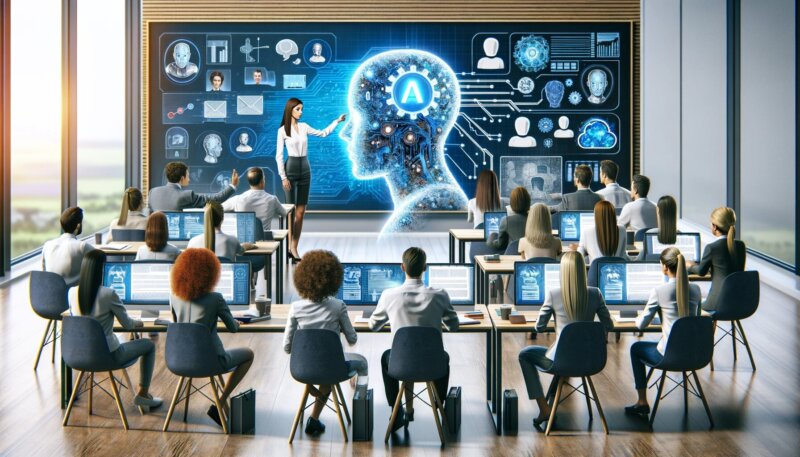
5. Training and Support
Successful AI implementation requires not only technological adjustments, but also that company employees understand how to work with the new systems and use them effectively. AI agencies therefore offer training and continuous support to ensure that AI technology is used effectively. This includes the provision of training materials, workshops, online courses and personal support. In addition, they offer support in troubleshooting and optimizing AI systems.
Services:
- Provision of training materials and guides
- Conducting workshops and seminars
- Online Courses and E-Learning Modules
- Personal Training Sessions
- Technical support and troubleshooting
- Consulting for continuous improvement
- Updates and Maintenance of AI Systems
- User feedback analysis and implementation
- Customization of training content to specific business needs
- Provision of community and support forums
Practical examples:
- Training of bank employees in the use of fraud detection tools
- Training of marketing teams in the application of AI-based analysis tools
- Technical training for IT personnel in the use of AI systems
- Workshops for healthcare professionals on the use of AI in diagnostics
- E-learning courses for retail employees to optimize customer service
- Support for executives in interpreting AI-based business analytics
- Training of production employees in the use of AI-supported quality control
- Training for developers on the integration and maintenance of AI applications
- Instructions for end users on interaction with AI-based user interfaces
- Retail: Training in the use of AI-based inventory systems.
Learn and further develop skills in working with Chat GPT
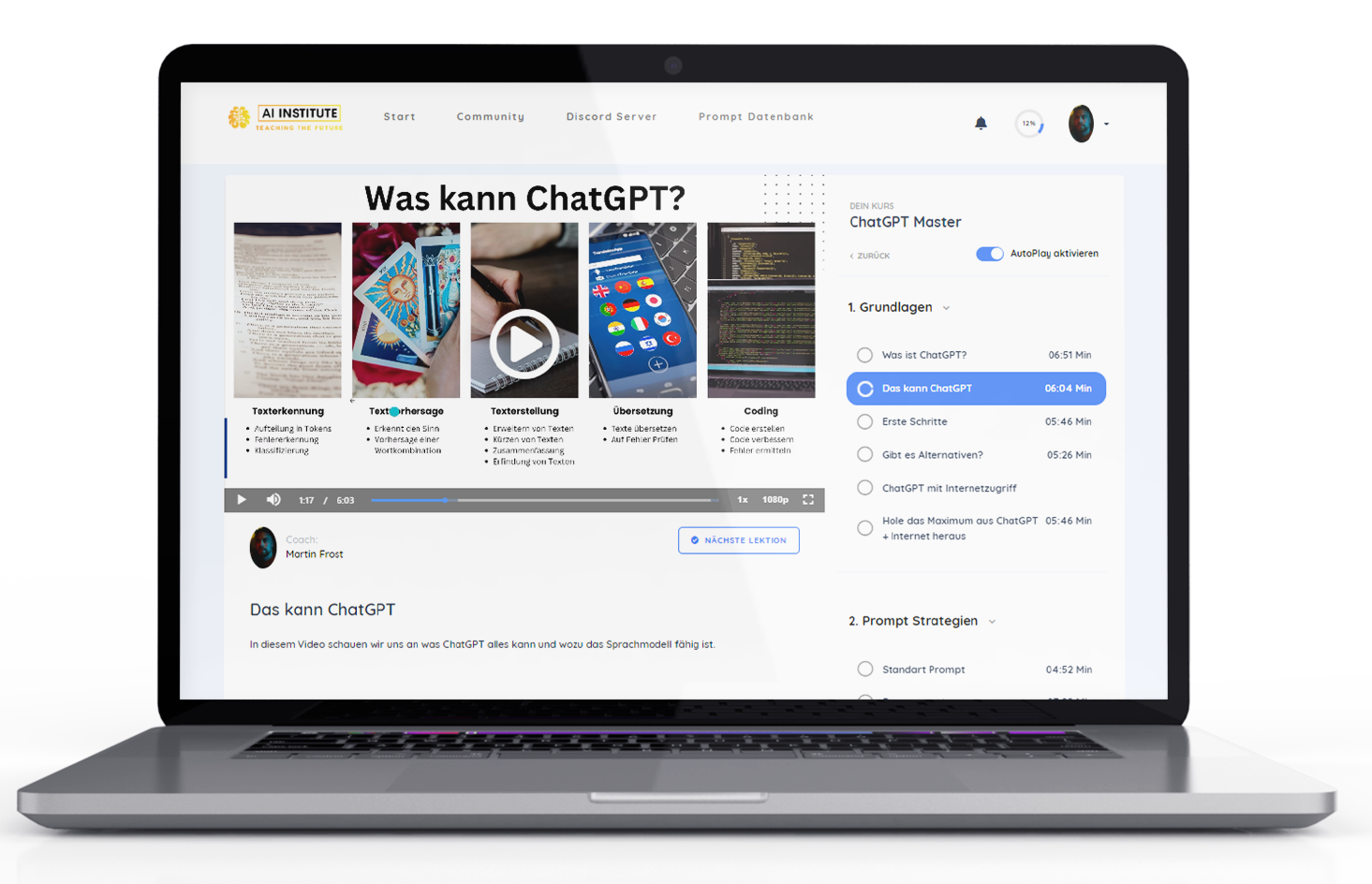
Absolute Empfehlung um den Handling and using Chat GPT + templates to learn quickly 🚀:
Another alternative as a Chat GPT basic course for business:

Earn money with Chat GPT – the ultimate money-making machine?
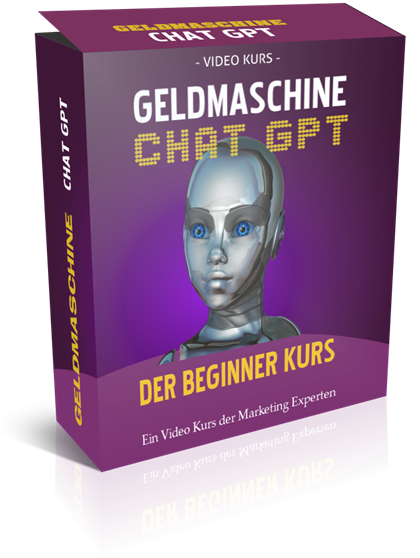
AI Kickstart Course to Get Started 10% Faster in Online Marketing:
Become more visible on Google & Social Media?
In a free strategy consultation for data-driven online marketing, we uncover your untapped potential, review any existing ad accounts if necessary, examine your SEO ranking and visibility, and determine which strategy is appropriate for your budget and which active measures will lead to more inquiries or sales.

✅ More visibility & perception through targeted placement
✅ More visitors > prospects > customers > revenue
✅ Reach target groups scalably with SEA
✅ Act and grow sustainably with SEO
🫵 Maximum success with our hybrid strategy
💪 More than 15 years of experience across industries in over 1,000+ projects demonstrable!






Additional Tip – Buy AI & AI Software Cheaply with One-Time Payment Instead of Monthly Subscriptions

6. Research and Development
Research and Development (R&D) in AI agencies focuses on creating new AI technologies and improving existing solutions. This is a critical area because it not only produces innovative products and services, but also helps expand the boundaries of what is possible with AI. These agencies often work at the forefront of technological development, exploring both theoretical research and practical applications.
Services:
- Development of new algorithms: Development and testing of new algorithms for machine learning and data processing.
- Adaptation and improvement of existing AI models: Modification of existing AI systems for specific requirements or to improve performance.
- Conducting pilot projects: Testing and implementing AI projects in a controlled, experimental environment.
- Collaboration with Academic Institutions: Partnerships with universities and research institutes to promote AI research.
- Technology transfer: Transfer of research results into commercially usable applications.
- Data mining and big data analytics: Development of advanced techniques for analyzing large and complex datasets.
- Development of AI-powered products: Conception and creation of new products based on AI technology.
- Patenting and intellectual property protection: Support with patenting AI innovations.
- Interdisciplinary Research Projects: Collaboration with experts from various industries to develop industry-specific solutions.
- Artificial Intelligence in Robotics: Development of AI systems for application in robots and automated systems.
Practical examples:
- Autonomous driving: Development of AI systems for self-driving vehicles.
- Environmental Monitoring: Use of AI to analyze environmental data and predict climate changes.
- Health Diagnostics: Development of AI systems for rapid and precise disease diagnosis.
- Aerospace Technology: AI applications for navigation and control of spacecraft.
- Smart Farming: Development of AI technologies for precision agriculture and yield maximization.
- Energy Sector: AI-based solutions for optimizing energy consumption and distribution.
- Financial Market Analysis: AI systems for predicting market trends and assessing risk.
- Custom Product Development: Use of AI to develop tailored products based on customer preferences.
- Speech processing: Development of advanced systems for speech recognition and translation.
- Artificial intelligence in the entertainment industry: Development of AI algorithms for creating personalized content and gaming experiences.
In these areas, it becomes clear how AI agencies are at the forefront of innovation and how their research and development efforts are revolutionizing a wide range of industries and applications.
These examples demonstrate how diverse and comprehensive the services and areas of application of an AI agency can be. They offer solutions tailored to different industries and specific requirements, and help companies fully exploit the potential of AI.
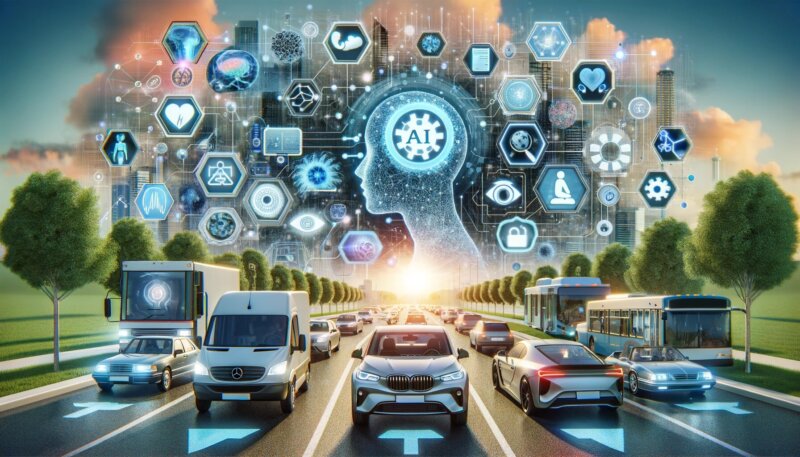
The most common AI application areas (industries)
The applications of Artificial Intelligence (AI) are diverse and growing steadily. The most common and significant areas of use include:
- Data Analysis and Big Data: AI is used to analyze large volumes of data, identify patterns, and gain insights that are valuable for companies and organizations.
- Automation: In manufacturing, offices, and other work environments, AI-supported systems are deployed to automate repetitive and time-consuming tasks.
- Healthcare: From diagnostic support to personalized medicine, AI is playing an increasingly important role in the healthcare sector.
- Financial services: Use of AI for fraud detection, algorithmic trading, risk management, and customer support.
- Marketing and Customer Interaction: AI is used to analyze customer behavior, develop personalized marketing strategies, and improve customer service.
- Autonomous Vehicles and Transportation: AI technologies are used in the development of autonomous vehicles and for optimizing logistics and transportation.
- Speech recognition and processing: Applications such as digital assistants, automated translations, and voice control functions are heavily dependent on AI.
- Image and Video Analysis: AI is used for facial recognition, surveillance systems, and analysis of image material in various industries.
- E-Commerce: Use of AI for recommendation systems, inventory management, and automated customer interaction.
- Cybersecurity: AI helps detect and prevent cyberattacks and secure networks.
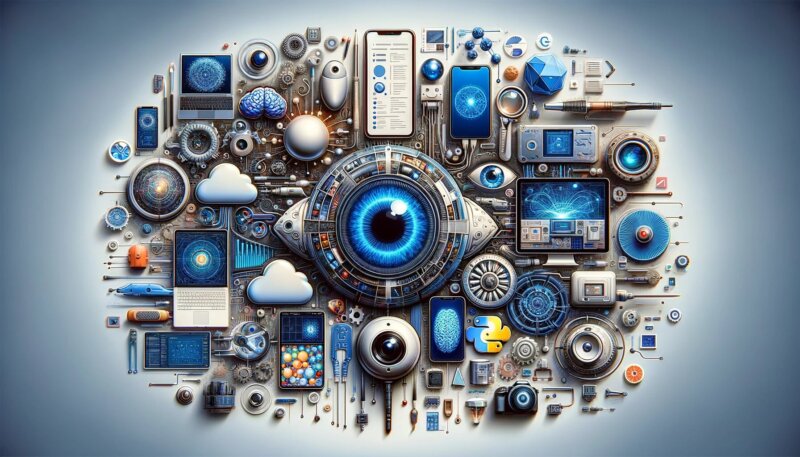
The most widely used professional AI tools
The most frequently used tools and technologies in the field of AI include:
- Machine learning platforms: e.g. TensorFlow, PyTorch, Keras.
- Data processing and analysis tools: such as Apache Spark, Hadoop.
- Cloud-Based AI Services: from providers such as AWS (Amazon Web Services), Google Cloud AI, Microsoft Azure AI.
- Automated machine learning tools (AutoML): such as Google AutoML, H2O AutoML.
- AI Optimization Tools: for specialized tasks such as neural network optimization.
- NLP (Natural Language Processing) Tools: such as NLTK, spaCy.
- Image recognition tools: such as OpenCV, YOLO (You Only Look Once).
- Robotic Process Automation (RPA) software: such as UiPath, Blue Prism.
- Specific frameworks and APIs for tasks such as speech recognition and chatbots: e.g. Google's Dialogflow, IBM Watson.
These tools and applications are crucial for the development and implementation of AI solutions across various industries and contribute significantly to the current technological revolution.
FAQ – frequently asked questions & answers about AI agency:
The most common questions about AI agencies revolve around their services, areas of application, the benefits of working with such an agency, and the challenges in implementing AI solutions. Here are some of these questions with corresponding answers:
- What is an AI agency?
- An AI agency is a company that specializes in the creation, development, and implementation of artificial intelligence solutions. It offers services such as AI consulting, development of customized AI systems, integration of AI into existing business processes, training and support for AI applications, as well as research and development in the field of AI.
- What services does an AI agency offer?
- Typical services include the development of AI algorithms, data analysis, machine learning, process automation, personalized customer solutions, chatbot development, predictive analytics, image and speech recognition, as well as training and technical support.
- For which industries are AI agencies particularly relevant?
- AI agencies are relevant across industries, including but not limited to financial services, healthcare, retail, manufacturing, transportation and logistics, marketing and advertising, as well as IT and cybersecurity.
- How can an AI agency help my business?
- An AI agency can help optimize business processes, increase efficiency, reduce costs, make data-driven decisions, personalize customer experiences, and develop new innovative solutions and services.
- What are the challenges in implementing AI?
- Challenges include integration into existing systems, the need for large amounts of data, security concerns, ethical considerations, lack of expertise, and the need for continuous adaptation and maintenance of AI systems.
- How expensive are the services of an AI agency?
- Costs can vary significantly and depend on many factors, such as the scope of the project, the complexity of the required solutions, the duration of collaboration, and the specific requirements of the company.
- How long does it take to implement an AI solution?
- The duration depends on the complexity of the project. Smaller projects may be implemented in a few weeks, while extensive and complex solutions can take months or even years.
- How does an AI agency ensure the quality and security of its solutions?
- AI agencies typically follow best practices in software development, including rigorous testing, quality controls, compliance with data protection and security standards, and continuous maintenance and support.
These questions provide an overview of the essential aspects that should be considered when examining AI agencies and their services.




 DE
DE