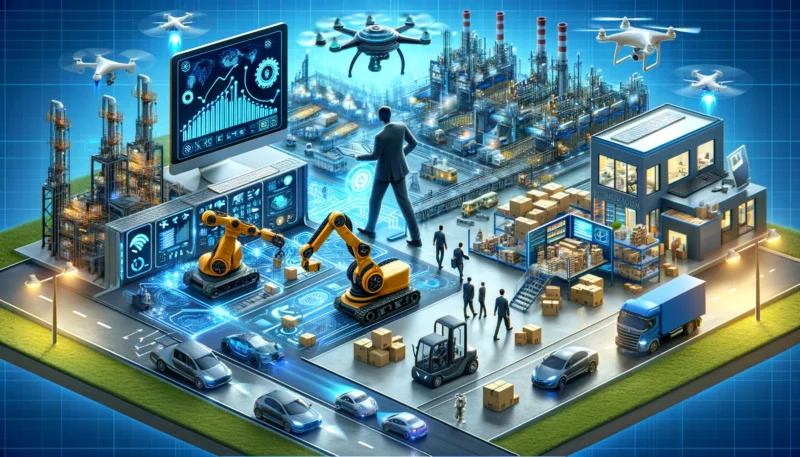
In today’s business world, small and medium-sized enterprises (SMEs) play a crucial role. However, they face numerous challenges, from increasing efficiency and controlling costs to improving customer satisfaction. A solution to many of these challenges is process optimization through Artificial Intelligence (AI), which has the potential to fundamentally change the way SMEs operate. AI process optimization enables companies to streamline their processes, make data-driven decisions, and develop innovative products and services. The applications of AI in SMEs are diverse and include customer service, marketing, warehousing, production, finance, human resources, business process optimization, decision support, cybersecurity, and research and development. Learn more in the article.
AI Process Optimization (Optimizing Processes with Artificial Intelligence)
The integration of Artificial Intelligence (AI) into small and medium-sized enterprises (SMEs) represents a transformative opportunity to revolutionize operations, enhance customer experience, and unlock new business potential. By utilizing AI in various areas such as customer service, marketing, warehousing, production, finance, and human resources, SMEs can increase their efficiency, reduce costs, and strengthen their competitive position. While the implementation of AI technologies presents challenges, particularly regarding resources and know-how, the potential benefits are considerable.
AI offers SMEs the ability to make data-driven decisions, automate processes, and develop innovative solutions tailored to their customers‘ needs. To realize these benefits, SMEs must adopt a strategic approach to AI adoption, including investing in the right technology, training employees, and adapting to changing business conditions. Ultimately, AI is not just a tool for large corporations but an accessible resource that can help SMEs succeed in an increasingly digitized world.
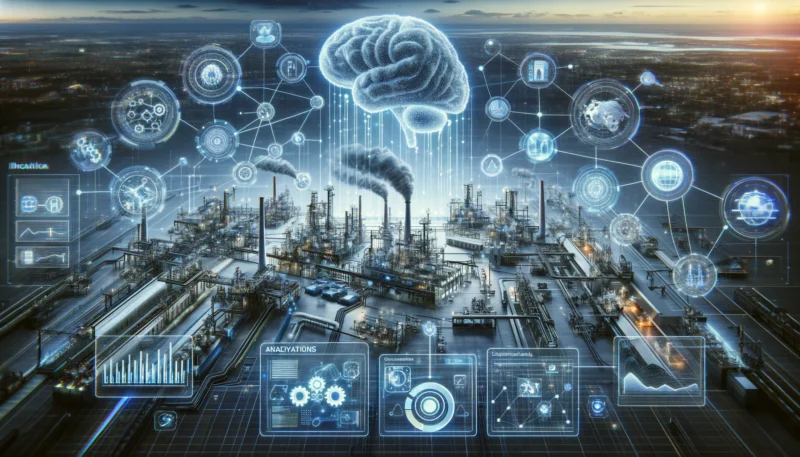
Applications for AI Process Optimization
AI process optimization refers to the application of Artificial Intelligence (AI) methods to make business processes more efficient, effective, and adaptable. The goal is to automate workflows, improve decision-making, and ultimately increase productivity and profitability. AI can be used in various forms, including machine learning, natural language processing, robotics, and data analysis, to name a few. Optimizing processes with AI can be done in several steps:
1. Data Collection and Analysis
First, data reflecting current business processes must be collected. AI systems can then analyze this data to identify patterns, trends, and bottlenecks. Machine learning tools are capable of learning from this data and providing predictions or recommendations for improvements.
2. Process Modeling
With the insights gained from data analysis, companies can create or adapt models of their business processes. These models help to understand the current state and identify potential improvements through the use of AI technologies.
3. Automation
Automation is a central aspect of AI process optimization. AI can be used to automate repetitive and manual tasks, from simple data processing to more complex decision-making processes. This can increase efficiency and reduce human error.
4. Continuous Learning and Adaptation
AI systems can be configured to continuously learn from new data and adapt to changing conditions. This allows companies to dynamically optimize their processes and respond to new challenges or opportunities.
Become more visible on Google & Social Media?
In a free strategy consultation for data-driven online marketing, we uncover your untapped potential, review any existing ad accounts if necessary, examine your SEO ranking and visibility, and determine which strategy is appropriate for your budget and which active measures will lead to more inquiries or sales.

✅ More visibility & perception through targeted placement
✅ More visitors > prospects > customers > revenue
✅ Reach target groups scalably with SEA
✅ Act and grow sustainably with SEO
🫵 Maximum success with our hybrid strategy
💪 More than 15 years of experience across industries in over 1,000+ projects demonstrable!






5. Sustainable Optimization
Sustainability in AI process optimization means creating solutions that are viable in the long term. This includes considering ecological, social, and economic factors. AI can help to use resources more efficiently, minimize energy consumption, and generally promote more environmentally friendly business practices.
Implementation in Practice
- Intelligent Analytics: Use of AI for data analysis to gain insights into processes and optimize decisions.
- Predictive Maintenance: Use of AI to predict failures in production processes to plan maintenance work and minimize downtime.
- Personalized Customer Experiences: Application of AI in customer interaction to offer personalized offers and services based on customer behavior and preferences.
- Supply Chain Optimization: Use of AI to predict supply bottlenecks, optimize inventory, and improve logistics.
Through these applications, AI can help make business processes not only more efficient and effective, but also more adaptive and sustainable.

Software Tools for Process Optimization with AI
There is a variety of software tools for process optimization with AI, which differ in their functionality, areas of application, and the complexity of the supported processes. Here are some categories and examples of such tools:
1. Data Analysis and Business Intelligence
- Tableau: Offers powerful data visualization and business intelligence capabilities to analyze and optimize business processes.
- Microsoft Power BI: Another popular tool for business analytics that enables extensive data analysis and visualization.
2. Machine Learning and Predictive Analytics
- TensorFlow: An open-source machine learning platform developed by Google. It allows the creation of complex models for data analysis and prediction.
- IBM Watson: Offers a wide range of AI and machine learning functions for various use cases, including process optimization.
3. Automation and Robotic Process Automation (RPA)
- UiPath: A leading RPA platform that enables companies to automate repetitive tasks through software robots, thereby improving process efficiency and accuracy.
- Automation Anywhere: Offers a user-friendly platform for automating business processes with AI and RPA technologies.
4. AI-powered Process Management Tools
- Pega Systems: Provides AI-powered software for process automation and customer engagement optimization.
- Appian: A low-code automation platform that integrates AI and machine learning to improve and automate business processes.
5. Cloud-based AI Services
- Amazon Web Services (AWS) Machine Learning: Offers a wide range of machine learning services and tools that can be easily integrated into existing applications.
- Google Cloud AI and Machine Learning: Offers services similar to AWS, with a variety of tools and APIs for machine learning and AI applications.
6. Specialized AI Tools for Specific Industries
- Salesforce Einstein: An AI platform specifically developed for CRM systems, enabling process improvements in sales, marketing, and customer service.
- GE Predix: Offers industrial Internet of Things (IoT) solutions, including AI-powered analytics for optimizing manufacturing processes.
These tools and platforms cover a broad spectrum of use cases and can be applied in various industries to analyze, automate, and optimize processes. The selection of the right tool depends on the specific needs, existing infrastructure, and goals of the company.
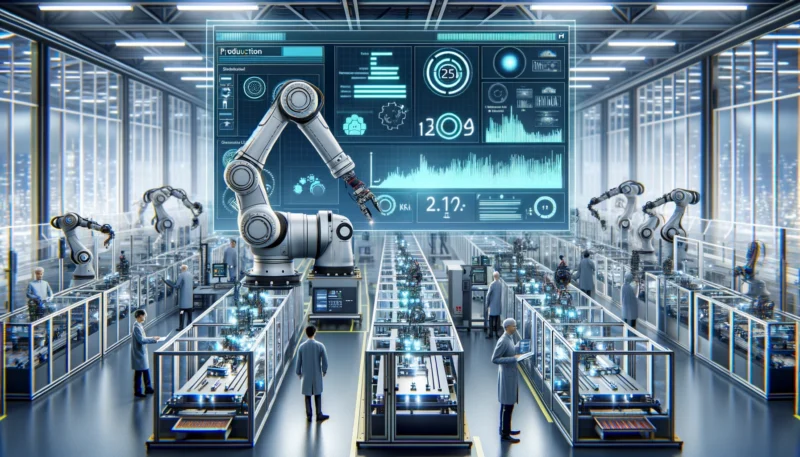
Improving Production with AI for SMEs
Improving production with AI for small and medium-sized enterprises (SMEs) can bring significant benefits, including increased efficiency, cost reduction, and improved product quality. SMEs can become more competitive by integrating AI technologies into their production processes. Here are some approaches on how SMEs can improve production with AI:
1. Process Automation
- Robotic Process Automation (RPA): Simple, repetitive tasks in production can be automated by RPA, which increases efficiency and reduces human errors.
- Smart Factory: Use of AI in manufacturing to control and optimize production processes, for example, by adjusting production schedules in real-time based on demand forecasts.
2. Quality Control
- Image Recognition and Machine Vision: AI-powered image recognition systems can be used in quality control to check products for defects or deviations from quality standards. This enables quick and accurate identification of problems.
3. Predictive Maintenance
- Predictive Maintenance: AI can be used to recognize patterns in machine data and predict when a machine needs maintenance before failures occur. This minimizes unplanned downtime and extends the lifespan of equipment.
4. Demand Forecasting and Inventory Management
- Data Analysis: AI can help analyze sales data and market trends to create more accurate demand forecasts. This improves inventory management and helps optimize stock management by avoiding overstocking and reducing supply bottlenecks.
5. Personalized Production
- Adaptability: AI systems can make production lines more flexible to allow for rapid adaptation to customer-specific requirements. This is particularly useful for companies that produce personalized products or small batches.
6. Energy and Resource Efficiency
- Optimization of energy consumption: AI can be used to monitor and optimize energy consumption in production facilities by identifying inefficient processes and making suggestions for reducing energy consumption.
Implementation steps for SMEs
- Needs Analysis and Goal Setting: Identify specific areas within your production processes that could benefit from AI.
- Technology Selection: Choose the appropriate AI tools and platforms that match your company’s requirements and goals.
- Pilot Projects: Start with small, manageable pilot projects to evaluate the value and feasibility of AI integration.
- Scaling and Integration: After successful pilot projects, scale the AI solutions and integrate them into your entire production processes.
- Continuous Learning and Adaptation: Leverage AI's ability for continuous learning to constantly improve processes and adapt to new challenges.
For SMEs, it is important to start with realistic expectations and focus on areas where AI can have the greatest impact. Partnering with AI experts or specialized service providers can also provide valuable support during implementation.
General article on digitalization:
Digitalization of Companies in SMEs & Industry 4.0 (Trends, Challenges, Problems & Solutions)
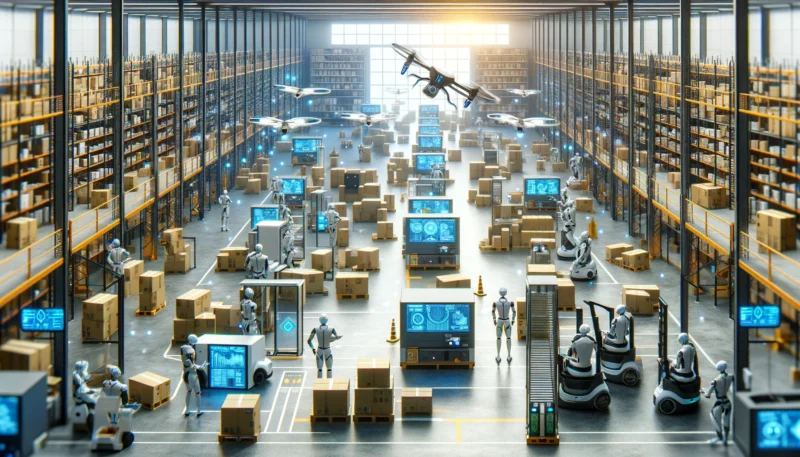
Artificial Intelligence (AI) in Warehousing and Logistics
Artificial intelligence (AI) has the potential to fundamentally transform warehousing and logistics by making processes more efficient, faster, and more cost-effective. Here are some of the key benefits that AI can bring to these areas:
1. Optimization of warehouse management
AI systems can analyze large amounts of data to identify patterns and trends. This can be used to optimally manage inventory levels by accurately predicting which products are needed when and in what quantities. This helps to reduce excess inventory while ensuring that demand is always met.
2. Improvement of demand forecasting
By analyzing sales data, seasonal fluctuations, and other market trends, AI models can make precise predictions about future product demand. This enables more efficient planning and warehousing, reduces storage costs, and improves customer service through higher product availability.
3. Automated warehouse processes
AI and robotics work hand in hand to automate warehouse processes. From storage and picking to packing and shipping, AI-controlled robots can take over many tasks that were previously performed manually. This not only increases efficiency but also reduces error rates and improves working conditions for employees.
4. Efficient route planning and delivery optimization
AI can be used to optimize supply chains and transport routes by determining the fastest or most cost-effective routes, taking into account traffic conditions, weather conditions, and other factors. This leads to shorter delivery times, lower transport costs, and an overall more efficient logistics network.
5. Predictive maintenance in logistics
AI systems can analyze data from vehicles and logistics equipment to detect maintenance needs early. This prevents unexpected breakdowns and downtime by proactively planning and carrying out maintenance work before major problems arise.
6. Intelligent Decision Support
AI can support complex decisions by analyzing real-time data from various sources and providing recommendations. This can range from selecting the right supplier to deciding on the best time for inventory replenishment, thereby improving overall supply chain efficiency.
7. Improving Customer Experience
By optimizing warehousing and logistics, companies can respond faster to customer inquiries and shorten delivery times. AI-driven chatbots and customer service tools can also ensure better communication and higher customer satisfaction.
Implementing AI in Warehousing and Logistics
For companies looking to introduce AI in warehousing and logistics, it is important to proceed with a clear strategy. This includes identifying specific problems or bottlenecks, selecting the right technologies and tools, and training employees to handle the new systems. A phased implementation, starting with pilot projects, can help minimize risks and facilitate the transition.
Overall, AI offers enormous opportunities for warehousing and logistics to increase efficiency, reduce costs, and improve customer satisfaction.
10 Examples: The Most Common Applications of AI in SMEs?
Small and medium-sized enterprises (SMEs) are increasingly using Artificial Intelligence (AI) to optimize their operations, improve customer experience, and unlock new business opportunities. Here are ten common applications of AI in SMEs:
1. Customer Care and Service
- Chatbots and Virtual Assistants: AI-powered chatbots can handle customer inquiries around the clock, increasing customer satisfaction and reducing the workload of the customer service team.
2. Marketing and Sales
-
- Personalized Marketing Campaigns: AI can analyze customer data to create personalized marketing messages based on individual customer preferences and behavior.
3. Warehousing and Logistics
- Inventory Management: AI systems can predict demand trends and optimize inventory levels to avoid overstocking while ensuring product availability.
4. Production Planning and Control
- Predictive Maintenance: AI can analyze data from production facilities to predict maintenance needs and minimize downtime.
5. Finance and Accounting
- Automated Invoice Processing: AI can automate the invoicing and payment processing by recognizing, classifying, and posting invoices.
6. Human Resources (HR)
- Applicant Selection: AI tools can scan resumes and identify the most suitable candidates for open positions, making the recruitment process more efficient.
7. Business Process Optimization
- Robotic Process Automation (RPA): AI-powered software robots can automate repetitive tasks, freeing up employees for more strategic assignments.
8. Decision Support
- Data Analysis and Insights: AI can learn from a variety of data patterns and provide valuable insights that support SMEs in decision-making.
9. Cybersecurity
- Anomaly Detection: AI can monitor network traffic and user behavior to detect unusual activities and identify potential security threats.
10. Research and Development
- Product Innovation: By analyzing customer feedback and market trends, AI can assist in developing new products or services that are better aligned with customer needs.
These examples demonstrate the diverse application possibilities of AI in various areas of an SME. By implementing AI solutions, SMEs can increase their efficiency, reduce costs, and gain a competitive advantage in their market segment. However, it is important for SMEs to also consider the challenges and ethical considerations when using AI.

Florian Ibe
CEO & Marketing Consultant
Your contact person: Florian Ibe
Overall, AI enables SMEs to optimize their processes, make informed decisions, and develop innovative solutions. Implementing AI can be a challenge, but it also offers significant opportunities for growth and competitiveness. It is crucial for SMEs to allocate the necessary resources and develop a clear strategy for the introduction and use of AI technologies.
Helpful article for everyday work with AI:




 DE