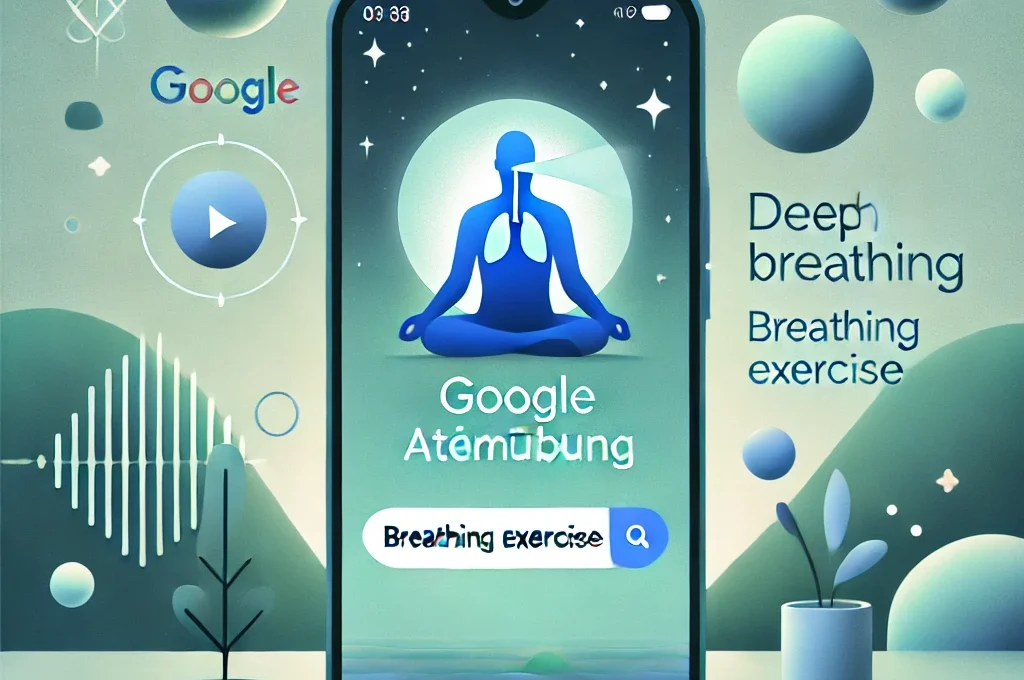
Google Breathing Exercise: Relieve Stress, Find Calm, Recharge
What is the Google Breathing Exercise?
The Google Breathing Exercise is an innovative method for stress management developed by the technology giant Google. This technique combines three essential elements: controlled breathing, targeted visualization, and positive self-talk. The goal is to help people in stressful situations organize their thoughts and adopt a more positive attitude.
At the core of the Google Breathing Exercise is the idea that conscious breathing has a direct impact on our nervous system. Through targeted breathing techniques, we can bring our body into a state of calm. The visualization component helps to focus the mind and block out distracting thoughts. Self-talk serves to break negative thought patterns and foster a constructive inner attitude.
The special feature of the Google Breathing Exercise lies in its simplicity and accessibility. It requires no special prior knowledge or equipment and can be performed practically anywhere. Whether in the office, at home, or on the go – the technique can be flexibly integrated into daily life. Applied regularly, it can contribute to improved stress resilience and increased well-being.
The Three Pillars of the Google Breathing Exercise
The Google Breathing Exercise is based on three central components that, in combination, form a holistic method for stress management. These pillars complement each other and enhance their respective effects.
The first pillar consists of breathing techniques. This involves conscious, controlled breathing that puts the body into a state of relaxation. Through targeted breathing exercises, the parasympathetic nervous system is activated, which reduces stress and promotes calm.
The second pillar includes visualizations. These mental images help to calm the mind and evoke positive feelings. Visualizations can range from simple nature scenes to more complex ideas representing personal goals or desires.
The third pillar consists of self-talk. This involves consciously shaping the inner dialogue and breaking negative thought patterns. Positive affirmations and encouraging self-talk can sustainably improve mental attitude.
The combination of these three elements makes the Google Breathing Exercise an effective method for reducing stress and increasing overall well-being.
1. Breathing Techniques
Breathing techniques form the foundation of the Google Breathing Exercise. They are based on the understanding that conscious breathing has a direct impact on our nervous system. Through controlled breathing, we can bring the body into a state of calm and relaxation.
A central element is abdominal breathing. Here, you breathe deeply into your abdomen, so that it rises, and then slowly exhale. This type of breathing activates the parasympathetic nervous system, our rest-and-digest nerve, and lowers stress levels. Another technique is 4-7-8 breathing: inhale for 4 seconds, hold your breath for 7 seconds, and exhale for 8 seconds.
Become more visible on Google & Social Media?
In a free strategy consultation for data-driven online marketing, we uncover your untapped potential, review any existing ad accounts if necessary, examine your SEO ranking and visibility, and determine which strategy is appropriate for your budget and which active measures will lead to more inquiries or sales.

✅ More visibility & perception through targeted placement
✅ More visitors > prospects > customers > revenue
✅ Reach target groups scalably with SEA
✅ Act and grow sustainably with SEO
🫵 Maximum success with our hybrid strategy
💪 More than 15 years of experience across industries in over 1,000+ projects demonstrable!







The Google Breathing Exercise also integrates alternate nostril breathing. Here, you inhale and exhale alternately through the left and right nostrils. This technique is said to balance the brain hemispheres and promote clarity. Regularity and concentration on the breath flow are important for all breathing techniques.
By regularly practicing these breathing techniques, you can learn to control your breathing even in stressful situations. This helps you to react more calmly and to reduce tension more quickly.
2. Visualizations
Visualizations play a central role in the Google Breathing Exercise. They serve to calm the mind and evoke positive emotions. Through targeted mental images, you can divert your attention from stress-inducing thoughts and cultivate inner peace.
A proven visualization technique is imagining a calm place. This could be a beach, a forest, or a mountain peak – it is important that this place is personally associated with peace and relaxation for you. Imagine the details of this place: the colors, sounds, and smells. The more vivid your imagination, the more effective the visualization.
Another method is light stream visualization. Here, you imagine healing, warm light flowing through your body and releasing tension. This technique can be particularly helpful for releasing physical tension and creating a feeling of well-being.
The Google Breathing Exercise also uses goal-oriented visualizations. Here, you imagine yourself achieving your goals or mastering difficult situations. This type of visualization can strengthen your self-confidence and help you deal with challenges more calmly.
3. Self-Talk
Self-talk is an essential component of the Google Breathing Exercise. It aims to break negative thought patterns and foster a positive inner attitude. By consciously shaping your inner dialogue, you can actively influence your thoughts and feelings.
A central element is the use of affirmations. These are short, positive statements that you say to yourself. Examples include „I am calm and serene“ or „I can master this challenge.“ It is important that these affirmations are personally meaningful and credible to you.
The Google Breathing Exercise also teaches how to recognize and reframe negative self-talk. Instead of „I’ll never manage this,“ you could say „I’m doing my best and learning from every experience.“ This reframing helps to adopt a more constructive perspective.
Another aspect is mindful self-talk. This involves observing your thoughts and feelings without judgment. This can help to gain distance from distressing thoughts and deal with stress more calmly.
Regular practice of these self-talk techniques can positively influence your mindset in the long term and strengthen your stress resilience.
Scientific Foundations of the Google Breathing Exercise
The Google Breathing Exercise is based on well-founded scientific insights from various research areas. Studies in neurobiology show that controlled breathing has a direct impact on the autonomic nervous system. Deep, slow breathing activates the parasympathetic nervous system, leading to a slowing of the heart rate and a reduction in blood pressure.
Visualization techniques, another core aspect of the Google Breathing Exercise, are based on cognitive psychology. Research shows that mental images trigger similar neural activity patterns as real experiences. This explains why visualizations can reduce stress and evoke positive emotions.
The effectiveness of self-talk is supported by findings from behavioral psychology. Studies show that positive self-affirmations can strengthen self-esteem and increase stress resilience. The restructuring of negative thought patterns, a core principle of cognitive behavioral therapy, is also reflected in the self-talk techniques of the Google Breathing Exercise.
Neuroscientific studies also provide insights into the effects of the combined application of these techniques. The combination of breathing, visualization, and self-talk can lead to increased activation of brain regions responsible for emotion regulation and stress management.
Benefits of the Google Breathing Exercise
The Google Breathing Exercise offers a variety of benefits that promote both physical and mental well-being. A central benefit is effective stress reduction. Through the combination of breathing techniques, visualizations, and self-talk, users learn to better cope with acute stress situations and remain calmer in the long term.
Another advantage lies in the improvement of concentration. The exercises help to focus the mind and block out distracting thoughts. This can lead to increased productivity and efficiency in daily life. In addition, many users report improved sleep quality, as the techniques help to switch off better in the evening.
The Google Breathing Exercise can also strengthen emotional well-being. By promoting positive self-talk and visualizing pleasant scenarios, negative feelings can be reduced and the general mood can be lifted. This contributes to a more optimistic outlook on life.
An often underestimated benefit is the promotion of self-reflection. The exercises encourage conscious engagement with one’s own thoughts and feelings. This can lead to a better understanding of oneself and increased emotional intelligence.
Areas of Application of the Google Breathing Exercise
The Google Breathing Exercise is used in various areas of life and can be helpful in different situations. In a professional context, it is excellent for managing work stress. Before important meetings or presentations, the exercise can help to reduce nervousness and increase concentration.
In the private sphere, the Google Breathing Exercise can support in coping with everyday challenges. For example, it can be used in conflict situations to react calmly and thoughtfully. The technique can also be a valuable aid in dealing with fears or worries by helping to break thought spirals.
Athletes use the Google Breathing Exercise for mental preparation for competitions. The combination of breathing techniques and visualizations can increase performance and reduce nervousness. In the area of health prevention, the exercise is used to prevent stress-related conditions such as high blood pressure or sleep disorders.
In educational institutions, the Google Breathing Exercise is increasingly being used. Pupils and students can benefit from the technique to reduce exam anxiety and improve concentration. Teachers use the exercise to create a calm learning atmosphere.
The versatility of the Google Breathing Exercise makes it a valuable tool in almost all life situations where stress, tension, or negative thoughts can arise.
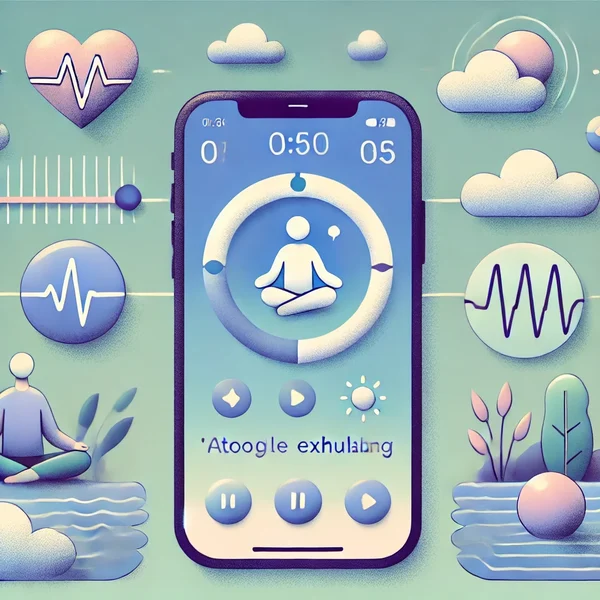
How to Perform the Google Breathing Exercise: A Step-by-Step Guide
The Google Breathing Exercise is performed in several consecutive steps. Begin in a comfortable sitting or lying position. Close your eyes to minimize external distractions. First, focus on your natural breathing rhythm without changing it. Simply observe how the breath comes and goes.
Now, transition to conscious abdominal breathing. Place one hand on your stomach and inhale deeply so that your stomach rises. Exhale slowly through your mouth and feel your stomach fall. Repeat this several times until you have found a calm rhythm.
Now integrate visualization. Imagine a place where you feel completely relaxed and safe. Notice the details of this place – colors, sounds, smells. With each breath, you delve deeper into this image.
Now begin with positive self-talk. Mentally speak encouraging words to yourself, such as „I am calm and serene“ or „I can master this situation.“ Connect these affirmations with your breath – with each inhale, you absorb strength and confidence, with each exhale, you release tension.
Perform the exercise for about 5-10 minutes. Then slowly return to the present by redirecting your attention to your surroundings. Open your eyes and take a moment to perceive the effect of the exercise.
Frequently Asked Questions about the Google Breathing Exercise
Many people interested in the Google Breathing Exercise have similar questions. A common question is: „How often should I perform the Google Breathing Exercise?“ Experts recommend practicing the exercise daily, ideally at a fixed time. Start with 5-10 minutes and gradually increase the duration. Regularity is more important than the length of individual sessions.
Another common question is: „Can I also use the Google Breathing Exercise in stressful situations?“ Yes, the technique can be well adapted to acute stress situations. In such moments, focus on deep abdominal breathing and short, positive self-talk. With increasing practice, it will become easier for you to apply the techniques even under stress.
Many also ask: „Do I need special prior knowledge or equipment?“ The Google Breathing Exercise is deliberately designed so that it can be performed without prior knowledge or special equipment. You only need a quiet place and some time for yourself.
"How long does it take until I see results?" This question cannot be answered generally, as individual factors play a role. However, many users report noticeable improvements in their well-being after just a few weeks of regular practice.
A final common question is: „Can the Google Breathing Exercise replace other relaxation techniques?“ The exercise is intended as a supplement to other methods, not as a replacement. It can be well combined with meditation, yoga, or other relaxation techniques.
Google Breathing Exercise vs. Other Relaxation Techniques
The Google Breathing Exercise has both similarities and differences to other well-known relaxation techniques. Compared to Jacobson’s progressive muscle relaxation, the Google Breathing Exercise focuses more on mental aspects. While the physical component is paramount in muscle relaxation, the Google Breathing Exercise combines breathing with cognitive elements.
In contrast to traditional meditation, which often requires longer practice, the Google Breathing Exercise is designed to be effective even in short periods. It is therefore particularly well suited for use in everyday life or in acute stress situations.
Similar to autogenic training, the Google Breathing Exercise uses the power of imagination. However, it is less structured and allows more room for individual adjustments. The self-talk component of the Google Breathing Exercise resembles techniques from cognitive behavioral therapy, but is embedded in a more holistic approach.
Compared to yoga, the Google Breathing Exercise also integrates breathing techniques, but dispenses with physical exercises. This makes it more accessible for people with limited mobility or in situations where physical movement is not possible.
The strength of the Google breathing exercise lies in its versatility and ease of use. It combines elements of various proven techniques into a practical, everyday approach to stress management.
Conclusion: The Future of Stress Management with the Google Breathing Exercise
The Google breathing exercise represents an innovative approach to stress management, combining traditional techniques with modern insights from psychology and neuroscience. Its strength lies in the combination of breathing techniques, visualizations, and self-talk into a holistic method that addresses both body and mind.
The future of stress management is likely to be shaped by integrative approaches such as the Google breathing exercise. The technique offers the potential to be integrated into various areas of life – from the workplace and the education sector to personal well-being. Its flexibility and adaptability make it a valuable tool in an increasingly complex and fast-paced world.
With increasing awareness of the importance of mental health, the Google breathing exercise could play an important role in prevention programs and corporate health promotion. The ease of learning and applicability of the technique allows a wide range of people to benefit from its advantages.
The Google breathing exercise exemplifies a contemporary approach to stress management that is individually adaptable, scientifically sound, and suitable for everyday life. It offers a promising perspective for a future in which effective stress management is an integral part of a healthy and fulfilling life.




 DE
DE