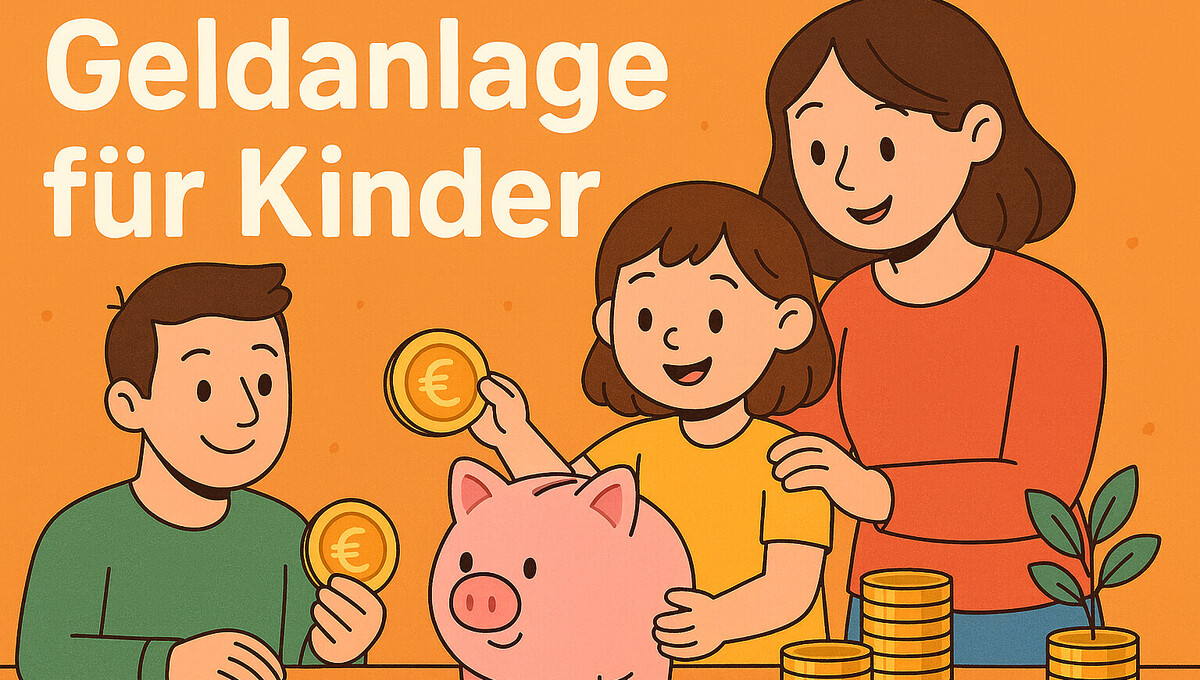
Investments for children are more important than ever today, as traditional savings methods are no longer sufficient to build wealth in the long term. Parents face the complex task of selecting the best investment for children from a variety of investment options. Factors such as investment horizon, return expectations, and risk tolerance play a decisive role in the success of child investments.
Junior depots have established themselves as a sensible investment because they can optimally utilize the compound interest effect. Over a period of 18 years, even a monthly savings rate of 25 euros can grow into a considerable fortune. The early start gives your child a significant financial advantage over later investors and answers the question which investment is the best.
The right investment for your offspring requires a strategic approach. Different life phases of the child demand different investment strategies, whereby the basic principles of diversification and long-term wealth building should always be in the foreground.
Money investment for children – how to invest money correctly for babies, children and teenagers and avoid mistakes
Investment for different age groups
Investment for baby and newborn
The investment for newborns offers the longest investment horizon and thus the greatest potential for the compound interest effect. Parents can lay the foundation for their children's financial future with a junior depot from birth. The period of 18 years makes it possible to choose volatile asset classes such as equity ETFs, since short-term fluctuations can be balanced out over this duration.
Baby savings investment works best through automated savings plans that continuously build wealth without additional effort. Which investment is optimal for a baby depends on the parents' risk tolerance. Broadly diversified global ETFs are considered a proven solution for long-term investment goals and often represent the best investment for children.
The early years are particularly valuable for wealth building, as every saved euro has maximum time to grow. A monthly savings rate of €50 can result in final capital of approximately €18,400 at an annual return of 6 percent after 18 years, although only €10,800 was contributed. This investment for newborns impressively demonstrates the power of compound interest.

Investment for small children
Investing for toddlers differs from the newborn strategy mainly in the somewhat shortened investment horizon. Nevertheless, 15 to 16 years remain sufficient time for a return-oriented investment strategy. Investing for toddlers can be designed more flexibly, as initial savings goals become more concrete and family situations can change.
Young children already develop an awareness of money and saving, which is why a junior depot also has educational value. Parents can inform their children in an age-appropriate manner about how stocks and ETFs work, thus providing early financial education. This creates an important foundation for later personal investment decisions and makes a good investment for children a family project.
When developing an investment strategy, parents should find the balance between return orientation and initial security components. A safe investment for children combines ETF savings plans with a small money market account portion for short-term wishes. What is important is the continuity of contributions to optimally use the cost-average effect and benefit from market fluctuations in the long term.
Investment for adolescents
Investment for teenagers requires a different approach, as the investment horizon is significantly shorter. The best investment for teenagers takes into account that the accumulated capital may already be needed for training or career entry. Here, the security of the accumulated amount takes on greater importance than with a long-term investment for babies.
Become more visible on Google & Social Media?
In a free strategy consultation for data-driven online marketing, we uncover your untapped potential, review any existing ad accounts if necessary, examine your SEO ranking and visibility, and determine which strategy is appropriate for your budget and which active measures will lead to more inquiries or sales.

✅ More visibility & perception through targeted placement
✅ More visitors > prospects > customers > revenue
✅ Reach target groups scalably with SEA
✅ Act and grow sustainably with SEO
🫵 Maximum success with our hybrid strategy
💪 More than 15 years of experience across industries in over 1,000+ projects demonstrable!







Adolescents can actively participate in investment decisions and learn how to handle different asset classes. Investing for teenagers offers the opportunity to provide practical financial education and develop a sense of responsibility for their own assets. Parents should act as advisors without limiting the teenagers' personal responsibility.
A sensible investment continues to combine ETF savings plans with a larger share of secure investments. The optimal allocation could look as follows:
- 60% ETF savings plans for long-term goals
- 30% call money for medium-term wishes (driving license, travel)
- 10% Fixed-term deposit for specific short-term goals
Junior Depot: The best investment for your child explained
What is a junior depot?
A junior account, also known as a children's account, youth account, or minor's account, is a securities account opened specifically for minor children. What makes it special: The account legally belongs entirely to the child, while parents act as legal representatives managing it. This structure makes it possible to benefit from tax advantages while building a good investment for children.
Unlike conventional savings forms, a junior depot provides access to high-yield asset classes such as stocks, ETFs, or funds. This makes it the answer to the question of which investment is optimal for children when it comes to long-term wealth building. However, the legal independence of the depot also brings special features that parents should understand before opening one.
Management is conducted in trust in the child's interest. Parents cannot arbitrarily dispose of the accumulated assets, but must always consider the child's welfare. This regulation protects the child's assets and ensures that the investment for your offspring actually serves the originally planned purpose.
Advantages of the junior depot as a good investment for children
Junior accounts offer significant tax advantages because children have their own savings allowance. Capital gains up to 1,000 euros per year remain completely tax-free, which significantly improves returns. Additionally, the basic tax exemption applies, so higher earnings often remain tax-free as well. This tax savings makes the junior account an excellent investment for children compared to parental investments.
The key advantages at a glance:
- Tax optimization: Saver's allowance + basic exemption
- High return potential: 6-8% annually with ETF savings plans
- Low costs: ETF fees often below 0.5% annually
- Flexibility: Savings rates adjustable at any time
- Educational aspect: Children learn capital market fundamentals
Return opportunities significantly exceed traditional savings forms. While savings books or call money accounts often do not even compensate for inflation, broadly diversified ETFs can achieve average returns of 6 to 8 percent in the long term. The cost-average effect from regular deposits reduces the risk of price fluctuations and makes the best investment for children a relaxed matter.
Example calculations: How powerful the compound interest effect is
Concrete figures illustrate why junior portfolios represent the best investment for children. The following table shows various scenarios over 18 years at 6% annual return:
| Monthly savings rate | Deposited | Final Capital | Profit | Factor |
|---|---|---|---|---|
| 25 € | 5.400 € | 9.200 € | 3.800 € | 1.70x |
| 50 € | 10.800 € | 18.400 € | 7.600 € | 1.70x |
| 100 € | 21.600 € | 36.800 € | 15.200 € | 1.70x |
| 400 € | 86.400 € | 147.200 € | 60.800 € | 1.70x |
Doubling the savings rate to 50 euros per month leads to a proportional increase in final capital to approximately 18,400 euros with contributions of 10,800 euros. This linear scaling shows that even small increases in the savings rate have significant effects on final assets and clearly answer the question of which investment for a child is optimal.
With a more ambitious strategy of 100 euros per month, the final capital reaches approximately 36,800 euros after 18 years. The profit share increases to around 15,200 euros with contributions of 21,600 euros. The compound interest effect becomes particularly impressive at 400 euros per month: here the assets grow to approximately 147,200 euros, even though only 86,400 euros were contributed.
Avoid the most common mistakes in child investment
Error 1: Choosing insurance instead of junior depot
Education insurance and similar products combine insurance protection with investment, which may seem attractive at first glance. However, this combination often proves to be a costly construct that offers neither optimal insurance protection nor the best investment for children. High acquisition costs and ongoing administrative fees significantly reduce returns and can result in inflation not being offset.
ETF savings plans in junior depots are transparent, cost-effective, and flexible. While insurance products often consume several percent of the paid-in amount for costs, ETF costs are usually below 0.5 percent annually. This difference has a dramatic effect on the final assets over the entire term and makes the difference between a good investment for children and a suboptimal solution.
Separate solutions offer more advantages:
- Affordable term life insurance for family protection
- Junior depot with ETF savings plans for wealth building
- Maximum flexibility with both products
- Significantly better overall returns through lower costs
Error 2: Relying on traditional savings products
Savings books have their charm and teach children basic saving habits, but they are not a sensible investment for long-term goals. With interest rates of often only 0.1 percent, saved money loses real value because inflation is usually higher. What was once considered a safe investment for children becomes a gradual loss of wealth over the years.
Bank savings plans and savings bonds suffer from similar problems. While they offer somewhat higher interest rates than savings books, these rarely suffice to maintain purchasing power. The apparent security of these investments obscures the fact that real assets shrink. Parents who ask themselves which investment for children is suitable and rely exclusively on such products miss the opportunity for genuine wealth building.
The best investment for children intelligently combines different asset classes. While a small portion is invested in safe investments for short-term goals, the majority should flow into high-yield ETFs. This mix offers both security and growth potential and optimally utilizes the long investment horizon. Diversification reduces risks without sacrificing return opportunities.
Mistake 3: Starting investment for offspring too late
Time is the most important factor in wealth building, and every lost year significantly reduces the possible final capital. Parents who only begin with investing for children in adolescence miss valuable years of compound interest. Starting at birth versus starting at ten years old can mean the difference between €30,000 and €60,000 in final capital.
Investing for newborns maximizes the time horizon and makes it possible to calmly weather volatile phases in capital markets. Short-term fluctuations even out over 18 years, while the long-term upward development of markets can be fully utilized. Those who start early can achieve the same goals with lower monthly amounts as latecomers with higher rates.
Procrastination costs real money. Even if the family situation doesn't seem optimal yet, a small start is better than none at all. An investment for babies with 25 euros per month can easily be increased later and already has a positive effect from day one. The psychological effect of "having started" saving additionally motivates further contributions and practically answers the question of which investment for babies makes sense.

Using a junior account correctly: Which investment is the best?
ETF savings plans in junior depot
ETF savings plans have established themselves as the gold standard for junior depots because they offer optimal balance between returns, risk, and costs. Broadly diversified global ETFs invest in hundreds or thousands of companies from different countries and sectors, which eliminates the risk of individual stocks. This diversification makes ETFs a good investment for children, even if parents are not financial experts.
Cost advantages of ETFs are substantial and have an impact over the entire investment period. While actively managed funds often incur costs of 1.5 to 2.5 percent annually, ETF costs typically range between 0.1 and 0.5 percent. This difference may seem small, but over 18 years it can amount to several thousand euros difference in final assets and thus be decisive for which investment for children is optimal.
Popular ETF categories for junior accounts:
- MSCI World ETFs – Developed industrial countries worldwide
- FTSE All-World ETFs – Global diversification including emerging markets
- S&P 500 ETFs – Focus on American large-cap companies
- Sustainable ETFs – ESG-compliant investments for conscious families
Automation through savings plans optimally utilizes the cost-average effect. Regular purchases at different price levels smooth volatility and reduce timing risk. This strategy has proven over decades to be the best investment for a child with a long-term horizon.
Depot providers and terms
The selection of the right account provider is crucial to the success of investments for children. Modern online brokers often offer junior accounts free of charge and waive account management fees. Particularly important are low or no costs for ETF savings plans, as these directly influence wealth building. Many providers offer special promotions for junior savings plans with reduced or waived fees.
User-friendliness and service play an important role, as parents want to access the depot regularly. A clear app or website makes it easier to manage and monitor investing money for children. Additional services such as rounding rules or gift features can make saving more attractive and motivate continuous use.
Important selection criteria for portfolio providers:
- Free depot management for junior depots
- Large selection of free ETF savings plans
- Low minimum savings amounts from 1-25 euros
- User-friendly apps and online banking
- Good customer service with expertise for families
- Flexible savings plan adjustments possible at any time
Recommended providers for junior accounts:
- ConsorsBank* – Comprehensive offering with many free ETF savings plans and excellent service for families
- Trade Republic* – Modern app-based solution with particularly favorable conditions for young savers
- SBroker* – Established provider with a solid platform and broad ETF selection for minors
You can find a detailed video from me on a junior depot comparison here
ETF selection and savings plan options vary considerably between providers. The best platforms offer hundreds of free ETF savings plans, allowing individual preferences to be taken into account and enabling the question which investment is the best to be answered individually. For parents who wish to invest additional capital, complementary platforms such as Bondora Go & Grow* are available, which offer attractive interest rates of up to 6% per annum.
Every link with an asterisk "*" marking at the end is an affiliate link. You do NOT pay more! However, I receive a small commission for my effort and added value for the referral. A mention in text, video or audio of the keywords "leading, leading, best, best, best" merely represents my/our opinion.
Legal aspects and important information
Ownership rights and control
The junior depot legally belongs entirely to the child, not to the parents. This fundamental rule has far-reaching consequences that parents should understand before opening one. Parents act merely as legal representatives and manage the assets in trust for the child's benefit. Unauthorized dispositions or the use of the money for family purposes are not legally permitted.
Withdrawals from the junior depot must always serve the child's welfare and may even require court approval for larger amounts. This regulation protects the child's assets from misuse, but significantly restricts the flexibility of parents. Those who are unsure whether the money should be permanently intended for the child should consider alternative investments for children.
Legal special features at a glance:
- Irrevocable ownership of the child upon deposit
- Fiduciary management by parents
- Use only in the child's interest permitted
- Court approval possible for larger withdrawals
- Full control of the child from the 18th birthday
Documentation of all transactions is recommended in order to be able to account for the management later. This approach protects against legal problems and shows the child who has reached adulthood that the good investment for a child was managed responsibly.
Tax optimization
Children's tax allowances make junior depots the most tax-efficient form of child investment. The saver's lump sum of 1,000 euros per year remains completely tax-free, and the basic exemption also applies to additional returns. With clever planning, even larger depots can often grow completely tax-free, which significantly improves returns compared to investments by parents.
Exemption orders must be submitted in a timely manner to take advantage of tax benefits. Many parents forget this important step and thereby waste money. The application is straightforward and should be made directly when opening the depot. Later adjustments are also possible without any problems if the earnings situation changes.
| Tax Allowance | Amount per year | Description |
|---|---|---|
| Saver's allowance | 1.000 € | Capital gains tax-free |
| Basic allowance | 11.604 € | Total income tax-free |
| Gift tax allowance | 400.000 € | Per parent every 10 years |
Gift tax only becomes relevant for larger amounts, as children have exemptions of 400,000 euros per parent every ten years. Normal savings rates in junior portfolios do not reach these limits, even with ambitious savings plans. These generous exemptions make the secure investment for children also very attractive from a tax perspective.
Majority: Transfer of control
On the child's 18th birthday, they gain full control of the junior depot and can dispose of it freely. This fact worries many parents, as they fear that the laboriously accumulated assets will be spent recklessly. Legally, parents then have no influence whatsoever, which is why financial education during minority is so important.
Preventive measures can reduce the risk of rash decisions. Parents should educate their children early about finances, investments, and wealth building. Regular conversations about the junior depot and its development create awareness of the value of accumulated assets and the importance of long-term thinking.
Tips for the transition to adulthood:
- Financial education imparted from childhood
- Regular depot consultations with the child
- Goals and wishes discussed early on
- Gradual responsibility transferred from age 16
- Positive role models in handling money
Communication about goals and wishes helps to use the accumulated assets meaningfully. The best investment for a child is ultimately the one that is not only financially successful, but also contributes to character development and teaches financial responsibility.
Practical implementation: How to get started
Open junior depot – step by step
Opening a junior depot requires special documents and follows a clearly defined process. Both parents must consent to the opening and provide their identification documents. Additionally, the child's birth certificate is required to complete the verification. Many providers now enable online verification, which significantly accelerates the process for the investment for children.
Custody and powers of attorney must be clearly defined, especially in non-traditional family situations. In cases of separated parents, additional documents may be required. The chosen broker carefully reviews all documents, as the legal framework for minor portfolios is stricter than for regular portfolios.
Required documents for portfolio opening:
- Identity documents of both parents (ID card/passport)
- Birth certificate of the child
- Custody proof in special family situations
- Tax identification number of the child
- Proof of residence (registration certificate)
PostIdent or VideoIdent procedures conclude the account opening process. After successful verification, it usually takes only a few days for the junior portfolio to become active and the first sensible investment can begin. Most providers send access credentials by mail to ensure maximum security.
Set up and optimize savings plan
Setting up the first ETF savings plan should begin with proven, broadly diversified products. World ETFs or ETFs based on the MSCI World Index have proven to be a solid foundation and offer sufficient diversification for most families. The minimum savings amount at most providers is between 1 and 50 euros, so even small budgets can be accommodated and the question of which investment for children is optimal is answered pragmatically.
Automation is the key to success in investing money for children. Setting up the savings plan once ensures that money is invested regularly without parents having to think about it. Debit dates can usually be chosen freely, with the beginning of the month having proven effective, as the money has not yet been used for other expenses.
Optimal savings plan configuration:
| Aspect | Recommendation | Justification |
|---|---|---|
| ETF selection | MSCI World/FTSE All-World | Broad diversification |
| Savings rate | €25-100 monthly | Depending on family budget |
| Execution date | 1st-3rd of the month | Funds still available |
| Dynamization | 3-5% annually | Inflation adjustment |
Regular review and adjustment of the savings rate help adapt the good investment for children to changed life circumstances. Salary increases, child allowance, or monetary gifts can strengthen the savings plan. At the same time, parents should remain flexible and be able to reduce the rate if their financial situation deteriorates.
Conclusion: Junior depot as the best investment for your child
Junior accounts have established themselves as the optimal solution for modern wealth building and combine the advantages of various asset classes with attractive tax conditions. The combination of a long-term investment horizon, low costs, and broad diversification makes them the answer to the question of which investment is the best in today's times. Families who start early with an ETF savings plan create significant financial advantages for their children.
The key lies in an early start and consistency in contributions. Even small monthly amounts can grow into considerable assets over 18 years and give your child an optimal start into adulthood. This sensible investment requires no special expertise, but above all discipline and long-term thinking. The best investment for children is characterized by simplicity, transparency, and sustainable return opportunities.
Parents who wish to lay the foundation for their children's financial future today will find junior accounts to be the ideal solution. The good investment for children combines return potential with flexibility and makes wealth building a family-friendly project. The earlier the start, the greater the head start that children will have for their future life – and the clearer the answer to the question which investment for children brings the greatest long-term benefit.
No investment advice! This article is intended only as an idea and inspiration!





 DE
DE