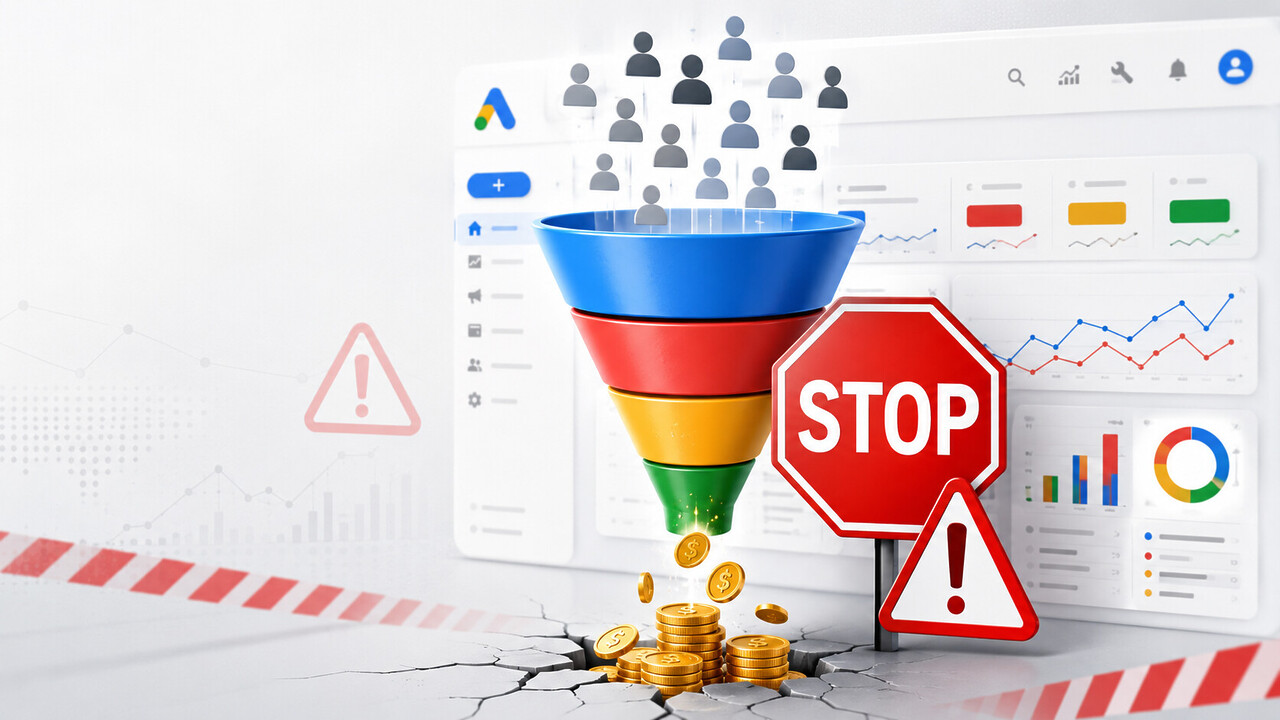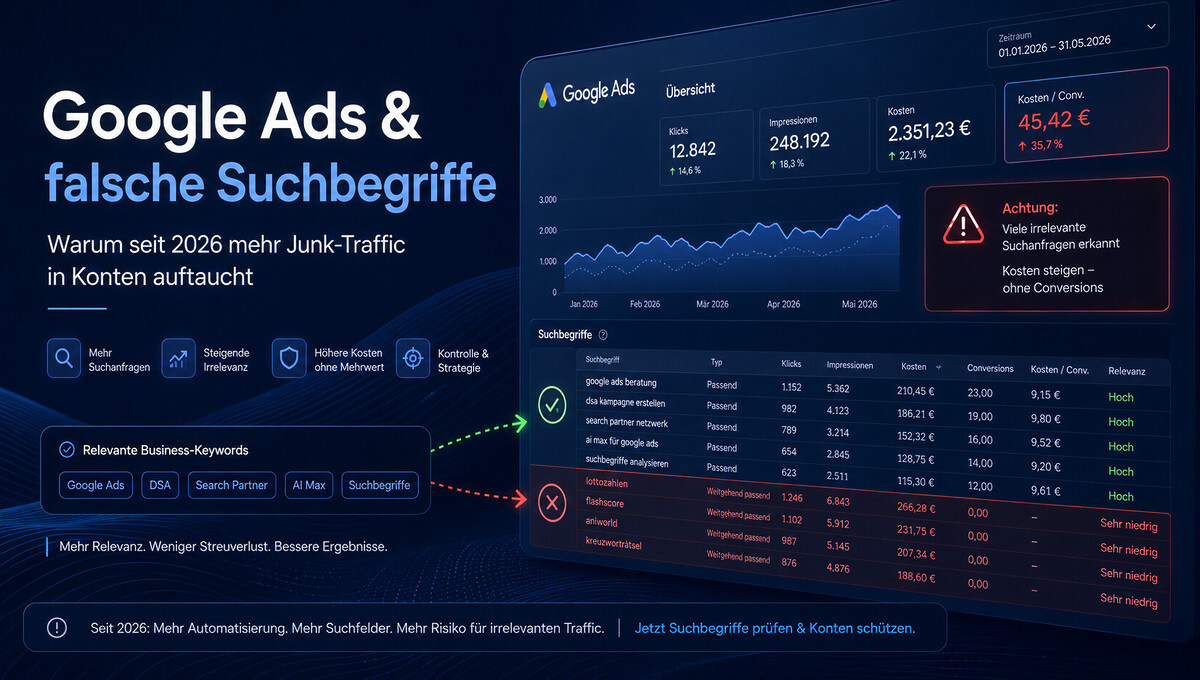
Many advertisers have been observing a disturbing problem since spring 2026: Google Ads campaigns that ran stably and cleanly for years suddenly appear for completely wrong search terms. Instead of qualified B2B inquiries, terms from areas such as sports live scores, streaming, lottery, crossword puzzles, login pages, price comparisons, or general information searches appear in the search term report. Particularly striking is that in many cases, no fundamental changes were made to keywords, ads, landing pages, or campaign structures. Nevertheless, traffic quality suddenly declines—sometimes even across accounts.
Google Ads suddenly matches wrong search terms: What's behind junk traffic, DSA, AI Max, and Search Partners since 2026
The important classification upfront: As of now, there is no officially confirmed Google Ads glitch that triggers wrong search terms in April or May 2026.
The official Google Ads Status Dashboard does not show any corresponding Search Ads incident. Nevertheless, there are several official Google updates and product changes that can explain why Google Ads behaves differently in 2026 than before.
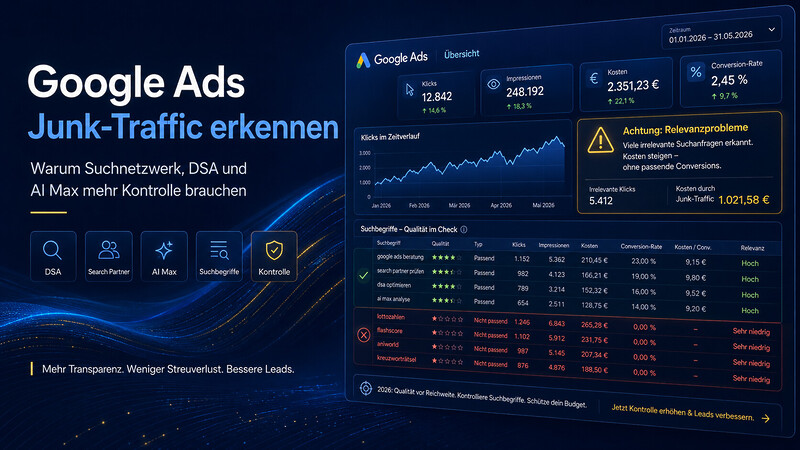
The symptom: Google Ads suddenly matches completely irrelevant search terms
Typical examples from affected accounts include search queries such as:
- lotto numbers today
- flashscore
- galatasaray live
- aniworld
- euro converter
- oil price
- crossword puzzle
- time butler login
- sentinel 2
Such terms have no place in a B2B campaign for software providers, industrial companies, B2B, shops, mechanical engineering, industrial automation, or technical services. This problem particularly often occurs with the following campaign and delivery types:
- Dynamic Search Ads, or DSA
- Google Search Partner Network
- Broad Match
- AI Max for Search campaigns
- Performance Max
- automatically created assets
- Final URL Expansion
- keywordless targeting
The problem therefore does not necessarily arise from an incorrectly booked keyword. It often arises from Google's automated delivery logic.
Technically explained simply: A keyword used to be a boundary, today it is only a signal
In the past, Google Ads could be controlled relatively directly:
Keyword → Search Query → Ad → Landing PageToday, Google Ads increasingly works like this:
Keyword + Landing Page + Ad + User Context + AI Model + Conversion Data + Search Intent → Possible Ad DeliveryThis means that the keyword is no longer always a hard boundary. It is increasingly a signal for Google’s system. Google officially describes Broad Match as allowing ads to appear for search queries that are related to the keyword. Furthermore, Broad Match is the default match type for new keywords. This is precisely where the problem begins: if Google misinterprets the context or the context on partner sites is weak, additional reach can very quickly turn into junk traffic.
The Biggest Suspect: Search Partner Network
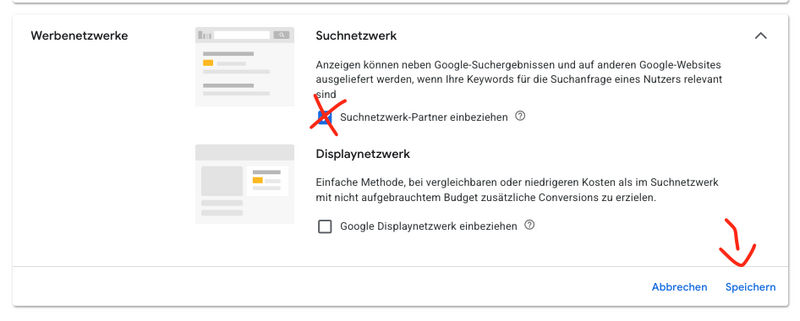
The Google Search Partner Network is not just google.de or google.com. It includes other search sites and partner surfaces outside of classic Google Search. Ads can also appear there as search ads. For many advertisers, this is dangerous because the „Search Network“ column in the Google Ads interface quickly makes it seem as if the traffic comes exclusively from classic Google Search. In reality, however, it can also include Search Partner traffic. If weak partner sites, aggregators, tool sites, or other low-quality search environments are involved, the search intent can be significantly worse than in actual Google Search.
Become more visible on Google & Social Media?
In a free strategy consultation for data-driven online marketing, we uncover your untapped potential, review any existing ad accounts if necessary, examine your SEO ranking and visibility, and determine which strategy is appropriate for your budget and which active measures will lead to more inquiries or sales.

✅ More visibility & perception through targeted placement
✅ More visitors > prospects > customers > revenue
✅ Reach target groups scalably with SEA
✅ Act and grow sustainably with SEO
🫵 Maximum success with our hybrid strategy
💪 More than 15 years of experience across industries in over 1,000+ projects demonstrable!





Why this is particularly relevant in 2026
Google has officially announced that parked domains or AFD will no longer serve as advertising space in the Search Partner Network from February 10, 2026. This is not proof of an error. But it shows that Google actively worked on the Search Partner Network in 2026. If inventory is removed, moved, or re-evaluated, the quality of the remaining partner sites can change. Therefore, an audit is mandatory for advertisers:
Segment → Network → Google Search vs. Search Partner Network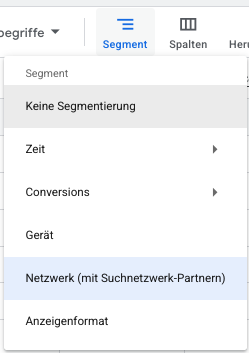
If the junk traffic primarily comes from Search Network Partners, the immediate action is clear: disable Search Partners and compare the quality of search terms before and after the change.
Dynamic Search Ads: When Google interprets the landing page itself
Dynamic Search Ads do not work like normal keyword campaigns. Google uses the content of the website to find suitable search queries. Google also creates dynamic headlines and landing page assignments based on the website content. This sounds practical but is risky. With DSA, the technical logic is not:
I book a keyword and Google may only show ads for that.But rather:
Google analyzes my website and decides for itself which search queries might be suitable for the page.If Google misinterprets the page content or search intent, incorrect matches occur. This is particularly problematic for B2B niches, technical products, and offerings that require explanation.
Important: A page about industrial services can be technically completely correct. Nevertheless, Google's system can make incorrect connections on partner sites or with weak query context.
April 2026: Google announces DSA upgrade to AI Max
On April 15, 2026, Google officially announced that Dynamic Search Ads will be further developed or upgraded to AI Max for Search campaigns. Starting in September 2026, legacy features such as Dynamic Search Ads are to automatically upgrade to AI Max. This is a very important context for all current Google Ads problems. Google describes AI Max as stronger automation for Search campaigns. AI Max uses, among other things:
- Search term matching
- Broad Match
- keywordless technology
- Text Customization
- Final URL Expansion
- dynamic landing page assignment
Google officially explains that AI Max extends existing keywords with Broad Match and keywordless technology to find additional relevant search queries. This can work. However, it can also reinforce exactly what many advertisers are currently observing: Google is moving further away from classic keyword control.
As a Google Ads agency with over 15 years of experience, we advise against its use!
Does this mean Google has a glitch?
Clearly formulated: not officially confirmed. There is currently no official Google article stating:
Google Ads Search is displaying ads for completely wrong search terms due to a bug.The better, technically sound formulation is:
Since 2026, there have been several official changes in the Google Ads ecosystem that affect more automation, more keywordless matching, more AI-based search term expansion, and changes in the Search Partner Network. These developments can lead to historically stable campaigns suddenly displaying ads for significantly broader or irrelevant search terms.
Or even clearer:
It doesn't have to be a classic bug. It can also be a systemic shift in Google's matching, automation, and inventory logic.
Why this is dangerous for advertisers
Incorrect search terms not only cost budget. They also damage the learning signals in the account. If Google collects irrelevant clicks, the following problems can arise:
- Budget is shifted to unqualified users
- Conversion rate decreases
- Smart Bidding receives poor signals
- CPA increases
- ROAS decreases
- Remarketing lists are polluted
- B2B target groups become less clear
- Google learns incorrect user profiles
Especially with small and medium budgets, this can severely worsen a campaign within a few weeks.
What every advertiser should check now
1. Export search terms from the last 90 days
Do not just check the last seven days. Compare at least:
January to March 2026 against April to May 2026These columns are important:
- Search term
- Campaign
- Ad group
- Keyword option
- Clicks
- Cost
- Conversions
- Cost per conversion
- Campaign type
- Network
- Google Search
- Search Partner Network
2. Deactivate Search Partner Network on a trial basis
If irrelevant search terms occur frequently, this is one of the most important immediate measures. Especially B2B campaigns, products requiring explanation, mechanical engineering, medicine, software, industry, and technical services should critically review Search Partners. Recommendation:
- Deactivate Search Partner for 14 days
- Compare search term quality before and after
- Check cost per qualified lead
- Check conversion rate
3. Pause or severely limit DSA ad groups
DSA should no longer run unsupervised in 2026. DSA is only useful with:
- clean page feed
- tight URL targets
- clear exclusions
- low test budget
- strict negative keyword structure
- regular search term review
For B2B niches, DSA should not be run as the main campaign.
4. Consciously test AI Max, do not activate blindly
AI Max can be useful, but only with control. The following questions should be clarified before activation:
- Which campaigns will be expanded?
- Which URLs is Google allowed to use?
- Are brand exclusions set?
- Are irrelevant pages excluded?
- Are landing pages technically sound?
- Are conversion goals correct?
- Is there enough real conversion data?
5. Systematically build negative keywords
Do not just exclude individual search terms. Topic clusters are better. Examples for B2B campaigns:
- live
- stream
- streaming
- login
- lotto
- betting
- sport
- football
- flashscore
- crossword puzzle
- puzzle
- converter
- converter
- oil price
- anime
- movie
- series
- free
- used
- job
- career
- training
- template
- definition
- wiki
But be careful: Negative keywords must always be checked to match the business model. For example, if you sell software for login security, you cannot generally exclude „login“.
6. Build a tighter campaign structure again
Many accounts have become too automated over the years. Now it's worth returning to more control. For B2B, this structure can be useful:
- Brand campaign
- Product or service campaign
- Problem or use case campaign
- Competitor campaign only with a clear strategy
- DSA or AI Max test campaign with a small budget
- Remarketing separately
Important: Brand, non-brand, and DSA or AI Max should not be in the same pot.
7. Check conversion data
Bad conversion data exacerbates the problem. Check:
- Are real leads being measured?
- Are micro-conversions overweighted?
- Are form spam and bot requests excluded?
- Are phone clicks evaluated meaningfully?
- Are GA4 events clean?
- Are offline conversions available?
If Google optimizes for soft goals, it can very quickly favor cheap but worthless clicks.
8. Contact Google Support with evidence
Do not write generally:
Our ads are performing poorly.Better:
Historically stable campaigns have shown a massive deterioration in search term quality across accounts since April/May 2026. There have been no relevant structural changes. The irrelevant search terms come from areas such as lottery, sports live scores, streaming, crossword puzzles, and login pages. Please investigate a possible Search Ads serving or matching problem, especially in connection with Search Partner Network, DSA, and AI Max.
You should include:
- Screenshots
- Search term export
- Change history
- Before-and-after comparison
- Affected campaigns
- Costs of irrelevant search terms
- Network segmentation
Conclusion: Google Ads will again require more (manual) control and active monitoring in 2026!
Google Ads is increasingly evolving from a keyword-driven platform to an AI-driven matching system. This can bring additional reach, but also leads to a loss of control if campaigns are not cleanly delimited. The official Google updates on Search Partner Network, Dynamic Search Ads, AI Max, Broad Match, and keywordless technology clearly show: Google is increasingly shifting responsibility from the booked keyword to automated interpretation of search intent, website content, and user signals. Advertisers should therefore act now:
- Review Search Partner
- Limit DSA
- Test AI Max consciously
- Expand Negative Keywords
- Clean up conversion goals
- Audit search terms regularly
- Manage campaign structure more tightly again
The most important rule for 2026 is:
Do not blindly trust Google Ads. Check where your budget is really going.
Google Ads can still be very profitable. But only if automation is not confused with loss of control.
Sources and further information
- Google Ads Status Dashboard: https://ads.google.com/status/publisher/
- Google Ads Help – Broad Match: https://support.google.com/google-ads/answer/7478529
- Google Ads Help – Search Partner Network / Parked Domains Update: https://support.google.com/google-ads/answer/16286960
- Google Ads Help – Dynamic Search Ads: https://support.google.com/google-ads/answer/2471185
- Google Ads Help – AI Max for Search campaigns: https://support.google.com/google-ads/answer/15910187
- Google Blog – DSA Upgrade to AI Max 2026: https://blog.google/products/ads-commerce/dsa-upgrade-to-ai-max-2026/





 DE
DE